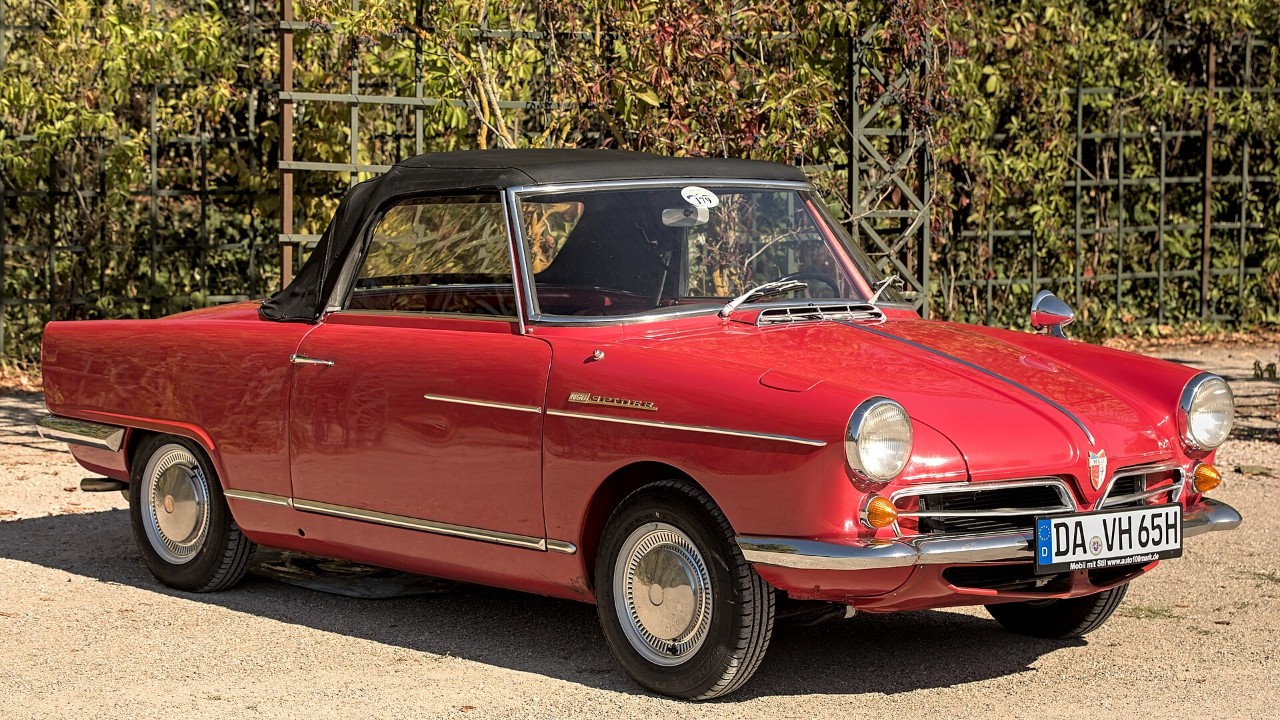
NSU built the first production car with a single-rotor Wankel engine, then the first with a twin-rotor one. The small company from Neckarsulm, Germany, also built rear-engined saloons that won hill climbs across Europe.
Audi now owns the NSU story, and its heritage department has published the numbers behind each model. These six NSU cars show both sides of the firm, from the rotary pioneers to the little four-cylinder racers that tuners loved.
1. 1964 NSU Wankel Spider
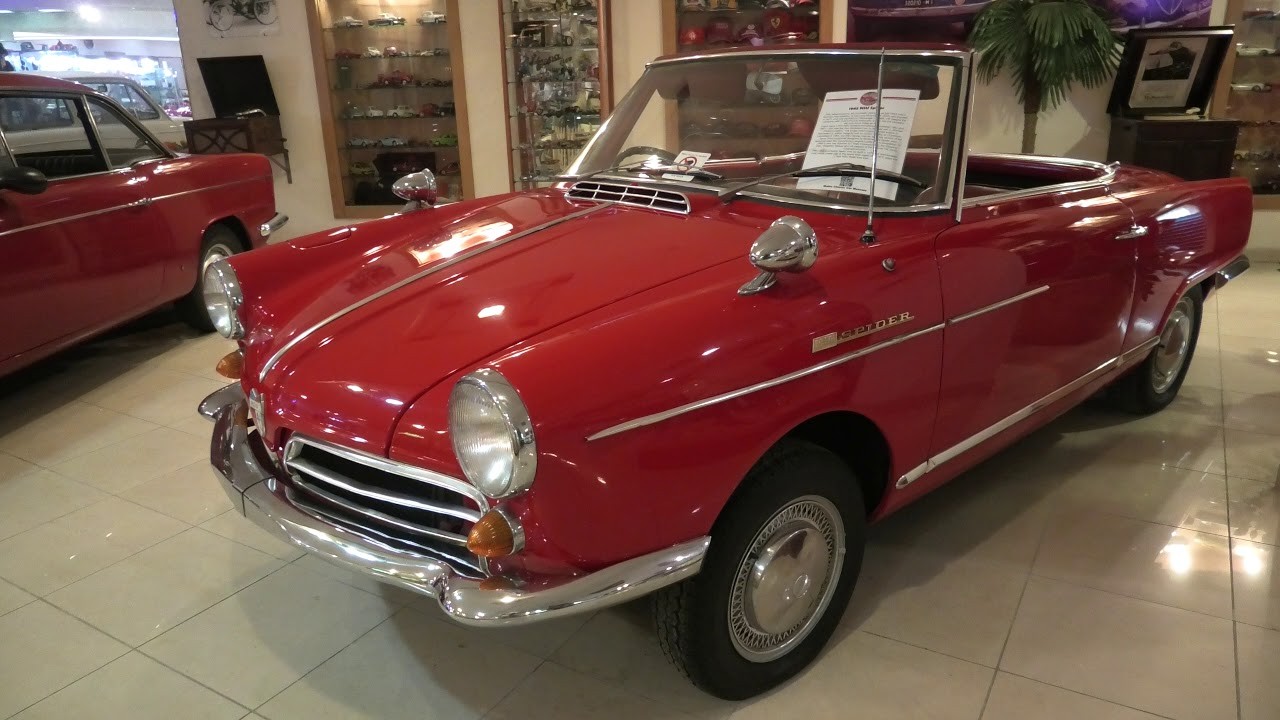
NSU had worked with engineer Felix Wankel on rotary engines since 1951. The result reached the public at the 1963 Frankfurt motor show as the NSU Spider. It was the first production car with a single-rotor Wankel engine, and Giuseppe “Nuccio” Bertone’s design shaped its monocoque body.
The engine sat under the rear floor, so the car had a trunk at each end. With its transmission, alternator and starter, the whole unit weighed about 125 kg, according to Audi’s Wankel Spider history. Sales began in fall 1964 at about 8,500 German marks. By July 1967, Neckarsulm had built 2,375 of them.
2. 1967–1977 NSU Ro 80
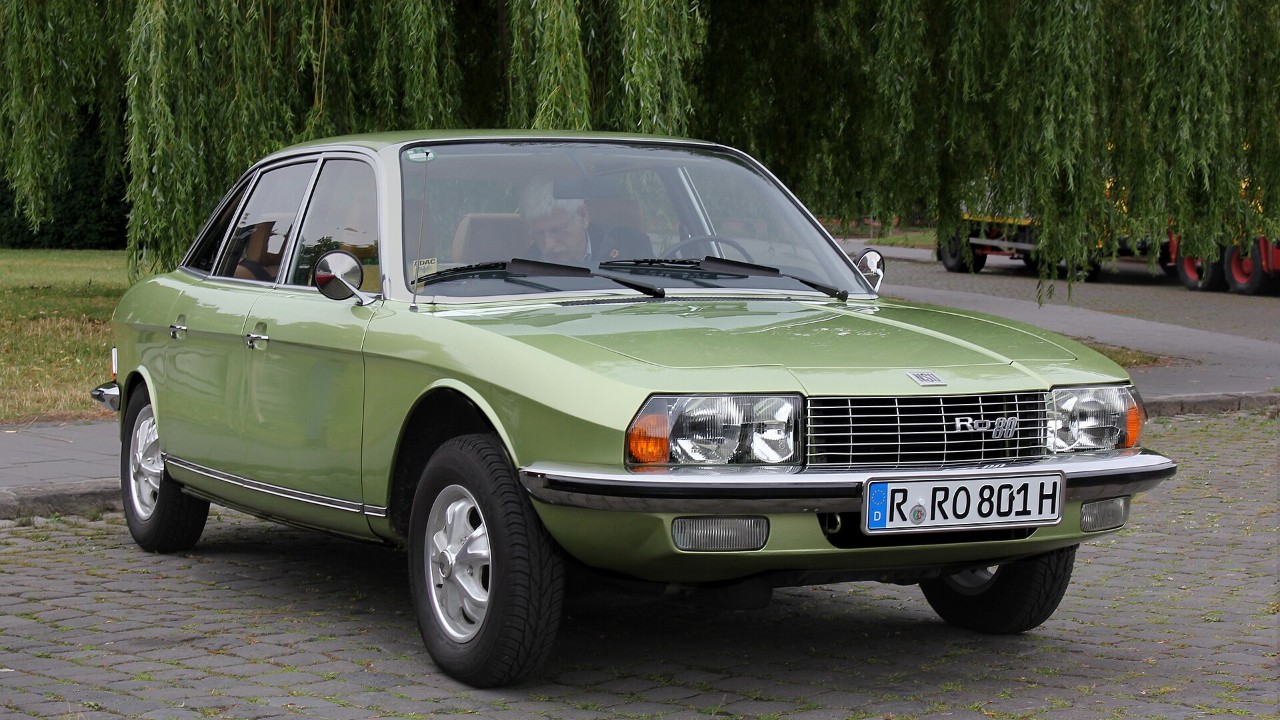
The Ro 80 took the rotary idea further with two rotors. NSU unveiled it at the September 1967 Frankfurt show after five years of development. In fact, it was the world’s first production car with a twin-disc Wankel, says Audi Tradition. The name is plain: “Ro” for rotary piston, “80” for the type number.
Engineers shaped the wedge body in a wind tunnel for a drag coefficient of 0.35. Then, in 1968, international journalists voted it Car of the Year, the first German car to win. However, the 1973 oil crisis pushed buyers toward thrifty cars. Production ended in April 1977 after 37,374 cars. Today, Hagerty’s valuation tool lists $11,400 for a 1974 Ro80.
3. 1964–1972 NSU Prinz 1000
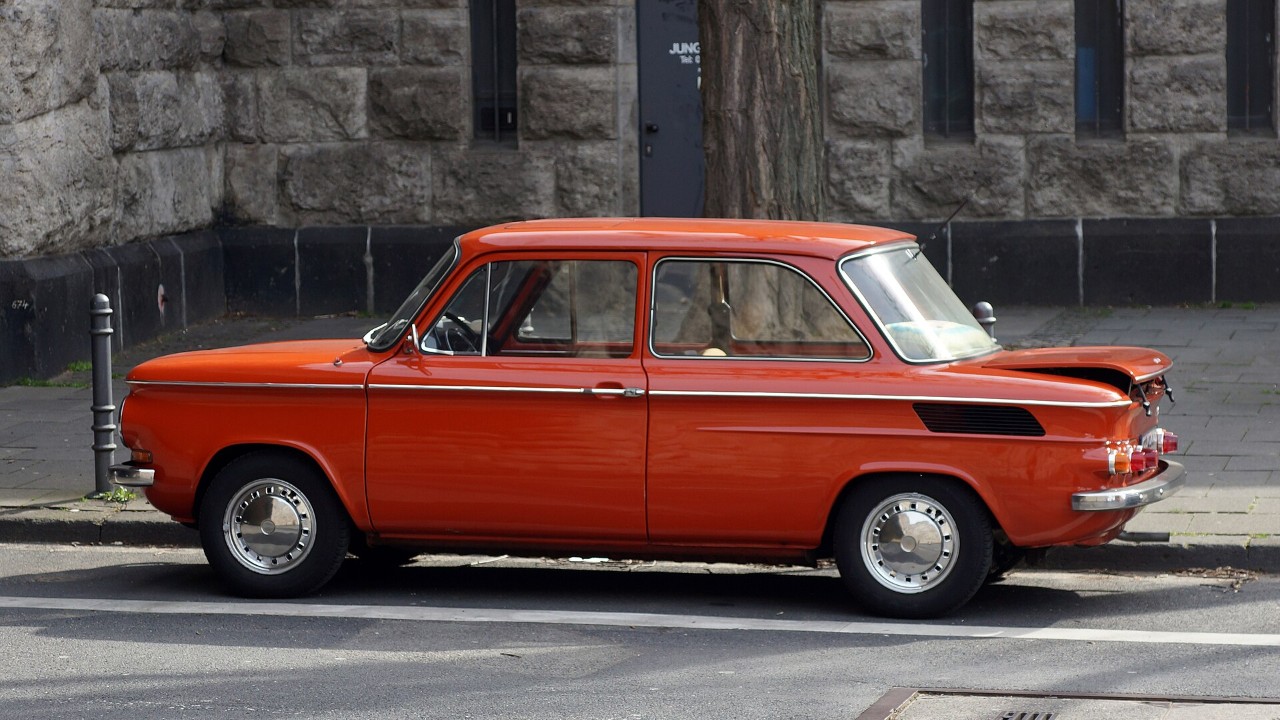
The Prinz 1000 debuted at the same 1963 show as the Spider. It took NSU into the mid-size class with four-cylinder engines, and fans called it the “Tausender,” German for “thousand.” To build it, NSU put up a new plant of about 10,000 square meters with six assembly lines.
The first cars left the line in early April 1964, and dealers ordered 1,150 by the end of that month. Standard output was 40 or 43 PS. Then tuner Siegfried Spiess went racing in one. In 1965 he won the German GT hill-climb title in all classes, taking 8 of 11 races. All told, NSU built about 195,000 Prinz 1000 L, S and NSU 1000 C cars, according to Audi’s NSU sports-car history.
4. 1967–1972 NSU TT
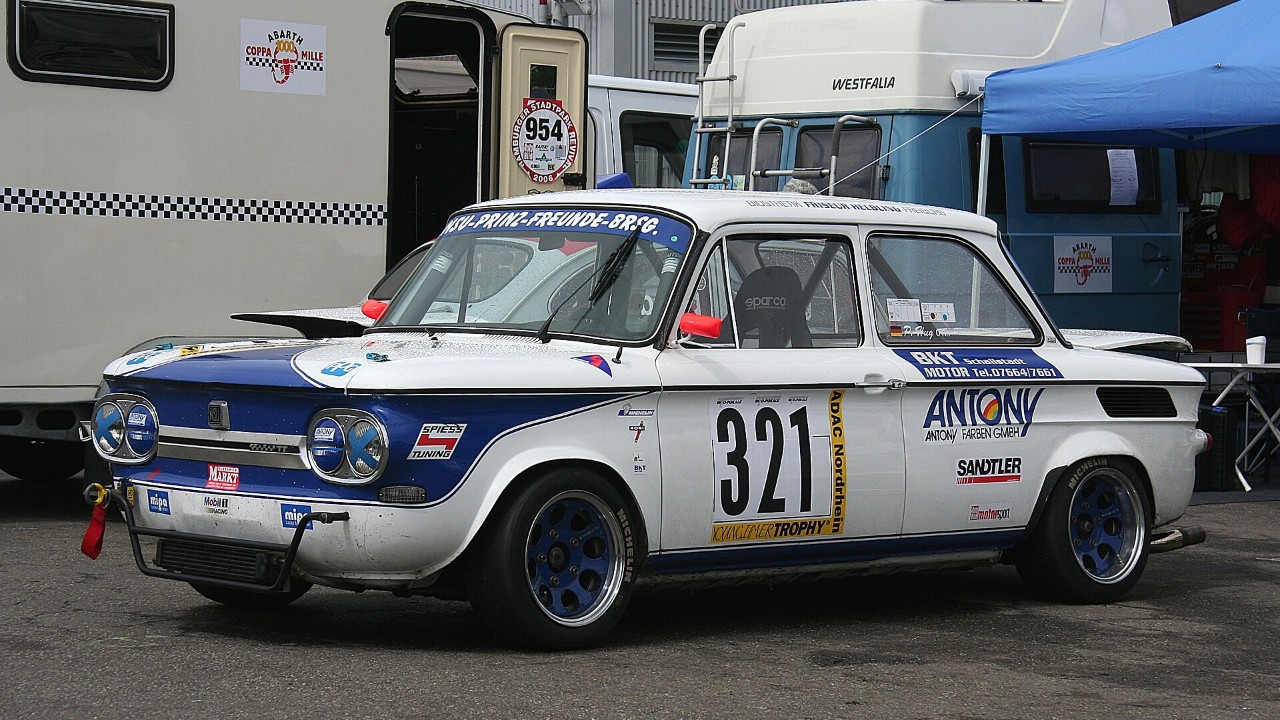
In 1967, NSU added two sports versions, the TT and the stronger TTS. Both kept a rear-mounted, air-cooled four-cylinder. The TT made 65 PS, and about 50,000 left the factory between 1967 and 1972. It followed roughly 11,500 earlier Prinz 1000 TT cars.
Racing gave it a name. For example, Günther Irmscher won the 1967 Tour d’Europe in a TT, and Bill Allen won an American championship in 1968. Until the mid-1970s, the TT was the most successful German car in national hill climbs, with 29 national titles in Europe and North America, per Audi Tradition.
5. 1967–1971 NSU TTS
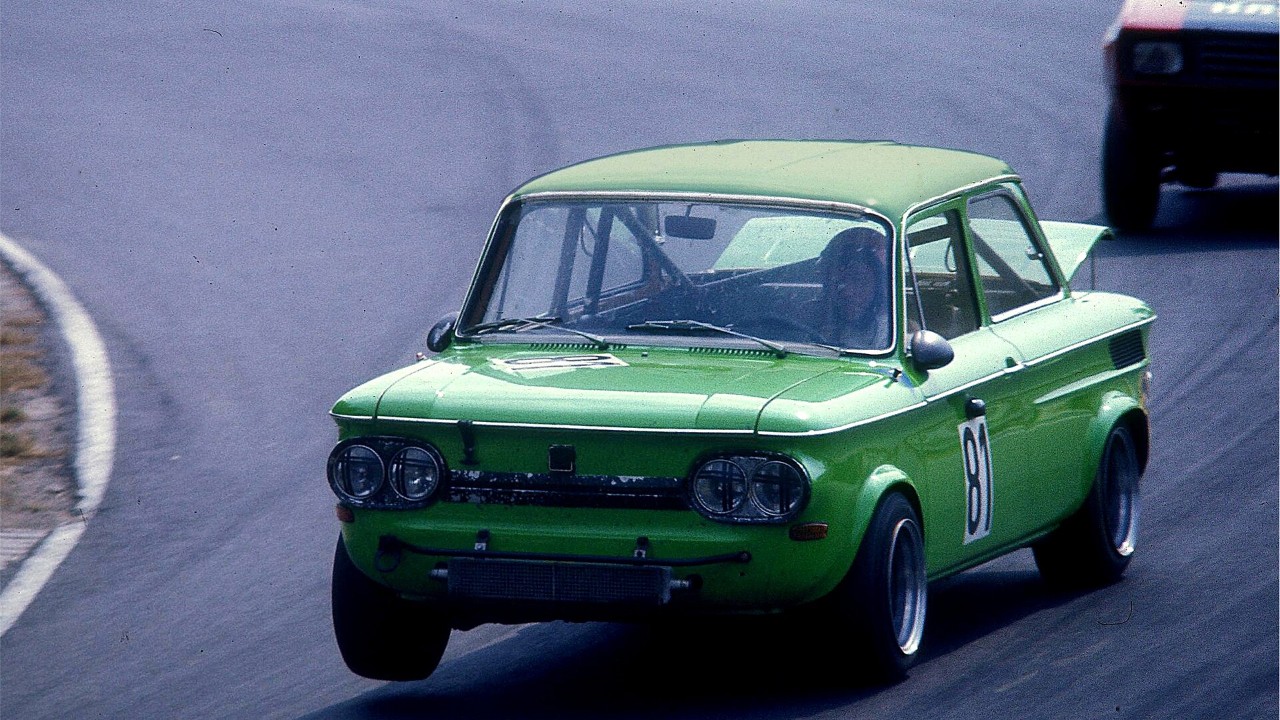
The TTS was the sharper tool. Its 1,000 cc engine made 70 PS. NSU also set its camber between slightly negative and neutral and fitted sports shock absorbers. A “Speed Set” was offered too, but only for track use.
Because NSU built only about 2,400 standard TTS cars from 1967 to 1971, it is far scarcer than the 50,000 TTs. Period ads called it a “notorious class winner,” Audi’s NSU anniversary release recalls. By comparison, the TT’s ads promised a “thoroughbred sports car, inch for inch.”
6. NSU TT Jägermeister, the 1974 hill-climb winner
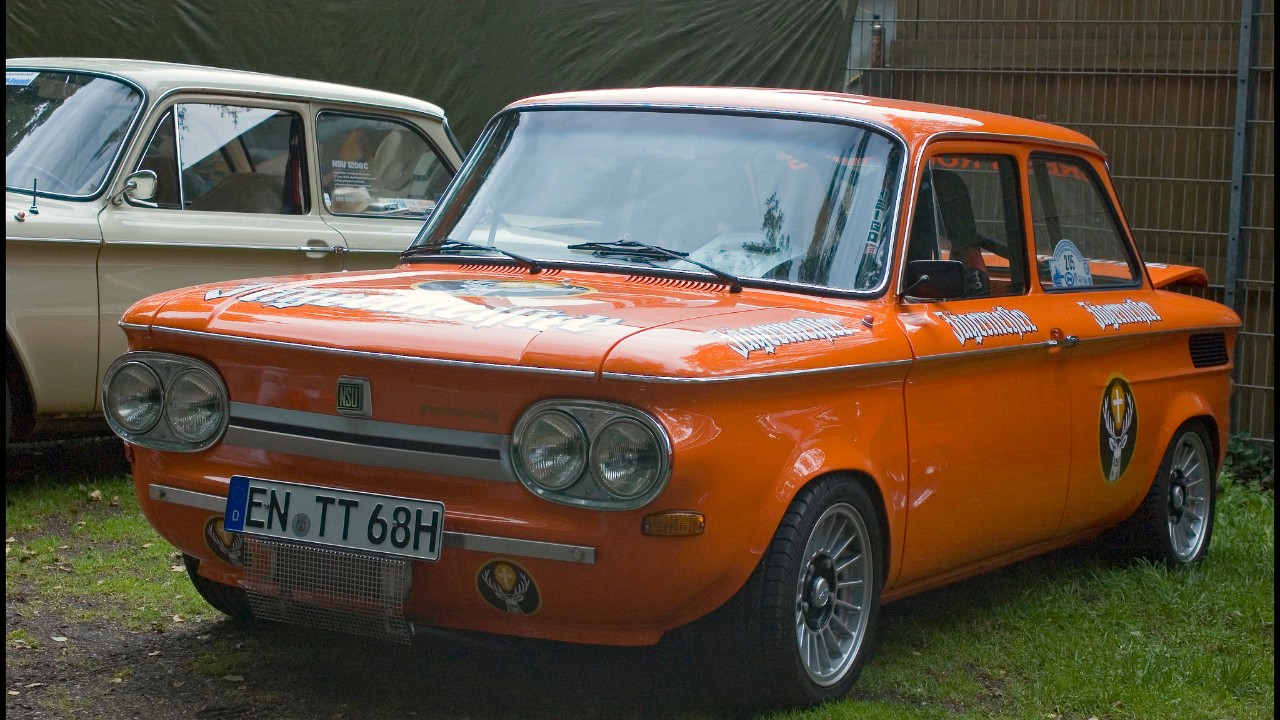
The last car here is a single race car that now lives in the Audi AG historic vehicle collection. Its engine got more displacement, Weber carburetors, dual ignition and enlarged intake and exhaust ports. As a result, it made 130 PS at 7,800 rpm and reached 190 km/h.
Its driver, Willi Bergmeister, owned an NSU dealership in Langenfeld and raced from 1968. He won the 1974 German Mountain Cup in this car, according to Audi. Later he moved to touring cars and won the 1980 European Touring Car Championship in an Audi 80 GLE.
More from Fast Lane Only