
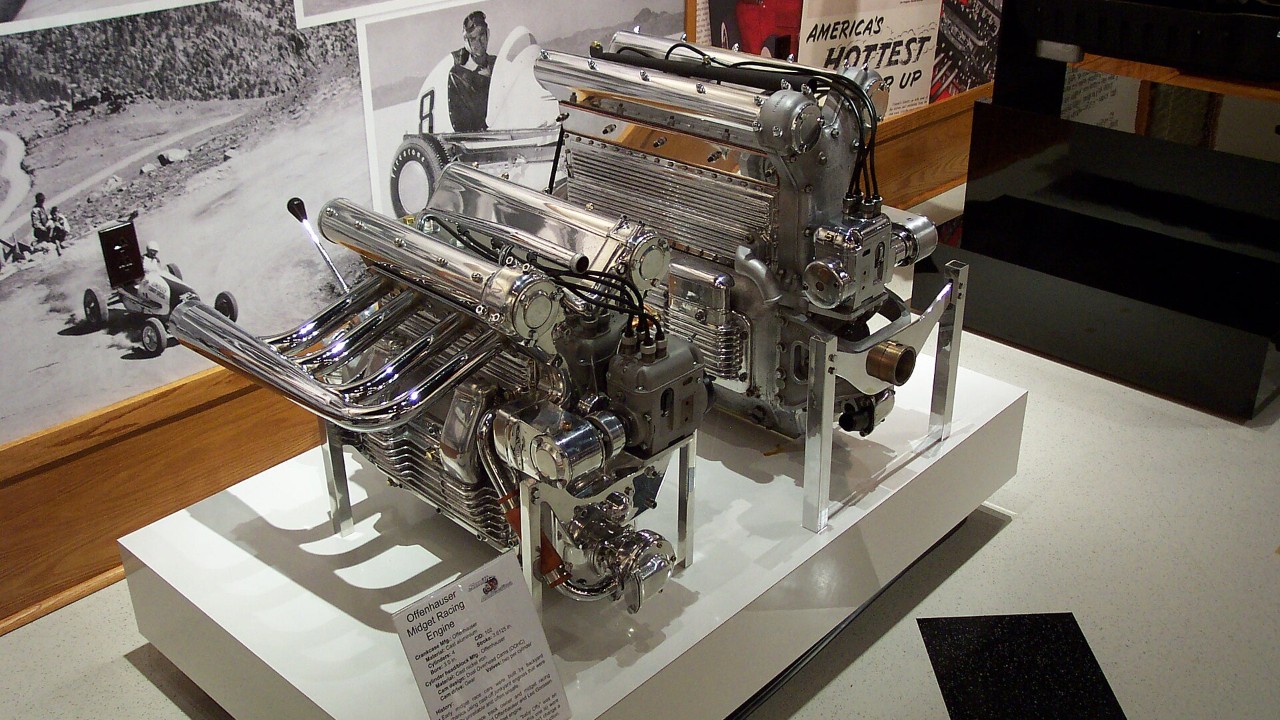
Fred Offenhauser and Leo Goossen bought Harry Miller’s designs and tooling at Miller’s 1933 bankruptcy auction. Soon, what came out of their Los Angeles shop was the Offenhauser four-cylinder, a racing engine with no showroom brochure behind it. Even so, the Offy kept doing more than a four-cylinder engine had any business doing.
After that, it won on dirt ovals, at Indianapolis and in tiny midgets, and it lasted for decades. These are our picks of the seven Offenhauser-powered cars that got more out of the engine than anyone had a right to expect.
1. 1937 Offenhauser 270 sprint car

The “270” is the giveaway. For example, Engine Labs puts the largest Offy at 270 cubic inches, or 4.4 liters. That is more than a liter per cylinder from a four. Compression ran as high as 15:1, and the best Offys made up to three horsepower per cubic inch. As a result, in a light sprint car, that meant a brutal shove out of every dirt-track corner. The Collings Foundation’s American Heritage Museum in Massachusetts gives prewar sprint cars a section of their own. In our view, this is where the Offy legend really starts.
2. 1938 Allen Special Offenhauser

Midget racing has run in America since 1933, the Louwman Museum notes, with light cars on short dirt ovals. Similarly, the Allen Special shows what an Offy could do at small scale. The museum lists a 1.8-liter twin-cam Offenhauser making about 170 hp. That is a lot of power for 1938, let alone in a car with a 1.6-meter wheelbase. The museum also quotes a top speed of 170 km/h. Today, the car belongs to the Louwman Museum’s collection. We think it is the clearest case of the Offy punching above its size.
3. 1952 Kuzma-Offenhauser Indy 500 winner

Troy Ruttman’s Agajanian Special was a Kuzma chassis with a 263-cubic-inch Meyer-Drake Offenhauser. By then, Louis Meyer and Dale Drake had bought the business, in 1946. According to the Indianapolis Motor Speedway Museum, Ruttman started seventh in 1952. He then led 44 laps and won at an average of 128.92 mph. In fact, Motor Sport notes that Offy-powered cars won every 500 from 1947 to 1964. For more Speedway winners, see our list of the most iconic Indy 500 winning cars.
4. 1957 Kurtis Kraft-Offenhauser

By 1957, Frank Kurtis’s roadsters ran a smaller Offy. Conceptcarz lists the 1957 Kurtis 500G with a 4,179 cc, or 255-cubic-inch, Offenhauser four. Sports Car Market’s profile of a 1957 Kurtis 500G2 puts that engine at about 400 hp. It also ran 14:1 compression and Hilborn fuel injection, burning methanol at about a gallon a lap. The same profile counts roughly 50 Kurtis-built roadsters among about 120 of all makes from 1955 to 1963. In our view, that’s a lot of muscle from a smaller engine.
5. 1962 Watson-Offenhauser Leader Card roadster
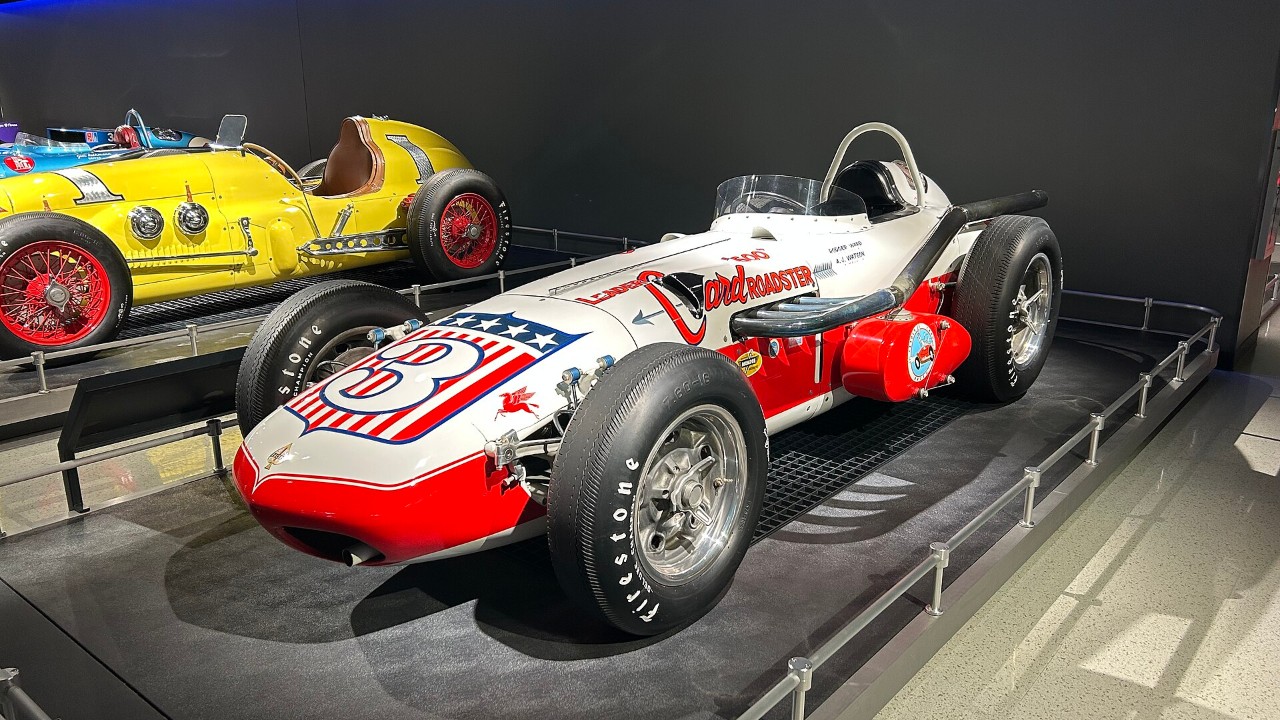
A.J. Watson’s Offy roadsters were the cars to beat, and Rodger Ward’s Leader Card cars prove it. The Speedway’s own records show Ward winning the 500 in 1959 in a Watson-Offy Leader Card 500 Roadster. Then he finished second in 1960 and third in 1961, both in Watson-Offys. In 1962, he won again from second on the grid after qualifying at 149.371 mph. That run of results looks like an engine that kept giving more than its rivals expected. We’d rank the Leader Card among the best Offy roadsters ever built.
6. STP Eagle-Offenhauser

By the 1970s the Offy had shrunk and grown a turbocharger. Specifically, Engine Labs says the turbocharged format ran 2.6 liters, or 159 cubic inches, from 1972 to 1976. Motor Sport adds that turbo Offys of the early 1970s made “well in excess of 1000bhp.” In 1973, Gordon Johncock won the 500 for Patrick Racing in the STP Double Oil Filter Eagle-Offy. He had qualified at 192.555 mph, while the Speedway’s records show the race ran only 133 laps. A four-cylinder making that kind of power? To us, that is the Offy exceeding every reasonable claim.
7. 1975 McLaren M16E-Offenhauser
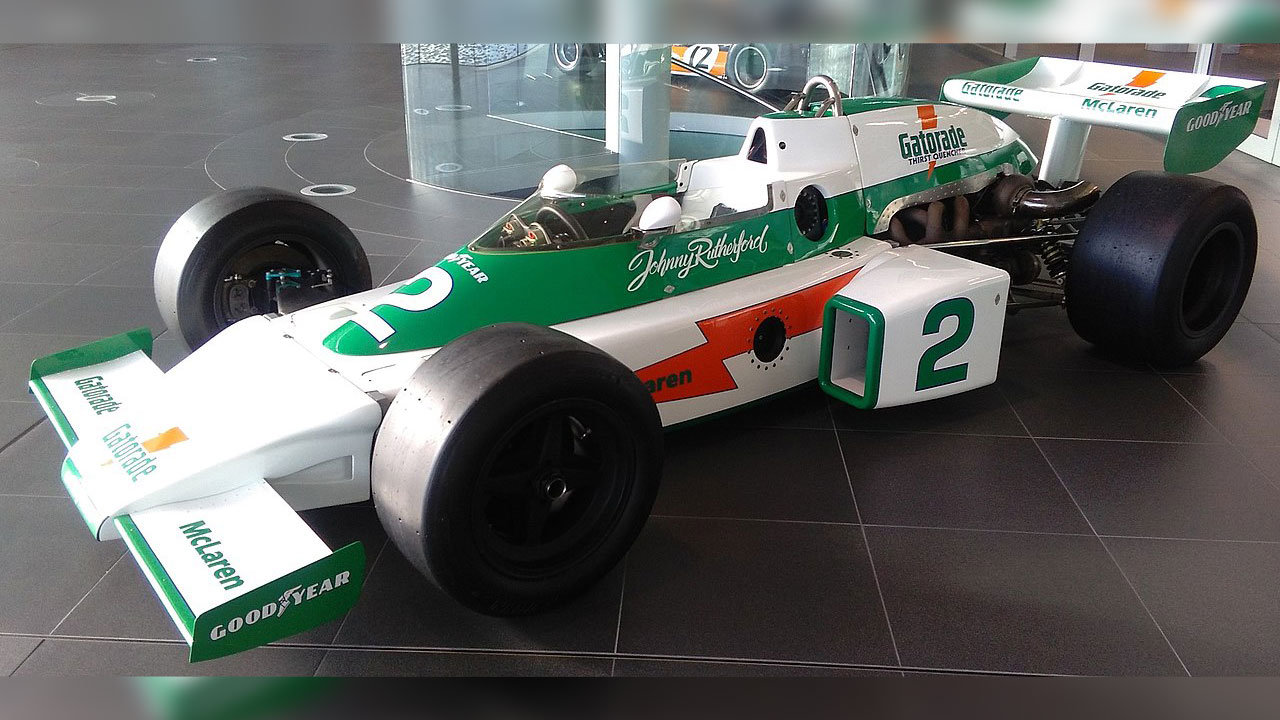
Gordon Coppuck designed the M16 for 1971, borrowing its wedge shape from the Lotus 72, according to McLaren. For the 1975 M16E, his assistant John Barnard did much of the work. Johnny Rutherford then finished second at Indianapolis in a rain-shortened race. The next year, he won the 500 in a race cut to 255 miles. After that, McLaren switched to the Cosworth DFX for 1977. For the full story of the engine, read how the Offenhauser four-cylinder won the Indianapolis 500 27 times. Finally, Motor Sport records the Offy’s last Indy entry in 1983, closing a 57-year history.
Sources: Engine Labs, Motor Sport, American Heritage Museum, Louwman Museum, Indianapolis Motor Speedway Museum, Conceptcarz, Sports Car Market, Indianapolis Motor Speedway (Rodger Ward), Indianapolis Motor Speedway (Gordon Johncock), McLaren.
More from Fast Lane Only



