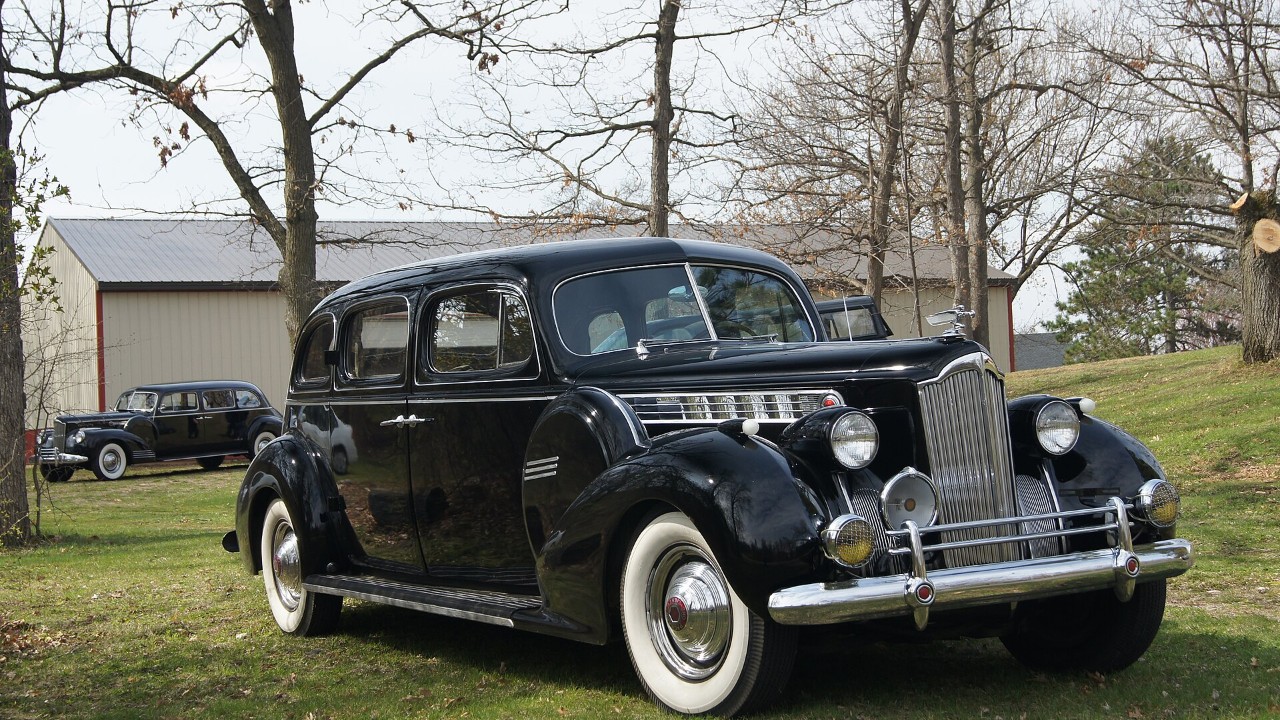
Packard air conditioning arrived in August 1939, as an option on the company’s new 1940 cars. No automaker had offered a factory cooling system before. The hardware was crude and costly, and it took over much of the trunk. Still, it gave Packard a first that every carmaker would eventually copy.
The option went only on Packard’s senior cars, the big One-Sixty and One-Eighty models. In our view, those were exactly the buyers most likely to pay extra for comfort in a hot summer.
That first system had real flaws, though. It could not be switched off from the dash, it blew only stale air, and Packard did not even build it in house. Here is how it worked, and why it mattered.
The first factory option
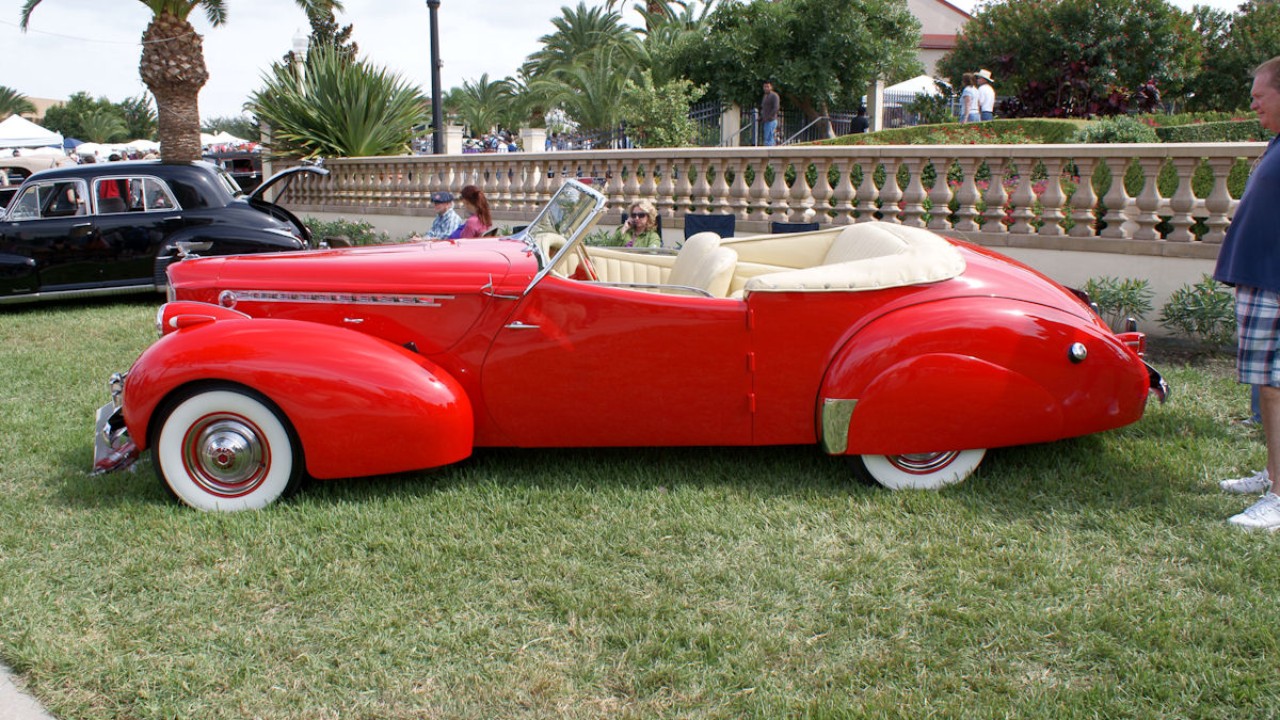
According to Curbside Classic’s history of automotive air conditioning, Packard debuted the first factory automotive air conditioning system in August 1939. It went on the 1940 Senior models, the One-Sixty and One-Eighty. The writer puts “factory” in quotation marks, because Packard neither developed nor installed the unit itself.
Instead, Packard shipped the cars to Cleveland, Ohio. There, Bishop & Babcock fitted its own system, and Curbside Classic says B&B built and installed every prewar unit. Packard first called the feature “mechanical refrigeration” and later the “weather conditioner,” Mac’s Motor City Garage notes.
Mac’s is careful about the claim. Homebuilt and experimental systems had already appeared in 1930s hobby magazines, so the 1940 Packard was not the first car with air conditioning. Rather, it was the first time a U.S. automaker offered it as a factory production option.
Which 1940 Packards could get Packard air conditioning
The option belonged to the top of the range. For 1940, Packard split its Super Eight in two, according to an RM Sotheby’s catalog entry. The One-Sixty took the old Super Eight’s place, while the Custom Super Eight One-Eighty became the new flagship and replaced the discontinued V-12.
Both series shared a new L-head straight-eight of 356 cubic inches. RM Sotheby’s gives its output as 160 horsepower at 3,500 rpm. The senior cars also came on three chassis lengths, with 127-, 138- and 148-inch wheelbases.
The same catalog lists optional air conditioning at $275 and calls it the first installed on production vehicles. Hagerty’s history gives the price as $274. However, Curbside Classic gives a much higher $475, so the exact figure depends on the source.
How the system worked
The layout looked nothing like a modern dash-mounted system. Mac’s says a twin-cylinder vertical compressor bolted to the straight-eight’s cylinder head. A belt drove it, and it pumped DuPont Freon through the loop.
Meanwhile, the evaporator coil and blower sat behind the rear seat. Curbside Classic places the condenser in front of the radiator. Cold air then entered the cabin through a single duct in the rear parcel shelf, so the back-seat passengers got most of it.
There was also a small auxiliary heater core, according to Curbside Classic. Beyond that, the only temperature control was the blower speed or a cracked window.
The catch: no off switch
The biggest flaw was the compressor drive. Because it had no electromagnetic clutch, the compressor ran whenever the engine ran. As a result, owners who wanted the cooling off for cold weather had to remove the drive belt.
The system also lacked a fresh-air intake. Mac’s says stale cabin air simply went round and round. Furthermore, the rear evaporator ate trunk space, and Hagerty notes that early trunk-mounted units took up about half of it. Curbside Classic adds that condensation and dripping were common.
Sales were predictably slow, especially outside the South, Curbside Classic says. Neither Mac’s nor Hagerty gives a firm count of how many Packards carried the option.
Who followed Packard, and how the idea spread
Packard did not keep the idea to itself for long. Curbside Classic says Cadillac offered a B&B-built system for 1941, although without the auxiliary heater core. Chrysler followed in the shortened 1942 model year. Mac’s adds that the same B&B unit appeared on some 1941 Chrysler Imperials and as an extra-cost option on the 1942 DeSoto.
Then the war intervened. World War II quickly stopped further development of the B&B system, according to Curbside Classic. Hagerty dates Packard’s own offering to 1940 through 1942.
Packard air conditioning therefore lasted only a few model years before the war ended it. Even so, the company had shown that a carmaker could sell cooling as a catalog option.
What a 1940 One-Eighty is worth now
The One-Eighty, the flagship that could wear the first factory air, was never common. RM Sotheby’s says Packard built 1,900 Custom Super Eights for 1940, out of 7,562 senior models that year.
One of them crossed the block at RM Sotheby’s Hershey sale in 2022. That 1940 Packard Custom Super Eight One-Eighty Club Sedan, with its 356-cubic-inch straight-eight and overdrive, sold for $51,700.
More from Fast Lane Only