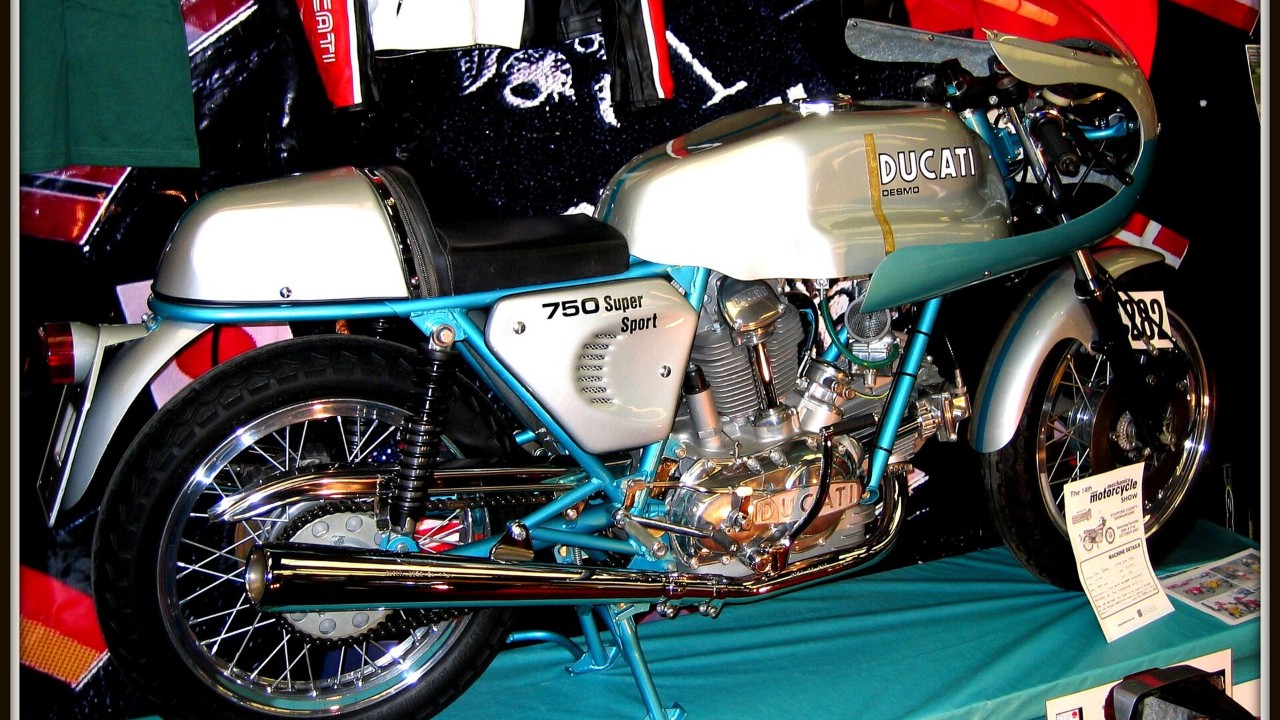
In 1972, Paul Smart and Bruno Spaggiari beat Giacomo Agostini’s works MV Agusta to win the Imola 200 on Ducati’s new 750 cc desmo V-twin. In turn, that win set the stage for the Ducati 750 SS road bike. Ever since, a red Ducati parked on a show lawn has drawn a crowd that most cars would envy.
Ducati’s story is not just about superbikes, though. In fact, the Bologna company built tiny singles, scramblers, touring twins and even a cruiser along the way. Some sold in big numbers, while others were built in batches of a few hundred for racers and collectors.
These are our picks, eleven Ducatis we think pull people across the parking lot at any car show. The verdict is our own opinion. Each comes with the facts that earned it a spot, plus our take on what to look for if you want one in your own garage.
1. 1974 Ducati 750 SS Formula 750 racer
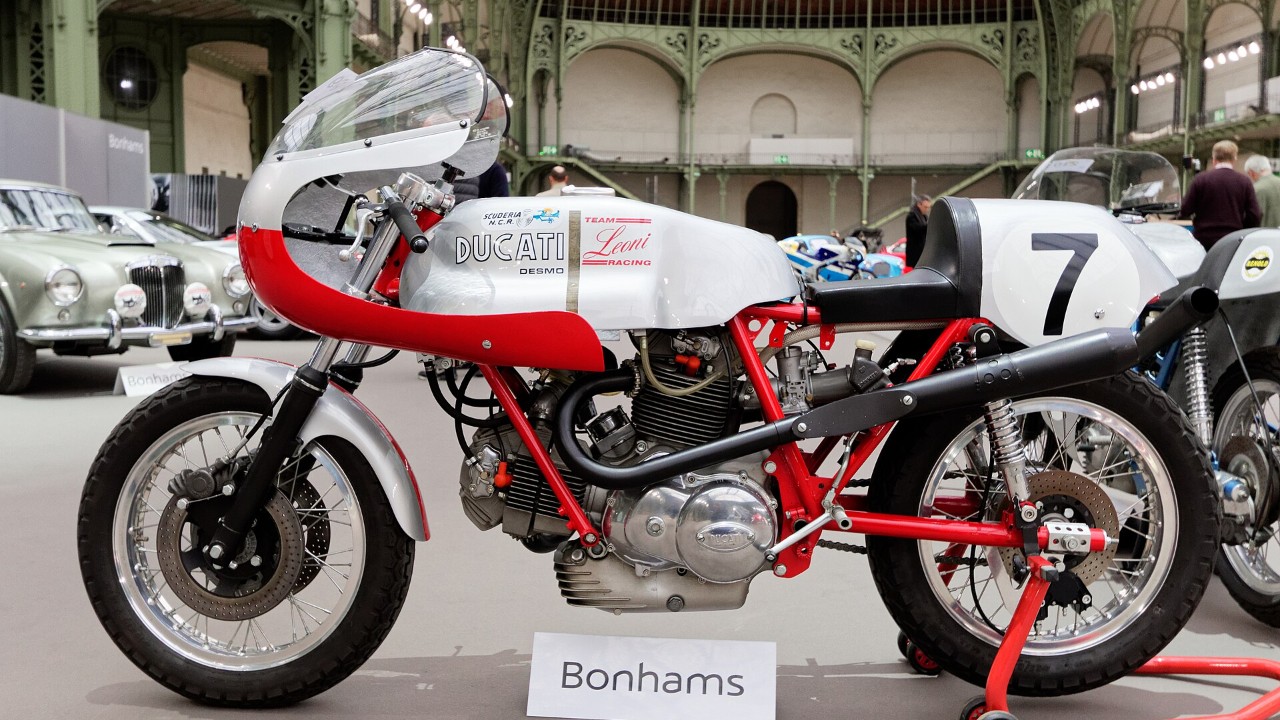
The racing versions of the Ducati 750 SS are the ones that stop people cold. RM Sotheby’s describes the engine as a 748 cc single-overhead-cam desmo V-twin with five speeds. For 1973, Fabio Taglioni reworked the racing engine with 86 mm pistons, a shorter stroke and a rev limit raised by 1,000 rpm to 10,200 rpm.
He also narrowed the valve angle from 80 to 60 degrees. Meanwhile, billet connecting rods and rockers replaced the old parts, and a dry clutch took the place of the wet one. As a result, those changes turned a fast road bike into a serious Formula 750 machine.
One 1974 racing 750 SS shows how these bikes lived. Carlo Saltarelli raced it as his own privateer machine in 1974 and 1975. Its numbers suggest it left the factory as a 750 GT and gained racing spec in period. Later, RM Sotheby’s sold that bike in Monaco in 2012 for €40,950.
Our take: this is the Ducati every other Ducati is measured against. If you are shopping, provenance is everything, because some, like the Saltarelli bike, began life as other models and gained racing parts in period.
2. 1988 Ducati 851 Strada Tricolore
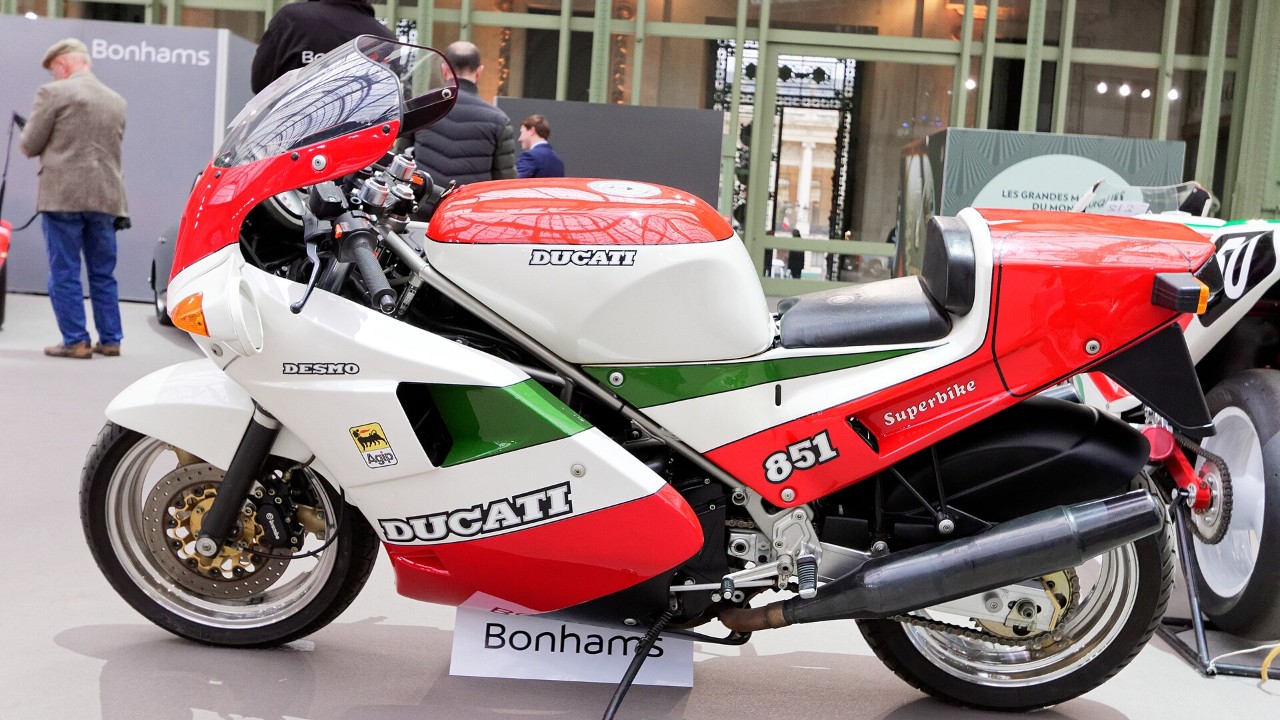
The 851 was the bike that dragged Ducati into the modern era. It used an 851 cc, liquid-cooled 90-degree V-twin with desmodromic four-valve heads and Weber fuel injection. That was a huge leap from the air-cooled two-valve twins that came before.
Surprisingly, the engine traced back to a university thesis. Massimo Bordi designed a four-valve desmo head for his degree at the University of Bologna in 1973. Later, working with Cagiva, he saw those ideas reach production as the Desmoquattro.
According to CycleChaos, the original 1988 road bike wore patriotic red, white and green paint and made about 100 bhp. It also rolled on 16-inch wheels and weighed 185 kg dry. The review notes that it really needed 17-inch rims, which arrived on the revised model.
Racing proved the design. Raymond Roche won the 1990 World Superbike title, and the four-valve twin became the heart of Ducati’s superbikes.
In our view, the first-year Tricolore is the 851 to own, because the colors announce exactly what it is. Ask for proof that someone has maintained the fuel-injection system, since early electronic parts can be a chore to replace.
3. Ducati Desmosedici RR
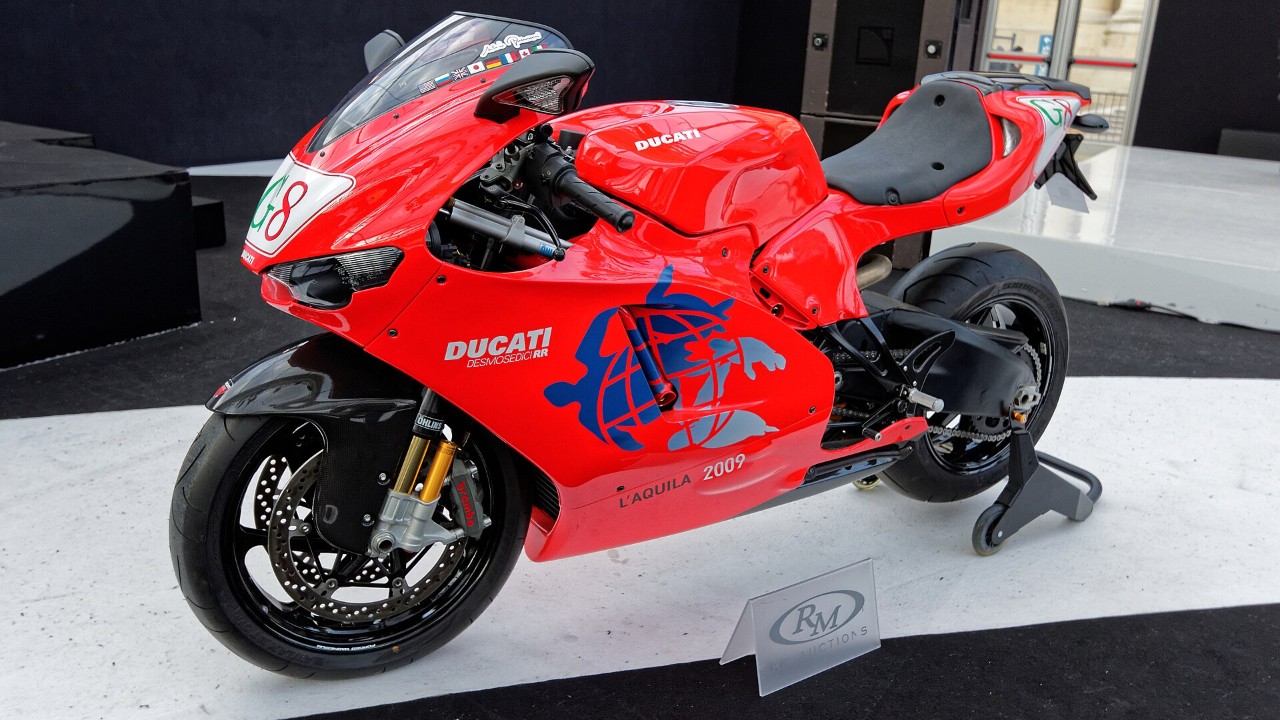
The Desmosedici RR was as close as most riders will ever get to a MotoGP bike. Ducati built it as a road-legal version of its Desmosedici racer, with production running from October 2007 to December 2008. At first, Ducati planned 1,500 for public sale.
The engine was a 989 cc desmodromic V4. Ducati claimed 197.3 horsepower at 13,800 rpm, an astonishing figure for a road bike at the time. Dry weight was 171 kg, so the power-to-weight ratio was savage.
Of course, that kind of hardware did not come cheap. At launch, the RR cost $72,500 in the US and £40,000 in Britain. In our view, that price made it a collector’s item from day one.
Its link to racing is the whole point. Ducati’s MotoGP effort has carried on with star riders, as our story on Marc Marquez locking in a fresh two-year MotoGP future with Ducati showed.
Our take: the Desmosedici RR is a showpiece first and a road bike second. If you buy one, budget for specialist servicing, since the V4 is closer to a race engine than a road one.
4. Ducati Pantah 500
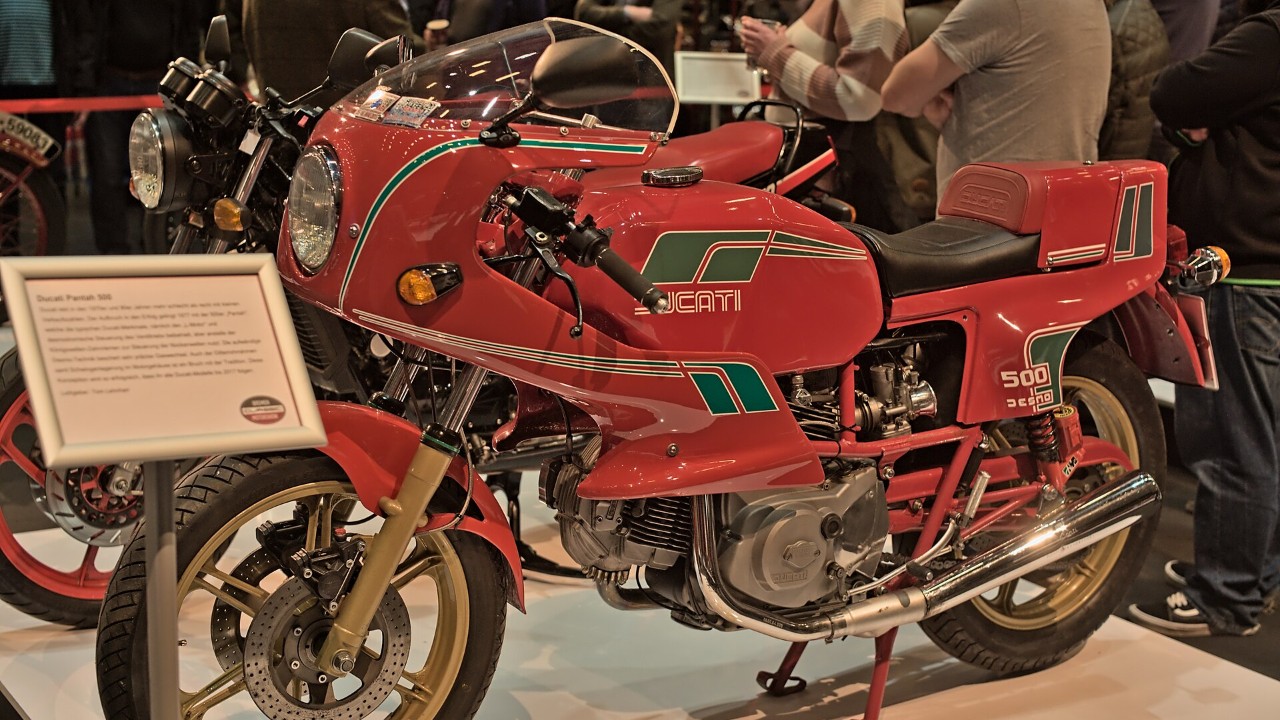
The Pantah saved Ducati at a tough moment. Taglioni developed it after the company’s 350 cc and 500 cc parallel twins of 1976 sold poorly. The 500SL arrived in 1980 with a 500 cc V-twin that made 50 hp at 8,500 rpm.
However, the big change was inside the engine. Instead of the old bevel gears, a toothed rubber belt drove the single overhead camshaft on each cylinder. That belt-drive design became the basis for later Ducati V-twins.
The Pantah also introduced the trellis frame, the web of steel tubes that became a Ducati trademark. The 500SL weighed 180 kg and rode on a 1,450 mm wheelbase. Later, the engine grew to 583 cc for the 600SL and then to the 650SL, which many riders considered the definitive Pantah.
Racing followed soon after. The 600 cc TT2 racer was the first Pantah-based racing bike, and the 750 cc TT1 came next.
In our view, the Pantah is one of the smartest buys in classic Ducati circles. It looks great and it carries real historical weight. If you buy one, change the cam belts on the schedule Ducati specifies, and keep the receipts.
5. 1965 Ducati Mach 1 250
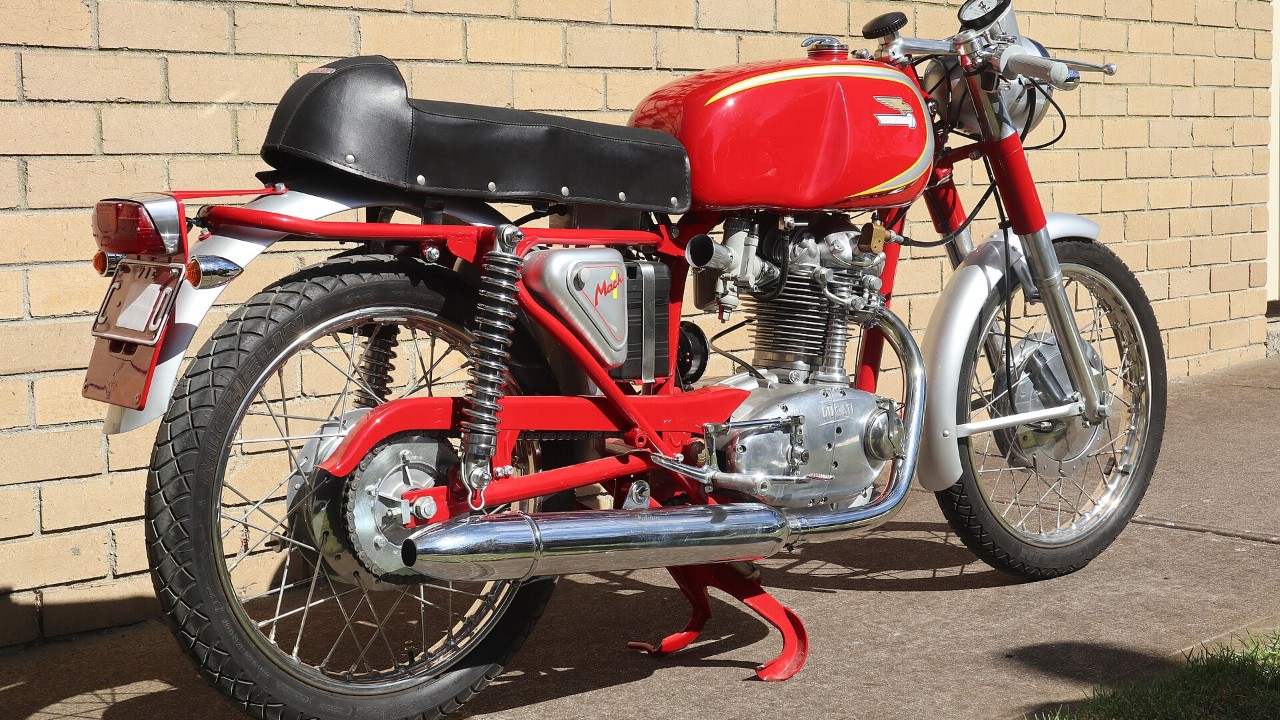
The Mach 1 was a little single with big ambitions. It used a 249 cc, single-overhead-cam engine with one Dell’Orto carburetor. According to Gooding & Company, it made 27.6 bhp at 8,500 rpm, a strong number for a 250 in the 1960s.
It also had a five-speed gearbox, which was a racing touch on a road bike. Drum brakes sat at each end, while Marzocchi suspension kept it composed. Gooding describes it as a rare, highly sought-after performance version of the Ducati Diana.
Production was small, though. Gooding says Ducati built 838 Mach 1s, and only 136 were for the US market. The 1965 model year was the last for the bike.
Gooding sold the 1965 Mach 1 it listed for $12,650, against a pre-sale estimate of $12,000 to $15,000. In other words, it is one of the more affordable ways into rare classic Ducati ownership.
Our take: the Mach 1 is the bike for riders who love lightweight singles. It sounds great and looks even better. If you want one, insist on matching numbers and original parts where possible, because a correct Mach 1 is the one collectors want.
6. Ducati 999R Xerox
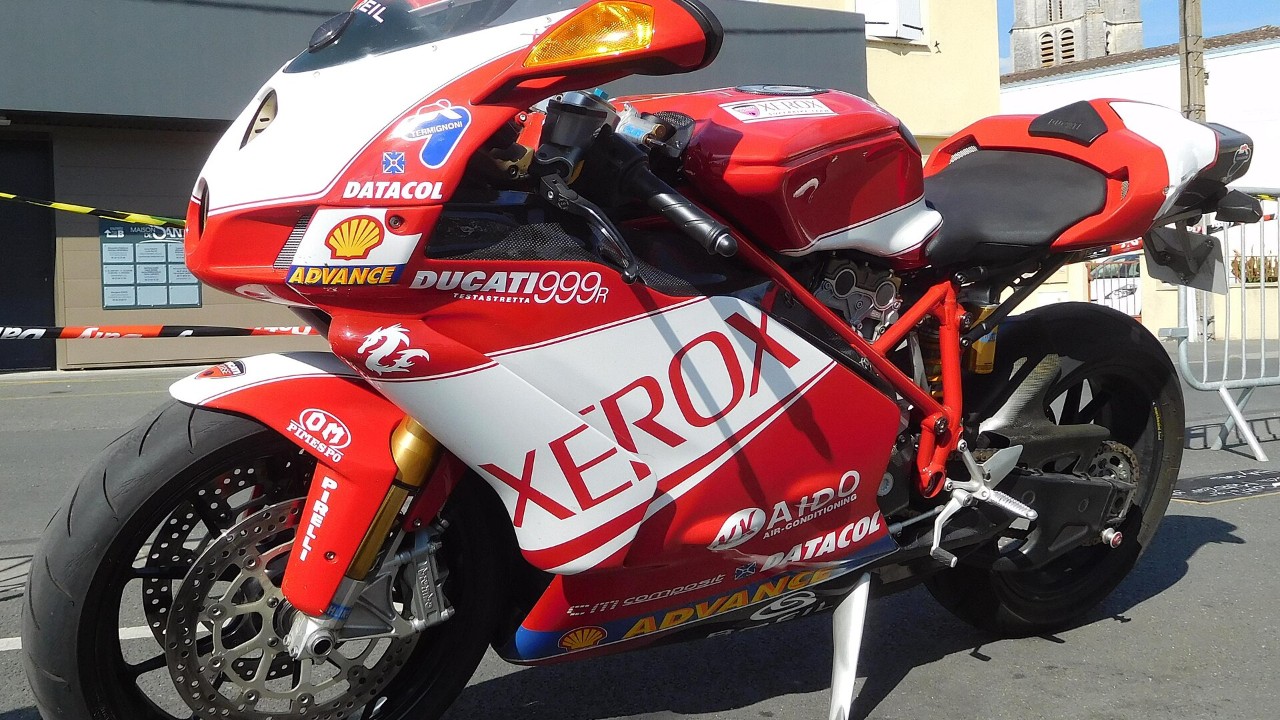
The 999R Xerox was a race replica in the most literal sense. According to webBikeWorld’s preview of the 2006 range, it “practically duplicates” the official 2005 Superbike World Championship bike, right down to the graphics.
Specifically, the livery came from the Ducati Xerox team, which ran the factory superbikes. Under the paint sat a 999 cc V-twin with four desmodromic valves per cylinder, rated at 150 hp at 9,750 rpm.
Ducati also added special parts that the standard 999R lacked. They included a black anodized steering head and footpegs, red Brembo Racing logos on the calipers and an aluminum-bodied Öhlins Racing rear shock. A red wheel trim kit and a Termignoni exhaust kit came as standard, so owners did not have to shop for the right pipes.
The 999 itself split opinion, with its stacked headlights and sharp lines. Even so, the Xerox version looks right in its racing colors, and it stands out next to any other superbike of the era.
In our view, this is the 999 to own if you want a collector piece. Keep the Termignoni kit and any paperwork with the bike, because originality drives value on limited editions like this.
7. 1972 Ducati 750 GT
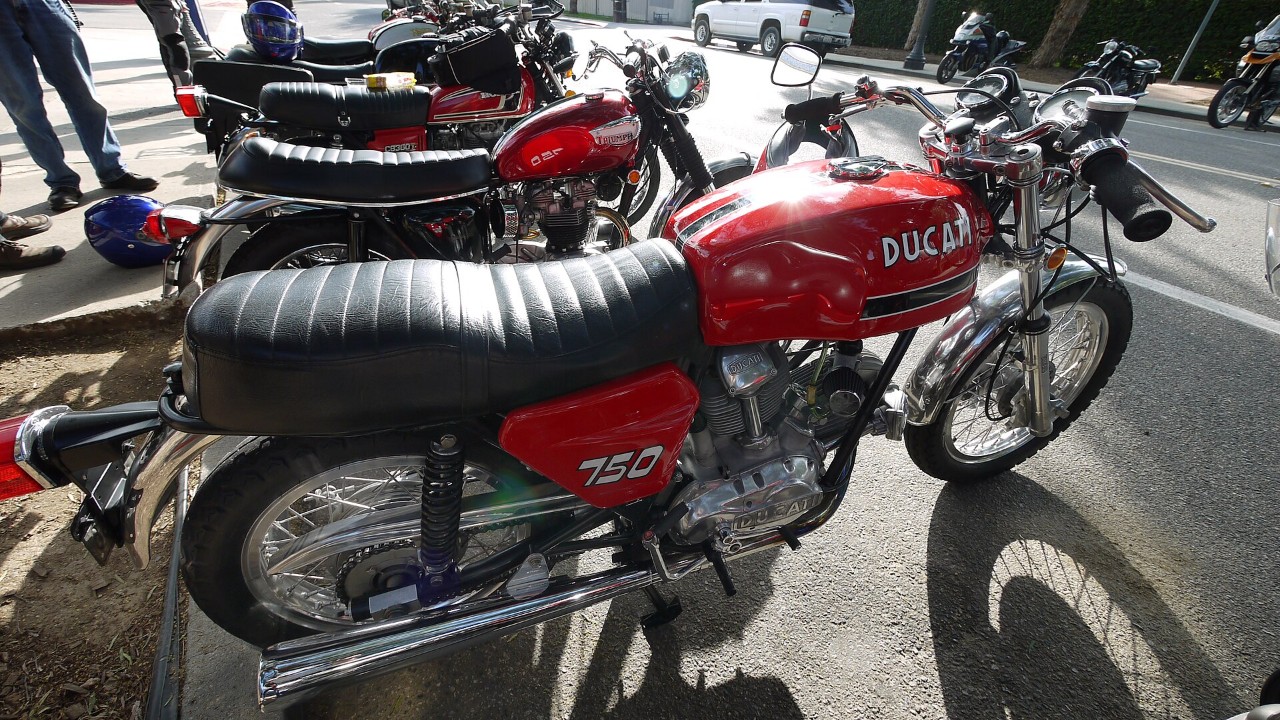
The 750 GT is where Ducati’s big V-twin story began on the road. Taglioni designed it with a 748 cc air-cooled 90-degree V-twin. That layout set the pattern that Ducati has used on its twins ever since.
The GT was the touring member of the family. In our view, that made it a usable fast bike rather than a race replica, and it is the model that made the later sporting twins possible.
Ducati built the 750 GT from 1971 to 1974, plus 40 more in 1978. In the end, total production reached 4,133. That is enough to find one with patience, yet few enough that a clean example stands out at any show.
The GT has earned its place among the great old bikes, as it did in our list of classic bikes that feel special on the open road.
Our take: the 750 GT is the gentleman’s Ducati of the 1970s, and that makes it a great rider. It has the long, low lines of an early 1970s Italian twin. If you want one, find a bike with a known history and a mechanic who knows bevel-drive Ducatis.
8. 1986 Ducati 750 F1 Montjuich
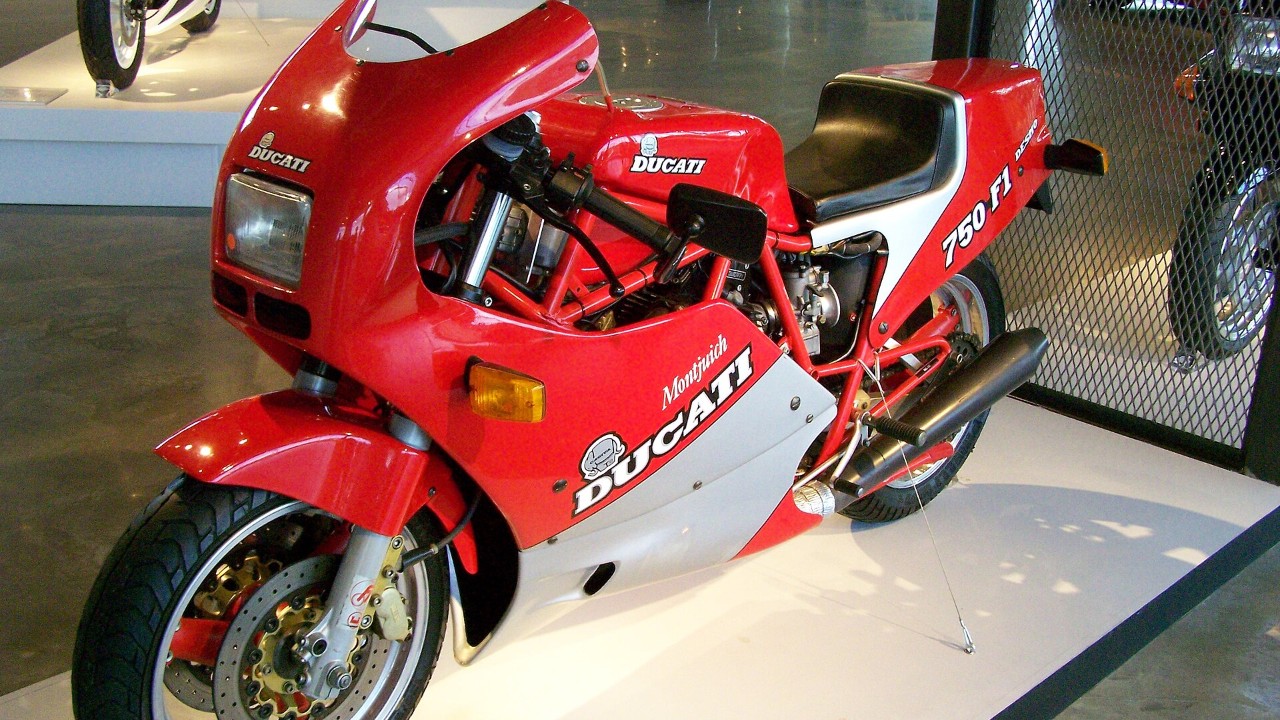
The Montjuich was a racing special you could register for the road. It took its name from Barcelona’s Montjuich circuit. According to Gooding & Company’s lot listing, Ducati made only 200.
The engine was a 748 cc air-cooled L-twin with larger ports, hotter cams and higher-compression pistons. Gooding gives it 95 bhp at 10,000 rpm, about 20 horsepower more than the standard F1. The catalogued weight was 341 pounds.
On top of that, the hardware was serious. It had a Verlicchi aluminum swingarm and fuel tank, plus a Verlicchi two-into-one exhaust. Magnesium Marvic and Akront wheel centers, Brembo Goldline discs, a lightweight clutch and straight-cut gears completed the racing spec.
Despite all that, the Gooding bike sold for $16,000 in a timed online sale without reserve. That was below its estimate of $20,000 to $30,000.
In our view, that result makes the Montjuich one of the best values among limited Ducatis. It carries pure racing DNA, and it looks the part. If you want one, verify that the special parts are all present, since each one is hard to replace.
9. Ducati 996
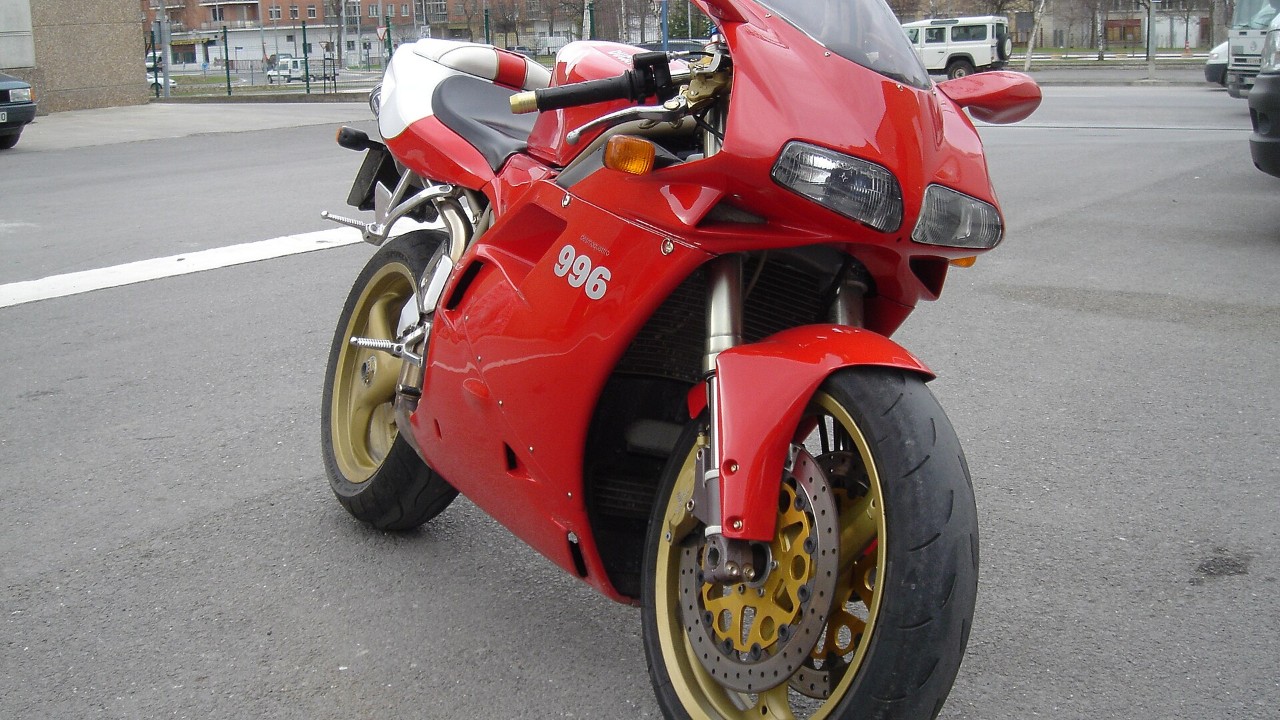
The 996 took the shape of the 916 and gave it more muscle. Ducati built it from 1999 to 2002, with a 996 cc, liquid-cooled 90-degree twin and four desmodromic valves per cylinder. In standard form, the bike made 112 horsepower at 8,500 rpm, so it was quick from the start.
Over time, there were several flavors. The base bike was the Biposto, while the 996S added Öhlins suspension. The Europe-only 996SPS had a stronger engine with about 124 bhp, plus titanium and carbon parts to save weight. Finally, the 2001 996R used the new 998 cc Testastretta engine, with 136 bhp, and Ducati built only 500.
The 996 also had a moment in Hollywood. One appears in The Matrix Reloaded, which helped introduce the bike to a whole new audience.
That shape is part of why it draws a crowd. In our view, the lines look as sharp today as they did in 1999, which is rare for a superbike.
Our take: the 996 is one of the most beautiful motorcycles ever made, and the standard bike is the affordable way in. If you are buying, check the belt-service history and ask for records of every major service.
10. Ducati Diavel Cromo
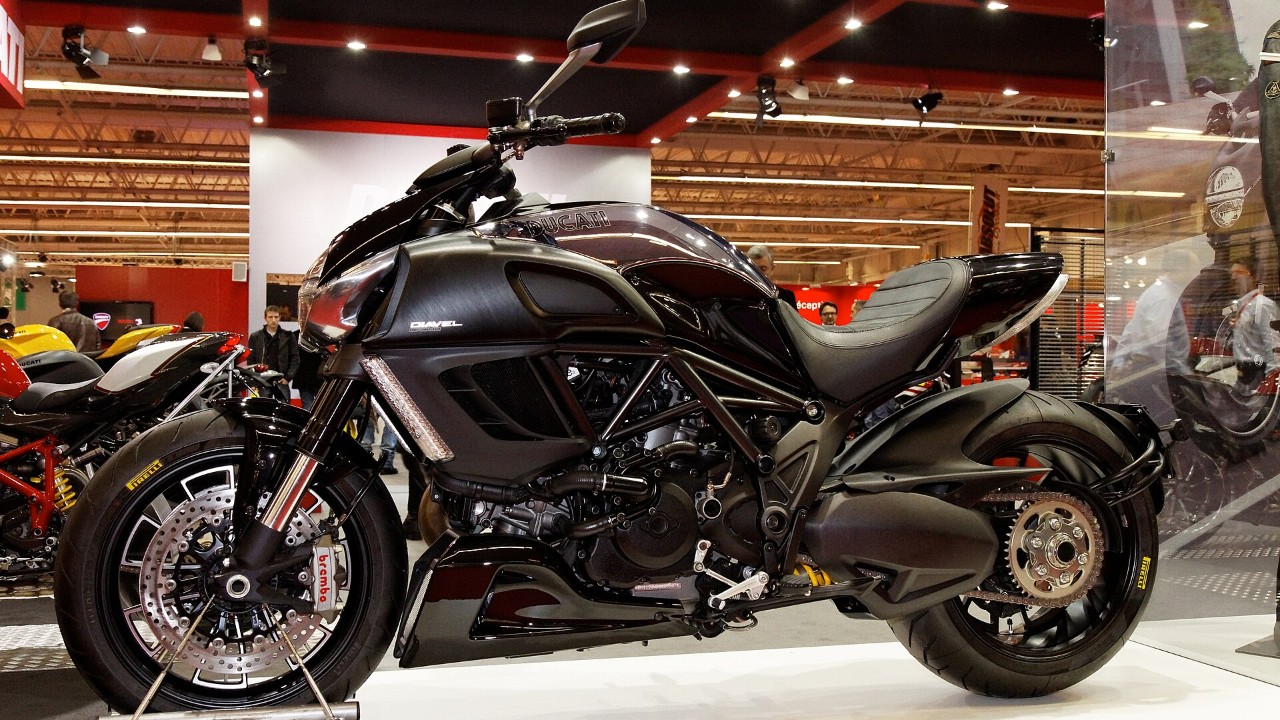
The Diavel was Ducati’s second cruiser, following the Indiana of 1986 to 1990. Yet it was nothing like a traditional cruiser. It used a retuned 1,198.4 cc Testastretta 11° twin from the 1198 superbike, and it rode on a huge 240-section rear tire.
The Cromo arrived for 2012 as the flashiest Diavel yet. According to a late-2011 magazine preview, it had a chrome-plated, mirror-finish tank paired with gloss-black parts. The engine made 162 horsepower at 9,500 rpm and 94 lb-ft of torque at 8,000 rpm.
That is superbike power in a long, low bike. Even so, the Cromo weighed 239 kg wet, and its US price was $18,995.
The chrome tank is exactly why it stops people at shows. Under bright lights, it reflects everything around it, and the gloss-black parts make the shine look even deeper.
In our view, the Cromo is the Diavel to own if you want something rarer than the standard bike. It is fast, comfortable and very different from other Ducatis. If you buy one, check the chrome finish closely, since repairing chrome on a fuel tank is specialist work.
11. 1972 Ducati 450 Scrambler
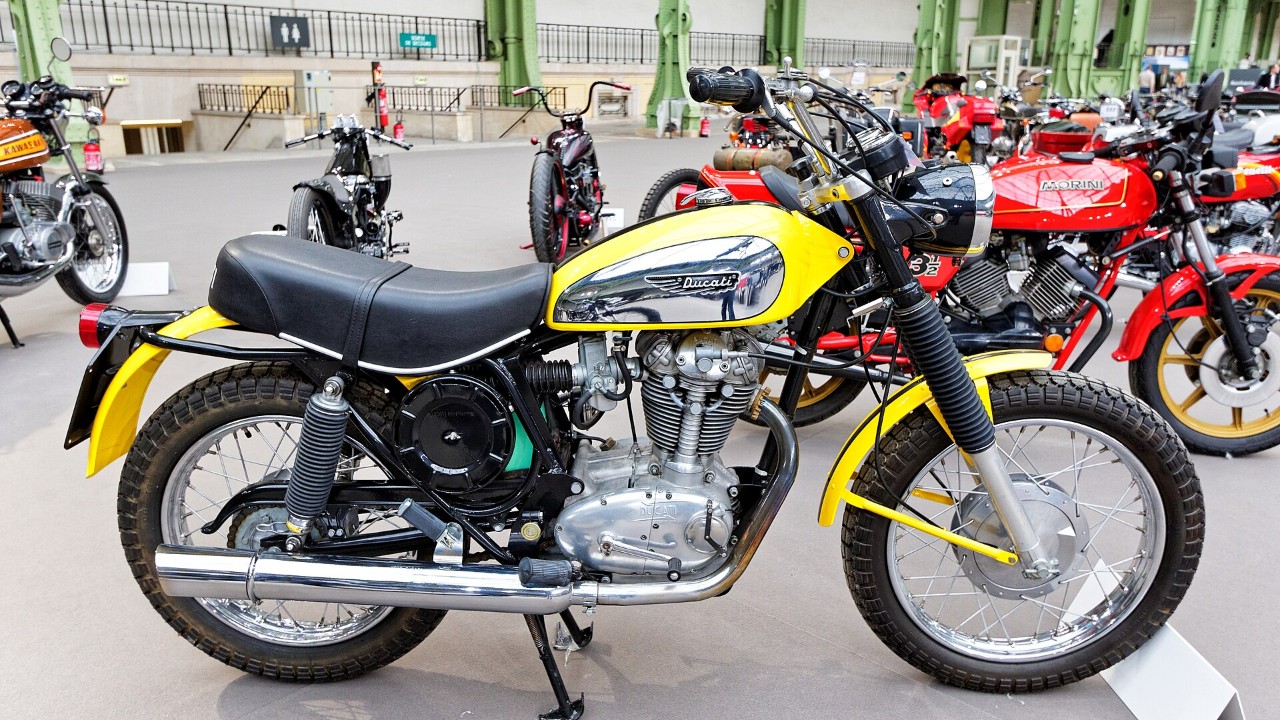
The Scrambler was Ducati’s fun bike long before the modern Scrambler brand existed. The 450 version used a 436 cc single-cylinder engine with a bevel-driven overhead cam. Ducati claimed 27 bhp at 7,000 rpm with a 75 mm stroke. Like the bigger Ducatis of the day, it used a bevel shaft rather than a belt to drive its camshaft.
America mattered to this bike. For example, Berliner Motor Corporation, Ducati’s US importer, brought it to American riders. The 450 joined the lineup in 1969, and production ran until 1974.
Its design was simple and honest, in our view. A single cylinder kept weight and complexity down, which gave it a friendly, go-anywhere character. That also suits riders who like to do their own maintenance.
All in all, Ducati built around 11,000 450 Scramblers. That is a decent number, yet clean, original bikes are harder to find than you might think, in our opinion.
Our take: the 450 Scrambler is the friendliest classic Ducati, and it draws smiles at every show. It is light, simple and great fun on a back road. If you want one, look for original tank badges and side covers, because they give the bike its period charm.
More from Fast Lane Only