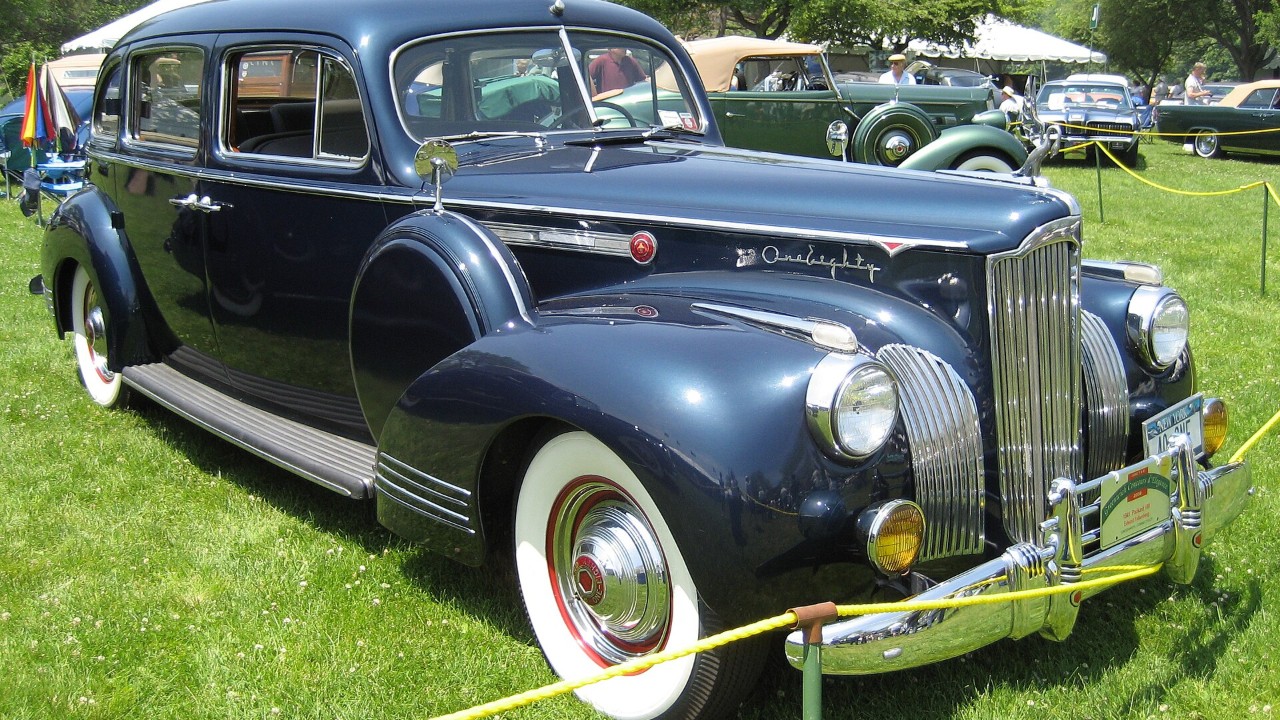
Packard power windows arrived on the 1941 Custom Super Eight 180, and they ran on hydraulic fluid rather than electric motors. Electric pumps pushed fluid through hydraulic lines to cylinders inside the doors, and those cylinders moved the glass. Lincoln offered power windows on its own big Custom models that same year.
It sounds clumsy now, but it was a serious luxury feature in 1941. Ordinary cars of the day used hand cranks. Packard’s big 180 let its owners skip the crank entirely.
The system also came with a catch that owners learned quickly. Hydraulic lines run through doors that open and slam every day, and fluid has a way of finding the exit.
How Packard power windows worked
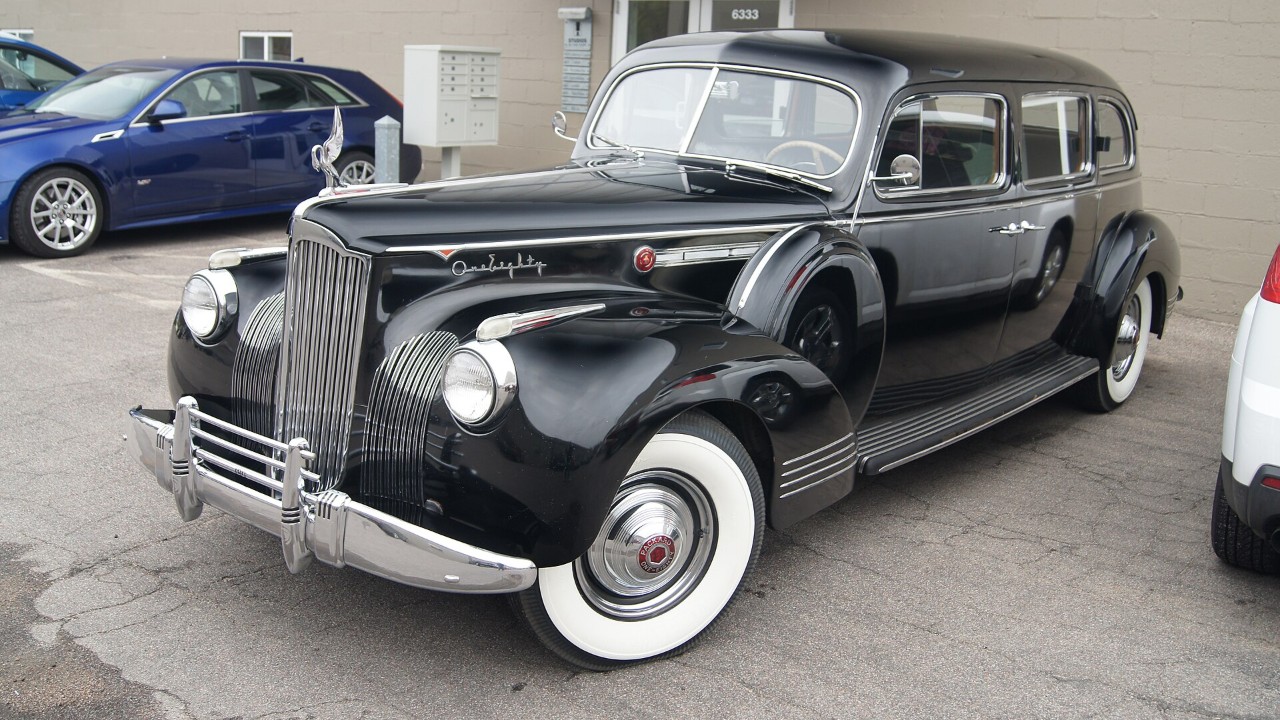
The idea grew out of other luxury hardware. Packard’s setup used “electric-driven pumps, pressure cylinders inside the doors, and hydraulic lines,” according to Jalopnik’s history of the power window. Engineers had first designed that kind of system to raise power-folding tops and move power seats in convertibles and sedans.
In other words, Packard borrowed a convertible-top mechanism and put it to work on the glass. Jalopnik credits Packard with unveiling the first power-operated windows on the 1941 model-year Custom Super Eight 180 touring sedan. Likewise, the Savoy Automobile Museum states that “Packard was the first automaker to offer power windows.”
However, the hardware had a weak spot. “Fluid leaks were commonplace,” Jalopnik notes, and the complex assembly made the system “finicky and unreliable at best.” That trade-off, comfort against plumbing, followed hydraulic windows through the rest of their life.
The car behind the windows
The 180 was the custom-bodied Packard that discerning buyers preferred, as the Savoy museum puts it. The Savoy museum’s 1941 One-Eighty, a LeBaron Sport Brougham, uses a 356-cubic-inch L-head straight-eight rated at 160 horsepower at 3,500 rpm. It drives through a three-speed manual gearbox with overdrive.
The numbers around it are just as big. That car rides on a 148-inch wheelbase, measures 213 inches long and weighs 4,450 pounds, according to the museum. Its original price was $3,545, and only 10 LeBaron Sport Broughams were built in 1941.
Inside, the cabin matched the price. The museum lists fine fabrics, leathers and carpeting, along with a woodgrain dashboard and inlaid wood cap rails on the doors. In that setting, a window that rose at the touch of a switch fit right in. The Savoy’s car has also earned a CCCA National First Prize, plus Senior-level recognition from both the AACA and the CCCA.
Interestingly, that museum car no longer uses its hydraulics. The Savoy says its original hydraulic windows were converted to electric operation, the only upgrade made to the car. It’s a telling detail about how owners have dealt with the old system since.
Lincoln followed the same year
Packard didn’t have the feature to itself for long. Ford offered standard power windows on the 1941 Lincoln Custom limousine and seven-passenger sedan, Jalopnik reports. Those Lincolns rode on an extended wheelbase and used a 292-cubic-inch V12 rated at 120 horsepower. In other words, Ford put the feature where it mattered most, on the cars built to carry passengers in the back.
Meanwhile, Cadillac took a different route in 1941. It installed a power-operated glass partition so the chauffeur couldn’t hear the rear passengers, according to Jalopnik. That partition was all-electric, but it didn’t raise or lower the side windows.
So by the end of the 1941 model year, Packard, Lincoln and Cadillac each had some form of powered glass. Of the three, though, only Packard and Lincoln moved the door windows themselves.
When the hydraulics gave way to electric motors
Hydraulic window lifts hung on through the 1940s. Then, according to Jalopnik, “The first proper electric power windows made their debut in the 1951 Chrysler Imperial.” That car also carried Hydraguide power steering and a 180-horsepower FirePower Hemi V8.
Electric motors solved the leak problem at its source, because there was no fluid left to escape. As a result, the electric motor won out, and it is what drives the power windows in cars today.
What a 1941 Packard 180 brings today
Original hydraulic cars still turn up for sale. RM Sotheby’s offered a 1941 Custom Super Eight One-Eighty touring sedan at Hershey in 2021. The auction house listed power windows among its cabin features, along with rare factory-installed air conditioning.
That car has a documented start, too. It was completed on 16 March 1941 and sold new by Packard Louisville Motor Co. in Kentucky, according to RM Sotheby’s. The Classic Car Club of America also recognizes the model as a Full Classic, the auction house notes. At Hershey, the car sold for $42,900.
More from Fast Lane Only