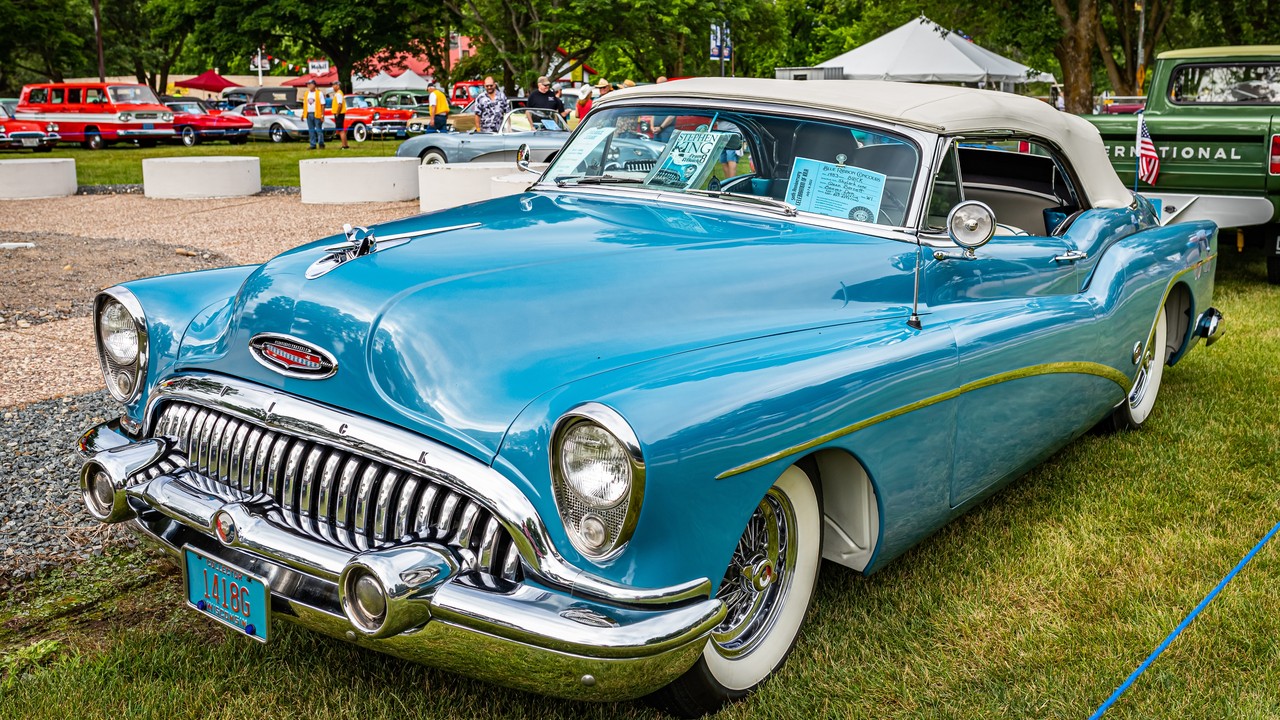
Buick first used the Skylark name on a hand-finished 1953 Buick Skylark convertible that cost more than a Cadillac. Over the next few decades, the badge moved from a Roadmaster-based showpiece to compact and midsize cars that ordinary families could afford. Along the way, it also gave birth to Buick’s Gran Sport muscle cars.
That long run produced plenty of forgettable sedans. However, it also produced a handful of Skylarks that hit the target so squarely that collectors still go looking for them. Some were built in tiny numbers, while others were simply the right body, the right engine and the right trim at the right moment.
These are our picks for seven rare Skylarks that Buick absolutely nailed. Calling them “nailed” is our opinion. The production counts, engines and prices behind each pick come from period specifications, auction records and model histories.
1. 1953 Buick Skylark convertible
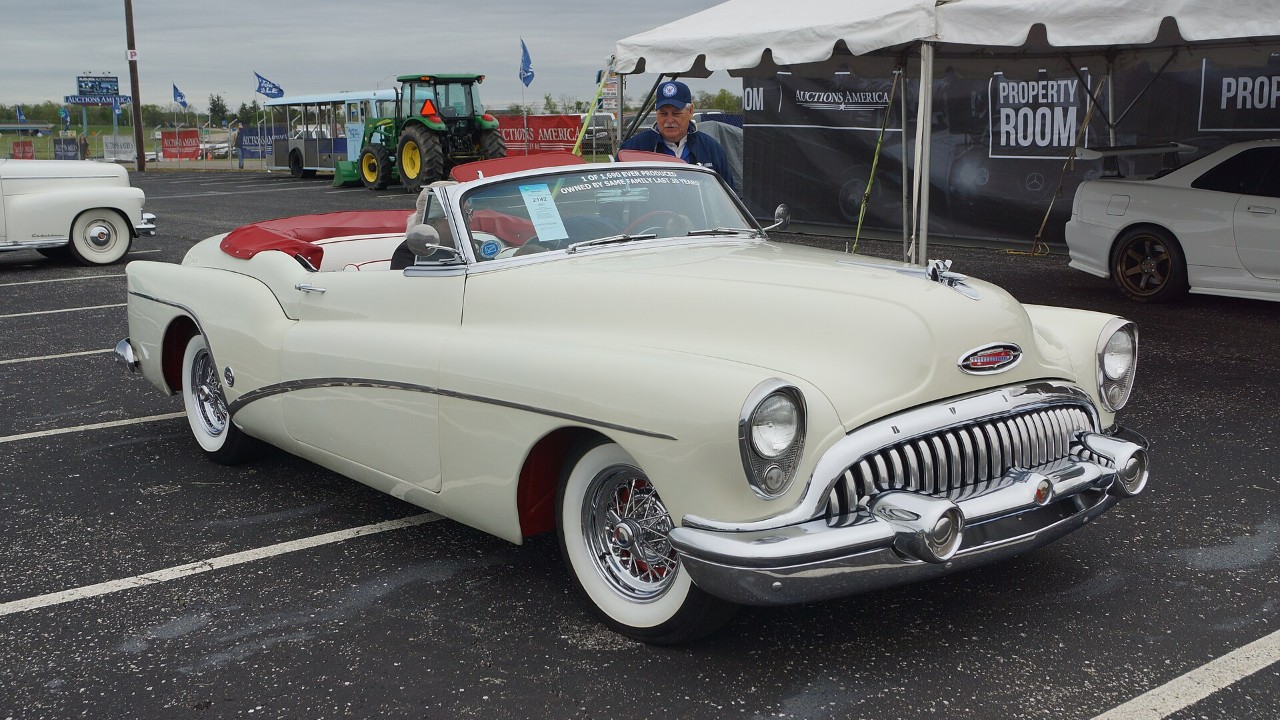
The original Skylark started as a sketch by Buick designer Ned Nickles, based on a customized 1951 convertible. According to Old Cars Weekly, Buick chopped the windshield, notched the beltline and opened up the rear wheel wells. As a result, the body sat about 3 inches lower than other 1953 Buicks.
Power came from the brand-new 322-cubic-inch Fireball V8, rated at 188 hp with a four-barrel carburetor. Buick also loaded the car with 40-spoke Kelsey-Hayes wire wheels and power features. Even the steering wheel hub carried a gold emblem with the first owner’s name. The list price was $5,000, which made it the most expensive Buick of the year. That was about $700 more than a Cadillac Sixty Special.
In the end, only 1,690 were built. In our view, this Buick Skylark convertible nailed the brief because it turned a show car into something a customer could actually buy. Its radiused wheel openings and sweepspear trim then spread to the whole 1954 Buick line. RM Sotheby’s sold one at its 2019 Auburn Fall auction for $57,500.
2. 1964 Buick Skylark Series 4300 convertible
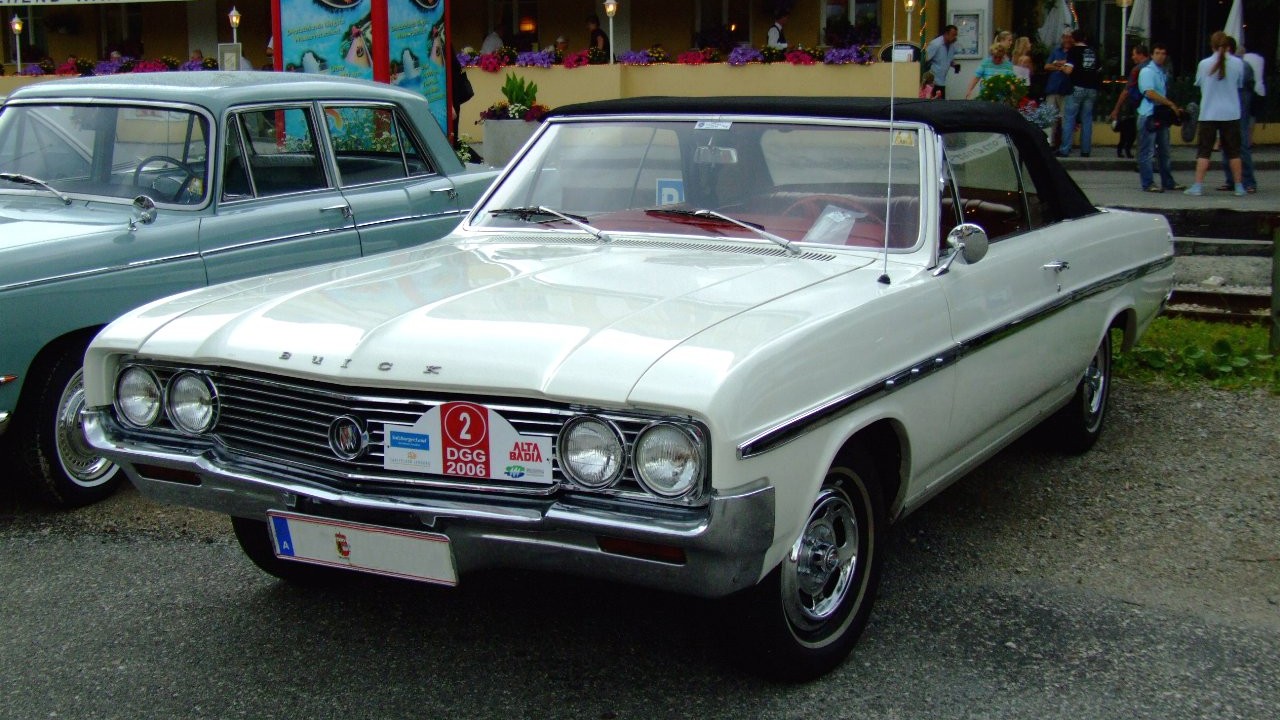
For 1964, Buick moved the Skylark onto GM’s new, larger intermediate platform. The result was a roomier car on a 115-inch wheelbase, and it suddenly looked like a scaled-down big Buick. Buyers could choose a hardtop coupe, a four-door sedan or a convertible.
Still, the drop-top is the one to want, and it wasn’t common. Buick delivered 10,255 Skylark convertibles that year, according to an Over-Drive fact sheet. Under the hood, Buick’s midsize line offered a 225-cubic-inch V6 with 155 hp. There was also a 300-cubic-inch V8 rated at 210 hp, or 250 hp in four-barrel form.
Our take: the 1964 car is the Skylark that found its place. It was big enough to feel like a proper Buick, yet light and simple enough to drive like a modern car. Meanwhile, the clean, square styling has aged better than many of its flashier rivals. That’s why we think Buick got the balance right on the first try. If you’re shopping, we’d hold out for a V8 car. Find one with a healthy top mechanism, because convertible frames and floors are the first places rust shows up.
3. 1967 Buick Skylark Thin-Pillar Coupe
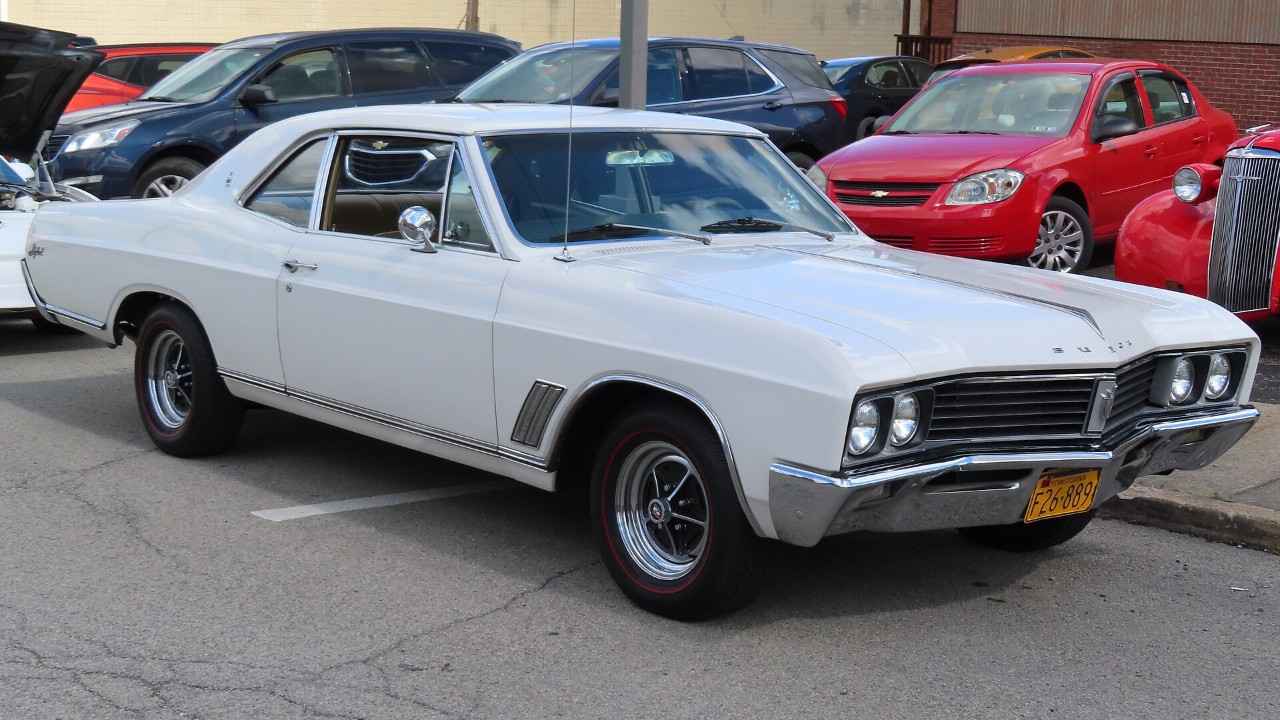
Most collectors chase hardtops, but Buick also sold a two-door Skylark with a slim fixed pillar behind the door. Buick’s own style codes, preserved by the club site Team Buick, list it as body style 4307 with the V6 and 4407 with a V8. The pillarless hardtop coupe carried its own code, 4417.
That small difference matters to collectors, because it changes how the car looks with the windows down. Team Buick even notes the V8 thin-pillar body as an option on the California GS. In 1967, the 225 V6 was standard on the base two-door, while most other Skylarks came with the 300 V8.
Our take: this is the sleeper of the bunch. Hardtops get most of the attention at shows, so a pillared coupe stands out. Still, it wears the same crisp lines and the same Buick dashboard as its pricier sibling. In our view, Buick nailed the formula here by offering a clean, solid coupe that didn’t need extra trim to look right. Before you buy, check the trim tag. The body style code tells you whether it left the factory as a V6 or a V8 car.
4. 1969 Buick Skylark GS Stage 1 hardtop
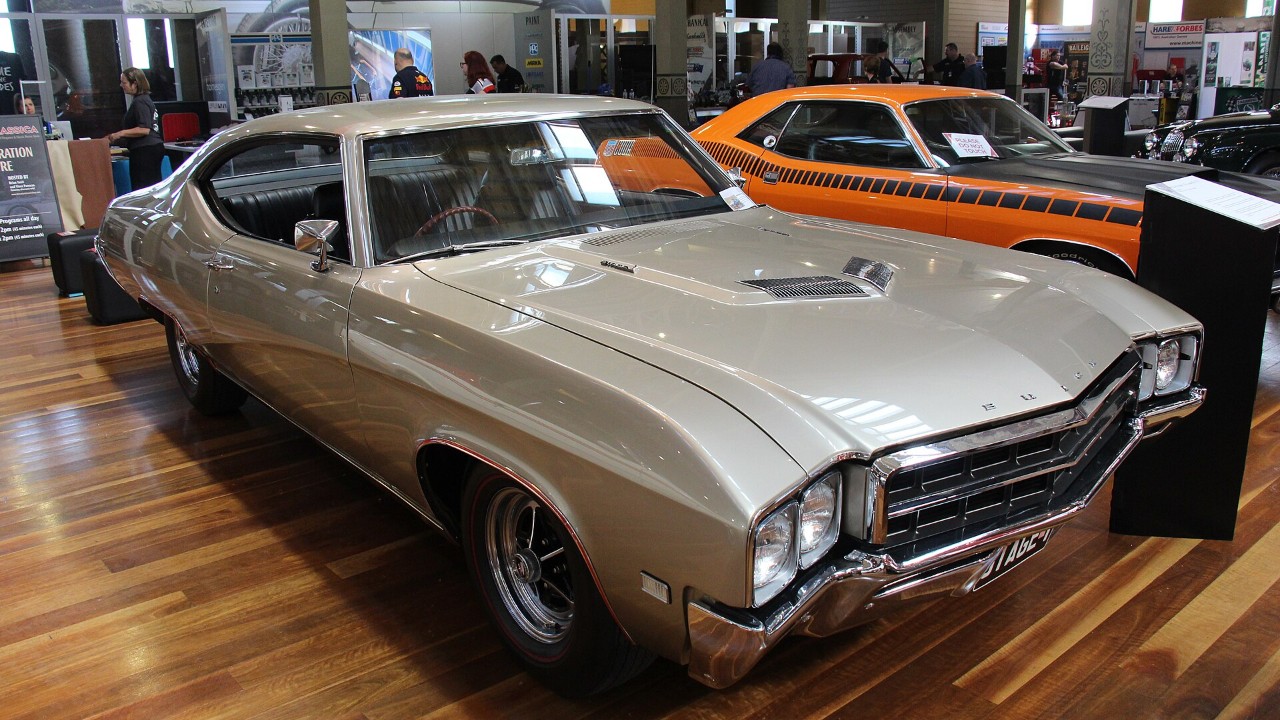
The Gran Sport began as a performance version of the Skylark. It arrived midway through the 1965 model year on the Skylark Custom, Hagerty explains in its GS400 Stage 1 auction pick. That shared foundation is why the car pictured here counts as a Skylark-based Gran Sport rather than a separate breed.
Buick added the Stage 1 package for 1968. It brought a high-lift camshaft, a four-barrel Rochester Quadrajet and a 3.42 limited-slip rear end. Hagerty puts the rating at 345 hp and 440 lb-ft of torque, and it notes that some owners believe the real output was higher. For 1969, ram air also became standard on the GS.
Fewer than 1,500 Stage 1 cars were built in 1969, so this is a genuinely scarce Buick. Our take: the Stage 1 is the Skylark family at its most serious. It paired big-block torque with a quiet, upscale cabin that Chevelle and GTO owners rarely enjoyed. In other words, it was a gentleman’s hot rod. If you find one, verify the paperwork before you pay a Stage 1 price.
5. 1969 Buick Skylark Custom Sport Coupe
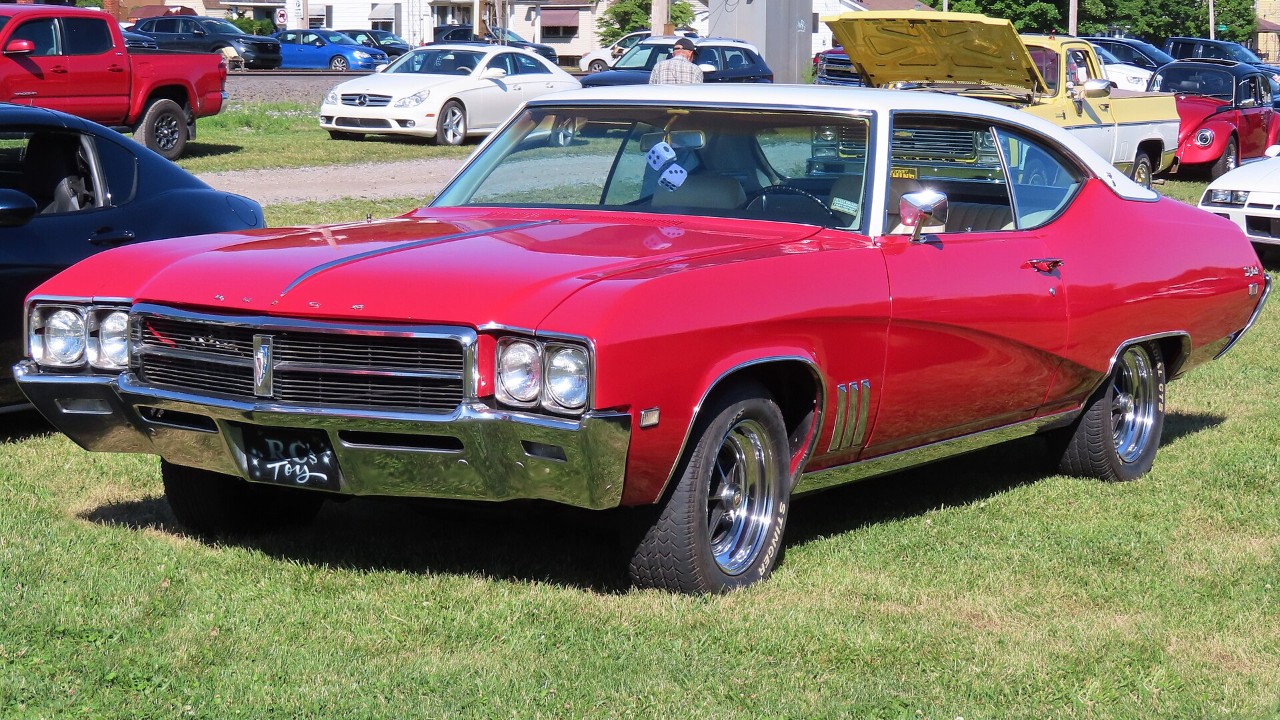
Not every great Skylark needed a big engine. The 1969 Skylark Custom was the comfortable, well-dressed version of Buick’s midsize car. It came standard with a 350-cubic-inch V8 with a two-barrel carburetor, rated at 230 hp. By comparison, the base Skylark started with a 250-cubic-inch six.
The body had arrived new for 1968 with near-fastback lines. Buick gave it a long sweepspear down each side and semi-enclosed rear wheels that looked almost like partial fender skirts. Curbside Classic notes that the two-door hardtop was the most popular Custom in 1968, with 35,639 built. Customs also came as a four-door hardtop, a four-door sedan and a convertible.
Our take: the Custom Sport Coupe shows Buick’s soft-spoken side at its best. It rides quietly, the 350 has plenty of torque for real roads, and the cabin feels a step above its Chevrolet cousin. In our view, Buick nailed the idea of a near-luxury car in a midsize package. Most were bought as daily drivers, so finding a clean one takes patience. Look for a car with its sweepspear trim intact and straight, since that trim defines the look.
6. 1970 Buick Skylark Custom convertible
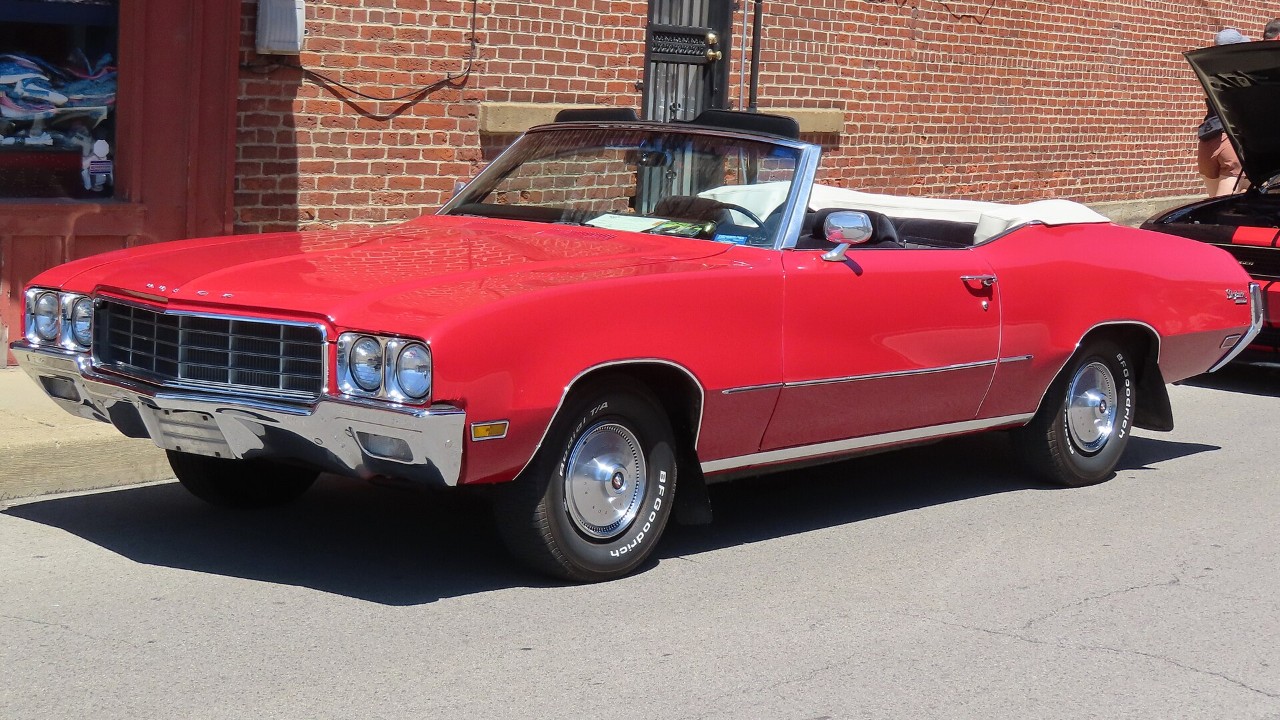
For 1970, the Skylark Custom’s standard 350 V8 got a stronger rating. The model history rates it at 260 hp at 4,600 rpm in that year’s Skylark. That made the convertible a strong, relaxed cruiser without the insurance bill of a GS.
Convertibles were already a small slice of the Custom line. In 1968, the first year of this body, Buick built just 8,188 Custom convertibles at $3,098 each, according to Curbside Classic. That small starting number leaves today’s buyers with a short supply of Skylark Customs that still have their original tops and trim.
Our take: this is the Skylark we’d pick for a summer weekend. It has the Custom’s upscale interior, and the 350 gives it effortless highway pace. On top of that, the long hood and sweepspear look even better with the top down. In our view, Buick nailed the mix of comfort and style here more than on any other open Skylark of the era. If you want one, check the top frame and the rear quarter panels carefully. Above all, confirm the car is a real Custom convertible and not a converted hardtop.
7. 1972 Buick Skylark Sun Coupe
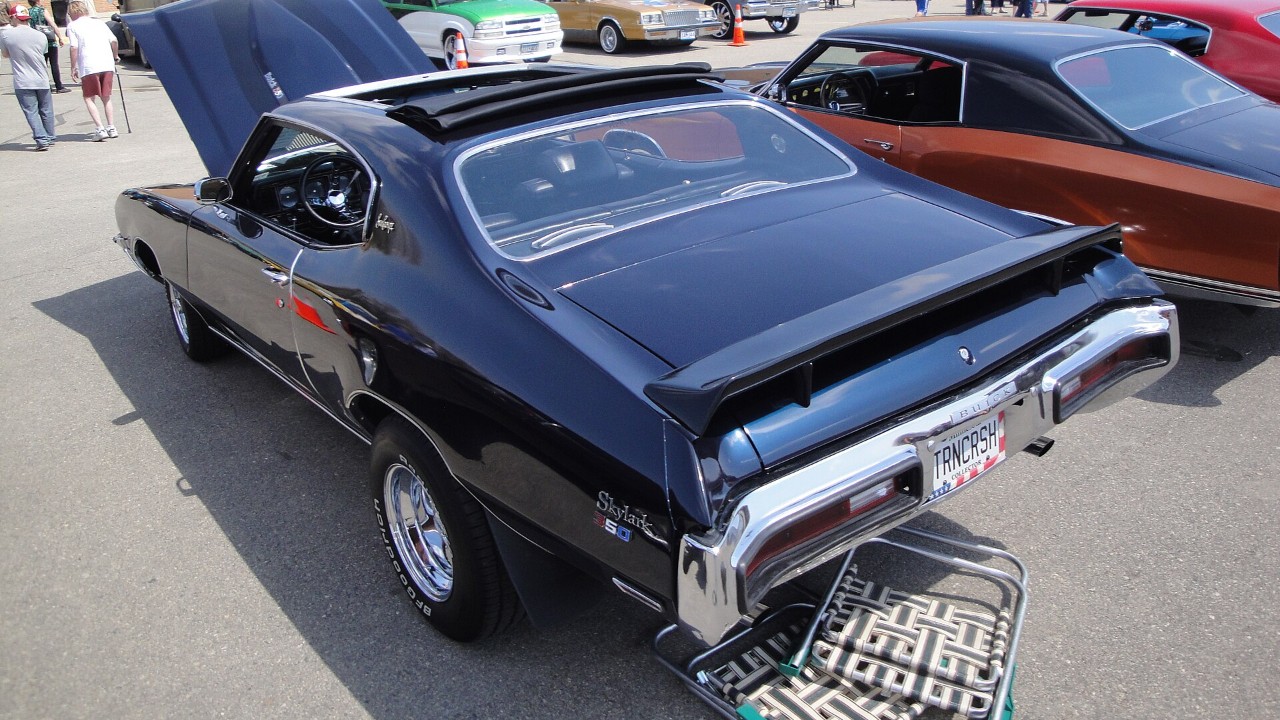
The Sun Coupe was Buick’s answer for buyers who wanted fresh air without a convertible. Buick took Skylark Sport Coupes, cut an opening in the roof and covered it with a manually operated vinyl panel. You simply folded it back to let the sun in. Barn Finds reports that about 2,000 cars were converted as a special sales promotion for 1972.
Underneath, the Sun Coupe was a regular Skylark. For 1972, the base 350 V8 with a two-barrel carburetor was rated at 145 hp. A four-barrel version, rated at 180 hp, came in the Skylark 350. Barn Finds notes that the four-barrel car it featured had an automatic transmission.
Our take: the Sun Coupe was a clever fix for buyers who wanted open-air driving on a coupe budget. Buick delivered it for one year as a low-cost promotion. In our view, that’s exactly why it belongs on this list. Survivors are hard to find today. Buyers should check the roof opening and the drains under the folding top, because water leaks there cause the most damage. Then look for the Sun Coupe emblems on the roof pillars, which help confirm the conversion is original.
More from Fast Lane Only