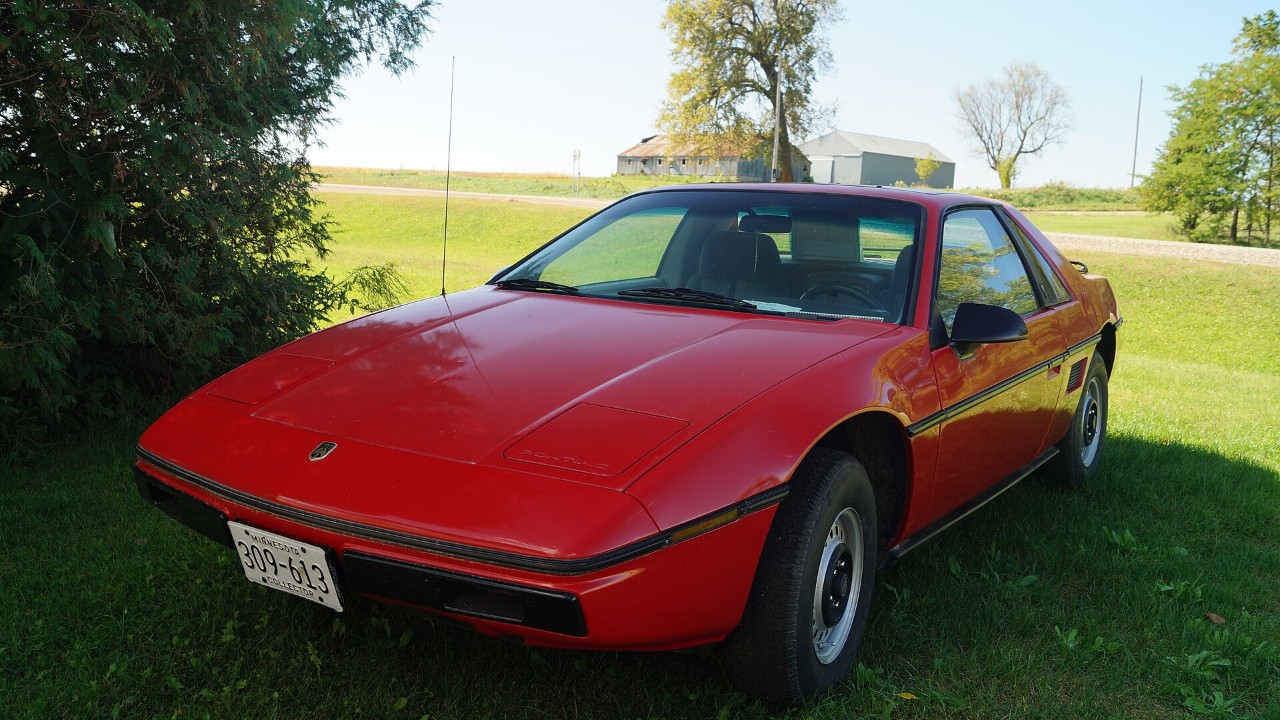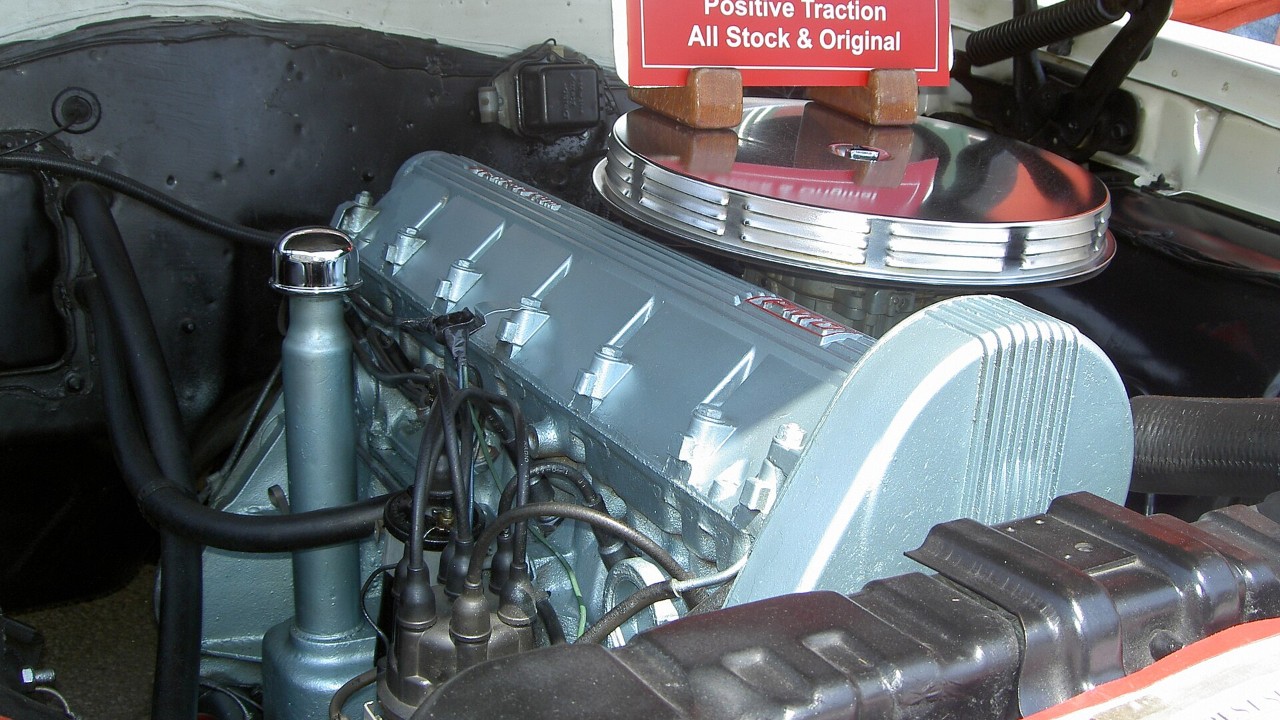
For 1966, the Pontiac OHC six became the standard engine in the Tempest and LeMans. Its camshaft sat above the valves and turned on a toothed, fiberglass-reinforced belt rather than a chain or gears. Pontiac kept building it through 1969, then walked away from it.
Two men pushed the idea. John Z. DeLorean ran Pontiac as vice president and general manager. Meanwhile, Malcolm “Mac” McKellar, the division’s engine specialist, led the overhead-cam research.
The story of the engine comes down to three questions. Why put the cam on top, why drive it with a belt, and why did Pontiac drop it after four years?
It started as a V8 project

McKellar’s overhead-cam work first targeted Pontiac’s 389 and 421 V8s, according to Mac’s Motor City Garage. Reportedly, Pontiac could not make a business case for a production OHC V8. So the effort moved to the inline six.
Ate Up With Motor describes the V8 prototypes that came first. They included a dual-overhead-cam 389 in early 1963 and a single-cam 421 later that year, both with belt-driven cams. A 24-valve single-cam 428 followed in 1965. However, none of them reached production.
The six that did reach showrooms began in DeLorean’s Advanced group, the same history says. It entered production in summer 1965 and replaced the 215-cubic-inch pushrod six as the standard 1966 Tempest engine.
Why Pontiac put the cam overhead
The main gain was lighter moving parts. McKellar noted that the design cut valvetrain mass by 45 percent, Mac’s Motor City Garage reports. That allowed more aggressive valve timing for higher rpm and greater output.
The layout was clever, too. The top end came in two halves, with a die-cast aluminum cam cover that doubled as the camshaft carrier. As a result, the cam needed no separate bearings. Chilled-iron finger followers with a 1.5:1 ratio worked against hydraulic lash adjusters in the head.
Those hydraulic adjusters were not optional. According to Ate Up With Motor, Pontiac policy required hydraulic lifters on engines that carried full factory warranties. The aluminum covers also helped hold the engine’s weight to 489 pounds.
Why a belt instead of a chain
Overhead cams had a reputation for cost and complexity. Ate Up With Motor explains the trade-offs. Gear drive was “prohibitively expensive for non-racing use” and “unacceptably noisy.” Chain drive was simpler, but it was still noisy and needed tensioning and lubrication.
A belt, by comparison, ran quieter, weighed less and used little power. It also needed no oil and cost “considerably” less than either gears or chains, the same history says.
Getting the belt right took years. Pontiac started its own belt experiments in 1959. Plain rubber proved too weak, steel cords rusted, and stainless cords cost too much. In the end, Pontiac worked with Uniroyal engineer Richard Case on a fiberglass-reinforced belt of neoprene-impregnated nylon fabric.
In fact, the finished part was small. Mac’s Motor City Garage says the belt was one inch wide and weighed less than 10 ounces. U.S. Rubber, later Uniroyal, developed it with Pontiac.
The Pontiac OHC six by the numbers
At first, the engine displaced 230 cubic inches, with a 3.875-inch bore and a 3.250-inch stroke. In 1966, the base engine used a one-barrel carburetor and made 165 hp at 4,700 rpm, Mac’s Motor City Garage says. Ate Up With Motor lists its torque at 216 lb-ft.
The Sprint version was the performance option. It had 10.5:1 compression, a high-lift cam, a split exhaust manifold and a four-barrel Quadrajet. On premium fuel it made 207 hp at 5,200 rpm, according to Mac’s. Ate Up With Motor’s production history says the 1966 Sprint package cost $126.72 and adds 228 lb-ft of torque.
The numbers then grew. For 1967, the Sprint rose to 215 hp, Ate Up With Motor says. For 1968, Pontiac lengthened the stroke to 3.53 inches, raising displacement to 250 cubic inches. The base engine then made 175 hp. By then, the six had also become the standard engine in the Firebird, which went on sale in late February 1967.
Why Pontiac dropped the overhead cam
Overall, the belt itself held up well, according to Ate Up With Motor. Instead, the trouble came from premature camshaft wear and sticking valve lash adjusters. The engine also cost more to build than the Chevrolet six and carried higher warranty costs.
Buyers were not rushing in either. Ate Up With Motor puts 1966 Sprint production at fewer than 20,000, against nearly 97,000 GTOs that year. Mac’s Motor City Garage adds that buyers who wanted performance preferred big V8s.
Finally, the engine lost its backers and its home. GM executives Roger Kyes and Ed Cole were unhappy with its cost, and it stood too tall for the second-generation Firebird’s hood. DeLorean left Pontiac for Chevrolet in early 1969. Ate Up With Motor says 1969 was the engine’s last model year, and from 1970 Pontiac used the 250-cubic-inch Chevrolet six instead.
More from Fast Lane Only
- Unboxing the WWII Jeep in a Crate
- 15 rare Chevys collectors are quietly buying
- 10 underrated V8s still worth hunting down
- Police notice this before you even roll window down
This article was created with the help of AI and was reviewed and edited by Fast Lane Only editors before publication.