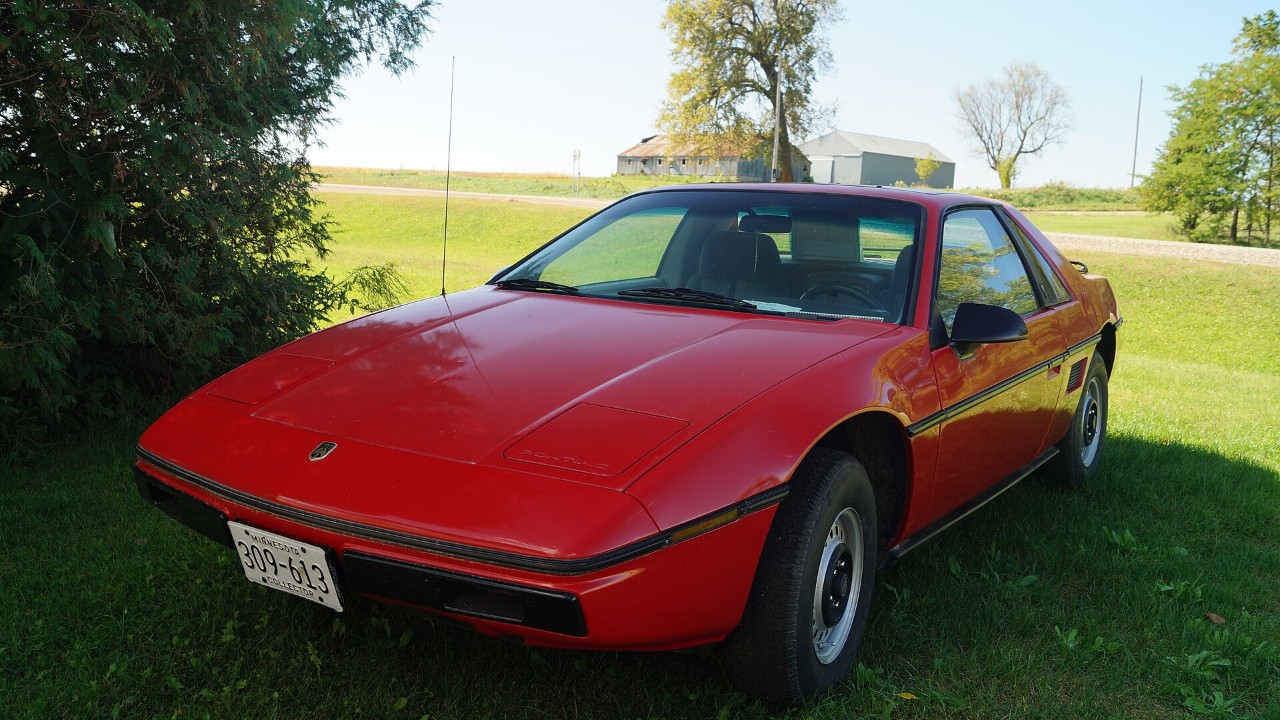
The Pontiac Fiero space frame was the part of the car that did the real work. Under the plastic skin, the 1984 to 1988 Fiero rode on a skeleton of steel. Pontiac bolted the outer body panels on afterward, and they carried no structural load.
That set the Fiero apart from a conventional unibody car. In a unibody, the steel outer panels form part of the structure. Pontiac split those two jobs in half.
Here is how the Fiero was put together, using period reporting from 1983 and later histories of the car.
A steel skeleton instead of a unibody
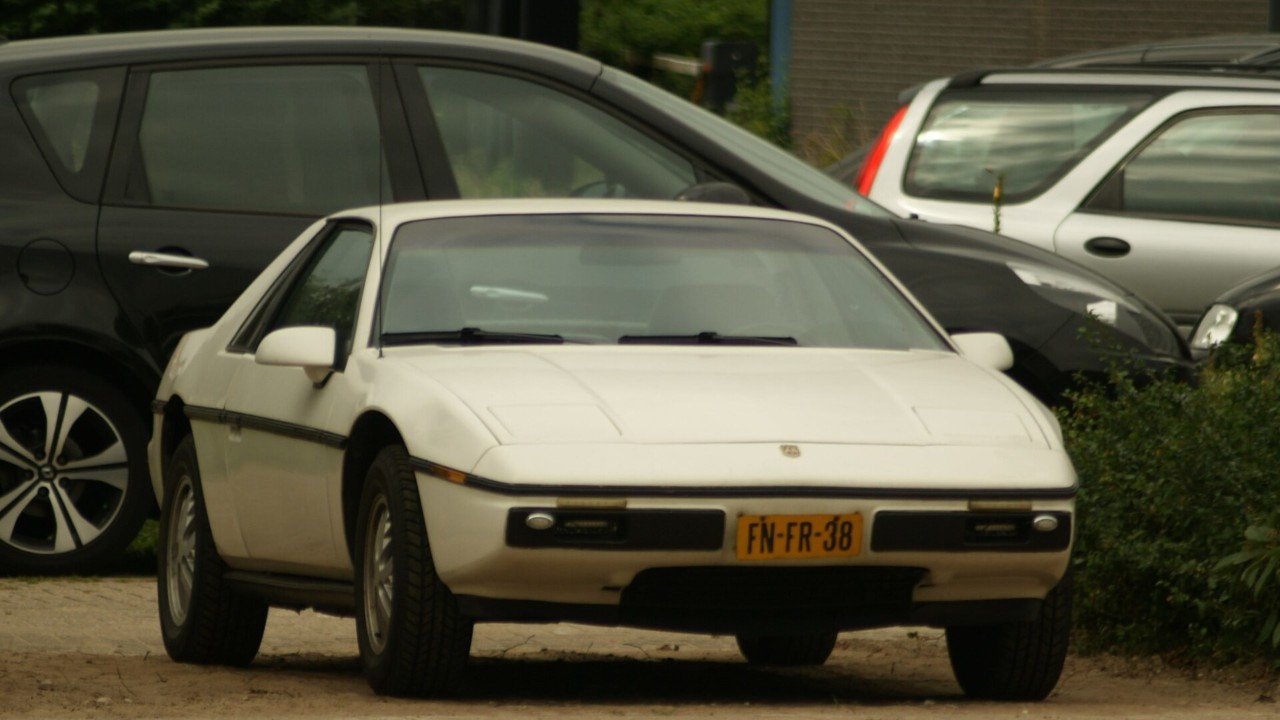
According to Silodrome’s history of the Fiero, Pontiac skipped a conventional unibody design. Instead, the car used “a steel spaceframe,” which the site describes as “a rigid skeletal chassis onto which non-structural Enduraflex composite body panels were bolted.” The engine sat crosswise behind the seats in a mid-engine layout.
A 1983 report in The Christian Science Monitor explained the same idea for new-car buyers. Writer Charles E. Dole said “the body is built as a skeleton.” That skeleton included the sheet-metal front compartment, floor pan, engine compartment, body sides, roof and doors. “Then the exterior plastic panels are attached to it,” he wrote.
In addition, the reference site Conceptcarz adds one more detail. It says the space frame used high-strength steel. It also describes the Enduraflex panels as corrosion-resistant.
How the Fiero space frame carried plastic panels
First, GM gave its plastic skin a brand name, Enduraflex. A 1984 GM engineering film, described by Mac’s Motor City Garage, covers both the “space frame” unitized steel chassis and the “mill and drill” system for attaching the molded plastic panels.
The panels were not all one material, either. The 1983 Monitor report described “rigid and soft plastics in major body panels.” Meanwhile, Conceptcarz says GM used reinforced reaction injection molded (RRIM) urethane panels in areas of the car that were prone to dents.
Because the panels were non-structural, they mostly had to look right and fit well. The Fiero space frame underneath handled the loads instead. That split is the whole point of the design.
Why Pontiac built it this way
Cost was a big part of the answer. In a 2017 look back, Consumer Guide noted that the molds for the Fiero’s plastic panels “were far cheaper to produce than the dies for steel panels.” That mattered for a low-priced two-seater.
The project also had a clear leader. Conceptcarz says Hulki Aldikacti, a Turkish émigré with a mechanical engineering degree from the University of Michigan, led it. It credits the styling to George Milidrag and Aldikacti.
The same thinking showed up under the skin. Mac’s says the drivetrain was “essentially borrowed from GM’s front-drive X-car platform and transplanted to the rear axle” of the Fiero’s P-body. Consumer Guide adds that the only engine at launch, the 2.5-liter “Iron Duke” four-cylinder, also came from the X-car parts bin.
Silodrome rates that four at 92 bhp. Later, a 2.8-liter V6 with 140 bhp joined the range. Pontiac general manager William Hoglund told the Monitor in 1983 that the division wanted to win back the “Pontiac image” for excitement. He called the brand’s image at the time “essentially neutral.”
The plant and the price
Building a car this way also meant rebuilding a factory. The Monitor reported that Pontiac spent $200 million to upgrade the old Fisher Body plant in Pontiac, Michigan, to build the Fiero. It also gave the plant’s capacity as 120,000 cars a year.
Silodrome identifies that site as the Baldwin Avenue plant. It says production there ran from August 1983 through August 1988. The price was the other half of the pitch. The Monitor listed a base price of $7,999, while its test car came to $11,914.
How many Fieros Pontiac built
Production started high. According to Silodrome, first-year production reached 136,840 cars for 1984. Output then fell to 76,371 for 1985 before rising to 83,974 for 1986.
After that, the slide continued. Silodrome lists 46,581 Fieros for 1987. For 1988, Pontiac redesigned the suspension with new geometry, revised steering and upgraded brakes. Even so, production that final year totaled just 26,402 cars, Silodrome says.
Every Fiero rode on the same idea: a steel space frame underneath, with bolted-on plastic panels outside. Mac’s puts the total at “more than 370,000 examples” from 1984 to 1988. Silodrome is more exact, counting 370,168 Fieros built on the Baldwin Avenue line before it closed out the run in August 1988.
More from Fast Lane Only
- Unboxing the WWII Jeep in a Crate
- 15 rare Chevys collectors are quietly buying
- 10 underrated V8s still worth hunting down
- Police notice this before you even roll window down
This article was created with the help of AI and was reviewed and edited by Fast Lane Only editors before publication.