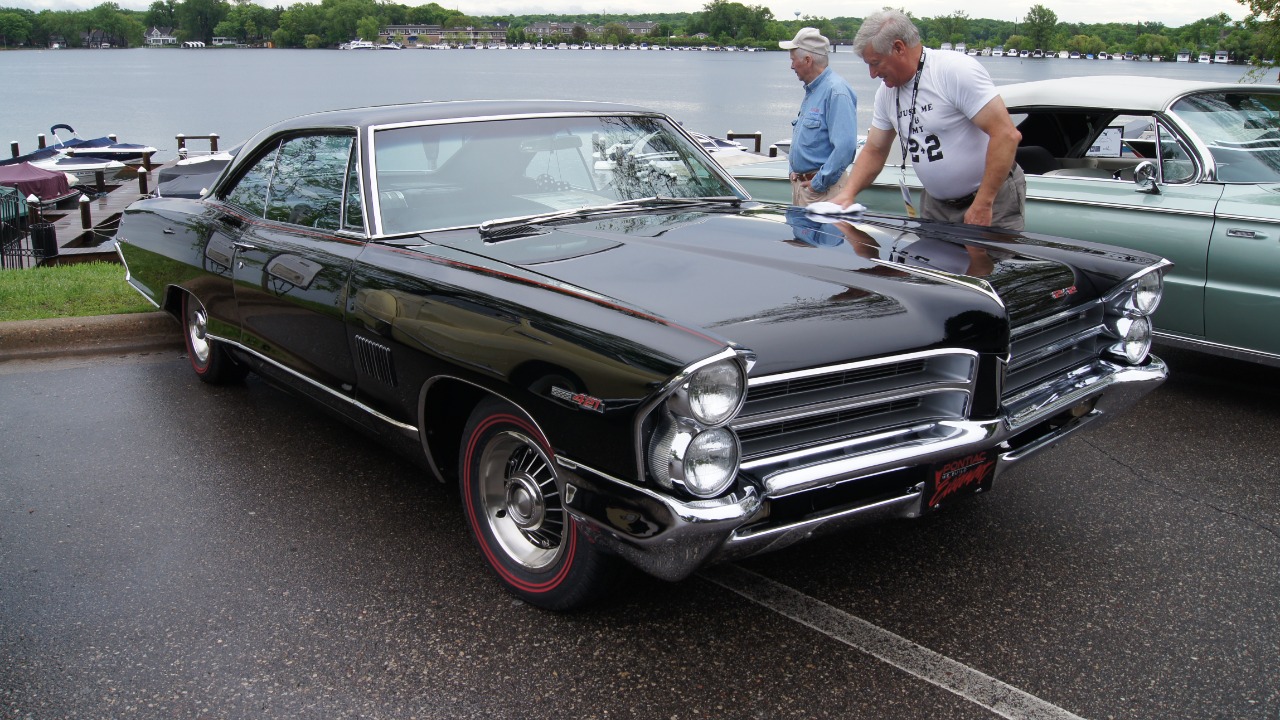
Pontiac’s 1965 Catalina 2+2 arrived at a moment when Detroit’s horsepower race seemed to belong to lighter intermediates. Yet this big B-body coupe proved that a full-size car could run with the quickest muscle machines while still hauling friends, luggage, and plenty of chrome. It combined genuine quarter-mile performance with the comfort, presence, and everyday usefulness that buyers still expected from a family-sized Pontiac.
From today’s vantage point, the Catalina 2+2 looks like a turning point. It showed how far a mainstream American brand was willing to push a large platform in pursuit of speed, and it previewed the blend of luxury and performance that would shape Pontiac’s image for the rest of the decade.
What happened
By 1965 Pontiac already had the GTO capturing headlines in the intermediate class, but the division wanted a halo model for its big cars as well. The answer was the Catalina 2+2, a performance package built on the standard Catalina two-door hardtop and convertible. Instead of a mild 389, the 2+2 came standard with Pontiac’s 421 cubic inch V8, a huge engine that turned the full-size coupe into a serious straight-line machine.
In base 2+2 trim, the 421 used a four-barrel carburetor and produced well over 300 horsepower, and buyers who wanted more could step up to the 421 High Output with a hotter cam, free-flowing exhaust, and extra carburetion. Period road tests treated the big Pontiac as a legitimate performance car, not a mere appearance package. The 2+2’s weight worked against it off the line, but the torque of the 421 let it pull hard through the midrange and stay strong at highway speeds where smaller engines started to run out of breath.
Pontiac did not stop at the engine bay. The 2+2 package bundled heavy-duty suspension, quick steering, and upgraded brakes to keep the big car composed when the driver took advantage of the power. Bucket seats, a center console, and unique trim inside and out made it clear that this was not an ordinary Catalina. The car wore discreet badges and brightwork but relied more on stance and sound than on flamboyant graphics. It was a performance car that still looked like an upscale full-size coupe.
The 1965 model year brought a major restyle for Pontiac’s big cars, with clean slab sides, a wide split grille, and stacked headlights that made the Catalina line look lower and more aggressive. The 2+2 benefitted from this new body, which gave it a long-hood, short-deck proportion that visually shrank the car. Underneath, the B-body chassis used perimeter frame construction and coil springs that balanced ride comfort with the stiffer calibrations needed for the performance package.
Contemporary buyers could also find Pontiac’s 421 engine in other models. A 1965 Catalina Safari wagon, for example, could be ordered with the same big-cube V8, turning a family hauler into a surprisingly quick machine, as illustrated by an original-owner 1965 Catalina Safari 421 that carried a family on long-distance adventures and showed how far Pontiac was willing to spread high performance across its lineup in the mid-sixties. That same philosophy shaped the 2+2: power and speed were not limited to stripped-down coupes but could be had in the brand’s more practical offerings as well.
The 2+2 name itself had appeared earlier on a compact Pontiac, but in 1965 it found its most famous form on the full-size Catalina. The package turned the car into a sort of big brother to the GTO, aimed at buyers who wanted muscle without giving up full-size space. The standard three-speed manual transmission could be swapped for a four-speed floor shift, and many cars were ordered that way, reinforcing the 2+2’s image as a driver’s car rather than a soft cruiser.
Surviving examples show how the car mixed luxury and speed. A rare 1965 Catalina 2+2 convertible that surfaced as a single-owner car with hidden stories and a high asking price demonstrates how collectors now treat the model as a significant piece of Pontiac history, especially when it retains its original performance hardware and trim. The combination of limited production, big-block power, and full-size comfort has turned such cars into prized finds.
Why it matters
The Catalina 2+2 mattered in 1965 because it proved that performance did not have to mean compromise on size or comfort. At a time when the GTO and other intermediates were capturing young buyers, the 2+2 gave Pontiac a way to sell speed to customers who still wanted a full-size car. It showed that a big coupe could carry four adults in comfort, tow a trailer, or cross states at high speed, all while offering the kind of acceleration that had previously been associated with smaller, lighter models.
From an engineering standpoint, the 2+2 also represented Pontiac’s confidence in its chassis and driveline. The company was willing to bolt its largest engine into a full-size platform and then tune the suspension and steering to handle the extra power. That approach paralleled what Pontiac would do in its personal luxury offerings. The 1965 Grand Prix, for instance, used the same basic B-body platform as the Catalina but wrapped it in more formal styling and offered similar big-inch V8 power. The Grand Prix’s mix of comfort, performance, and distinctive design helped define Pontiac’s image, and the 2+2 can be seen as a more overtly muscular expression of the same idea.
The 2+2 also reflects a broader trend in mid-sixties Detroit, when manufacturers experimented with niche performance variants to attract specific types of buyers. Pontiac had the GTO in the intermediate segment, the Grand Prix as a sporty luxury coupe, and the Catalina 2+2 as a full-size muscle car. That multi-pronged approach helped the division build a reputation for excitement across its range, not just in one halo model.
For enthusiasts today, the 1965 Catalina 2+2 offers a different flavor of classic performance compared with the more famous GTO. The car’s size gives it a presence on the road that smaller muscle cars cannot match, and the long wheelbase provides a smooth ride that makes highway cruising effortless. At the same time, the 421’s torque delivers strong acceleration with minimal effort, especially when paired with a four-speed manual. The combination of relaxed cruising and sudden thrust is what gives the 2+2 its enduring appeal.
The model also highlights the way Pontiac blurred the lines between family transport and performance machine. A buyer in 1965 could order a Catalina wagon with a 421, a Grand Prix with similar power, or a 2+2 that packaged the engine with sportier suspension and styling. That flexibility meant that performance was not confined to one body style or price point. It was part of Pontiac’s broader identity, visible in everything from big coupes to long-roof family cars.
Collectability has grown as enthusiasts look beyond the usual muscle car icons. The scarcity of surviving 2+2 models, especially convertibles and cars with higher-output engine options, has pushed interest higher. At the same time, the car’s full-size nature keeps it somewhat under the radar compared with smaller, racier-looking models, which can make it a relative value for those who appreciate its blend of comfort and speed.
The 1965 Catalina 2+2 also matters because it captures a specific moment before federal emissions and safety regulations began to reshape American performance cars. Large displacement, relatively simple carbureted engines, and minimal electronic controls defined the era. The 2+2’s straightforward mechanical layout makes it approachable for modern enthusiasts who want to maintain and drive their cars without complex diagnostics. That simplicity, combined with the car’s visual drama, helps explain its appeal at car shows and on long-distance tours.
In historical context, the 2+2 can be seen as a bridge between traditional full-size American luxury and the more focused muscle cars that would dominate later in the decade. It carried the chrome, the generous interiors, and the highway manners of a big sixties coupe, but it added enough performance hardware to satisfy drivers who cared about acceleration and handling. That balance is what made it a compelling new-car purchase in 1965 and what keeps it relevant in discussions of classic performance today.
What to watch next
Interest in full-size performance cars from the sixties has been rising as collectors look beyond the most obvious muscle models. The Catalina 2+2 sits in a group that includes big-block Chevrolets, full-size Fords with high-performance packages, and other large coupes that once lived in the shadow of smaller, racier siblings. As awareness grows, more enthusiasts are likely to seek out cars like the 2+2, especially well-documented examples with original drivetrains.
One factor that will shape the 2+2’s future standing is how collectors value originality and history. Cars that can trace their equipment and ownership back to new, like the single-owner 1965 2+2 convertible that surfaced with a premium price, tend to command strong interest. Documentation that proves a car left the factory with a specific 421 configuration, transmission, and axle ratio can make a significant difference in value. Enthusiasts who appreciate the model’s blend of performance and comfort are likely to keep rewarding such authenticity.
The broader Pontiac story also influences how the 2+2 is perceived. Enthusiasts often trace the division’s performance image through models like the GTO and the Grand Prix, and both lines share mechanical and styling DNA with the Catalina. The 1965 to 1968 Grand Prix, for example, evolved as a personal luxury coupe with strong performance credentials, using the same basic engineering that underpinned the 2+2. As collectors continue to explore Pontiac’s sixties catalog, they are likely to see the 2+2 as an essential chapter in that narrative rather than a side note.
Another area to watch is how enthusiasts use these cars. Some owners treat the 2+2 as a showpiece, preserving original paint and interiors and limiting mileage. Others embrace long-distance driving, taking advantage of the car’s comfortable ride and strong highway performance. The example of a 1965 Catalina Safari 421 wagon that served as a family adventure vehicle shows how durable and versatile these big Pontiacs can be when maintained properly, and that same durability applies to the 2+2. The more these cars are seen on the road rather than just on display, the more their reputation as practical performance machines is likely to grow.
Restoration trends will also shape the future of the 2+2. Some owners choose factory-correct rebuilds, preserving original colors, interior materials, and drivetrain specifications. Others lean toward subtle upgrades, such as modern radial tires, improved cooling, or electronic ignition, to make the cars more usable in modern traffic. Because the 2+2 started as a well-engineered package, it can accommodate tasteful improvements without losing its character. How the community balances originality with usability will influence which cars draw the most attention at auctions and shows.
Finally, the Catalina 2+2’s story connects to a broader appreciation of mid-sixties American design. The same clean lines and wide-track stance that defined Pontiac’s big cars in 1965 also appeared in models like the Grand Prix, which shared the platform and many styling cues. As interest in that design language continues, more collectors are likely to seek out full-size Pontiacs that capture the look, and the 2+2 offers that style with the added appeal of serious performance.
More From Fast Lane Only: