Porsche is starting to feel the strain of a tougher global trade and demand environment. Profitability that once looked untouchable is now being tested by new tariffs on European cars heading to the United States and by a more cautious luxury buyer in China, its most important growth market. The latest results show that the pressure is no longer theoretical but visible in the numbers and in the guidance management is willing to give investors.
What happened
The turning point for Porsche has come as the United States moves ahead with higher import duties on vehicles built in the European Union. The new tariff regime, pushed by the administration of Donald J. Trump, raises the cost of bringing high-value European models into the American market. According to a detailed account of the new trade measures, the White House has targeted imported cars and parts from Europe with higher rates that directly affect premium brands such as Porsche, BMW and Mercedes-Benz, putting a surcharge on every vehicle that crosses the Atlantic under the new tariff package.
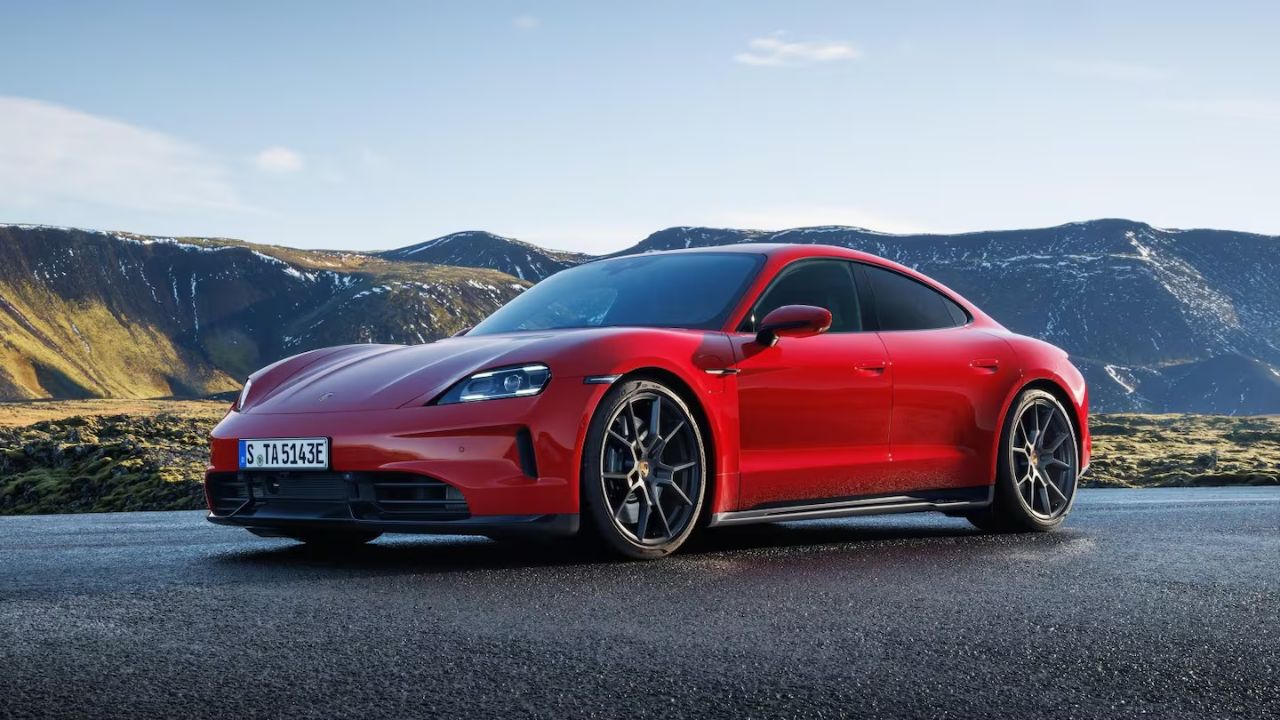
For Porsche, whose U.S. lineup depends heavily on imports from Europe, the shift lands at a delicate time. The company has been rolling out new generations of its core models, including the Porsche 911 and the Porsche Cayenne, while also ramping up electric offerings such as the Taycan and the Macan Electric. These vehicles are priced at a premium and rely on tight cost control to protect margins. A jump in import duties immediately narrows the gap between sticker price and profit, unless Porsche can pass the full increase on to customers, which is harder in a market already crowded with luxury SUVs and performance EVs.
The trade squeeze comes on top of a broader cooling in European auto demand that is starting to show up in industry data. In the first half of 2025, sales of new passenger vehicles in the European Union fell compared with the same period a year earlier, and several major manufacturers cut their full-year outlooks. One industry review of the period reported that European automakers delivered fewer vehicles and warned that profit expectations for 2025 would have to be reset, as the sector adjusted to weaker order intake and higher costs across the region in the first half of.
Porsche is not immune to that slowdown. While its customer base is wealthier than the average car buyer, the brand still depends on a healthy European market for a large share of its sales, especially for sports cars and high-end trims that sell most strongly in Germany, the United Kingdom, Switzerland and other core markets. A softer backdrop there means dealers are working harder to move inventory and are more reliant on discounts or generous financing, which again eats into margins.
China adds another layer of complexity. For years, Porsche treated Chinese demand as a near-guaranteed growth engine, especially for SUVs like the Macan and Cayenne that fit the tastes of affluent urban buyers in Shanghai, Beijing and Shenzhen. More recently, however, luxury demand in China has become less predictable, as economic growth slows, property markets stay under pressure and younger buyers turn to domestic electric brands that promise cutting-edge tech at lower prices. Even without precise unit figures from the latest quarter, the combination of slower Chinese growth, more intense competition and a stronger focus by Beijing on supporting its own automakers points to a more challenging environment for imported performance cars.
Why it matters
The pressure on Porsche is a telling signal for the broader premium auto sector. If a brand with some of the strongest pricing power in the industry is being forced to navigate thinner margins and more cautious guidance, then competitors with weaker brands are likely under even greater strain. Investors have long treated Porsche as a benchmark for how far a carmaker can push profitability through brand strength and tight engineering, so any sign of erosion there raises questions about the entire European auto investment case.
Tariffs are central to that shift. The new U.S. duties on European cars do not just raise the cost of selling a Porsche 911 or Taycan in Los Angeles or Miami; they also inject uncertainty into long-term planning. Porsche and its parent group must decide whether to absorb the tariffs, raise prices, or adjust production footprints to build more vehicles in tariff-free locations. None of those choices is painless. Absorbing the cost cuts into earnings. Raising prices risks losing customers to rivals that already produce inside the United States. Moving production requires large, long-term investments and could dilute the “Made in Germany” cachet that underpins Porsche’s brand.
China is equally significant. Porsche’s strategy over the past decade has leaned heavily on expanding its SUV lineup and customizing models for Chinese tastes, from extended-wheelbase variants to lavish interior packages. If that market becomes structurally slower or more protectionist, the company loses a core driver of volume growth and must find new ways to keep its factories running efficiently. The rise of high-performance Chinese EVs, many of them packed with advanced driver assistance and connected features, also chips away at Porsche’s technology edge that once justified premium pricing in Shanghai showrooms.
The European demand slowdown adds a third constraint. As the EU market cools, Porsche’s home-region customers become more price sensitive, even at the top end. Corporate buyers may delay fleet upgrades, and private buyers might stretch existing leases instead of ordering a new 911 Carrera or Panamera. At the same time, European regulators continue to push strict emissions and safety requirements that raise development costs for each new model generation. The company is therefore being squeezed between higher regulatory and input costs on one side and softer pricing power on the other.
All of this comes at a moment when Porsche is in the middle of an expensive transition to electrification and digitalization. The Taycan and Macan Electric require heavy investment in battery technology, software integration and charging infrastructure partnerships. Those outlays were planned on the assumption of strong global demand and relatively open trade flows. Tariffs and a weaker China complicate the payback period for those investments, since each unit sold now contributes less profit than originally forecast.
For workers and suppliers, the stakes are high. Porsche’s plants in Zuffenhausen and Leipzig, along with a dense network of German and European component suppliers, depend on steady global exports of high-margin vehicles. If management decides that tariffs and weaker Chinese demand justify shifting some production or sourcing elsewhere, that could affect jobs and investment in those regions. Even without immediate relocation, any slowdown in output or delay in new projects can ripple through the supply chain, from engine component makers in Baden-Württemberg to software contractors across Europe.
What to watch next
The first sign of how Porsche intends to navigate this new environment will come from its pricing strategy in the United States. Analysts will be watching whether the company quietly raises sticker prices on key models, trims dealer incentives, or introduces slightly decontented variants that can be sold at current prices with lower costs. The balance it strikes between protecting volume and preserving margins will offer a clear signal of management’s priorities under the new tariff regime.
Production strategy will be another key area. If Porsche begins to hint at greater use of manufacturing capacity outside the European Union for models destined for the U.S. market, that would indicate a willingness to adjust its industrial footprint to blunt the impact of tariffs. That might involve deeper cooperation with facilities already operated by its parent group in North America, or more creative use of knockdown kits and local assembly. Any such move would require careful messaging to avoid diluting the German engineering identity that remains central to the brand.
More From Fast Lane Only: