The 1976 Pontiac Trans Am arrived at a strange moment in American car culture, when insurance hikes and emissions rules were choking performance yet drivers still craved speed and swagger. Against that backdrop, Pontiac’s flamboyant coupe managed to turn a tightening regulatory era into a rolling statement of defiance. The result was a car that did more than sell well; it became a symbol of blue-collar cool that still resonates on highways and auction blocks today.
Its impact did not rest on raw horsepower alone. Styling, marketing, film and television exposure, and a carefully cultivated outlaw attitude all combined to turn the 1976 Trans Am into one of the most recognizable American performance cars of the late 20th century.
What happened
By the mid‑1970s, Detroit’s muscle car boom had faded. Compression ratios dropped, catalytic converters arrived, and many once‑mighty nameplates quietly disappeared. Pontiac took a different route with the Firebird Trans Am, leaning into visual drama and chassis tuning to keep the car relevant even as official horsepower ratings fell. The 1976 model year marked a turning point, with Pontiac refining the second‑generation body, adjusting engine options, and setting the stage for the Special Edition package that would explode in popularity the following year.
Production figures show how firmly the Trans Am held its ground. Data for the 1976 model year lists tens of thousands of Trans Ams built, with detailed breakdowns by engine and trim that underline how strongly the car sold despite the broader performance slump. Enthusiast analyses of 1976 production numbers describe a lineup centered on 400 cubic inch V8s, along with the last of the big 455 engines in limited configurations, which helped keep the car’s muscle reputation alive.
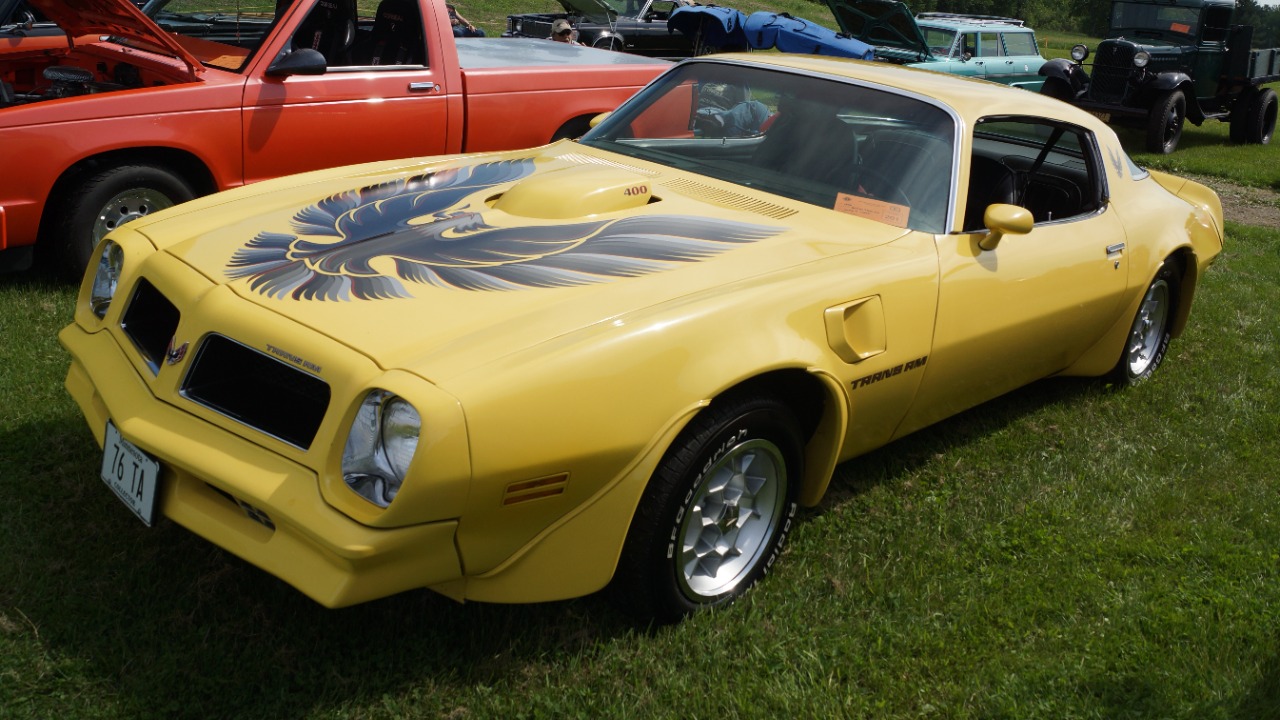
Styling did as much work as the spec sheet. Pontiac’s designers doubled down on the aggressive front end, shaker hood scoop, and bold graphics that had evolved since the Trans Am’s 1969 debut. The now‑famous hood bird, often called the “screaming chicken,” grew larger and more theatrical, turning the car into a moving billboard for Pontiac’s performance identity. Histories of the hood bird emblem trace how it went from a controversial option to a defining visual signature by the mid‑1970s.
Within that 1976 lineup, rarity added another layer of mystique. Pontiac offered a black and gold Special Edition package with gold striping and unique trim that previewed the look later associated with the Bandit movies. Detailed coverage of a 1976 Trans Am notes that only 110 examples combined the Special Edition appearance with the 455 cubic inch engine, making those cars some of the most sought‑after Trans Ams of any year.
Pop culture finished what Pontiac’s engineers and stylists started. While the 1977 model is the one immortalized on film, the 1976 cars share the same basic body, interior, and visual attitude that audiences came to associate with high‑speed chases and rebellious drivers. The groundwork laid in 1976, from the Special Edition look to the emphasis on attitude over raw numbers, meant that when the car hit the big screen, it already carried a fully formed personality.
Why it matters
The 1976 Trans Am became a cultural touchstone because it captured a specific American mood. Performance was officially in retreat, yet drivers still wanted something that looked fast, sounded tough, and felt special. Pontiac leaned into that tension, creating a car that acknowledged the new rules while quietly promising that the fun was not over.
Enthusiast commentary on the meaning of the often highlights this balance between image and substance. The car’s identity fused straight‑line speed, long‑distance comfort, and a kind of accessible flash that appealed to buyers who might never see a racetrack. It was not a fragile exotic or a stripped‑out drag machine; it was a daily‑drivable symbol of personal freedom that still looked at home in a parking lot full of sedans and pickups.
Design played a central role in that symbolism. The oversized hood bird, flared fenders, and shaker scoop turned the Trans Am into something close to a comic‑book character among cars. Histories of the “screaming chicken” graphic point out that what began as a polarizing option eventually defined the entire model line. By 1976, the bird signaled not just a trim level but an attitude: unapologetically loud, slightly irreverent, and proud of its American V8 roots at a time when many manufacturers were downplaying performance heritage.
On the road, the Trans Am backed up its look with respectable capability for the era. Contemporary and retrospective reviews of late‑1970s Firebirds, including detailed write‑ups of a 1979 Trans Am, describe a car that felt heavy but planted, with suspension tuning that favored high‑speed stability and long‑distance cruising. The 1976 version shared that character. It was not a razor‑sharp sports car, yet it offered a confident, slightly theatrical driving experience that matched its visual drama.
The cultural impact extended beyond enthusiasts. For many people, especially outside big coastal cities, the Trans Am became shorthand for a certain kind of working‑class aspiration. It was attainable in a way that European sports cars were not, yet it carried a similar sense of specialness. Owners could pull into a diner or a small‑town main street and immediately stand out. That visibility helped the car lodge itself in collective memory, reinforced by countless appearances in television shows, music videos, and local car meets.
Rarity within the 1976 lineup added another dimension to its legend. The small run of Special Edition 455 cars, documented as only 110 built, created a halo effect for the entire range. Even buyers of more common 400‑powered cars could feel connected to a limited‑production performance story. Over time, as those rare configurations became prized by collectors, they helped lift the profile of the 1976 model year as a whole.
That collector interest is underpinned by the solid production data compiled in enthusiast references. Detailed breakdowns of 1976 Trans Am give buyers and historians a clear picture of how many cars left the factory with each engine, gearbox, and appearance package. In the collector world, that kind of documentation feeds value, storytelling, and a sense of authenticity that keeps the model in conversations about significant American performance cars.
The Trans Am also matters because it shows how branding can carry a model through difficult regulatory shifts. Analyses of later second‑generation Firebirds, such as the 1979 example, emphasize how Pontiac kept the car appealing even as horsepower ratings changed by maintaining a consistent visual and emotional identity. The 1976 car sits near the center of that story, bridging the rawer early 1970s models and the more heavily marketed late‑decade versions that leaned even harder on appearance and attitude.
What to watch next
Interest in 1970s American performance cars has surged in recent years, and the 1976 Trans Am is well positioned within that trend. Collectors are increasingly drawn to vehicles that combine pop‑culture recognition with manageable running costs and clear documentation. The Trans Am checks all three boxes, especially in Special Edition or rare engine configurations.
Market observers expect continued attention to the most distinctive variants. The tiny production run of SE 455 cars places them firmly in the investment‑grade category, but even standard 400‑powered 1976 Trans Ams are gaining recognition as drivers look for analog, characterful machines that still feel usable on modern roads. As earlier muscle cars grow more expensive and fragile, the slightly later second‑generation Trans Ams can seem like a more practical way into the V8 coupe experience.
Enthusiast communities will likely continue to shape how the car is remembered. Discussions of the Trans Am’s identity increasingly frame it not just as a straight‑line bruiser but as a cultural artifact that reflects changing attitudes toward performance, regulation, and personal expression. That broader framing tends to support values for well‑preserved, correctly optioned cars, since originality helps tell the story of the era.
More From Fast Lane Only: