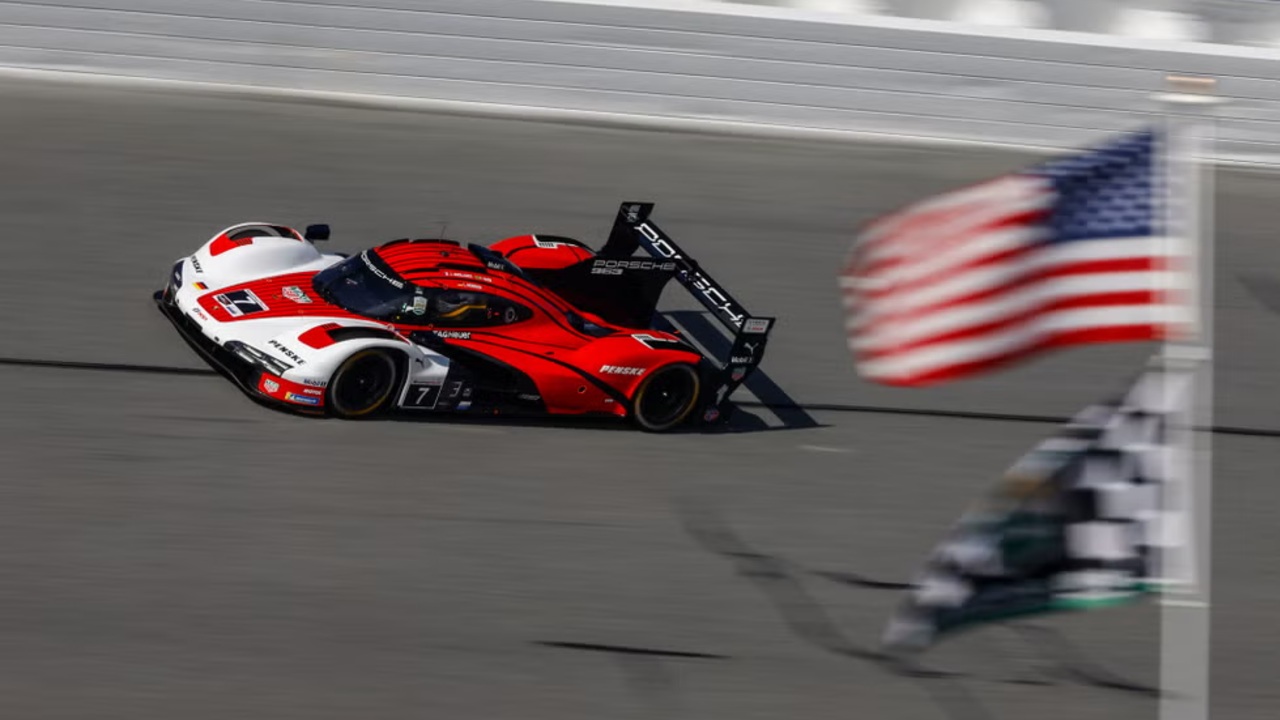
Porsche Penske Motorsport has turned the Rolex 24 at Daytona into its personal proving ground, converting a once unpredictable endurance classic into a showcase of relentless control. With Felipe Nasr sealing a third consecutive overall victory for the program, the team has elevated a hard‑won streak into a statement about preparation, depth, and sheer pace at the front of IMSA’s top class. What unfolded over 24 hours at Daytona International Speedway was less a survival exercise than a sustained demonstration of how to dominate modern sports car racing.
The latest triumph did not come in a vacuum. It arrived at the start of a milestone season for Roger Penske’s organization, under intense pressure from heavyweight rivals and in the middle of a challenging year for the team’s broader racing portfolio. That context only sharpened the impact of a three‑peat that now frames Porsche Penske as the benchmark everyone else must chase.
The decisive 24 hours that cemented a dynasty
The 64th running of the Rolex 24 was shaped in its final phase by a direct fight between Felipe Nasr and Jack Aitken, a duel that distilled an entire day of strategy and execution into a handful of critical laps. In the closing minutes, Aitken mounted a serious attack into Turn 1, diving to Nasr’s inside with a run that briefly threatened to overturn Porsche Penske’s control. Nasr responded with a firm defense that preserved track position and, with it, the foundation of the team’s third straight overall win, as detailed in the Final Hour Report.
That late exchange was the most visible flashpoint in a race that Porsche Penske had largely controlled through pace and discipline. Over the full 24 hours, the team’s prototype combined outright speed with clean execution in traffic, allowing Nasr and his co‑drivers to stay in the fight even as caution periods and strategy gambles compressed the field. The official IMSA account of the event confirms that Porsche Penske Motorsport converted that advantage into a commanding third consecutive victory in the 64th Rolex 24, with Nasr again entrusted to close the race.
Felipe Nasr and the Brazilian thread running through Daytona
Felipe Nasr’s role in this era of Porsche Penske success is both tactical and symbolic. As the closer in the latest win, he carried the responsibility of managing traffic, fuel, and pressure in the most volatile phase of the race, when a single misjudgment can erase an entire day’s work. His composure under Aitken’s late challenge, and his ability to maintain the car’s pace without overextending, underpinned the final margin that secured the three‑peat, a performance highlighted in detailed race results coverage.
Nasr’s victory also extends a remarkable national storyline at Daytona. Reporting on the aftermath notes that his success ensured a Brazilian driver has been part of the winning team in the Rolex 24 for six consecutive editions, a streak that includes the contributions of Helio Castroneves in earlier triumphs. That continuity, described in depth in a wire report, underscores how Brazilian talent has become woven into the modern identity of the event, with Nasr now central to that narrative.
Roger Penske’s milestone season starts with a statement
For Roger Penske, the latest Rolex 24 victory carries significance beyond another trophy. His organization is marking the 60th anniversary of Team Penske, and opening that commemorative year with a win in the first major race on the calendar sends a clear signal about the group’s enduring competitiveness. Coverage from Daytona Beach, Fla, notes that Penske’s team entered the event with that milestone in mind and emerged with a third straight overall triumph at Daytona International Speedway, a result that reinforces the program’s stature at the top of North American sports car racing, as outlined in race reports from DAYTONA BEACH, Fla.
The win also offers a measure of optimism in what has been described as a challenging year for Penske’s broader operations. A detailed analysis of the result frames the Rolex 24 success as a bright spot, suggesting that the performance of the Porsche program provides both competitive validation and a morale boost. In that context, the three‑peat is not only a sporting achievement but also a strategic asset, reinforcing Penske’s reputation for excellence at a time when every high‑profile success carries added weight.
How Porsche Penske turned speed into sustained control
The scale of Porsche Penske’s dominance at Daytona is rooted in more than a single strong driver lineup. Over three consecutive Rolex 24 victories, the team has refined a template that blends outright performance with meticulous race management. Reporting on the 64th running of the event notes that the Porsche Penske entry delivered a record‑breaking performance, combining a commanding margin with the ability to respond to changing conditions and rivals’ strategies. The description of a “commanding third consecutive victory” in a comprehensive race analysis underscores how thoroughly the team controlled the overall contest.
That control was tested most visibly in the final hour, when Aitken’s challenge forced Nasr and the team onto the defensive. The Final Hour Report details how Aitken closed in and attempted a decisive move into Turn 1, only for Nasr to hold firm and retain the lead. That sequence illustrates the balance Porsche Penske has struck: the car was quick enough to stay ahead on merit, yet the crew and driver were prepared to manage risk aggressively when the race compressed into a sprint. The ability to transition seamlessly from long‑range strategy to short‑burst defense is a hallmark of the team’s current run.
What the three‑peat means for IMSA’s new season
The Rolex 24 traditionally sets the tone for the IMSA season, and the latest result suggests that Porsche Penske will again be the reference point in the top prototype class. The official IMSA summary of the event confirms that Porsche Penske Motorsport not only secured the overall win but did so in a race that also produced notable class victories elsewhere in the field. That combination of a dominant overall program and competitive depth across categories hints at a season in which the series’ balance of power will be measured against the standard set at Daytona.
From a broader motorsport perspective, the Rolex 24 result also reinforces the event’s role as a high‑profile curtain‑raiser that captures attention beyond the traditional sports car audience. A detailed roundup of results and highlights notes that the racing season “kicked off with a bang” at Daytona, underscoring how the 24‑hour race has become a key early marker for teams and manufacturers. With Porsche Penske now owning three straight overall wins, every rival program will arrive at the next rounds of the IMSA calendar with a clear target, and every fan will measure new storylines against the benchmark that Nasr and his teammates have just raised.
More from Fast Lane Only