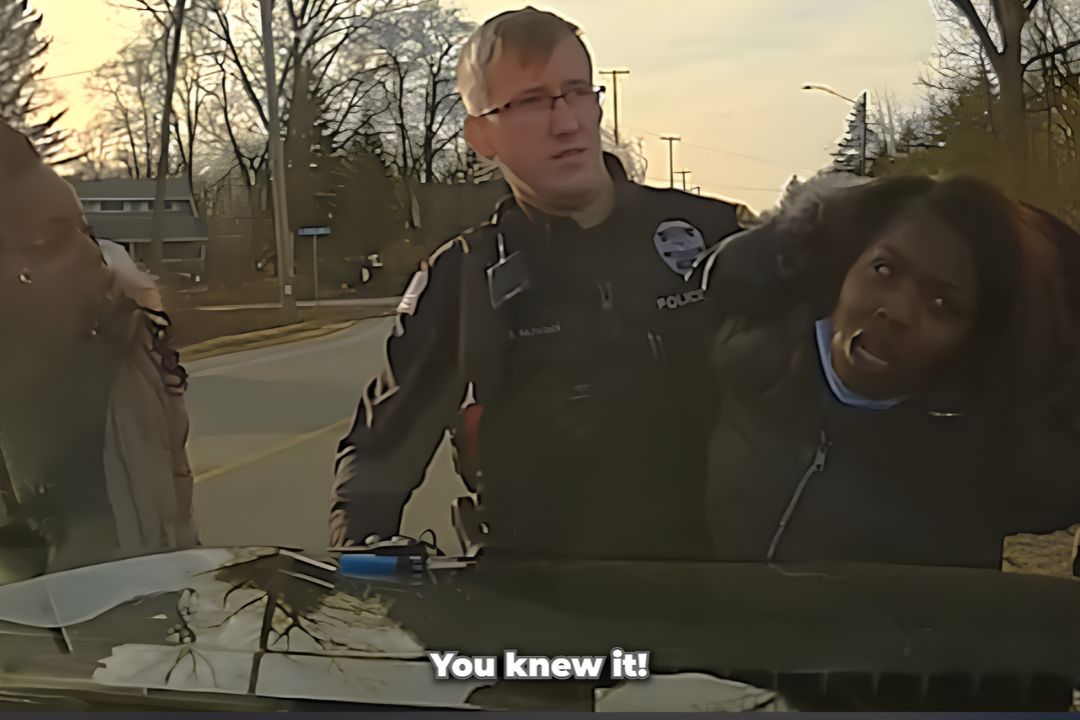
A routine traffic stop rarely turns into a physical struggle over a signature. But that’s exactly what happened when Deputy Mendez of the Page County Sheriff’s Office pulled over a 52-year-old man driving a PT Cruiser for two reasons: a suspended license and a license plate frame obscuring the numbers on his tag. What started as a straightforward stop, the kind that usually ends with a citation and a court date, spiraled into a fight on the ground because the driver refused to accept the paperwork in front of him.
Deputy Mendez was clear from the start about what he was and wasn’t doing. He told the driver he wasn’t taking him to jail, just issuing a criminal citation with a future court date. State records showed the license had been suspended since July over a lapse in insurance, and Florida had also issued what the deputy called a “seize tag order” on the plate, meaning he was required to physically confiscate it on the spot. None of that meant an arrest. All the driver had to do was sign to acknowledge his court date and hand over the tag.
He wouldn’t do either.
“I’m legit” wasn’t going to change the system
The driver’s response wasn’t calm compliance or even calm disagreement. He insisted repeatedly that he was “completely legit,” that his insurance was valid, and that the suspension must be some kind of mistake. Deputy Mendez didn’t argue the point. He told the driver plainly that he wasn’t accusing him of lying, only relaying what the state system showed, and that resolving the discrepancy wasn’t something he had the authority to do on the roadside. If the driver’s records were wrong, the fix was showing up to court with proof, not arguing with the officer holding the citation.
That distinction, between disputing a record and refusing to acknowledge one, is where the stop started to go sideways. The driver asked to see where the seize order was documented. The deputy explained he wasn’t required to show him that. The driver asked to go get his insurance paperwork from the car. The deputy told him it wouldn’t matter at that point. Every attempt to negotiate the underlying facts of the stop got the same answer: sign the citation, and any dispute could be sorted out later, in court, with the right documentation.
The moment he asked for a supervisor
Rather than sign, the driver escalated to demanding a supervisor, accusing the deputy of violating his rights as a citizen. Deputy Mendez didn’t refuse the request. He agreed to call one, but asked a simple, direct question first: was the driver going to sign the citations, yes or no, so he could relay both issues to the supervisor at the same time. It wasn’t an unreasonable ask. It was also the last calm exchange of the stop.
Instead of answering, the driver turned and started walking back toward his own vehicle, saying he was going to get his keys. That’s the point where the encounter physically broke down. Deputy Mendez ordered him to stop, then grabbed his arm as the driver kept moving. The driver pulled away, told the deputy “you’re not going to arrest me, bro,” and accused him of trespassing. What followed was a struggle that took both men to the ground, with the deputy calling for backup while continuing to order the driver to put his hands behind his back.
What the signature was actually protecting him from
There’s a detail easy to miss in the chaos of the struggle: the deputy had explicitly warned the driver, before any physical contact happened, that refusing to sign would result in arrest. That’s a standard warning for a reason. Signing a citation isn’t an admission of guilt. It’s an acknowledgment that you’ve received it and agree to appear in court, a formality that lets the process move forward without anyone needing to be taken into custody on the spot. The driver’s resistance wasn’t really about the suspension or the tag order. It was about that signature, and walking away from the conversation to retrieve his keys was the action that turned a paperwork dispute into a physical one.
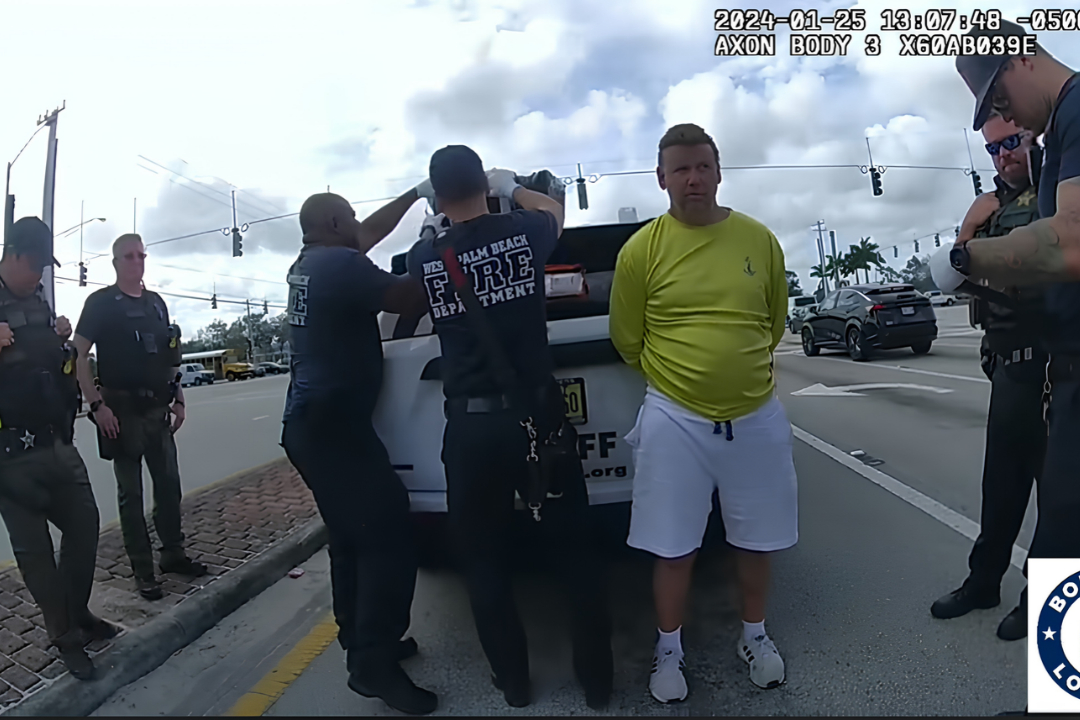
Backup arrived shortly after the driver was handcuffed, and paramedics checked him out in the back of a patrol vehicle as a precaution, standard procedure any time a physical struggle has occurred during an arrest.
Five charges in, two convictions out
The driver was initially charged with five offenses: two counts of resisting an officer without violence, one count of battery on a law enforcement officer, and two license-related charges tied to driving on a suspended license. By the time the case worked through court, three of those five charges were dropped entirely, including the battery charge and both license violations. What remained were the two counts of resisting without violence, on which the driver was adjudicated guilty. His sentence was three days in county jail.
That outcome is worth sitting with. The charges that survived weren’t about the suspended license or the disputed insurance record, the things the driver spent the entire stop arguing about. They were about what happened after he decided walking away and refusing to sign was a better option than waiting for the supervisor he’d just requested.
More from Fast Lane Only
- Unboxing the WWII Jeep in a Crate
- 15 rare Chevys collectors are quietly buying
- 10 underrated V8s still worth hunting down
- Police notice this before you even roll window down
*Research for this article included AI assistance, with all final content reviewed by human editors.