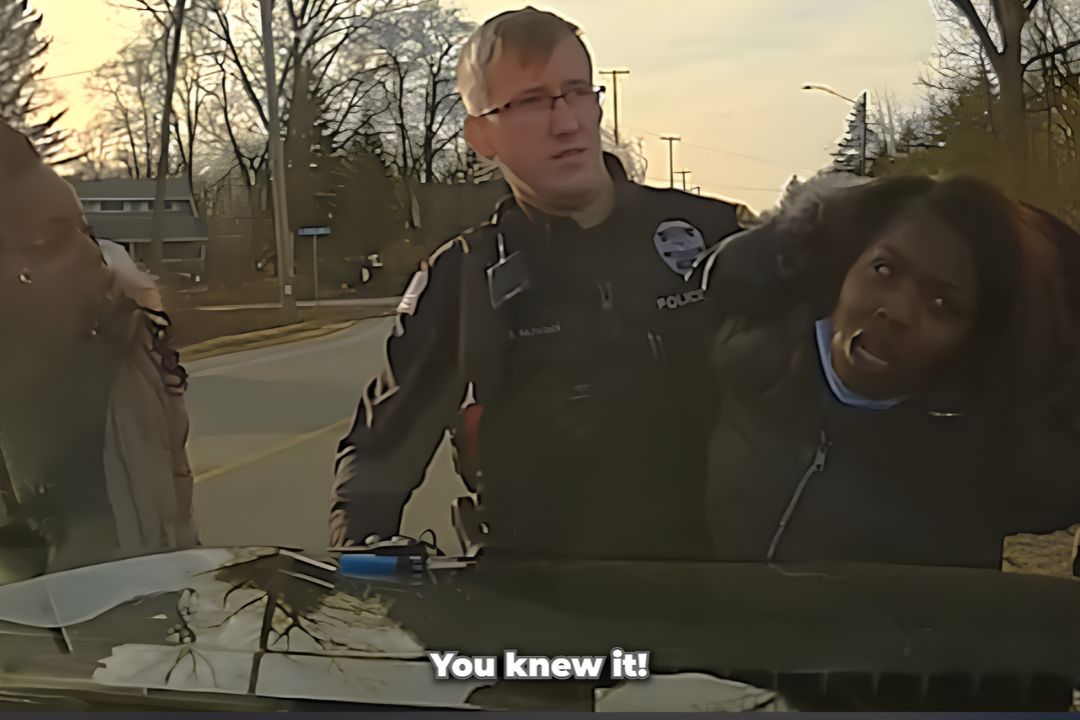
Officer Vasos wasn’t looking for trouble. A passerby had called in a woman walking along Highland street with a child, worried it might be a domestic violence situation. That’s it. That’s the whole reason he pulled up. He just wanted to make sure everyone was okay, get a name, maybe an ID, and be on his way.
Andrea wasn’t having it. From the first few questions, she made it clear she thought the whole stop was unnecessary, calling the person who’d called it in nosy and complaining that “dumb ass white people” out there just can’t mind their business. Vasos tried to keep things low-key, explaining he just wanted to confirm everyone was safe. That should have been the end of it.
It wasn’t, because a routine license check turned up a problem nobody called about: Jonathan, the man who’d picked her up, was driving on a suspended license. And Andrea didn’t have a valid license either. Which meant, per basic traffic stop procedure, neither of them could legally drive that car away from the scene.
A parking problem became a standoff
Officer explains nobody present can drive, asks if there’s someone who can come get the vehicle, everybody waits around for a bit, problem solved. Andrea escalated it instead. She told Vasos she wasn’t about to sit on the side of the road with her baby, insisted she didn’t know anyone who could come get her, and got progressively louder about how unfair the whole situation was.
At one point Vasos tried to check the vehicle’s VIN on the door jamb, just standard paperwork stuff. Andrea physically got in the way and started yelling at him for it. Officers ended up calling a tow truck as a backup plan, mostly because Andrea kept insisting she had no one who could come pick up the car. Then, right on cue, she remembered her mom was on the way after all, and the tow got put on hold.
None of this had anything to do with domestic violence at this point. It was just a woman escalating a parked-car logistics problem into a full confrontation with police. And that escalation is exactly what kept the stop alive long enough for the records checks to finish running.
The records came back, and so did an old case
Here’s where things really turned. While running everyone’s information, officers discovered Jonathan was on probation for armed robbery, and as part of that probation, he was under an active no-contact order specifically barring him from being around Andrea. It stemmed from a prior domestic violence case between the two of them.
None of that had anything to do with why police showed up. Nobody called about a probation violation. Nobody called about an old DV case. They called because a woman was walking down the street with a kid and somebody got worried. But once officers started digging into licenses and IDs, that digging surfaced a violation that was going to send Jonathan back to jail regardless of anything else happening that day.
Vasos didn’t sugarcoat it when he broke the news. He told Jonathan probation wanted a hold placed on him because he wasn’t supposed to be in contact with Andrea at all, and that meant getting taken into custody right then. Jonathan, to his credit, took it about as well as anyone could. He put out his cigarette when asked, stayed calm, cooperated the entire time officers cuffed him. Andrea did not. The second he was told he was under arrest, she went from combative to full meltdown, begging repeatedly to just talk to him, which was exactly the contact the order existed to prevent. Her mother arrived and tried to talk her down, bluntly telling her she was “acting like a dumb ass” and asking if she wanted to go to jail too. It didn’t work. Andrea kept pushing toward the officers, screaming for them to get him away from her and refusing to back off.
From yelling to a real arrest
Eventually officers decided the safest move was getting Andrea into a squad car, out of the situation entirely, away from Jonathan and away from the chance of things getting worse. Andrea refused. Loudly. “I’m not getting in his car,” she kept saying, treating a patrol vehicle like it was somehow optional.
It stopped being just verbal resistance fast. She hooked her foot under the car door specifically to keep it from closing, and at some point in the struggle, kicked the male officer. That single moment turned an already messy scene into something with real legal weight. Resisting officers verbally is one thing. Physically obstructing an arrest and kicking an officer is an entirely different category, and it’s the kind of thing that turns a chaotic afternoon into felony charges. By the time the dust settled, Jonathan was hit with bail jumping, pleaded guilty, and was sentenced to 80 days in local jail. Andrea faced a longer list of charges, including felony battery on a law enforcement officer, felony resisting causing substantial bodily harm, resisting and obstructing, and disorderly conduct, though she ultimately pleaded guilty only to the battery charge, with the rest dismissed, and was sentenced to three years of probation instead of jail time.
One moment from the body cam footage says almost everything about how this whole thing unfolded. As officers led Jonathan away, one told him plainly that this outcome traced back to the confrontation itself: none of it would have come to light if the situation hadn’t kept escalating the way it did. That’s not an officer being smug about the outcome. That’s just an honest description of what happened. Nobody showed up looking for a probation violation or an old no-contact order. Andrea’s own escalation is what pulled those threads loose.
More from Fast Lane Only
- Unboxing the WWII Jeep in a Crate
- 15 rare Chevys collectors are quietly buying
- 10 underrated V8s still worth hunting down
- Police notice this before you even roll window down
*Research for this article included AI assistance, with all final content reviewed by human editors.