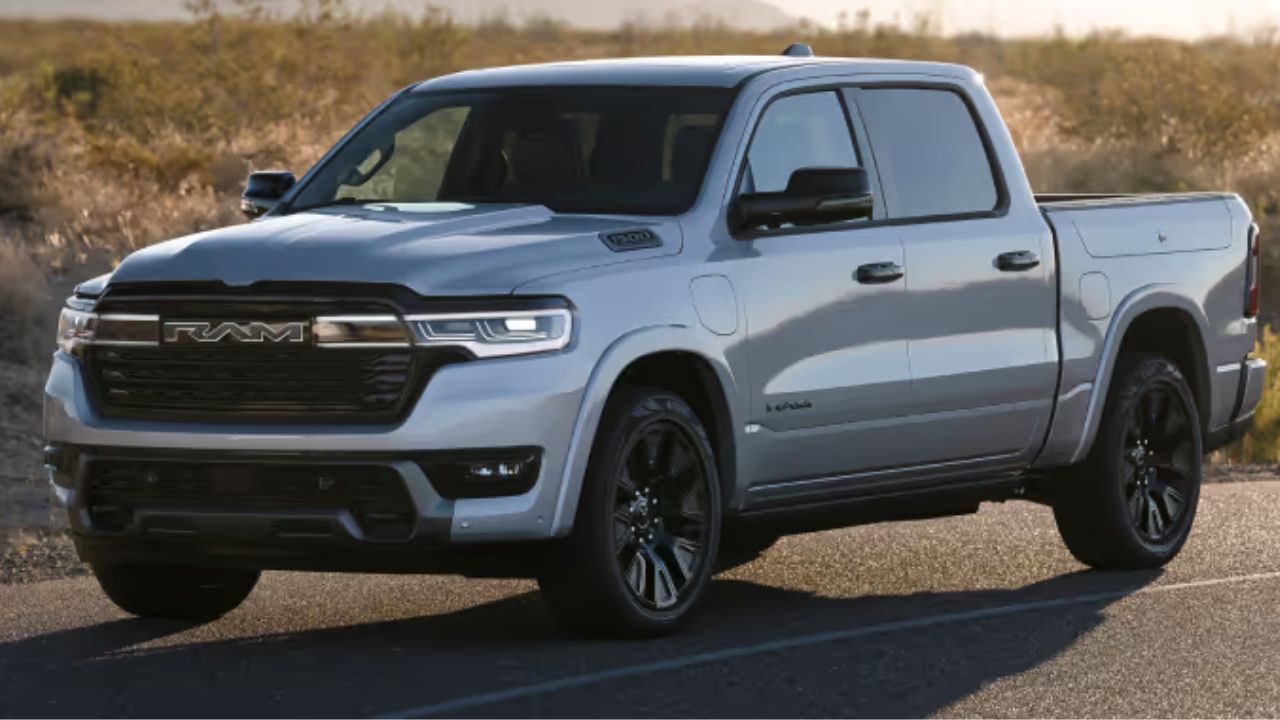
Ram is quietly rewriting its electrification strategy for full-size pickups, trimming its eTorque mild-hybrid system from more 5.7-liter Hemi V8 configurations just as the Hemi itself stages a high-profile comeback for 2026. The move reshapes how Ram balances fuel economy, performance, and cost in a lineup that now stretches from fully electric to old-school, naturally aspirated V8 power. For buyers, it sharpens a key choice: accept a bit less tech in exchange for a simpler, more traditional Hemi truck, or look elsewhere in the lineup for electrified assistance.
Specific trims losing eTorque and how the 5.7 Hemi is evolving
Ram’s eTorque system pairs a belt-driven motor generator with a small battery to add low-end assist and smoother stop-start operation to the 5.7-liter Hemi. By pulling that hardware from more V8 trims, Ram is effectively standardizing the classic Hemi layout across a wider slice of the Ram 1500 range. Reporting on the 2026 Ram 1500 shows the company leaning into a cleaner, more straightforward V8 package, with the 5.7-liter engine returning as a central pillar of the lineup rather than a niche option.
Product details highlight how the Hemi is being repositioned. Coverage of the 2026 Ram 1500 describes a lineup where the 5.7-liter V8 is again available in mainstream trims such as Big Horn, with its output tuned to deliver familiar Hemi character without the complexity of eTorque. In that context, the mild-hybrid system becomes less of a default and more of a specialty feature, as Ram focuses on selling the V8 on its own merits. Reviews of early 2026 trucks note that the Hemi’s response and sound remain key selling points, even as the powertrain mix around it becomes more diverse.
Ram is also expanding its performance envelope at the top of the range. The return of a high-output Hemi for the Ram 1500 TRX, with reports of a 777 horsepower configuration, underscores how strongly the brand is leaning into V8 identity for halo models. That flagship package, detailed in coverage of the TRX Hemi return, sets a tone that trickles down to more attainable trims. Dropping eTorque from additional 5.7-liter variants fits that narrative of a purer, more traditional V8 experience.
The structural change is clearest in volume-focused configurations. Analysis of the 2026 Ram 1500 Big Horn describes the 5.7-liter Hemi as the “sweet spot” for many buyers, with pricing and equipment balanced around that engine rather than around the mild-hybrid add-on. In that reporting, the Big Horn’s Hemi is presented as a straightforward, non-electrified choice that still delivers strong towing and everyday drivability. The shift away from eTorque in such a core trim signals that Ram now sees the conventional Hemi as the default, not the hybridized version.
Market pressures and customer signals behind the eTorque retreat
Ram’s decision to scale back eTorque on 5.7-liter trucks arrives at a moment when the brand is juggling several competing pressures. On one side are tightening emissions expectations and the need to show credible progress toward electrification. On the other are loyal truck buyers who value simplicity, durability, and a familiar driving feel, and who have been vocal about their attachment to the Hemi nameplate. Recent coverage of Ram’s product strategy makes clear that the company is listening closely to that second group.
Reviews of the 2026 Ram 1500, including critical assessments of its interior, ride, and powertrain mix, suggest that Ram is trying to keep its core audience engaged while it rolls out newer engines and electric models. Some testers have pointed out that the Hemi option, without eTorque, still hits the key notes that long-time Ram owners expect, from throttle response to exhaust note. That feedback, reflected in critic reviews, reinforces the idea that mild-hybrid hardware is not essential to the truck’s perceived value, especially if it adds cost or complexity without a dramatic real-world fuel economy gain.
Detailed reporting on the 2026 Ram 1500 lineup also shows that Ram is reshuffling its powertrain hierarchy. Alongside the 5.7-liter Hemi, the company is promoting newer six-cylinder engines and battery-electric variants, which carry the main burden of improving fleet efficiency. Within that structure, the Hemi can play a more focused role as a heritage and performance option. A review of the 2026 Hemi-equipped Ram 1500 notes that the engine’s return was driven in part by customer demand, with many buyers explicitly asking for a V8 after Ram initially pivoted toward other powertrains. That same analysis, available in a detailed Hemi review, frames the engine as a response to market pressure rather than a purely internal engineering decision.
The cultural dimension is even more explicit in reporting that describes Ram’s revival of the Hemi as a kind of protest. In that coverage, Ram executives position the V8 as a symbol for buyers who feel that their preferences are being sidelined by regulatory and corporate pushes toward downsized engines and full electrification. The description of the Hemi as a “symbol of protest” appears in analysis of Ram’s messaging around the truck, which casts the engine as an expression of customer identity as much as a piece of hardware. That narrative, outlined in coverage of the, helps explain why Ram would strip away the mild-hybrid layer on more trims and lean into the V8’s old-school image.
On the practical side, removing eTorque from additional 5.7-liter configurations likely simplifies production and reduces parts complexity. It also gives Ram more room to differentiate pricing. Reporting on the Ram 1500 Big Horn Hemi points out that the trim’s value proposition rests on a strong feature set at a manageable price, which becomes easier to maintain if the engine package is straightforward. The analysis of that model, captured in a Big Horn breakdown, suggests that Ram sees a clear business case for a non-hybrid Hemi in the heart of the lineup.
How Ram’s truck strategy could shift after the eTorque pullback
With eTorque receding from more 5.7-liter Hemi trims, Ram now has a cleaner split between traditional V8 trucks and its newer, more efficient offerings. That sets the stage for a multi-track strategy over the next few model years. On one track, Ram can continue to market the Hemi as a heritage and performance choice, anchored by halo models like the 777 horsepower TRX and volume sellers such as the Big Horn. On another, the company can invest in six-cylinder and electric powertrains that carry the efficiency banner and satisfy regulatory demands.
Future product decisions will likely hinge on how well that split performs in the showroom. If non-hybrid Hemi sales remain strong, Ram may feel emboldened to keep the V8 in the lineup longer, even if it means relying more heavily on other models to meet emissions targets. Coverage of the 2026 Ram 1500 already indicates that the Hemi’s reintroduction has been framed as a win for customers who felt left behind by earlier powertrain shifts. That sentiment, reflected in early owner interest and dealer feedback, could give Ram extra incentive to keep refining the V8 rather than phasing it out quickly.
Ram is also under pressure to show credible progress on electrification. Detailed first looks at the 2026 Ram 1500 lineup describe a broader powertrain portfolio that includes advanced six-cylinder engines and battery-electric variants, which are expected to carry much of the efficiency load. One such preview, available in a first look, points out that Ram is using the Hemi’s return to keep loyalists engaged while it builds out those newer options. The gradual removal of eTorque from more V8 trims fits that pattern, since it reserves electrification resources for engines and models where the payoff is greater.
More from Fast Lane Only
- Unboxing the WWII Jeep in a Crate
- 15 rare Chevys collectors are quietly buying
- 10 underrated V8s still worth hunting down
- Police notice this before you even roll window down
*Research for this article included AI assistance, with all final content reviewed by human editors.