For most of its life, American Motors sold sensible cars to sensible people, and nobody expected a rare AMC to rattle Detroit. Rambler built its name on compact economy cars. So when the company started bolting big V8s, wild paint and racing spoilers onto those same cars, people had to look twice.
Not every one of those experiments sold well. Some were built in tiny numbers, and others lasted only a season or two. Yet together they changed what the AMC badge meant, from thrifty family transport to something with real personality.
These are our picks for nine AMC models that did the most to change that image. Our verdict on each car’s impact is opinion. Meanwhile, the production totals, engines and prices come from auction catalogs, enthusiast historians and model histories.
1. 1969 AMC Hurst SC/Rambler
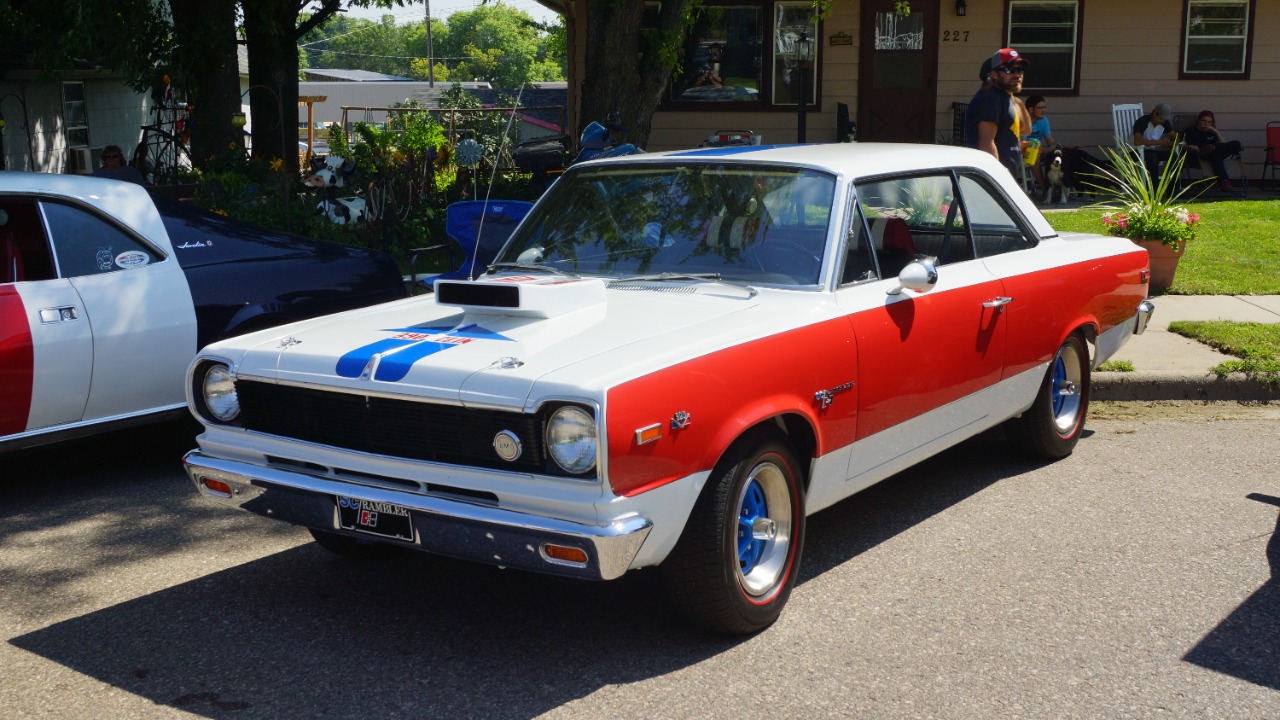
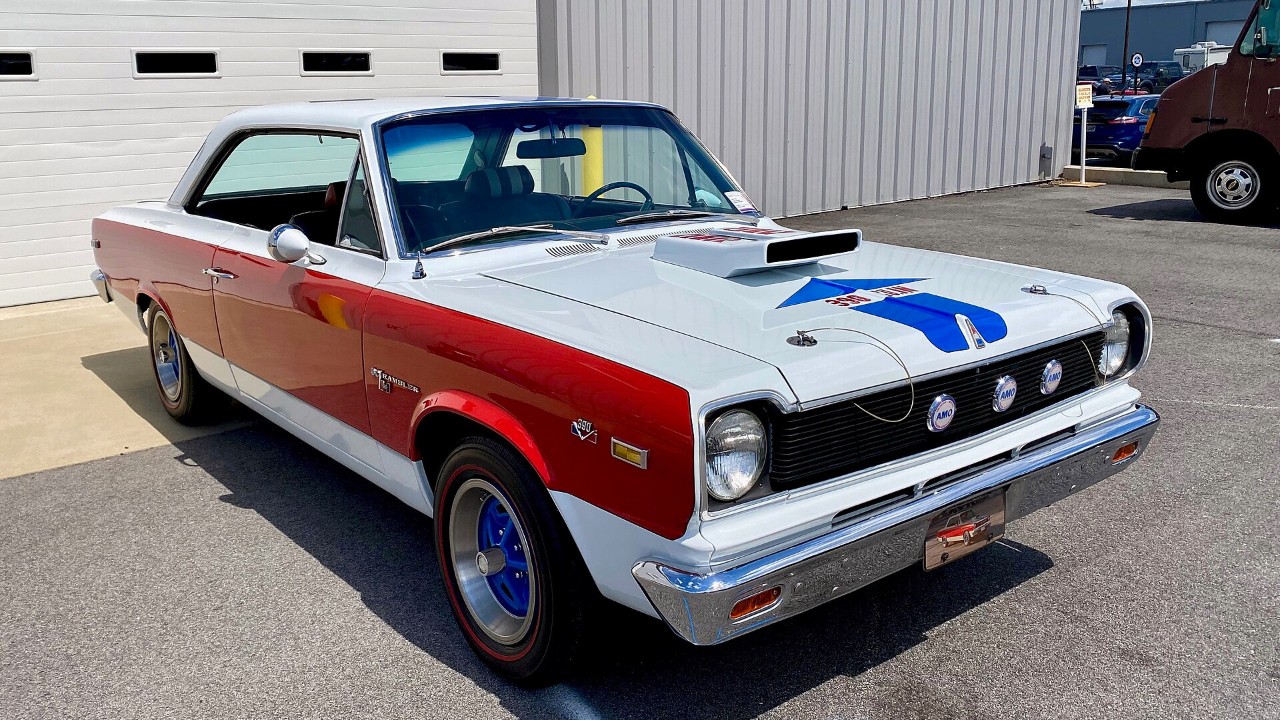
The SC/Rambler started with the humblest car in the lineup, the compact Rambler American. Then AMC and Hurst Performance turned it into a street racer. Walt Czarnecki of AMC and Dave Landrith of Hurst get the credit for the idea. The goal was to reverse AMC’s conservative image and win over younger buyers.
Still, the recipe was simple. AMC installed its 390 V8, rated at 315 horsepower, along with a four-speed and a Hurst shifter. A giant arrow on the hood pointed to a working scoop that fed cold air to the engine. According to Mac’s Motor City Garage, the car sold for just $2,998 out the door. The same history says it could run low-14-second times at 100 mph.
AMC built only 1,512 of them, so this rare AMC is hard to find today. Most wore the loud red, white and blue “A” scheme, while 500 got a toned-down “B” version. We covered how AMC priced the SC/Rambler at $2,998 in more detail. Our take: no car did more to tell buyers that the Rambler name could mean speed.
2. 1969 AMC AMX SS
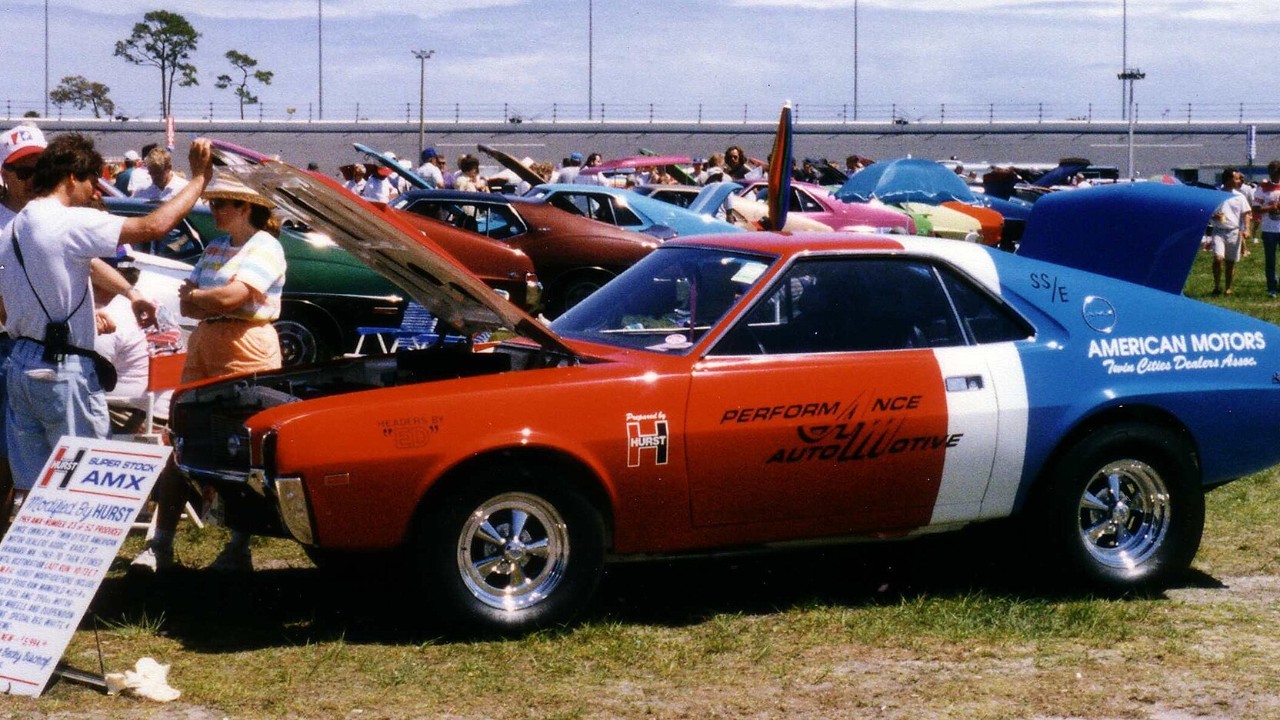
The AMX was already AMC’s two-seat answer to the Corvette. For 1969, AMC and Hurst went further and built a drag-racing version for NHRA Super Stock classes. Hurst converted 52 production cars at its Detroit facility, all painted Frost White with consecutive serial numbers.
The 390 V8 got 12.3:1 compression, an Edelbrock cross-ram intake and two 650-cfm Holley four-barrels. AMC told the NHRA the engine made 340 horsepower. The NHRA didn’t buy it and refactored the rating to 420, according to Mac’s Motor City Garage’s history of the Super Stock AMX. On top of that, the NHRA placed the cars in SS/E rather than the SS/G class AMC had sought.
The factory price was $5,994, about $2,500 more than a regular 390 AMX. With just 52 production cars, the SS is a rare AMC even among AMX collectors. Experts believe at least 40 of the 53 cars, including the prototype, survive. Our story on AMC’s 340-hp claim and the NHRA’s 420-hp rating digs into that fight. In our view, this was the AMC that proved the company would race anyone, anywhere.
3. 1970 AMC Javelin SST Mark Donohue
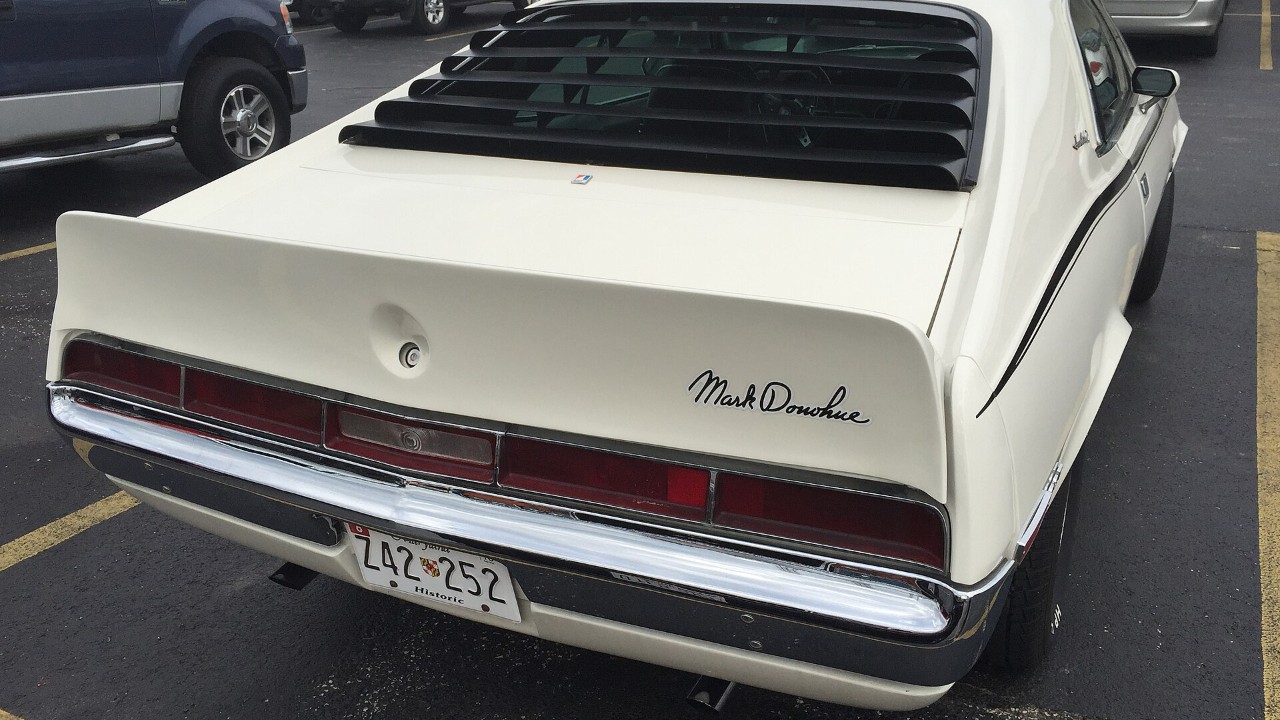
Penske Racing took over AMC’s Trans-Am program for 1970, with Mark Donohue behind the wheel. Donohue wanted a better rear spoiler, so he designed one. AMC then had to sell it on road cars to make it legal for racing.
That’s how the Javelin SST Mark Donohue edition came about. Its ducktail rear spoiler carried Donohue’s signature on the right side, and the spoiler itself was a separate $58.30 option. AMC built 2,501 of these SST versions. The original plan called for a special 360 with four-bolt mains and Ram Air. Instead, buyers got the standard 360 or 390 V8.
The engine compromise doesn’t bother us. The spoiler is the point, because it ties a showroom Javelin directly to a famous racing driver and a top team. Penske and Donohue then helped deliver AMC’s Trans-Am title in 1971. If you want one, check for the signature on the right side of the spoiler, since that’s the edition’s calling card. Our take: the Donohue Javelin turned AMC from a Trans-Am underdog into a car that racers took seriously, and its signature spoiler tells that story.
4. 1971 AMC Javelin AMX 401
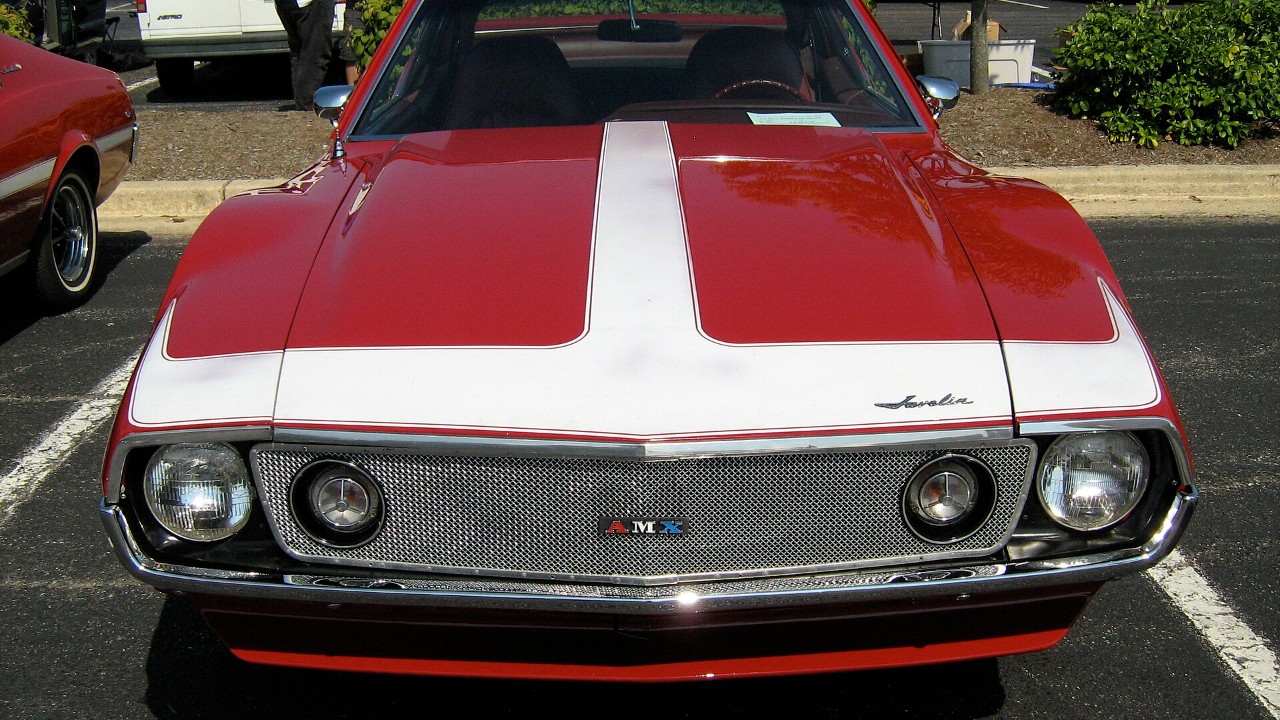
AMC redesigned the Javelin for 1971 under Chuck Mashigan. The new car had raised blisters over the front wheels, flared rear fenders and a “twin canopy” roof with an integral spoiler. To our eyes, it looked like nothing else in the pony car class.
The Javelin AMX could carry AMC’s biggest engine, the 401 V8. AMC rated it at 330 horsepower and 430 lb-ft of torque, both gross figures before the industry moved to net ratings for 1972. The 3,244-pound car ran the quarter-mile in the mid-14s at 93 mph. Meanwhile, Penske’s team tested the 1971 AMX and found its rear spoiler added about 100 pounds of downforce.
On the track, Javelins won the Trans-Am title in 1971 and 1972. That record gave the road car real credibility. Even Alabama police bought 132 Javelins in 1971 and 1972. The 401 version also had the muscle to back up its looks on the street. In our view, this is the most complete performance car AMC ever sold, with racing wins, a big engine and a body that still turns heads.
5. 1973 AMC Gremlin Levi’s
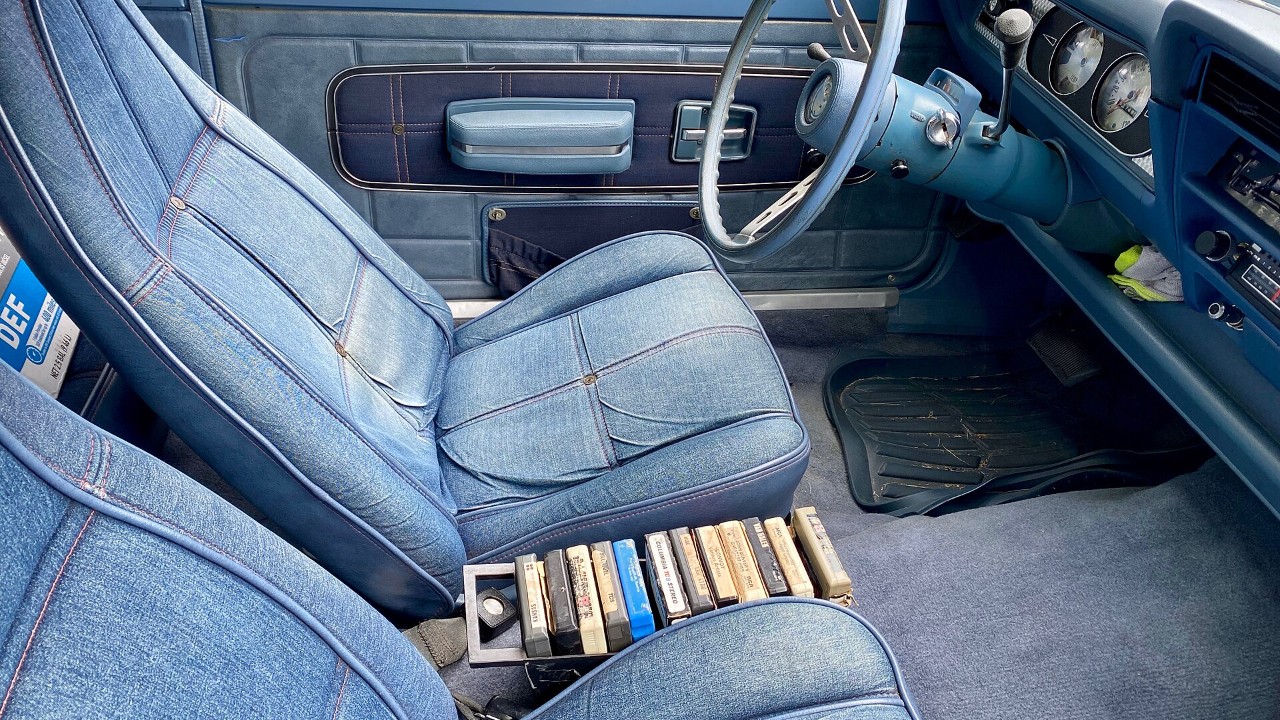
In 1973, AMC added a Levi’s option to the Gremlin and the Hornet hatchback. The seats looked like blue denim, complete with metal buttons, copper-colored stitching and a Levi’s tag. But the fabric wasn’t real denim, because real denim didn’t meet flame-retardation rules and couldn’t survive seat wear. The trim also carried copper rivets and red Levi’s tabs, and AMC added rear-seat legroom that year.
AMC worked with Milliken & Company to develop a look-alike fabric instead. After that, the idea spread through the company. According to Hagerty’s story on the Levi’s Gremlin, the Jeep division later used the interior in Cherokees, J-series trucks and CJs. It also showed up in the 1977 Pacer and the 1978 AMX.
Today, Hagerty says a Levi’s interior can add about 20 percent to a Gremlin’s value. That tells you how much collectors love the idea. AMC built 671,475 Gremlins from 1970 to 1978, so finding a Levi’s car takes patience. Our take: the Levi’s Gremlin showed that AMC understood youth culture better than its bigger rivals. It turned a small economy car into a fashion statement, and that made the brand feel young.
6. 1964 Rambler Classic Typhoon, a rare AMC six-cylinder special
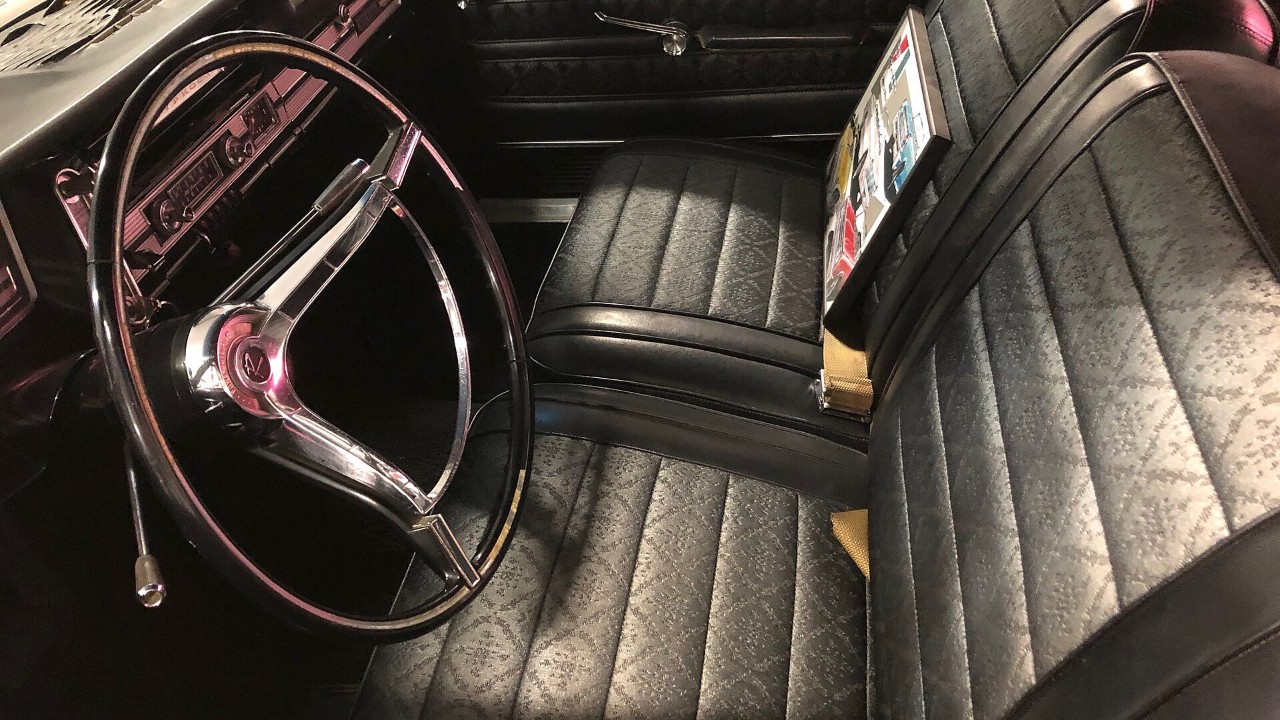
The Typhoon arrived in April 1964 as a sporty mid-year version of the Classic 770 two-door hardtop. Its job was to launch AMC’s new 232-cubic-inch inline-six. That engine had a short stroke and seven main bearings, and it made 145 horsepower with an 8.5:1 compression ratio. So the Typhoon was a showcase for a new engine rather than a muscle car.
Every Typhoon came in the same colors, a Solar Yellow body with a Classic Black roof. Inside, buyers also got an all-vinyl sports interior. A “Typhoon” script replaced the usual “Classic” badge, and the grille got blackout accents. The list price was $2,509. The 1964 Classic line had also just added its first pillarless two-door hardtop, offered only in top 770 trim.
AMC built only 2,520 Typhoons, which makes it a rare AMC by any measure. The one-color rule also made every Typhoon instantly recognizable. If you want one, that yellow-and-black paint makes a real Typhoon easy to spot at a show. In our view, it was an early sign that Rambler could build a car people bought for style and not just for value.
7. 1972 AMC Gremlin X
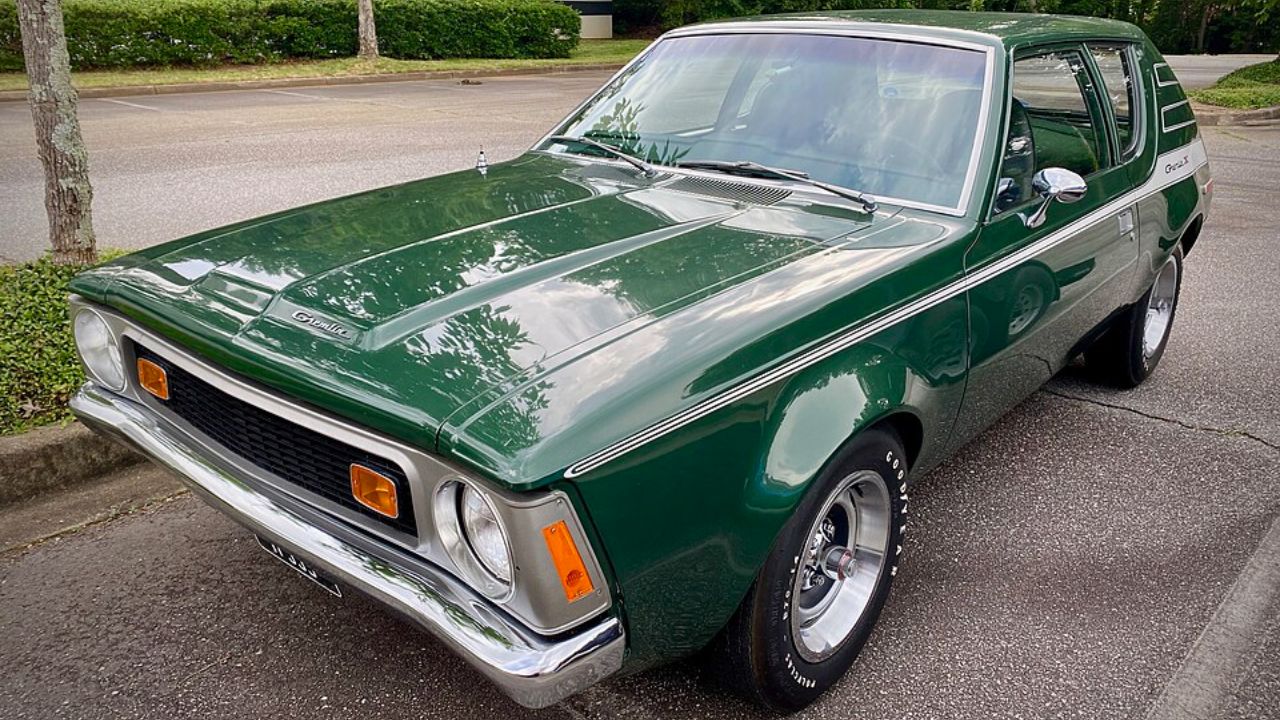
The Gremlin went on sale on April 1, 1970. A year later, AMC added the Gremlin X, introduced for 1971 as a $300 option on the four-seat model. That was a big step up for a car whose four-seat version had listed at $1,959 in 1970. It added body-side stripes, a body-color front fascia, slotted wheels with Goodyear Polyglas tires, a blackout grille, bucket seats and “X” decals.
For 1972, the Gremlin got a much bigger change. AMC made its 304 V8 available, rated at 150 net horsepower. That turned a small economy car into a lightweight hot rod. Over the years, 40,994 Gremlins left the factory with that engine. AMC finally dropped the V8 at midyear 1976, after just 826 installations that season.
The V8 Gremlin X was a cheap way to have fun, and that was exactly the point. It also makes a good garage partner for the Levi’s car on this list. Our story on how the Gremlin launched on April 1, 1970 explains where the car came from. Our take: the V8 Gremlin X is the most fun AMC ever put into a subcompact.
8. 1974 AMC Matador X
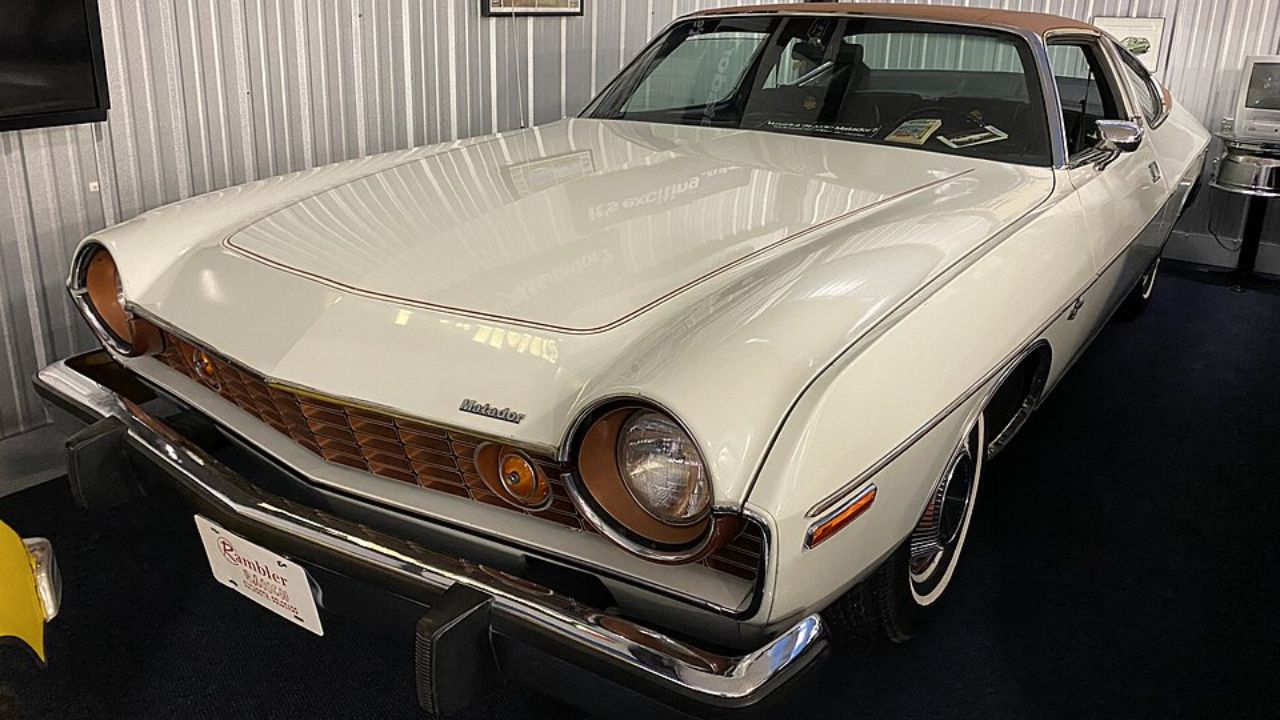
For 1974, AMC replaced its boxy Matador hardtop with a sleek fastback coupe. As a result, it had a long sloping hood, a short tall tail and deeply tunneled headlights. Car and Driver named it the Best Styled Car of 1974. Not everyone agreed, though, because the design drew praise for its aerodynamics but criticism for its interior ergonomics. Four round taillamps gave it a distinctive look from behind.
The Matador X was the sporty version, with body-side striping that wrapped around the rear. In the U.S., the 1974 car used a 304 V8 and listed at $3,699. The coupe also had a movie career. A Matador coupe served as the villain Scaramanga’s car in the 1974 James Bond film The Man with the Golden Gun. In the film, the car sprouts wings and flies, although a remote-controlled model handled the aerial shots.
On the track, Penske Racing ran factory-backed Matadors in NASCAR. Bobby Allison won the Los Angeles Times 500 at Ontario in November 1974 and three more races in 1975. In our view, the Matador coupe was AMC’s boldest design statement. AMC delivered 62,629 coupes in its first model year, from August 1973 through December 1974.
9. 1981 AMC Eagle Sport wagon
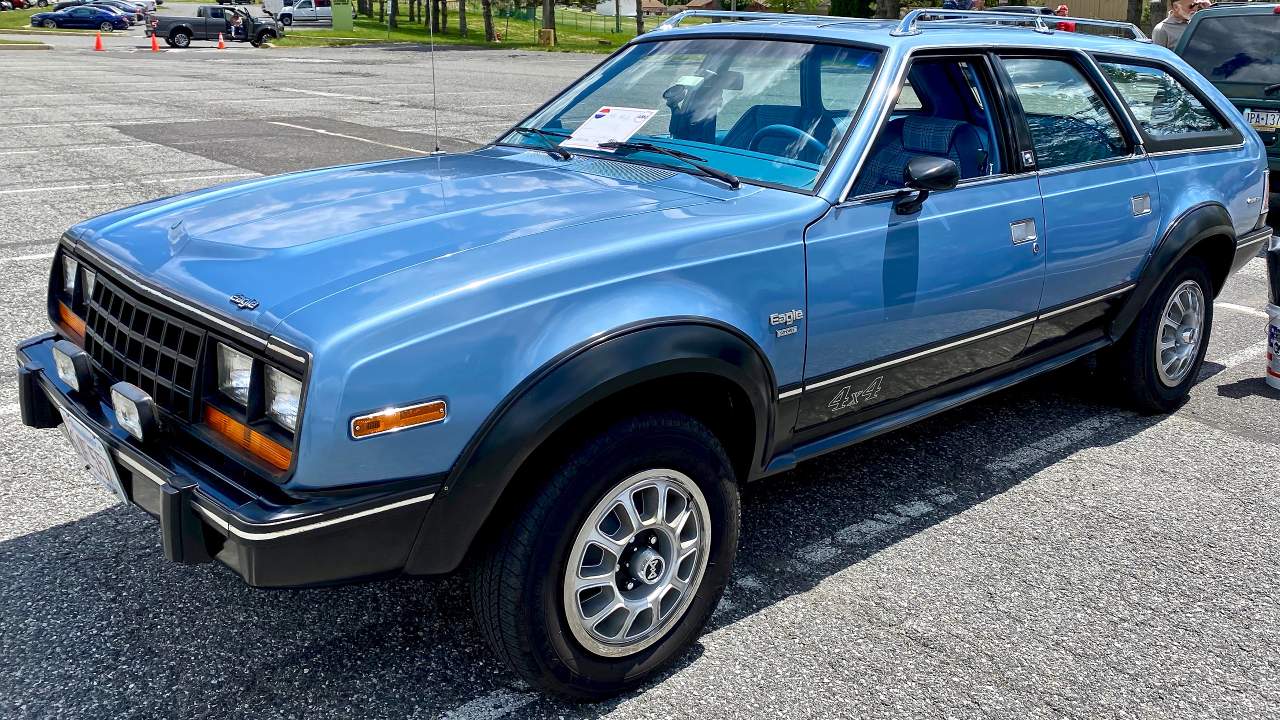
AMC introduced the Eagle in August 1979 as a 1980 model. It took the Concord and added permanent four-wheel drive, using a New Process 119 transfer case with a viscous coupling. For 1980, the 258 six was the only engine, paired with a three-speed automatic. In other words, AMC gave a regular passenger car four-wheel traction.
The Sport package, first offered for 1980, added sport seat trim, a leather-wrapped steering wheel, Goodyear Tiempo radials, fog lamps, halogen high beams, black exterior trim and “Sport” and 4X4 graphics. For 1981, AMC also redesigned the 258 six for more low-end torque and cut 90 pounds from it. AMC built 10,371 Eagle wagons that year. It also launched the smaller SX/4 and Kammback Eagles, based on the Spirit.
Our take: the Eagle changed AMC’s image one last time, from economy brand to the maker of a raised, all-weather wagon decades before crossovers took over. The Eagle wagon also outlasted AMC itself. Chrysler bought the company in 1987, and the 1988 model year was the Eagle’s last. Only the wagon remained, with 2,306 built that final year.
More from Fast Lane Only