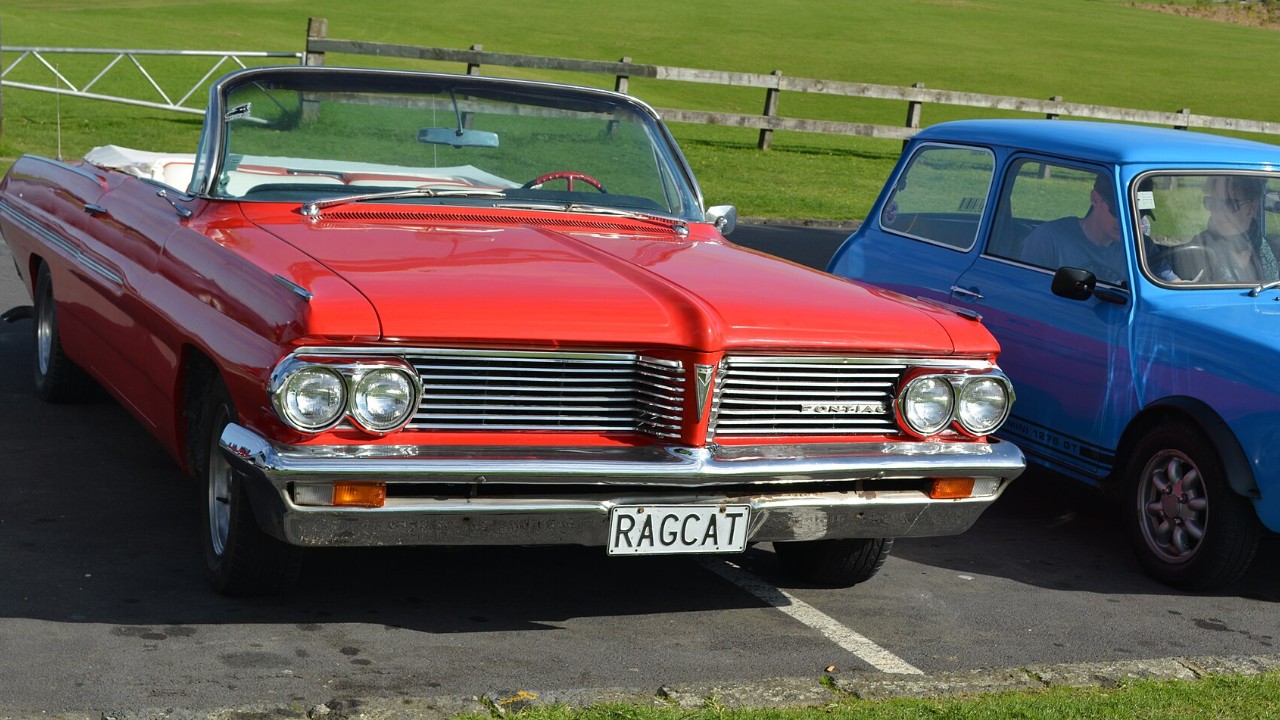
Pontiac built only a small number of 1962 Catalinas with the 405-horsepower 421 Super Duty V8. The Catalina Super Duty set the pattern for a strange few years in Detroit. Factories built stripped, lightened sedans for one job, which was winning at the drag strip on Sunday.
Most of those cars ran a season or two and then vanished from the order books. A corporate racing ban ended some of them. Others simply got outrun by the next special. Today the famous ones get the magazine covers, while the rest sit in the shadows of the muscle cars that followed.
These twelve factory lightweights are our picks for the drag specials that deserved better. The verdicts are our opinion. However, the facts behind them, from engines to build counts, come from factory specifications, period racing records and auction results.
1. 1962 Pontiac Catalina Super Duty 421
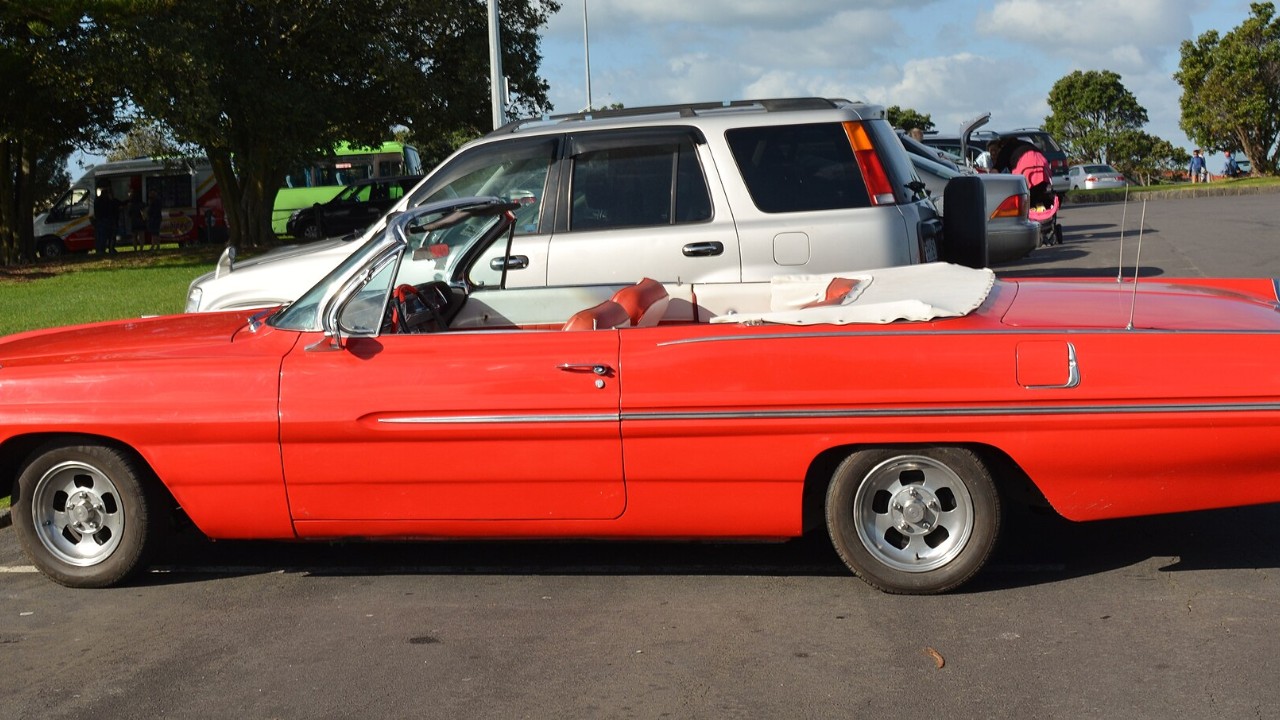
The 421 Super Duty first reached the public late in the 1961 sales season as a dealer-installed engine. In other words, it was a specialty item that individual dealers fitted at their own discretion. For 1962, a small number of Catalinas left the factory with a “non-streetable” version of the 421 Super Duty. It carried two four-barrel carburetors and a 405-horsepower rating.
The price tells you who it was for. The engine was a $2,250 option at a time when a base Catalina listed at $2,725. Pontiac’s performance options also included aluminum bumpers and even lighter frames drilled full of holes, nicknamed “Swiss cheese” frames.
Our take: the Catalina Super Duty deserved a longer run than it got, especially since it was a full factory effort. After all, it was a full-size family car that Pontiac itself turned into a race car, and it never had the chance to grow up. In February 1963, GM ordered its divisions to cease and desist from factory-supported racing, and the program lost its backing. If you ever shop for one, paperwork matters more than paint, because the engine began life as a dealer-installed part.
2. 1963 Pontiac Tempest Super Duty
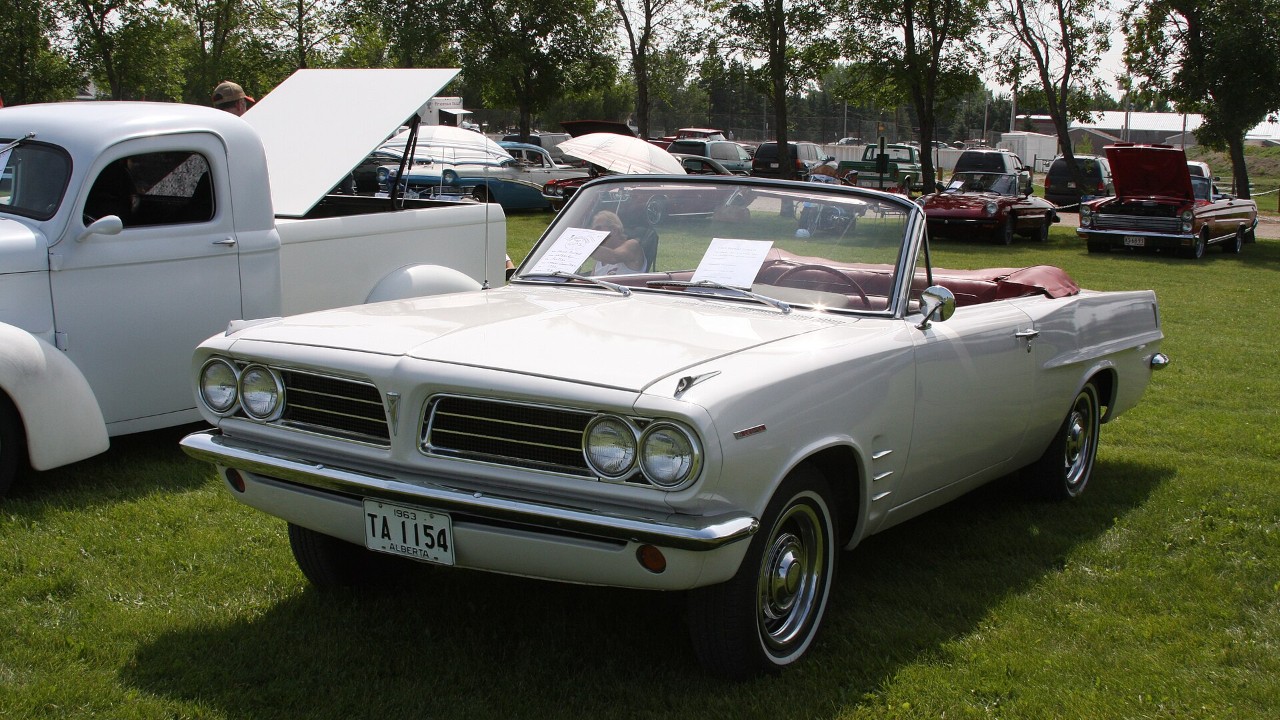
Pontiac’s compact Tempest was an odd home for a big-cube V8, especially one that started life in the Catalina Super Duty. Even so, the factory squeezed the 421 Super Duty into it for 1963. Hagerty’s history of the car counts two prototype coupes and a dozen production cars, six LeMans coupes and six wagons. That makes 14 in all, and Hagerty says collectors have found only five.
The engine ran dual Quadrajets and 12:1 compression for a 405-horsepower rating. Behind it sat a four-speed PowerShift, a modified two-speed automatic with a hydraulic clutch in place of a torque converter. Then the results came fast. Bill Shrewsberry won A/FX at the 1963 NHRA Winternationals with a 12.04-second run at 116.29 mph, and Arlen Vanke later set the class record at 11.89 seconds.
In our view, the Tempest Super Duty is the saddest story here. On January 24, 1963, Pontiac zone managers learned the Super Duty engines were cancelled. So a car that was winning in its first season never got a second one. With so few built, each surviving car is a rolling piece of Pontiac’s racing history.
3. 1963 Chevrolet Impala Z11
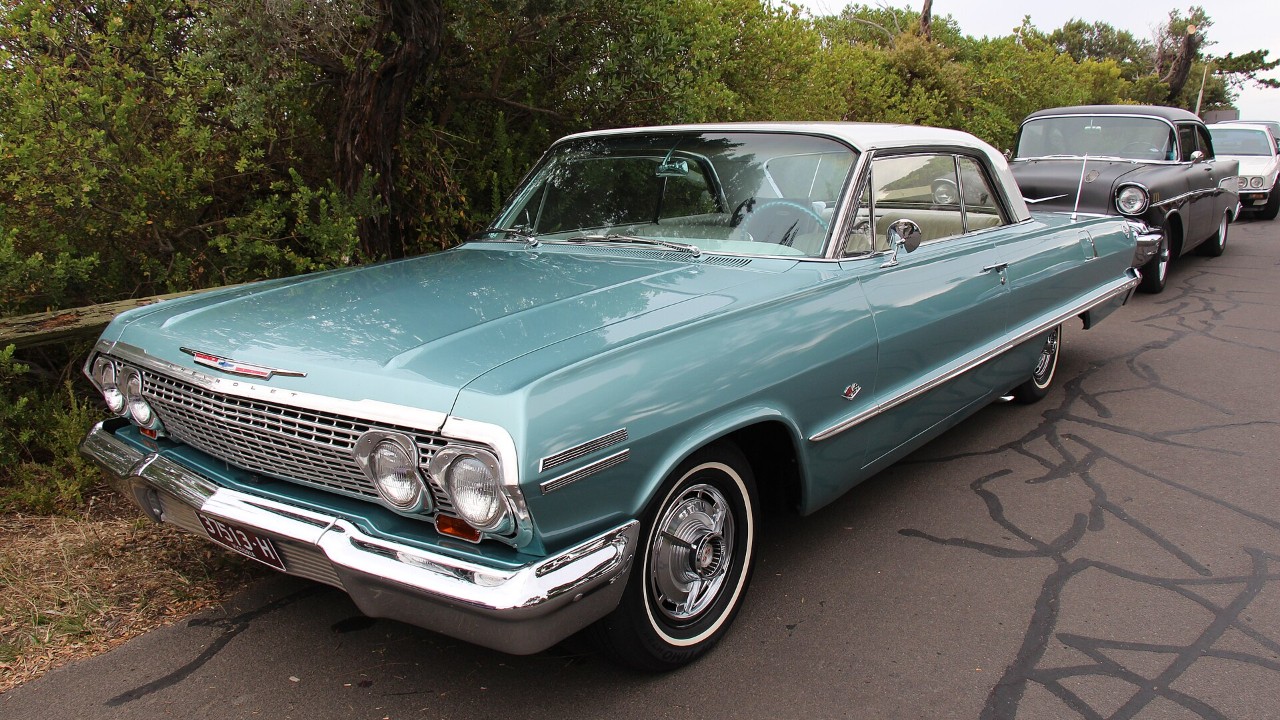
Chevrolet’s answer to the drag-strip wars hid behind a plain order code. On paper it was an Impala Sport Coupe, so from the curb it looked like any other 1963 Impala. Buyers ordered it under Regular Production Option Z11, and it brought a 427-cubic-inch version of the 409. The rating was 430 horsepower and 575 lb-ft of torque.
Chevrolet built only 50 Z11 cars at its Flint plant. The aluminum body parts came from a Flint facility that is now known as GM Flint Metal Center. That local touch matters, because it shows how much of the car was a one-off effort inside a giant company. In our view, that hand-built feel is exactly why it deserves more attention than it gets.
Our take: the Z11 deserved a longer life than the season it arrived in. That was the same season GM told its divisions to stop factory-supported racing. As a result, a car built with this much care became a footnote almost at once, and in our view it should be far better known.
4. 1962 Dodge Dart Max Wedge
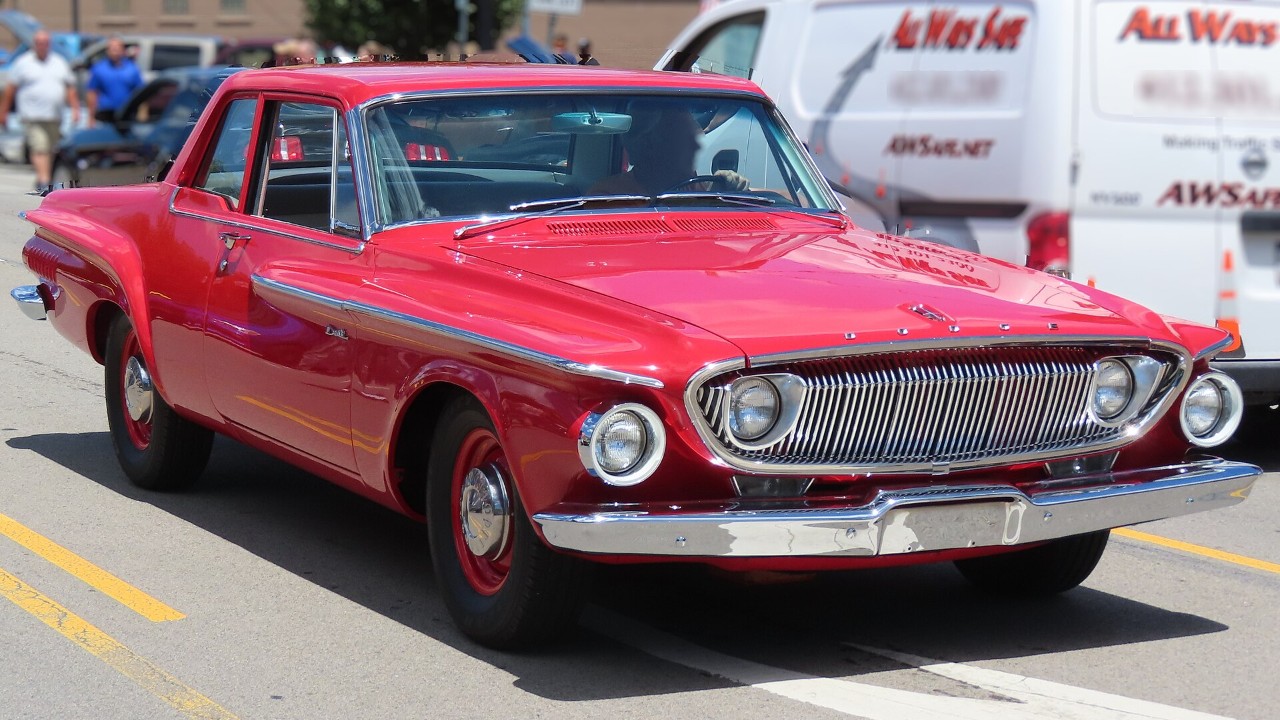
For 1962, the full-size Dodge Dart moved to a new lightweight unibody shared with Plymouth. Then, in the middle of the year, Dodge added the 415-horsepower Ramcharger 413. Chrysler aimed that engine squarely at sanctioned drag racing. In other words, a lighter body met a race engine in a car you could buy from a Dodge dealer.
Mopar historians at MaxWedge.com note that the 1962 413 was never a “Stage I.” Chrysler simply called it the 413 Maximum Performance Wedge, or “Max. Perf. Wedge” for short. If you want to dig into how the later 426 version worked, our look at the hidden features of the Dodge 426 Max Wedge engine covers it.
Our take: the 1962 Dart deserved more credit as the car that started the Max Wedge story. The next year, Dodge went further with an aluminum package for the 330. RM Sotheby’s describes aluminum front fenders, a scooped aluminum hood and a battery moved to the trunk. It also says Dodge built nine of those 330 Lightweights, and the example it offered sold for $110,000.
5. 1963 Plymouth Savoy Super Stock II
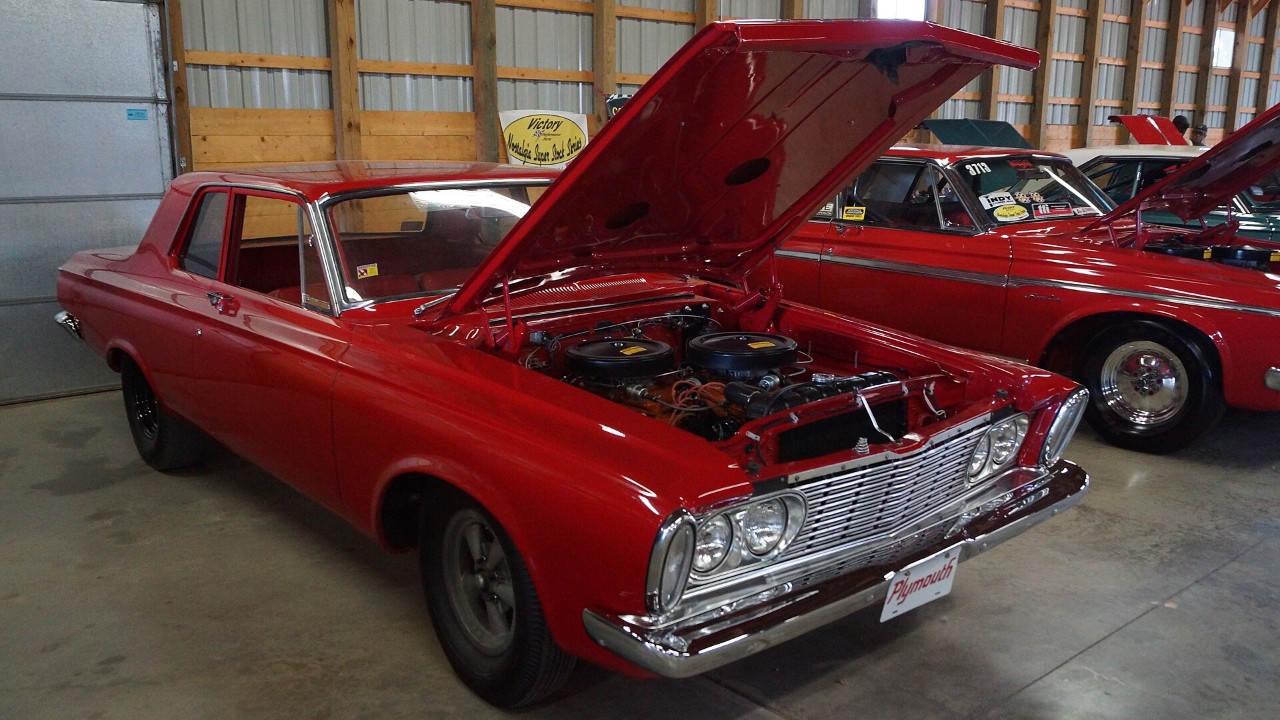
The Savoy gave Plymouth racers a full-size sedan to build on. Chrysler had sold the 413 Max Wedge as a competition engine, and for 1963 the 426 Max Wedge replaced it. Chrysler rated the new engine at 415 or 425 horsepower, depending on compression.
In May 1963, Chrysler released an improved version. According to MaxWedge.com, it brought bigger carburetors, a clutch fan to cut drag, light port work on the heads and a battery relocated to the trunk. Plymouth called it the 426 Super Stock II, while Dodge called its twin the Ramcharger 426A. Meanwhile, induction came through a cross-ram manifold with two Carter four-barrels.
Our take: the Super Stock II deserved better publicity. Chrysler never changed the advertised power rating despite the Stage II and later Stage III updates. In short, the factory hid its best work behind an old number. In our view, that’s one reason fans often confuse these cars with every other Max Wedge sedan.
6. 1963 Ford Galaxie 500 lightweight
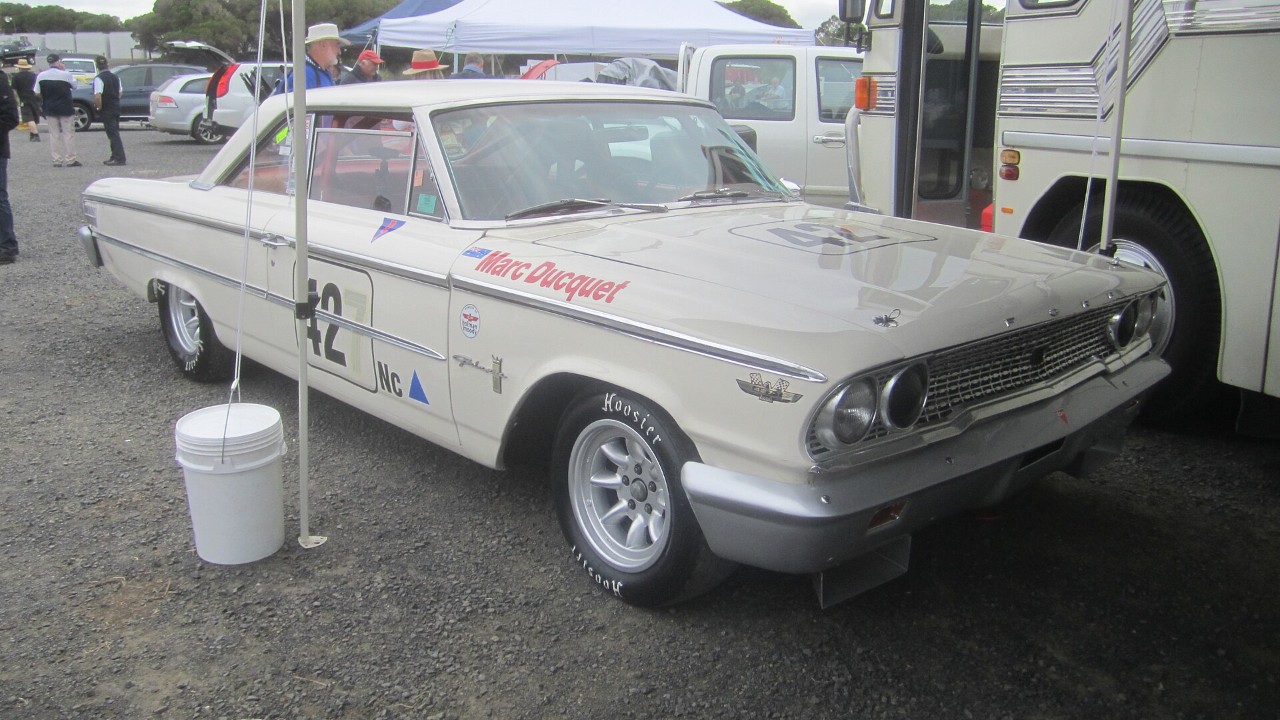
Ford started small. Late in the 1962 run, it built 11 lightweight Galaxies with fiberglass panels and aluminum bumpers, fender aprons and brackets. Those cars weighed in at under 3,400 pounds.
For 1963, the effort grew. Ford produced 212 lightweight R-code 427 engines for the Galaxie 500 Sport Special Tudor fastback, rated at 425 horsepower. It also fitted aluminum bumpers and mounting brackets, aluminum transmission cases and an aluminum bellhousing. In all, these 427 cars were 375 pounds lighter than before. That is a serious diet for a car this size, and Ford managed it without shrinking the body at all.
Our take: the 1963 Galaxie lightweight deserved better, because Ford’s own next idea overshadowed it. It was a big car fighting physics, and it did it with clever parts rather than a smaller body. Still, Ford soon moved the 427 into the smaller Fairlane, and the full-size lightweight faded away. If you love big-body drag cars, this is the one that proved the idea could work.
7. 1964 Ford Fairlane Thunderbolt
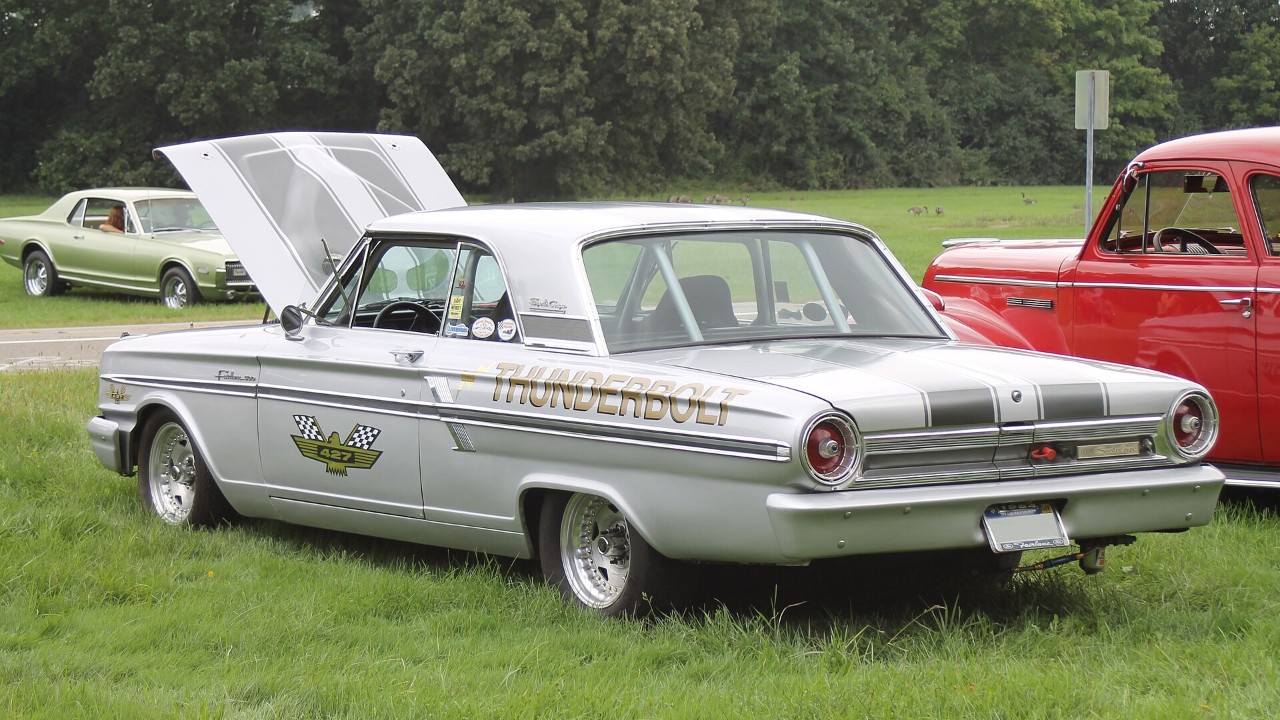
The Thunderbolt was that smaller car. Ford did not build it on a regular assembly line. Instead, Andy Hotton’s Dearborn Steel Tubing assembled 100 of them for the 1964 model year, 49 with four-speeds and 51 with automatics. The first 11 wore Vintage Burgundy paint, and the other 89 came in Wimbledon White.
Power came from a high-rise 427 with two four-barrel Holley carburetors, rated at 425 horsepower. Early cars also got fiberglass doors, hood and front fenders, plus Plexiglas side and rear windows. In November 1963, a four-speed car ran 11.61 seconds at 124.8 mph at Lions Drag Strip. Ford went on to win the 1964 NHRA Super Stock championship. For more on how Ford put it together, see our story on why the 1964 Ford Thunderbolt existed mainly to dominate drag racing.
Our take: the Thunderbolt is the best known car on this list, but it deserved better all the same. It won its title and then disappeared after one model year. A car that dominant should have had a sequel, and we think Ford left a lot on the table by stopping at 100.
8. 1964 Mercury Comet Cyclone A/FX
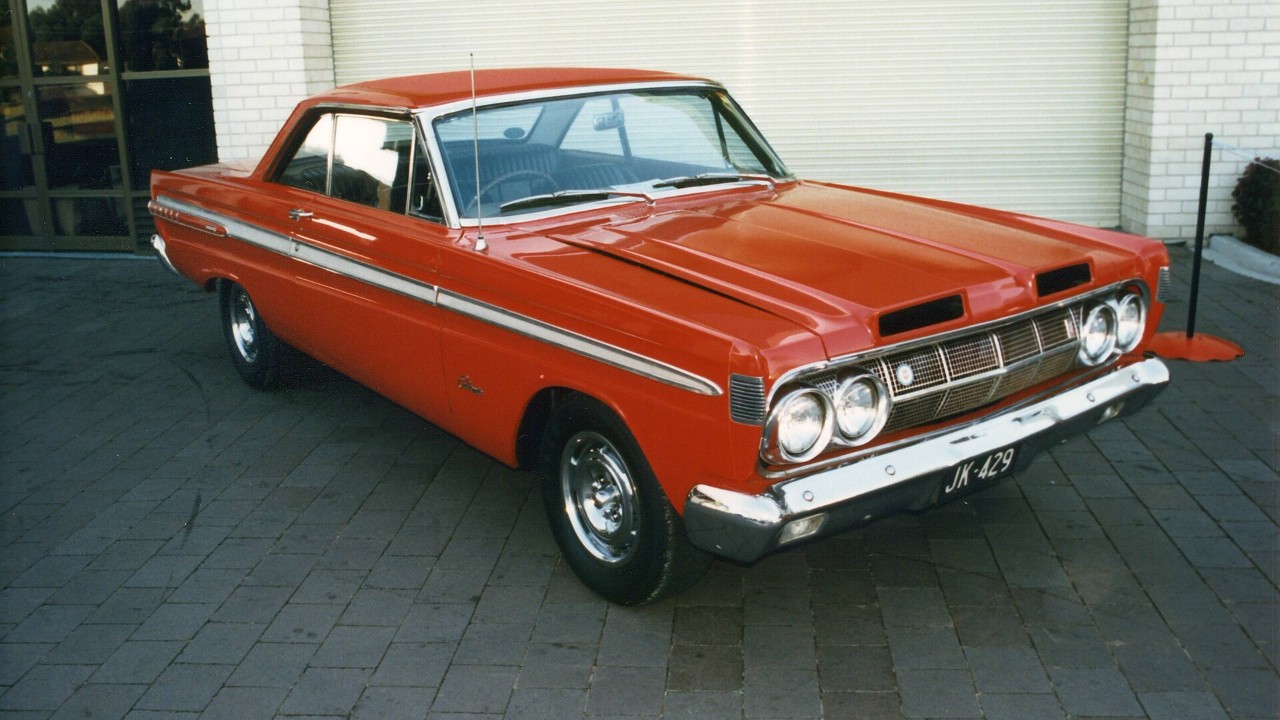
Mercury got its own version of the idea. For 1964, Ford produced about 50 lightweight Comet Cyclones with the racing two-carburetor 427, similar to the Thunderbolt. Then racers modified them to run in the A/FX class on 10-inch tires.
As a result, the A/FX results were strong. The Cyclones were as dominant in A/FX as the Thunderbolts were in Super Stock. On top of that, the driver list was impressive. It included Ronnie Sox, Don Nicholson and Wild Bill Shrewsberry, who teamed with Jack Chrisman.
Our take: the Comet Cyclone lightweight deserved its own spotlight. Ask most fans about 1964 factory drag cars, and they name the Thunderbolt first. Yet Mercury’s car was just as dominant in its own class, with some of the best drivers of the era. In our view, that should count for more than it does. With only about 50 built, the Cyclone lightweight is also the harder car to see in person. If you spot one at a nostalgia drag meet, look at the tires first, because those 10-inch A/FX rubber widths were part of its story.
9. 1965 Dodge Coronet A990
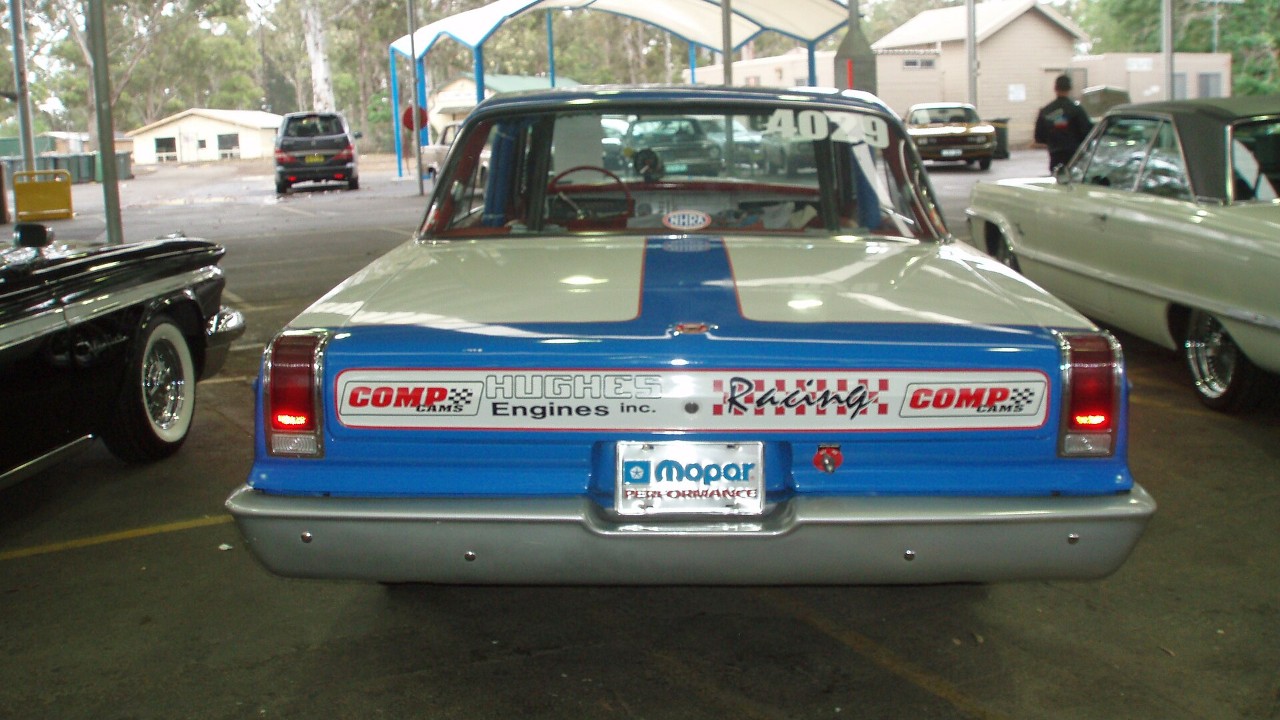
By 1965, Chrysler had moved its drag effort to the 426 Race Hemi. Internally, Dodge and Plymouth called their 1965 Super Stock cars “A990,” and both started from a basic two-door post sedan. According to Sports Car Market, Dodge built 101 Coronets this way.
The weight-saving list was long. These cars went without sound deadening or the caulk between unibody sections. They also borrowed bucket seats from Dodge A100 vans and dropped the heater, radio, armrests, outside mirrors and rear seat. Even the rear side windows were fixed in place. Corning lightweight side glass, deleted inner high beams and a trunk-mounted battery finished the job. The engine was hand-built at Chrysler Marine in Marysville, Michigan, and drove through an A727 TorqueFlite to 4.56:1 gears.
Our take: the A990 Coronet deserved better, since fans tend to skip from the Max Wedge cars straight to the later Hemi specials. It was a factory race car in a family sedan’s clothes. One sold at Worldwide Auctioneers’ Auburn sale in September 2023 for $109,200, with a period-correct replacement engine.
10. 1965 Plymouth Belvedere A990
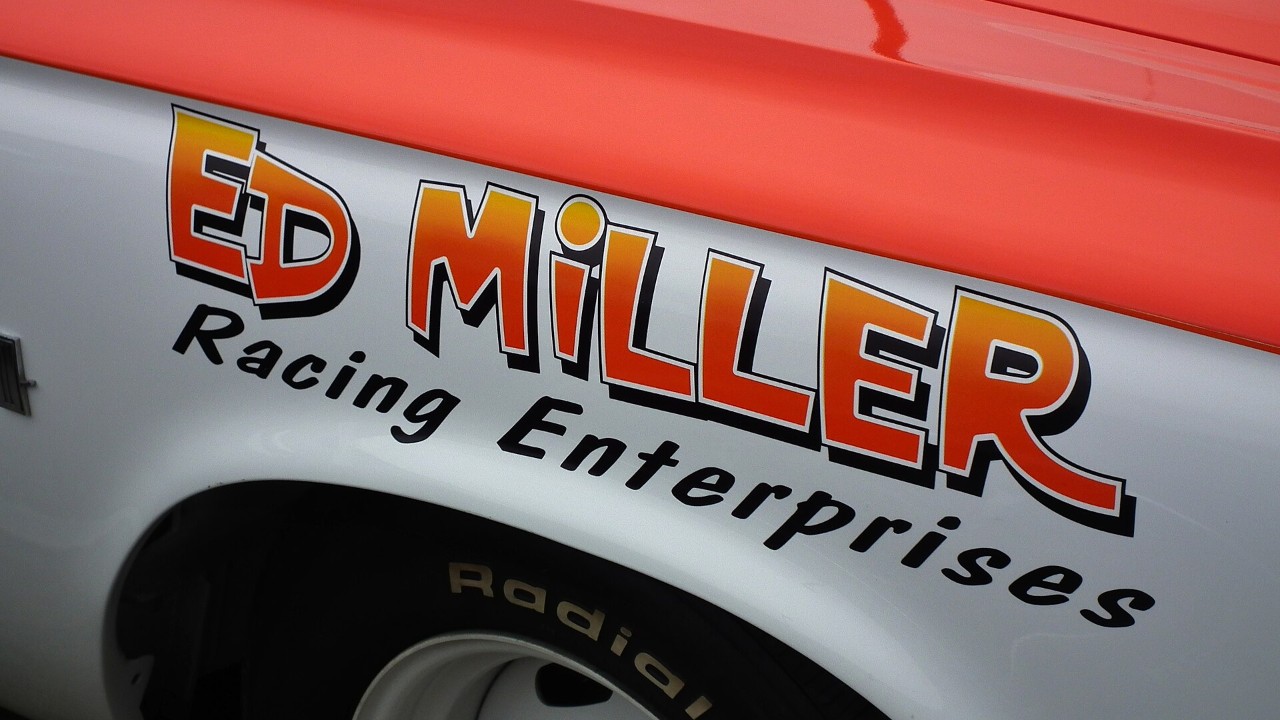
Similarly, Plymouth’s version used the same recipe. The Belvedere already had Race Hemi history, too, since drivers such as Richard Petty raced the track version of the engine in a Plymouth Belvedere in 1964. Sports Car Market counts 102 Belvederes built alongside the 101 Coronets. Plymouth limited the lightweight package to two-door post sedans, and the cars carried the upgraded A990 Hemi introduced that year.
That engine was full of light parts. RM Sotheby’s lists a magnesium cross-ram intake, aluminum cylinder heads and aluminum water pump and thermostat housings. It also rated the 426 Race Hemi with dual quads at 425 horsepower. Interestingly, RM notes that for 1965 the front fenders, hood and radiator and grille supports were lightweight stamped steel rather than aluminum.
Our take: the Belvedere A990 deserved better recognition as the car that carried the Race Hemi into a new season. It looks like a plain Plymouth, which is part of its charm. For racers, the deal was simple: a light two-door body and a Race Hemi straight from the factory. RM Sotheby’s sold one at its 2017 Arizona auction for $121,000.
11. 1968 Dodge Dart Hemi L023

The last chapter came in 1968, when Chrysler stuffed the 426 Hemi into its compact cars. Dodge contracted Hurst Performance to build a limited number of Darts under option code L023, offered for 1968 only. Hurst made only 80, and Dodge intended them strictly for drag racing.
In our view, that makes the Hemi Dart one of the purest factory race cars Detroit ever sold to the public. A compact body with a race engine was the whole point. We dug into its class-busting speed in our story on why the 1968 Dodge Hemi Dart was too fast for its own class.
Our take: the Hemi Dart deserved a wider audience in its day. Because it was a drag car first, most people only ever saw one at the strip. Even now, it gets less attention than the street Hemi cars from the same years, and in our view that’s backwards. After all, this was the factory’s most focused answer to the question of how fast a Dodge could be.
12. 1968 Plymouth Barracuda Hemi
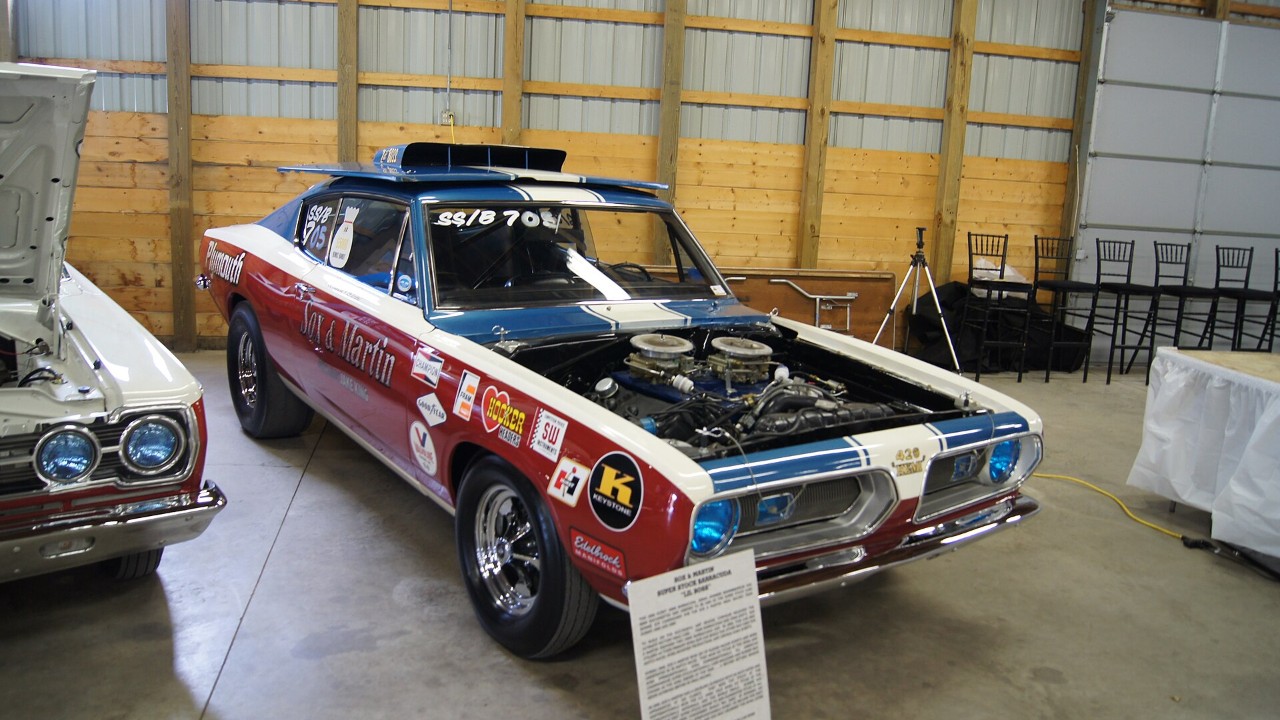
Plymouth’s twin to the Hemi Dart was a fastback Barracuda. Chrysler built approximately fifty of them with the 426 Hemi in 1968, and Hurst Performance assembled them too. That means the Barracuda is even scarcer than the 80 Hemi Darts. For reference, Chrysler rated the street version of the 426 Hemi at 425 horsepower.
In addition, the lightweight parts read like a race-shop shopping list. The cars got lightweight Chemcor side glass, fiberglass front fenders, a fiberglass hood with a scoop and lightweight front seats. Plymouth also left out the rear seat and the sound deadener.
Our take: the Hemi Barracuda deserved better than its usual role as the Dart’s sibling. It was every bit as serious, and it came from the same tiny run of factory drag cars. In our view, the later Hemi ‘Cuda street cars get the fame this one earned first. Plymouth was honest about what it was, too. An included sticker stated that the car was not for use on public roads.
More from Fast Lane Only