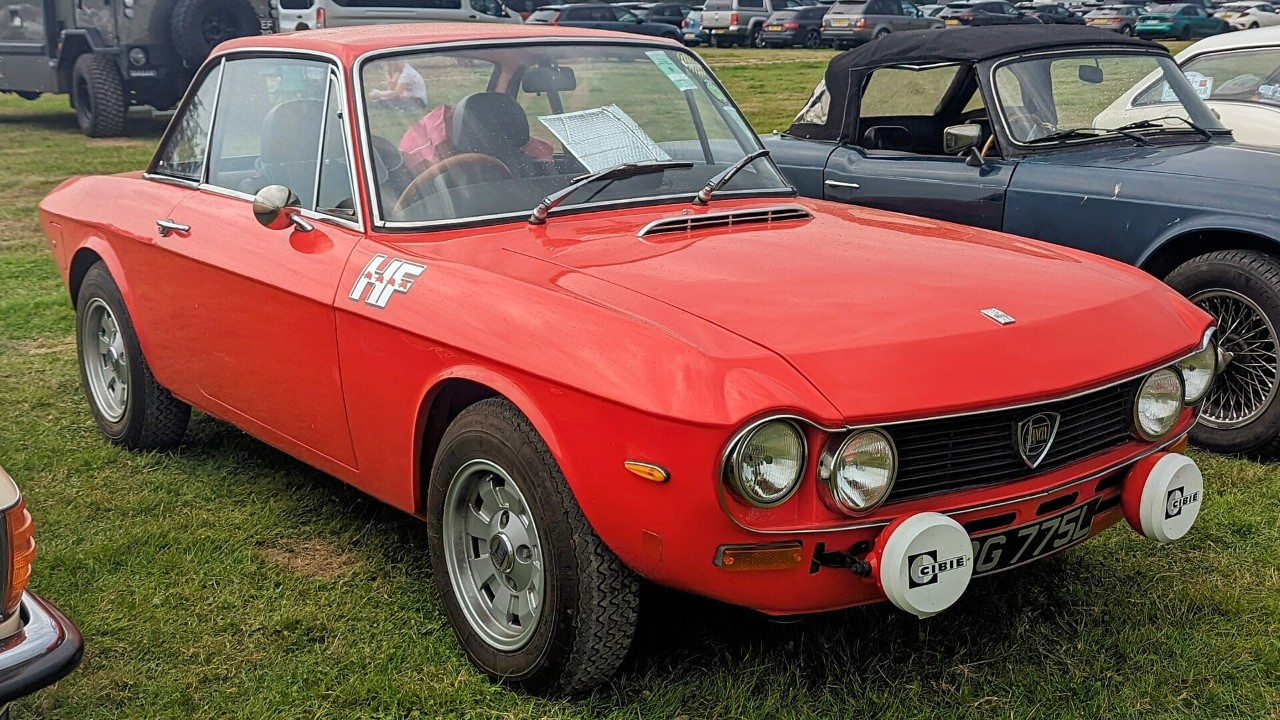
The Lancia Fulvia won the Monte Carlo Rally in 1972, and that same year Lancia took the international makes title for rally cars. A small front-drive coupe beat bigger, louder machines. Italian sports cars of that era often worked that way, because clever engineering mattered more than size.
Italy gave the world plenty of fast cars between the mid-1960s and the mid-1970s. However, speed alone does not keep a car in the conversation for half a century. The ones that last usually have a story, an odd engineering choice, or a design nobody has managed to copy.
These are our picks: 10 Italian sports cars we think are worth talking about today. The choices and verdicts are our opinion. Meanwhile, the years, engines and production figures come from maker records, auction catalogs and reference sources we checked for this story.
1. Lancia Fulvia Coupé HF
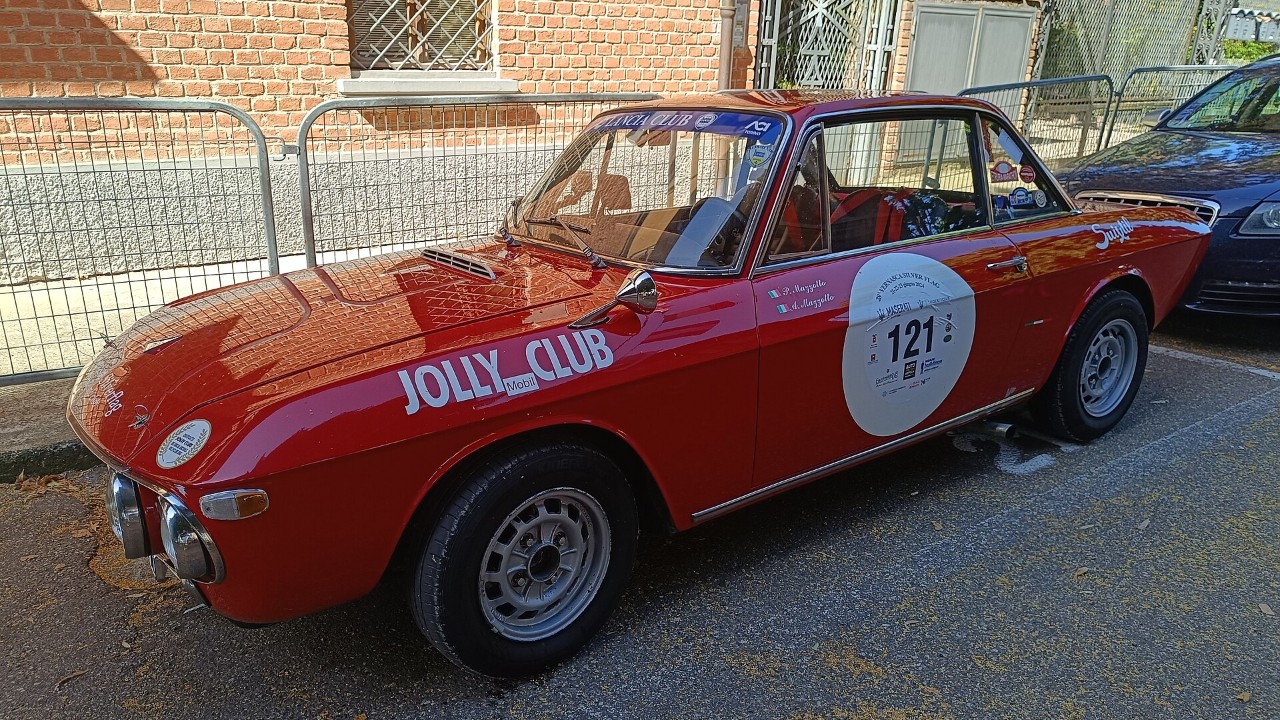
Piero Castagnero drew the Fulvia Coupé inside Lancia’s own styling center, and the car arrived in 1965. It sat on a shorter wheelbase than the Fulvia sedan. Under the hood was a narrow-angle V4, a layout Lancia loved, mounted to drive the front wheels. Lancia had form here, since its Aurelia had already brought the first production 60-degree V6 to market.
The HF badge marked the tuned versions. The first Coupé HF used a 1,216 cc engine with 88 CV, up from 80 CV in the regular coupe. Later Rallye 1.6 HF cars went to 1,584 cc and 115 CV. Then the works team took it rallying. Sandro Munari and Mario Mannucci won Monte Carlo in 1972 by more than ten minutes over a Porsche 911 S.
Lancia built 139,797 Fulvia Coupés before the model ended in 1976. In our view, that makes the HF the rare case of a giant-killer you can actually find. If you shop for one, the HF paperwork is what to check first, because plenty of ordinary coupes now wear the badge.
2. 1965 Alfa Romeo Giulia Sprint GTA
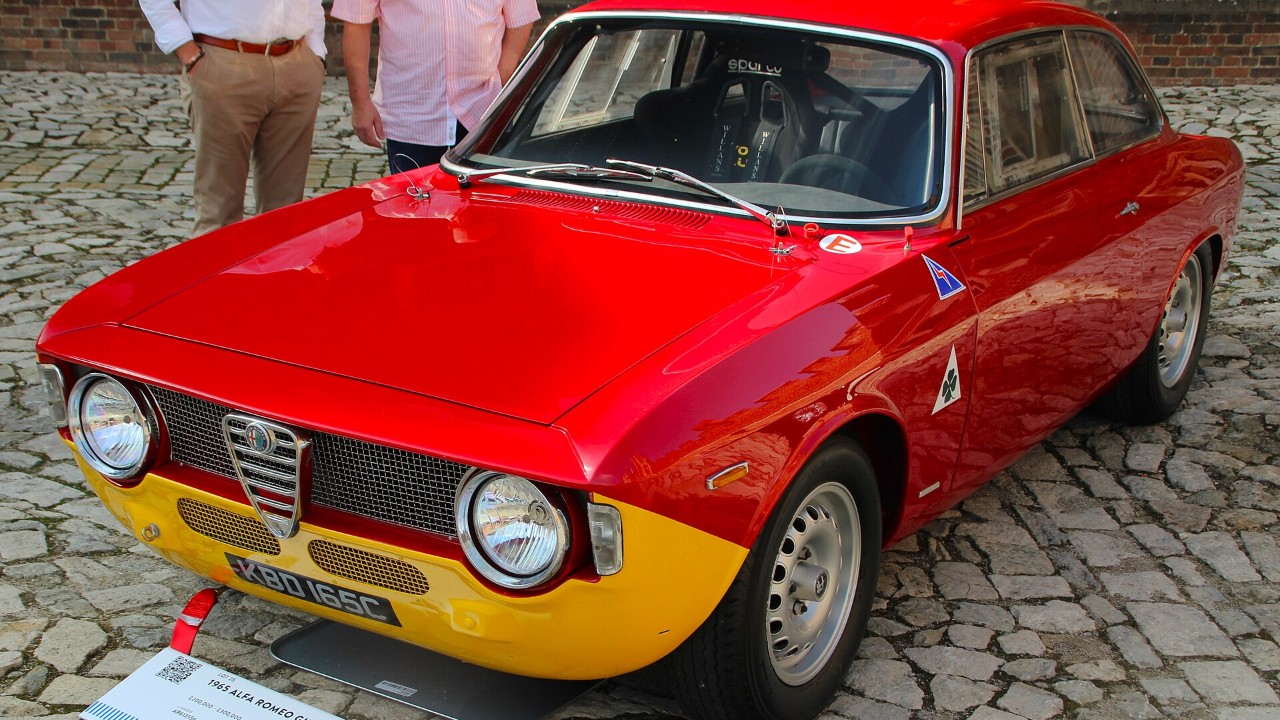
The letter A in GTA stands for Alleggerita, Italian for lightened. Alfa Romeo swapped the steel outer panels of its Giulia Sprint GT coupe for aluminium ones. It also thinned the inner steel panels, then bonded and riveted the skin together. The result weighed roughly 1,640 pounds dry.
That diet was only half the story. The 1,570 cc engine got two spark plugs per cylinder, and the road version made about 115 PS. Meanwhile, Autodelta, Alfa’s racing arm, built competition engines that reached around 170 PS. Alfa made about 500 cars, enough to qualify the GTA for touring car racing.
Racing is where the GTA earned its name. Andrea de Adamich won the European Touring Car title in 1966, and the GTA took the championship again in 1967 and 1968. For our money, the GTA is the template for every lightweight special that followed. It proves that taking weight out can matter as much as adding power. That lesson is why we would put a GTA near the top of any list of Alfas to talk about.
3. 1969–1973 Fiat Dino Spider 2400 (Second Series)
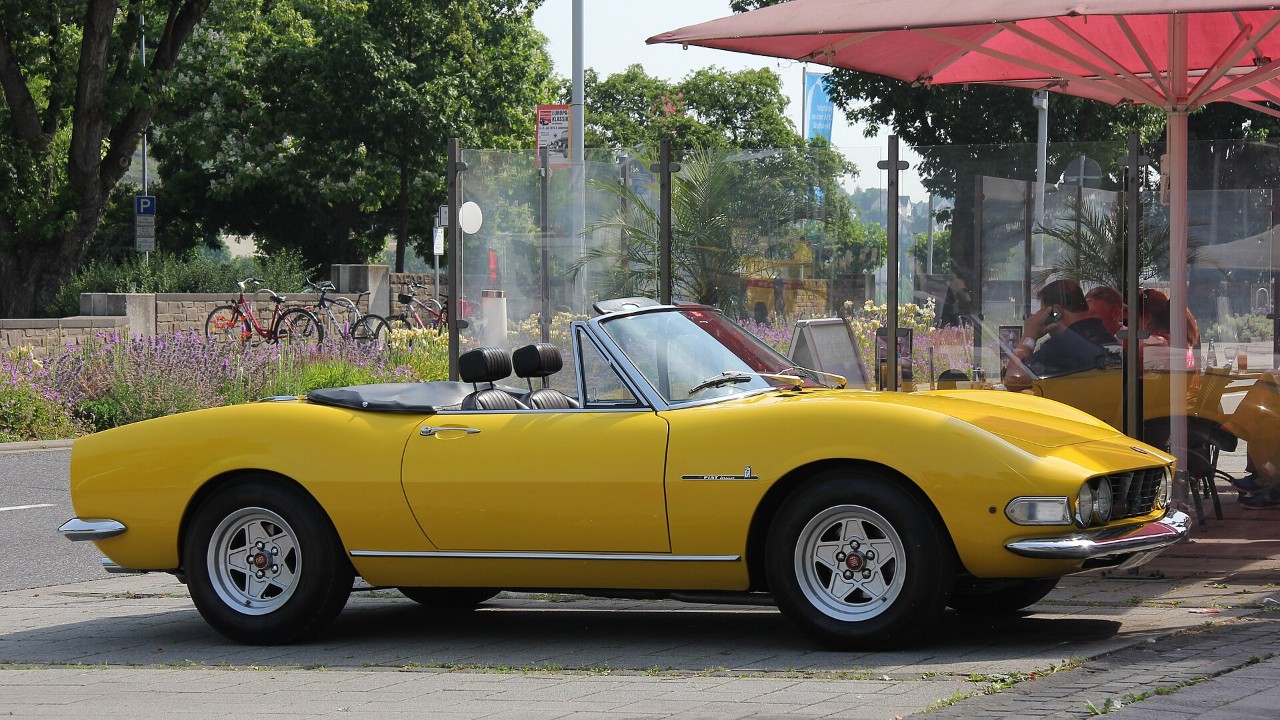
The Fiat Dino exists because of a racing rule. Ferrari wanted a V6 for Formula 2, and the rules called for 500 production-based engines within a year. Ferrari could not build that many alone, so Fiat agreed to put the engine in its own car. Pininfarina designed and built the Spider bodies.
The second series arrived in October 1969, and it changed more than the badge. The engine grew to 2.4 liters with a cast-iron block, and it made about 180 PS. Fiat also replaced the leaf-sprung rear axle with independent rear suspension on coil springs. From December 1969, Ferrari assembled the cars in Maranello on the same line as the Dino 246 GT.
Only 420 of the 2.4-liter Spiders were built, compared with 1,163 two-liter Spiders. That makes the later car the rarest Fiat Dino of all. In our view, it is the better car too, since the extra torque and the modern rear end suit the engine. So a Fiat badge on the nose hides a car built in Ferrari’s own factory.
4. 1972 Iso Grifo Series II
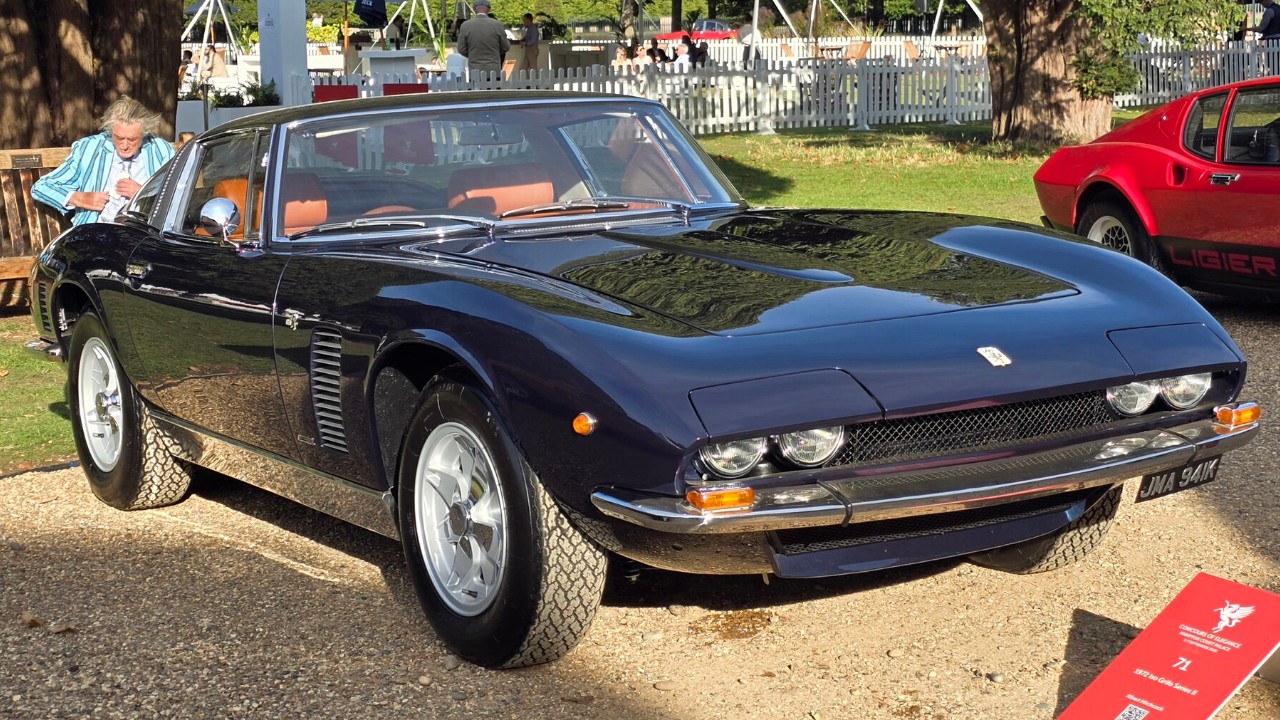
Iso hired two of Italy’s best talents for the Grifo. Giorgetto Giugiaro styled the body at Bertone, and Giotto Bizzarrini handled the engineering. The car went on sale in 1965 and ran until Iso went bankrupt in 1974.
The Grifo paired Italian craft with American muscle. Early cars used a Chevrolet 327 V8, and the 7 Litri version used a Chevrolet 427. The Series II arrived in 1970 with a sleeker nose and hidden headlights. Later cars used a Chevrolet 454, while the 1972 IR-8 version switched to a Ford 351.
Iso built 330 Series I cars and only 83 Series II cars, for 413 in all. Our take: the Series II is the more striking of the two, and its low nose has aged beautifully. Fans of forgotten GT cars will know the formula. Here, though, the execution is about as good as it got.
5. Bizzarrini 5300 GT Strada
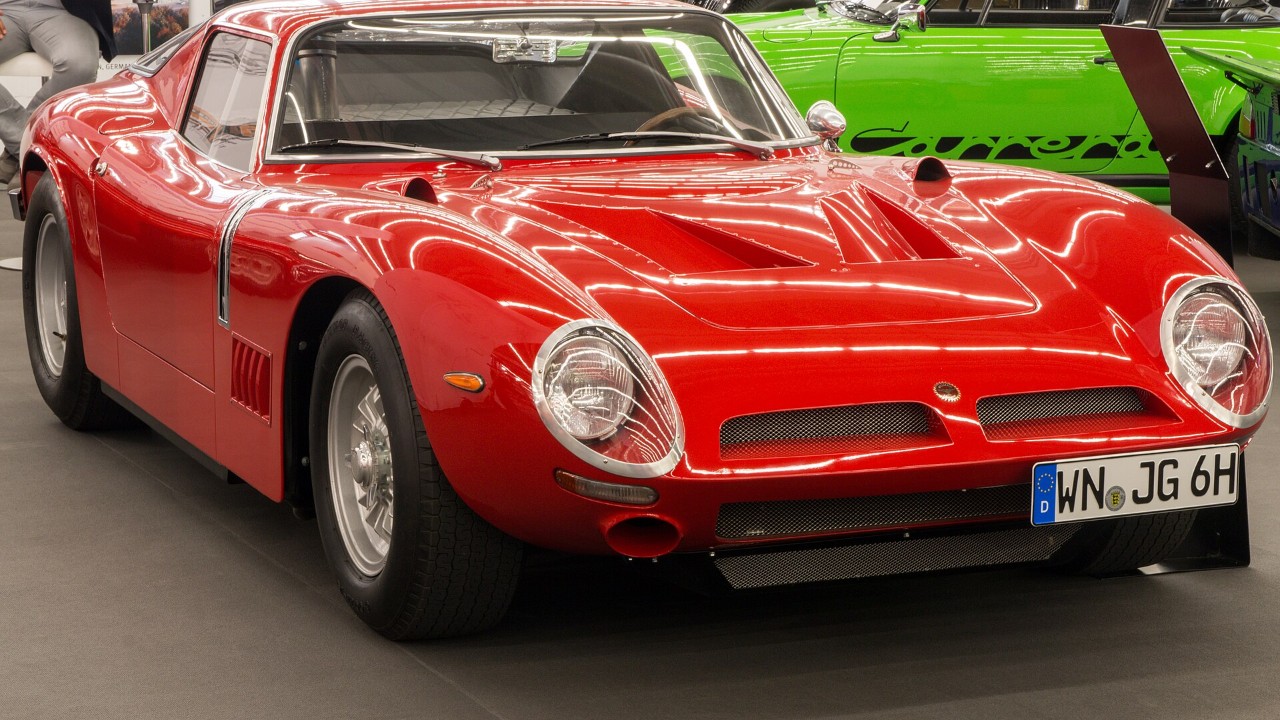
Giotto Bizzarrini knew how to build a winner. At Ferrari, he did much of the development work on the 250 Testa Rossa and the 250 GTO. After leaving Ferrari in 1961, he designed a V12 for Lamborghini and worked on Iso’s cars. His racing Grifo won its class at Le Mans in 1964 and 1965.
The 5300 GT Strada was that race car made legal for the road. According to RM Sotheby’s catalog for a 1965 example, it used a 5,359 cc Chevrolet Corvette V8 rated at 365 hp, with a four-speed manual. The body sat over a fabricated platform chassis, and many cars wore aluminium panels. The auction house put the claimed top speed at up to 180 mph.
Estimates for total production run from 100 to 149 cars, including perhaps 70 with alloy bodies. Bizzarrini production ended in 1969. To us, the Strada is the purest of the Italian-American hybrids, a car built by an engineer rather than a marketing team. That is why it keeps coming up whenever people talk about the GTO’s spiritual cousins.
6. Maserati Ghibli (First Generation)
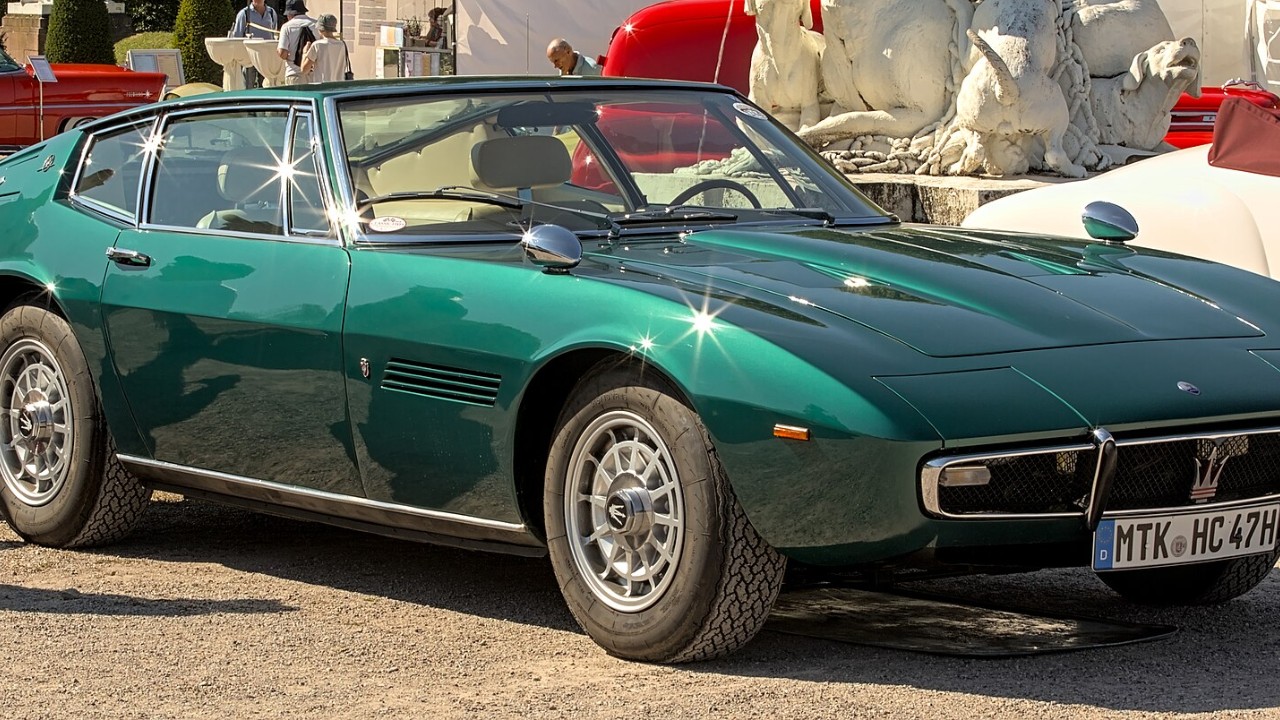
Maserati named the Ghibli after a hot desert wind, and the car looked the part. A young Giorgetto Giugiaro drew it while working at Ghia. The car was unveiled on the Ghia stand at the Turin show in late 1966, and deliveries began in March 1967.
The engine was a four-cam 90-degree V8 borrowed from the Quattroporte and the Mexico. However, Maserati gave it dry-sump lubrication so it could sit under the very low hood. According to Maserati’s own history of the car, the 4,719 cc version made 330 hp and reached 265 km/h. The later 4.9-liter SS made 335 hp and topped out at 285 km/h.
Maserati’s spec table lists 779 standard Ghiblis and 425 SS cars, and the company added a Spyder in 1969. In our view, the Ghibli is the most beautiful front-engine Maserati of its era. Its long hood and low tail set the tone for big Italian GTs of the period, at least to our eyes.
7. Lancia Stratos HF
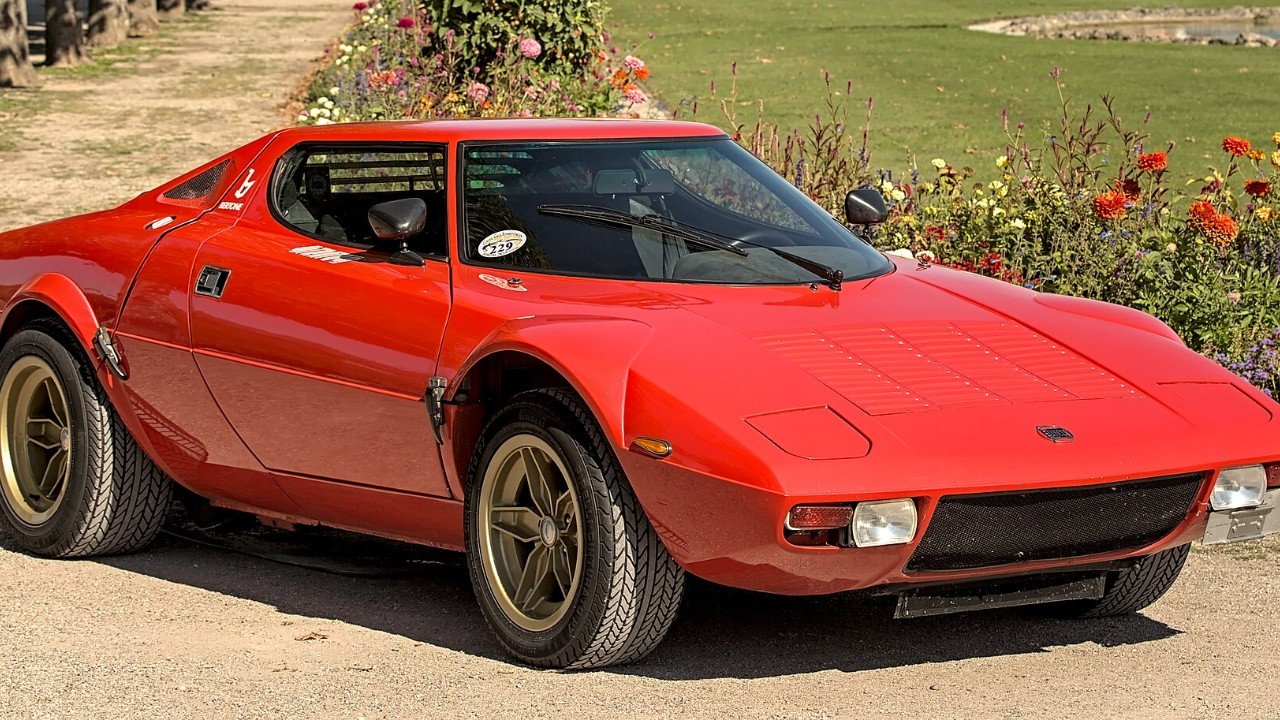
Most rally cars started life as road cars. The Stratos went the other way. Lancia designed it to win rallies first, then built just enough road cars to make it legal. The rules asked for 500 cars, and the usual estimate is that about 492 were completed.
Marcello Gandini shaped the wedge at Bertone. The idea grew out of his 1970 Stratos Zero concept, which used a Fulvia V4. For the real car, Lancia sourced a 2,418 cc V6 from Ferrari’s Dino line, rated at 190 hp in road trim. Bertone made the bodies, and Lancia handled final assembly at Chivasso.
The plan worked. The Stratos won the World Rally Championship in 1974, 1975 and 1976, with Sandro Munari and Björn Waldegård among its drivers. Munari then won Monte Carlo again in 1977. For us, the Stratos is the clearest example of a car built for one job and doing it brilliantly. Few road cars can say their whole shape came from a stage rally.
8. 1975 Ferrari 308 GTB
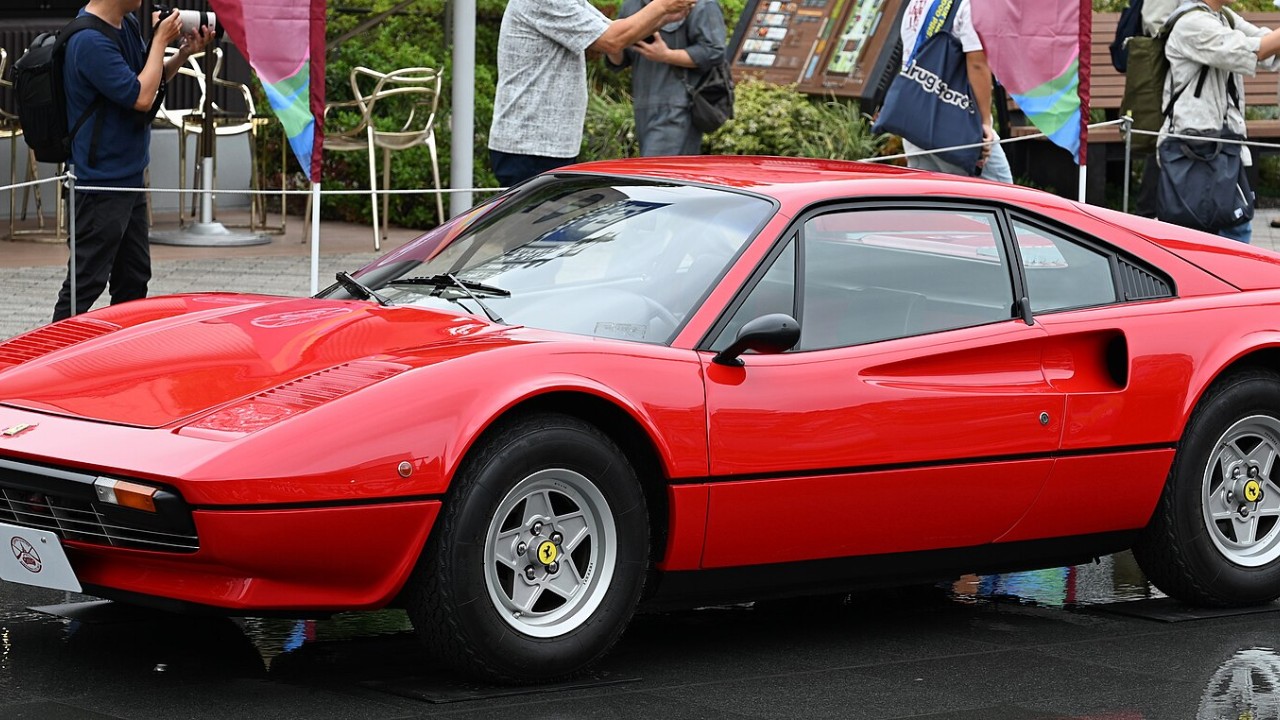
A 1975 308 GTB is not the same car as the steel-bodied ones most people picture. Ferrari launched the GTB at the 1975 Paris show, and its first bodies were glass-reinforced plastic. That kept the weight near 1,050 kg. Ferrari switched to steel in June 1977, which added roughly 150 kg.
Only 808 fibreglass cars were built, so these early cars are the collector’s choice today. Leonardo Fioravanti styled the body at Pininfarina. Behind the seats sat a 2.9-liter V8 with four twin-choke Weber carburetors. European cars made about 255 PS, while emissions gear cut US versions to about 240 PS.
The 308 later became a TV star, because Tom Selleck’s character drove 308 GTS cars on Magnum, P.I. from 1980 to 1988. In our opinion, though, the early fibreglass GTB is the version worth seeking out. It is lighter, purer and closer to what Fioravanti first drew.
9. 1971 Lamborghini Miura P400 SV
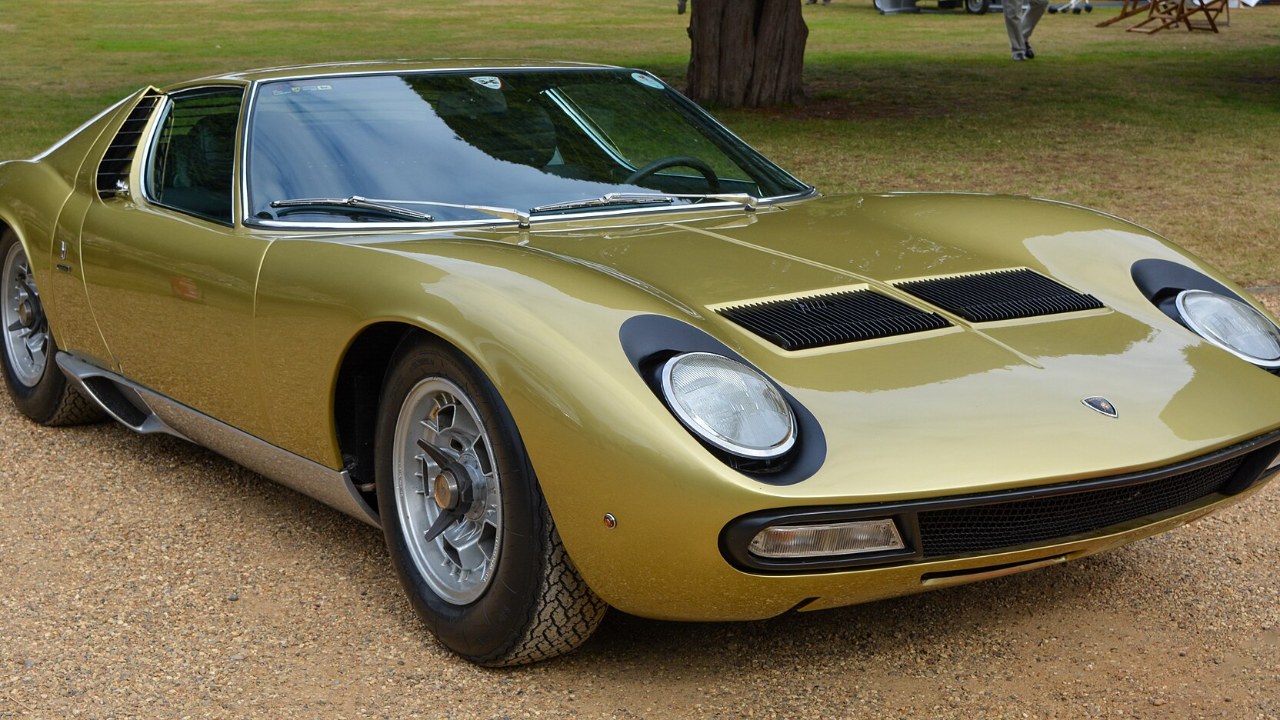
The Miura was the first high-performance production road car with its engine mounted behind the driver and driving the rear wheels. Lamborghini built it from 1966 to 1973. Its 3,929 cc V12 sat sideways, and early cars shared one casting between engine and gearbox.
The SV, shown in 1971, was the last and most developed version. It got revised cam timing, wider rear fenders for nine-inch rear wheels and new taillights. Output rose to 385 PS at 7,850 rpm. Lamborghini built 150 SVs, and the last 96 had a split sump, which finally separated engine oil from gearbox oil.
Marcello Gandini styled the Miura at Bertone, and the design made his name. In our view, the SV is the Miura sorted out, with the early cars’ rough edges fixed. It is also the car that set the layout for nearly every supercar that came after it, which is reason enough to keep talking about it.
10. Alfa Romeo Montreal
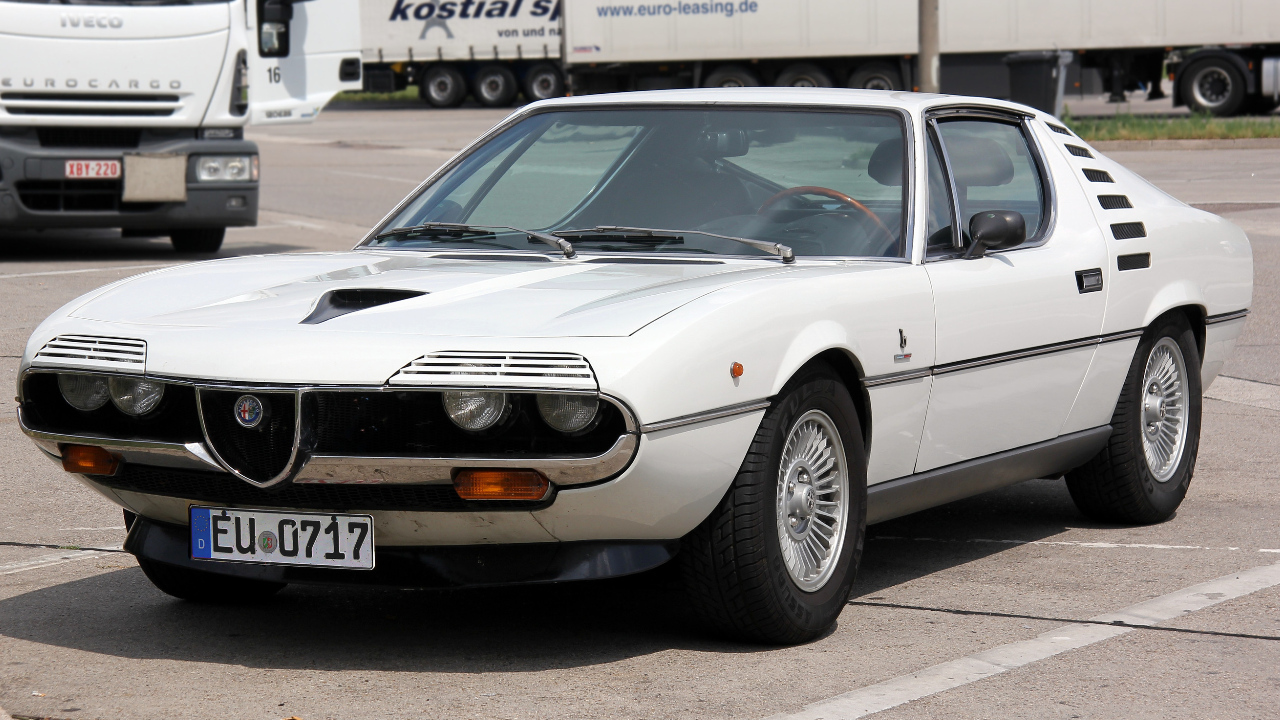
The Montreal began as a show car at Expo 67 in Montreal, Canada. Visitors called it “The Montreal,” and Alfa Romeo kept the name when it went into production in 1970. Marcello Gandini designed the 2+2 coupe at Bertone, which also built the bodies near Turin.
Under the hood was a 2,593 cc V8 with SPICA mechanical fuel injection, rated at about 200 PS. The engine took inspiration from the Tipo 33 racing V8. However, it shares no parts with that race engine. Gandini also gave the car its signature headlamp grilles, which retract when the lights come on.
Alfa built about 3,917 Montreals before production ended in 1977. In our view, the Montreal is the most interesting Alfa of the 1970s, a V8 grand tourer from a maker known for four-cylinder cars. Its slatted lamps and side vents remain some of Gandini’s most distinctive details.
More from Fast Lane Only