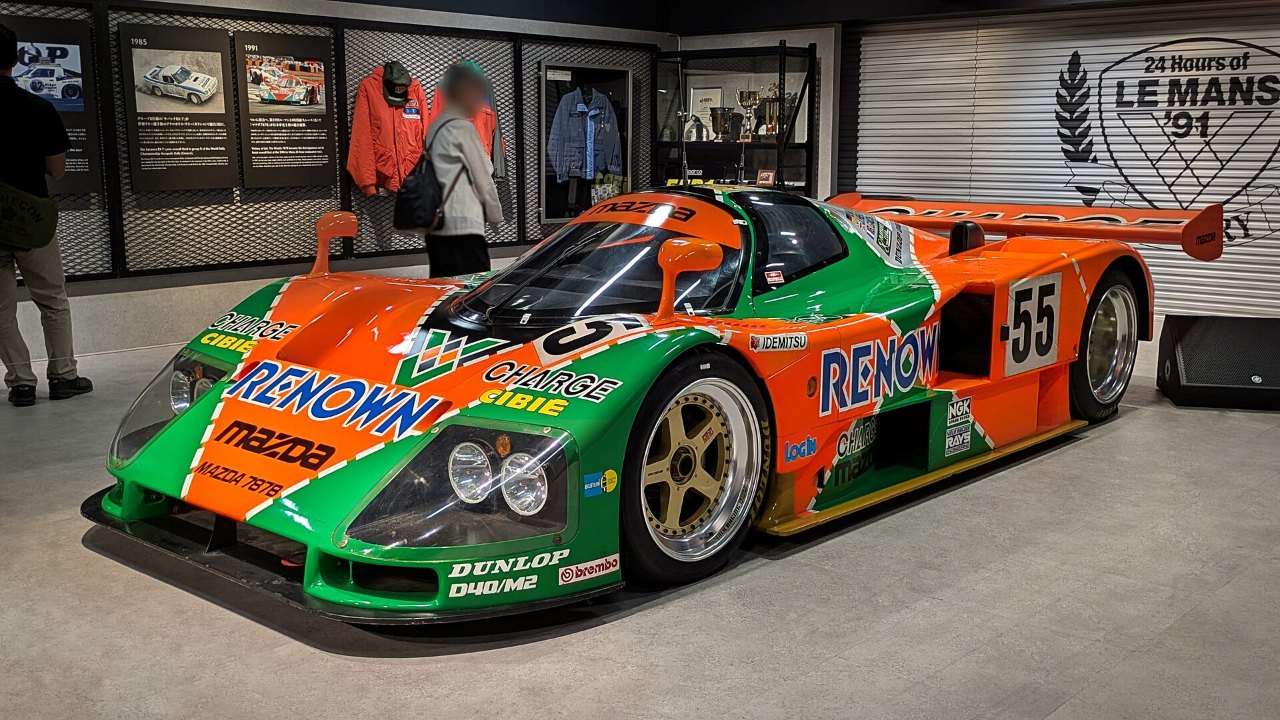
On June 23, 1991, Johnny Herbert drove the No. 55 rotary Mazda 787B across the line to win the 24 Hours of Le Mans. Mazda says it remains the only rotary-powered car to win the race overall. It was also the first overall Le Mans win for a Japanese manufacturer.
That result came from a mix of long preparation, a well-timed rules decision and a reliable four-rotor engine. It also came in the last year the rules let a rotary race for the win. Here is how those pieces fit together.
Why Mazda Kept Bringing Rotaries to Le Mans
Mazda did not arrive at Le Mans in 1991 as a newcomer. Its Mazdaspeed racing arm had run rotary-powered cars there since the 1970s. Then the factory effort began in earnest in 1983, according to a history of the win by Jalopnik.
Those years brought progress, but no overall win. For example, Hagerty UK notes that the earlier 757 and 767 Group C cars took class wins. In 1990, however, both 787 entries retired in the early-morning hours, the magazine says. So the 1991 team had a lot of race miles behind it, along with a clear memory of how the race could go wrong.
By then, time was also running out. The Jalopnik account reports that the sport’s governing body, FISA, had made clear rotary engines would not be allowed at Le Mans from 1992. As a result, 1991 was Mazda’s last real chance.
Inside the Rotary Mazda 787B and Its R26B Engine
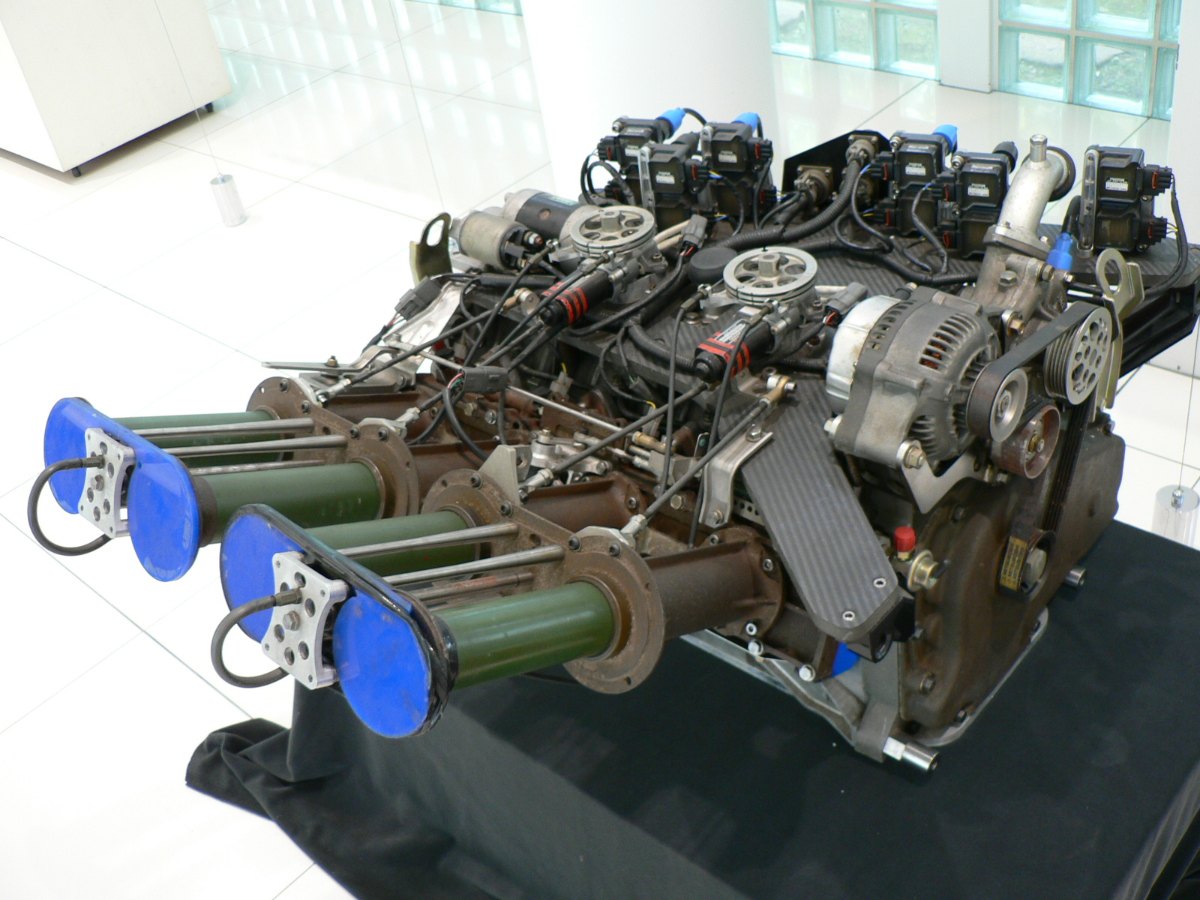
The heart of the car was the R26B, a four-rotor engine. According to Mazda Australia’s 35th-anniversary story, it made 515 kW and, after development, 608 Nm of torque. Published horsepower figures differ, though. For instance, evo quotes 680 bhp in Le Mans trim with an 8,500-rpm limit, while Jalopnik rounds it to 700 horsepower.
Evo’s anatomy of the 787B also lists each rotor at 654cc. In addition, it says a British company, Advanced Composite Technology of Heanor in Derbyshire, made the car’s carbon composite monocoque. Meanwhile, the drivers were all current or former Formula 1 racers: Herbert from Britain, Bertrand Gachot from Belgium and Volker Weidler from Germany.
Weight mattered too. A new 1991 rule required competitors to add ballast, which would have hurt the 787B, Jalopnik reports. However, Mazdaspeed team principal Takayoshi Ohashi won an amendment from FISA that let the car run in its standard form. Hagerty UK puts it another way: the naturally aspirated rotary escaped the weight penalties placed on piston-engined rivals.
How the 1991 Race Fell Mazda’s Way
The 787B did not lead from the start. Instead, Weidler moved it into the top ten by 6 p.m. on the first evening, according to Jalopnik. Then the faster cars ahead began to drop out. Hagerty UK says neither of Peugeot’s 905s lasted beyond the four-hour mark.
That left a Sauber-Mercedes at the front. Later, though, the leading Mercedes-Benz retired, Jalopnik reports. Hagerty UK traces that car’s trouble to a sheared alternator bracket on the C11. After that, the Mazda took control.
Mazda’s reliability made the difference. The No. 55 car completed 362 laps, Jalopnik says, and needed just one oil top-up, a change of brake discs and pads, and one new nose. Meanwhile, Herbert drove a triple stint to the finish. He then needed medical attention for dehydration and missed the podium ceremony, according to the official 24 Hours of Le Mans site.
The Rule Change That Made It a One-Off
The race organizer’s own site describes Mazda as the first marque with a rotary engine to win the 24 Hours. Mazda goes a step further. Its global newsroom calls the 787B the only rotary-powered car to achieve an overall Le Mans victory. Independent outlets agree, too: Hagerty UK and evo both describe the rotary Mazda 787B as the only rotary-engined winner.
The reason is the rulebook. For 1992, new regulations required piston engines, Mazda Australia says. As a result, the 1991 race was the rotary’s last shot at the overall win under those rules.
The engine itself came through in good shape. After the race, Mazda stripped the R26B down and found it was down just 2% on peak power after almost 5,000 kilometers, according to Mazda Australia.
Where the Winning Car Is Now
Mazda kept the winner. According to Mazda Australia, the car spends most of its time in the Mazda museum. Even so, Mazda brought it back to Le Mans for demonstration runs at the race’s centenary in 2023, according to a Mazda news release from that year.
For the 35th anniversary of the win, Mazda’s 2026 news release announced the 787B’s return to the Circuit de la Sarthe. The car was scheduled to run at the Le Mans Classic from July 2 to 5, 2026, the same circuit where it finished 362 laps in 1991.
More from Fast Lane Only
- Unboxing the WWII Jeep in a Crate
- 15 rare Chevys collectors are quietly buying
- 10 underrated V8s still worth hunting down
- Police notice this before you even roll window down
This article was created with the help of AI and was reviewed and edited by Fast Lane Only editors before publication.