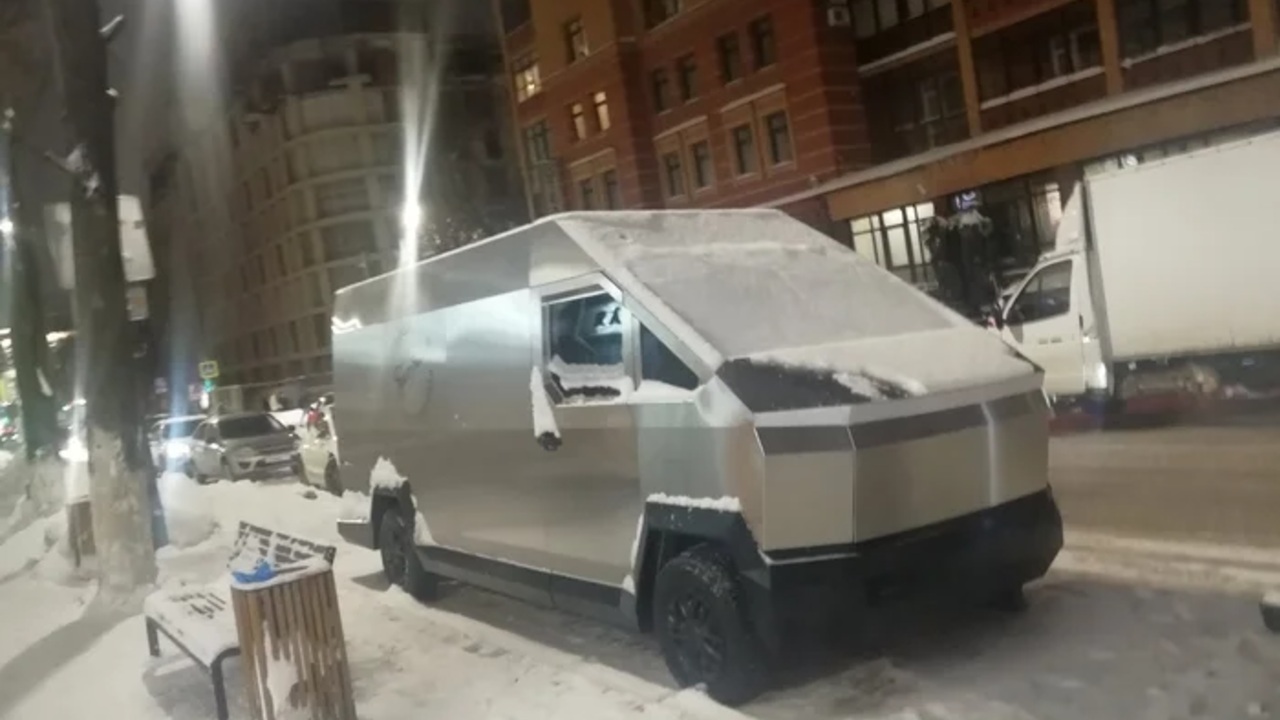
Russia’s so‑called Cybervan looks like a prop that escaped from a low‑budget sci‑fi film and accidentally merged into traffic. It borrows the sharp angles and bare metal bravado of Tesla’s Cybertruck, yet everything about it feels like a retrofitted fantasy, a futuristic truck that already feels out of date the moment it hits Russian roads. I see it less as a glimpse of tomorrow and more as a rolling commentary on how far the country’s automotive ambitions lag behind the global electric and autonomous race.
A homemade Cybertruck echo on Russian roads
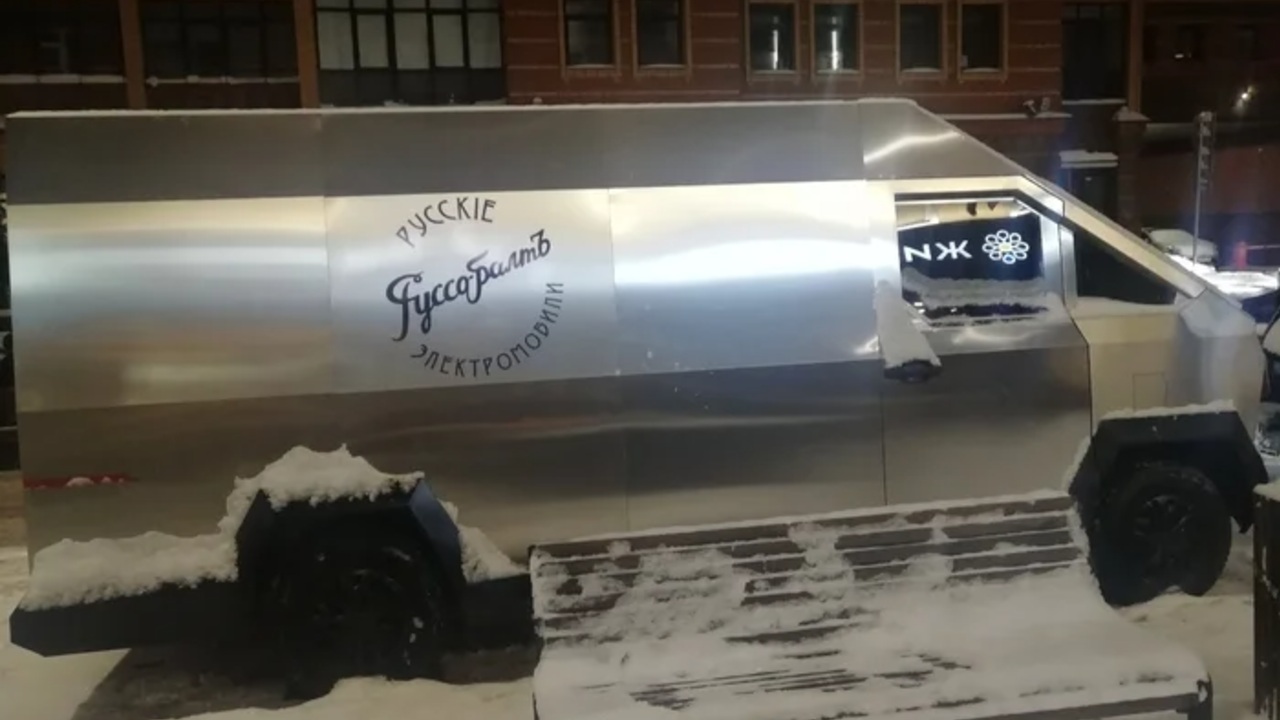
The first thing that stands out about the Russian Cybervan is how aggressively it imitates Tesla’s design language without ever quite getting there. Reports describe it as an “An Unexpected Find” on Russian roads, a strange homemade copy that is “strikingly similar” to the wedge‑shaped pickup from Tesla, right down to the angular bodywork and exposed metal panels that try to mimic the Cybertruck’s stainless steel skin. Instead of a polished production vehicle, it looks like a one‑off experiment, a private attempt to bottle the same shock value that made Tesla’s original pickup impossible to ignore.
Underneath the sci‑fi shell, the Cybervan appears to be far more ordinary than its styling suggests. Little is known about its technical details, but it reportedly started life as an electric V90 model before being rebodied into this angular van, with the new exterior serving as a rolling advertisement for the builder’s business rather than a serious engineering leap. That makes the vehicle less a breakthrough and more a costume change, a conventional platform dressed up in Cybertruck cosplay to turn heads on Russian roads rather than to redefine what a truck can do.
Copying the Cybertruck without its tech
When I compare the Cybervan to Tesla’s own hardware, the gap between appearance and capability becomes even clearer. The van seen in Russia is described as mimicking the Cybertruck with angular steel panels and a blocky silhouette, yet it is likely based on China’s electric Weiqi V90, a relatively modest commercial van that was never designed to carry the performance, software, or structural innovation associated with Tesla’s pickup. The result is a vehicle that looks radical from a distance but, up close, is closer to a rebodied delivery van than a clean‑sheet electric truck.
That contrast matters because Tesla’s Cybertruck is not just a styling exercise, it is tied to a broader push in electric performance and software‑defined vehicles. Tesla has promoted the Cybertruck as a powerful, futuristic pickup, with launch coverage emphasizing its unconventional design and the brand’s focus on performance and technology. By comparison, the Russian Cybervan offers no verified breakthroughs in range, power, or driver‑assist systems, and the available reporting does not document any advanced autonomy or Full Self‑Driving style features. Unverified based on available sources.
While Tesla moves to Cybervan and Robovan, Russia improvises
What makes the Russian Cybervan feel especially dated is that Tesla has already moved beyond the pickup into more ambitious concepts that use the same design language for new roles. Tesla is teasing an autonomous RV called Cybervan, built on a Robovan platform that is meant to leverage Full Self‑Driving technology for long‑distance travel. That project is framed as a way to merge electric drivetrains with modular amenities, turning the Cybertruck aesthetic into a flexible, software‑heavy platform rather than a one‑off styling stunt.
In parallel, Tesla’s next big commercial vehicle push is framed around a Cybervan for transport and logistics, described as the company’s “Latest Fully Autonomous EV for Transport and Logistics” and pitched as a potential robo‑taxi platform. In that vision, the sharp‑edged bodywork is just the shell for a fully autonomous workhorse that can move goods or passengers with minimal human input. Against that backdrop, Russia’s homemade Cybervan looks less like a rival and more like a fan project, borrowing the look of Tesla’s future products while lacking the integrated autonomy, networked software, and industrial backing that make those concepts plausible.
War, image, and the strange role of Tesla in Russian power politics
The Cybervan’s appearance on Russian roads also lands in a moment when Tesla vehicles have become unexpected symbols in the country’s war‑time image‑making. Earlier coverage highlighted how a Chetchin warlord and Putin ally, identified as Ramzison Katarov, claimed to be using a Tesla Cybertruck and praised its capabilities, turning an American electric pickup into a status symbol in a conflict zone. Another report described how a Russian warlord’s Tesla Cybertruck was framed as a successor to “Taliban Toyotas,” signaling a shift from rugged Japanese pickups to high‑tech American EVs as the vehicle of choice for projecting power.
Those stories have been accompanied by speculation about whether Elon Musk could remotely disable such vehicles, with one analysis noting that it is very difficult to verify anything the Chetchian warlord is saying about his access to Tesla hardware. Another video featured Ramzan Kadirov talking about a Tesla Cybert truck and its use in Russia’s war effort, again blending battlefield narratives with the mystique of American electric technology. In that context, the Russian Cybervan reads like a domestic attempt to capture some of the same aura without relying on imported vehicles that might be vulnerable to remote control or sanctions pressure.
A futuristic truck that already feels behind
For all its visual drama, the Cybervan’s biggest problem is that it feels like yesterday’s idea of tomorrow. The original Cybertruck shocked audiences with its bare metal body and sharp geometry, and Tesla’s launch coverage leaned into that spectacle with a barrage of “Hey” and “Heat Heat Heat Heat Heat Hey” hype around the truck’s power and design. By the time a homemade copy appears in Russia, the global conversation has already shifted to how that design language can underpin fleets of autonomous vans and RVs, not just one‑off showpieces.
That is why I see Russia’s Cybervan less as a competitor and more as a commentary on the country’s constrained innovation environment. It is both funny and impressive that a builder could turn an electric V90 into such a convincing visual echo of Tesla’s pickup, yet the project underlines how far Russia is from fielding its own Cybertruck‑class platform or a Cybervan‑style autonomous logistics vehicle. While Tesla experiments with Cybervan, Robovan, and Full Self‑Driving‑enabled transport, Russia is left with a single angular van that looks like it drove out of a sci‑fi fantasy and straight into a technological dead end.
More from Fast Lane Only: