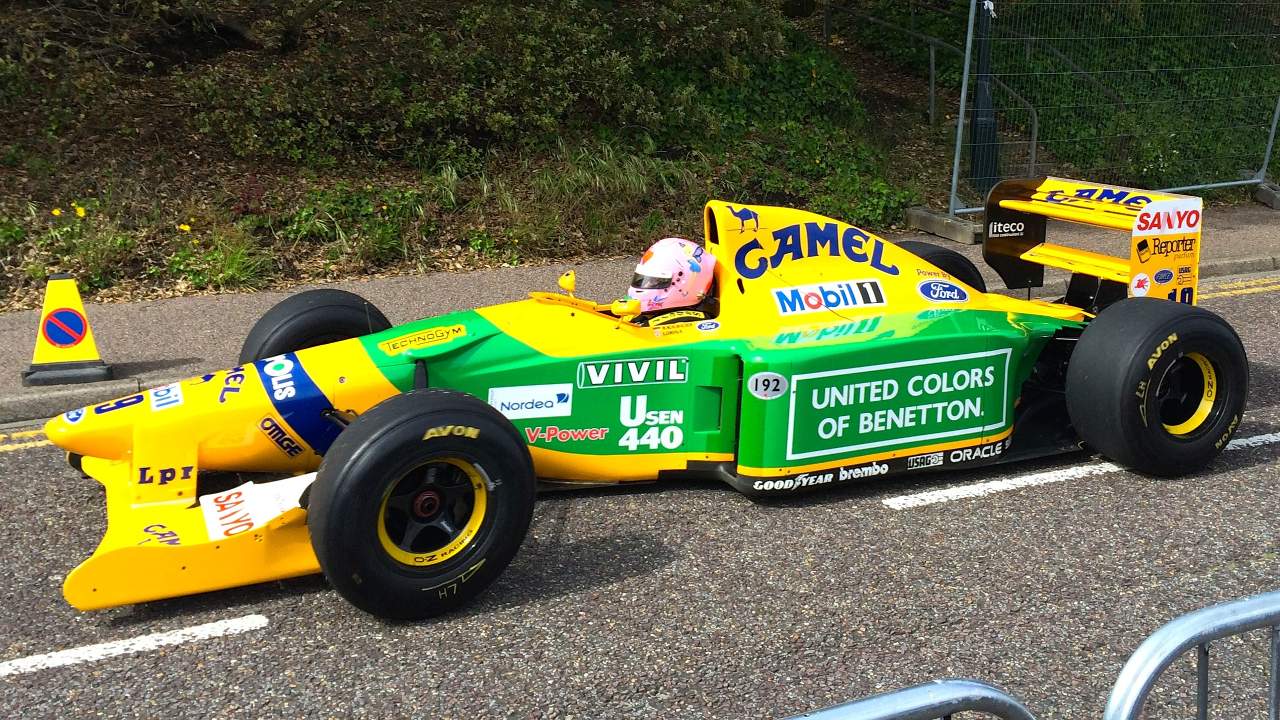
For years, one of Michael Schumacher’s most significant Formula 1 machines sat out of sight in a Renault facility, known only to a small circle of insiders. Now that car, the Renault for which he claimed his first grand prix victory, has quietly emerged onto the open market, offering a rare chance to buy the chassis that turned a promising rookie into a proven race winner.
As a piece of F1 history, it is overshadowed by the title‑winning Ferraris that came later, yet its importance to Schumacher’s rise is arguably just as profound. I see this car less as a museum piece and more as the moment his career pivoted from potential to inevitability, a transformation that is now being priced into its eye‑watering valuation.
The Renault that made Schumacher a winner
Before the championships and the red overalls, Schumacher needed a first win to validate the hype around him, and he found it in a Renault that was quick, agile and perfectly matched to his aggressive style. This was the chassis in which he converted raw speed into a race victory for the first time, a result that shifted him from “future star” to a driver the rest of the grid had to take seriously. The car’s configuration, developed by Renault for a tightly contested season, gave Schumacher the platform to attack, manage tyres and control pace in a way he had not yet been able to showcase over a full race distance.
That breakthrough triumph, recorded in this specific Renault for, is what now underpins the car’s status as his breakout machine. According to detailed auction notes, Schumacher took his first Formula 1 win in this chassis, and it was retained by Renault for years after its competitive life ended, effectively frozen in time as the car that unlocked his winning habit. The fact that it is not just a test car or a show car, but the very machine in which he first saw the chequered flag from the front, is central to why collectors are treating it as a once‑in‑a‑generation opportunity, a point reinforced in specialist coverage of the car’s sale.
Hidden in plain sight inside Renault
What makes this story unusual is how long the car remained tucked away inside Renault’s own collection before anyone outside the factory had a serious chance of owning it. Rather than being sold off quickly, the team kept the chassis in storage, effectively mothballing the Renault for years while newer machinery cycled through the race bays and showrooms. It was not part of the usual parade of ex‑F1 cars that appear at historic festivals or corporate events, which meant that even dedicated fans of Schumacher’s early career could easily have gone their whole lives without seeing the car that delivered his first win.
Only later was the car quietly sold to a private buyer, with reporting indicating that it passed from Renault to its current owner in 2016. From there it disappeared into a discreet collection, away from the public eye and largely absent from the booming historic racing scene. That long period of obscurity is why the car is now being described as having “sat hidden at Renault for years” before resurfacing, a description supported by detailed sale notes that trace its path from factory storage to private hands. The result is a machine that feels almost freshly unearthed, despite having been built and raced decades ago.
From factory treasure to eight‑figure asset
Now that the car has emerged, it is not being treated as a mere curiosity but as a blue‑chip asset with a price tag to match. The current listing pitches Schumacher’s breakout Renault at 9.2 million euros, which equates to around 9.97 million dollars, placing it firmly in the top tier of F1 collectibles. That figure reflects more than just scarcity. It bakes in the car’s direct link to Schumacher’s first victory, its long period of single‑owner custody since leaving Renault, and its unusually complete provenance file, all of which are highlighted in the sale documentation and contemporary analysis of the listing.
In the context of the wider market for ex‑F1 machinery, that valuation signals how far demand has shifted toward cars tied to defining moments in a driver’s career rather than simply championship winners. Recent sales have shown that collectors will pay a premium for chassis that mark a “first” or a turning point, and this Renault fits that pattern perfectly. The auction notes and specialist commentary on the sale stress that it is Schumacher’s first ever race‑winning Formula 1 car, not just another race‑used chassis, which helps explain why the asking price has climbed into eight‑figure territory and why brokers expect strong interest from buyers who see it as both a trophy and a long‑term store of value.
Why this car lags Ferrari in the public imagination
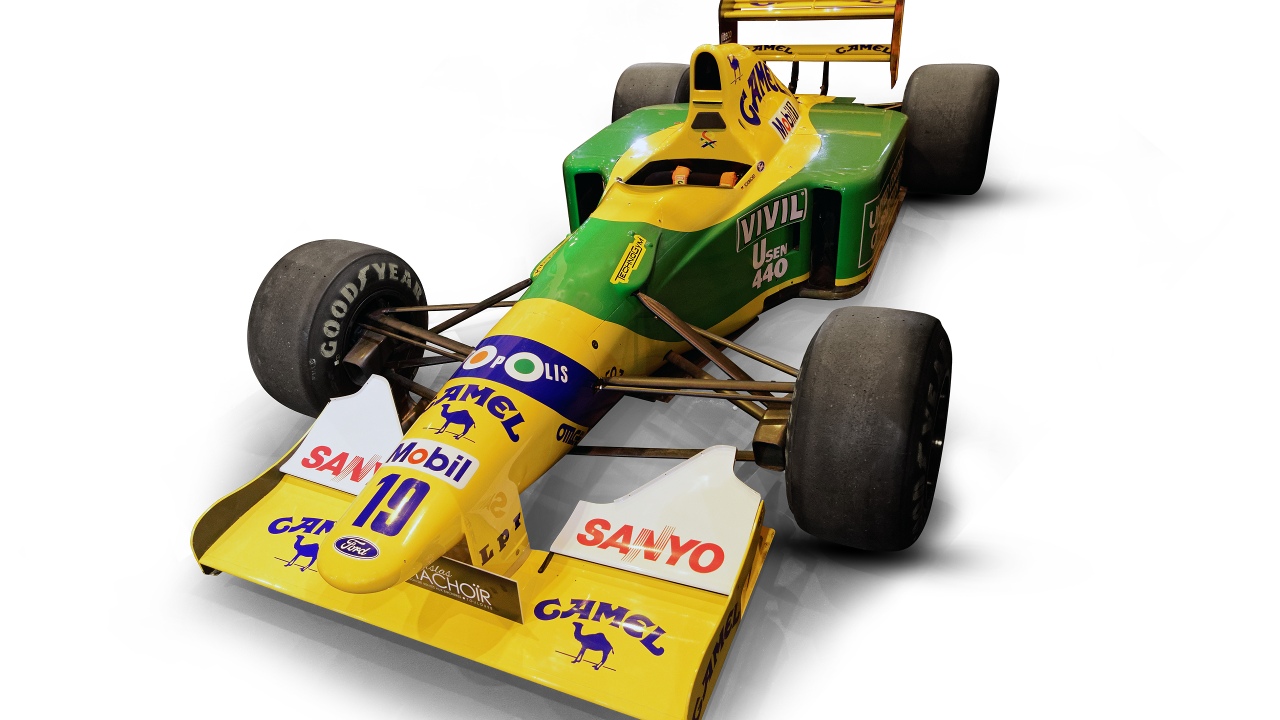
Despite its importance, this Renault does not occupy the same space in popular memory as Schumacher’s later Ferraris, and that gap in recognition is part of what makes its reappearance so intriguing. The narrative of his career is usually told through the lens of his dominant seasons in red, with the earlier years compressed into a brief prelude. As a result, the car that delivered his first win has been overshadowed by the machines that delivered his titles, even though, from a sporting perspective, that initial victory was the moment that proved he could convert speed into silverware. The reporting on the sale implicitly acknowledges this imbalance, framing the Renault as a breakout car that has been somewhat forgotten outside specialist circles.
I see that relative obscurity as a double‑edged sword for the market. On one hand, it means the car lacks the instant, mass‑market recognition of a championship‑winning Ferrari, which can limit casual demand. On the other, it gives the Renault a certain insider appeal, the sense that owning it is a way of claiming a deeper, more nuanced piece of Schumacher history. The sale analysis leans into that angle, presenting the car as a connoisseur’s choice, a machine that serious students of his career will recognise as the true starting point of his era at the front of the grid, even if it never carried the scarlet paint that came to define his image.
What its sale says about F1 nostalgia and value
For me, the quiet arrival of this car on the market underlines how Formula 1 nostalgia is maturing into a more granular, story‑driven form of collecting. Buyers are no longer satisfied with simply owning “a Schumacher car” or “a title‑winning chassis”. They want the specific machine that corresponds to a pivotal chapter, such as a first win, a decisive championship round or a famous duel. The documentation around this Renault, which repeatedly identifies it as the car in which Schumacher took his first F1 victory and notes its long period in Renault’s care before a single private sale in 2016, fits that appetite for narrative detail that can be translated directly into value.
At the same time, the sale highlights how teams and manufacturers are reassessing the cars they keep and the ones they release. Renault’s decision to hold on to this chassis for years, then let it go, has effectively transferred a piece of its own competitive heritage into private hands, where it is now being monetised at a level that would have seemed unlikely when it first went into storage. The coverage of the listing suggests that this will not be an isolated case, as more early‑career cars tied to great drivers are identified, authenticated and brought to market. In that sense, Schumacher’s once‑hidden Renault is not just a breakout car from his past, but a signpost for how the next era of F1 collecting will be defined by the stories that individual chassis can tell.
More from Fast Lane Only: