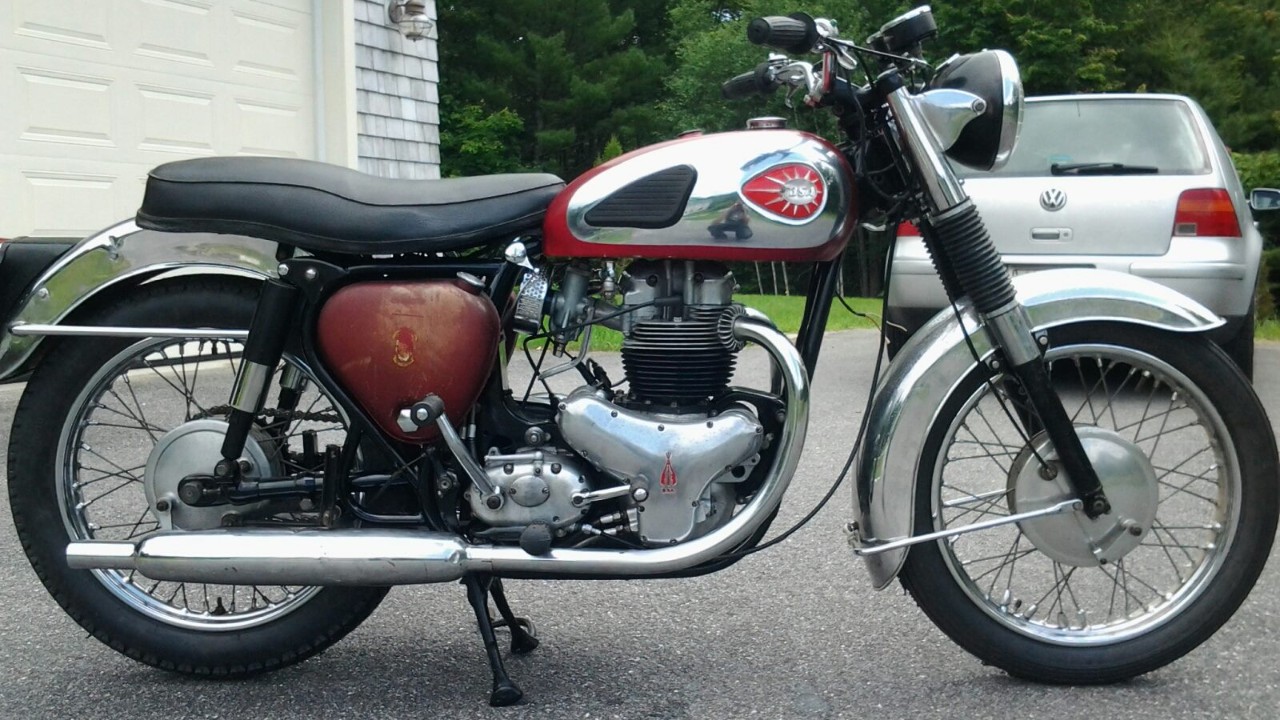
In 1962, BSA dropped a tuned BSA Super Rocket engine into a Gold Star frame and created the Rocket Gold Star. That one move sums up the Birmingham company at its best: strong engines, proven chassis and a habit of mixing the two into something faster.
BSA built everything from wartime workhorses to desert racers and early superbikes. However, not every BSA has aged equally well as a collector bike. Some were too common, some too troubled, and some were simply overshadowed by rivals.
These are our picks for the BSA motorcycles we think are worth collecting today. The verdicts are our opinion, based on what made each model matter. Every year, engine and figure below comes from published model histories and race results.
1. 1963 BSA A10 Super Rocket
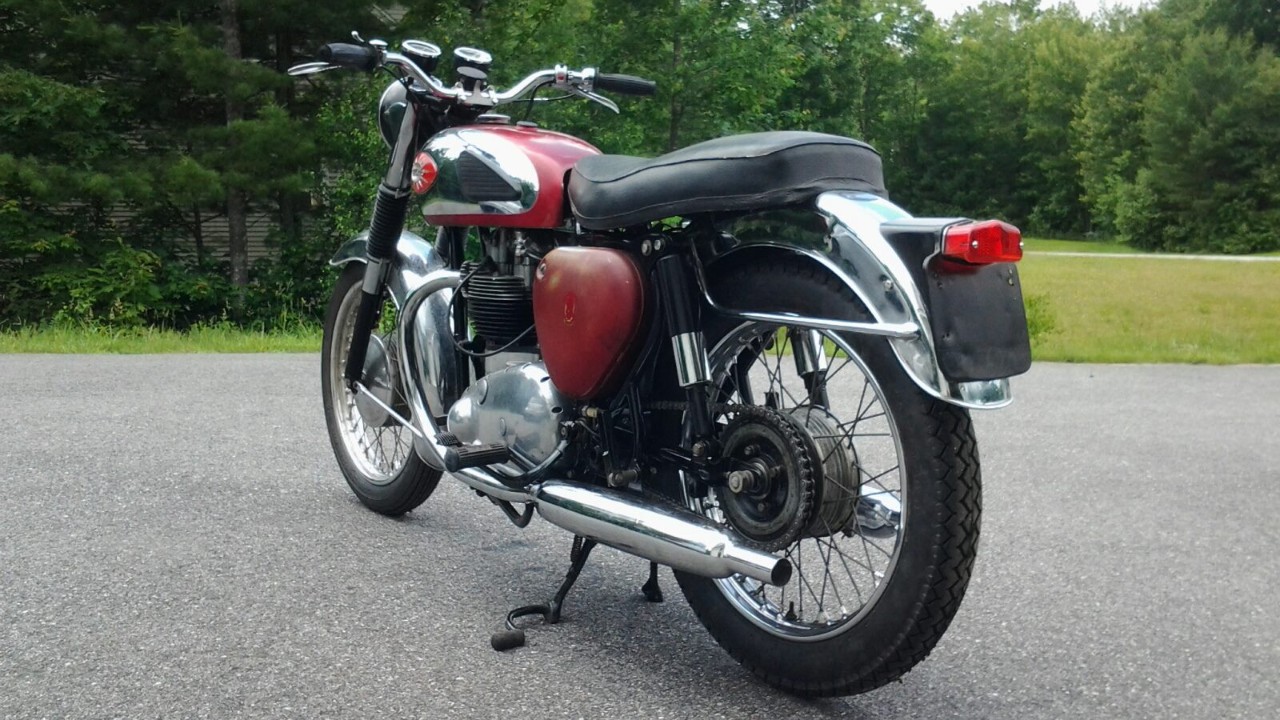
Bert Hopwood designed the A10 series, and BSA built it at Small Heath, Birmingham, from 1950 to 1963. Every A10 used a 646 cc air-cooled parallel twin. In 1958, the Super Rocket replaced the Road Rocket as the sporting model, with 43 bhp at first.
Then, in 1962, BSA fitted a larger Monobloc carburetor, and output climbed to 46 bhp. That same engine, tuned further, powered the Rocket Gold Star. As a result, the 1963 BSA Super Rocket sits right at the peak of the A10 line, in its final year of production.
Our take: the last Super Rockets are the A10s we’d hunt for first. They carry the most developed version of Hopwood’s twin without the rarity premium of the Rocket Gold Star. For riders, that means real performance on a bike you can actually service. If you find one with its original engine and frame numbers, you’ve found a solid foundation for any British bike collection. Meanwhile, it also gives you a direct link to the Rocket Gold Star, which used a tuned version of the same engine.
2. BSA A65 Lightning Rocket
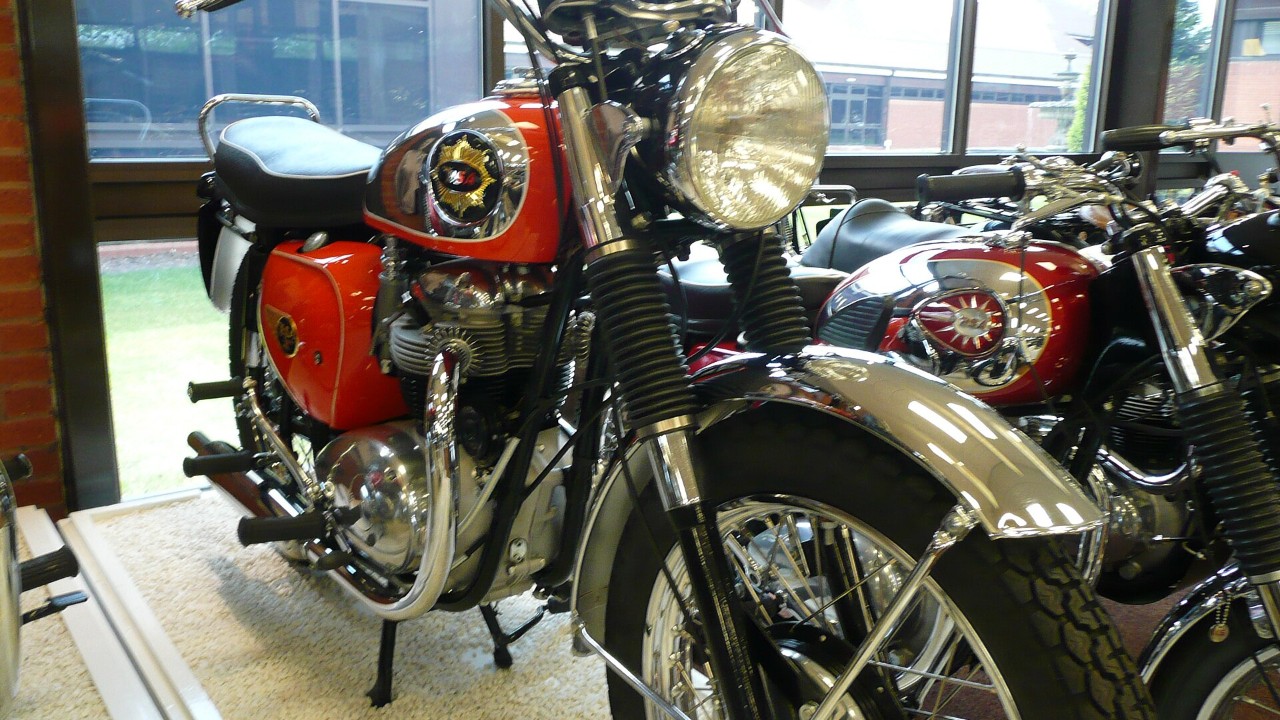
The Lightning Rocket was BSA’s bid for the lucrative American export market in the mid-1960s. It used the 654 cc overhead-valve A65 twin, fitted with high-compression pistons and twin Amal carburetors. BSA rated it at 48 bhp at 6,250 rpm, with a top speed of 115 mph.
Buyers could also order a close-ratio gearbox. A slimmer fuel tank, slimmer mudguards and extra chrome gave the bike a sharper look than the standard A65. Its life was short, though. BSA built it in 1965, the same year the A65L Lightning became its main production twin.
We think the Lightning Rocket is one of the more interesting A65 variants. It shares many cycle parts with the standard twin, so it’s easy to keep running. Yet its tune and trim make it something more special. Before buying, check that the high-compression engine and correct twin carburetors are in place. After all, those parts are what set it apart from a plain A65.
3. 1969 BSA Rocket 3
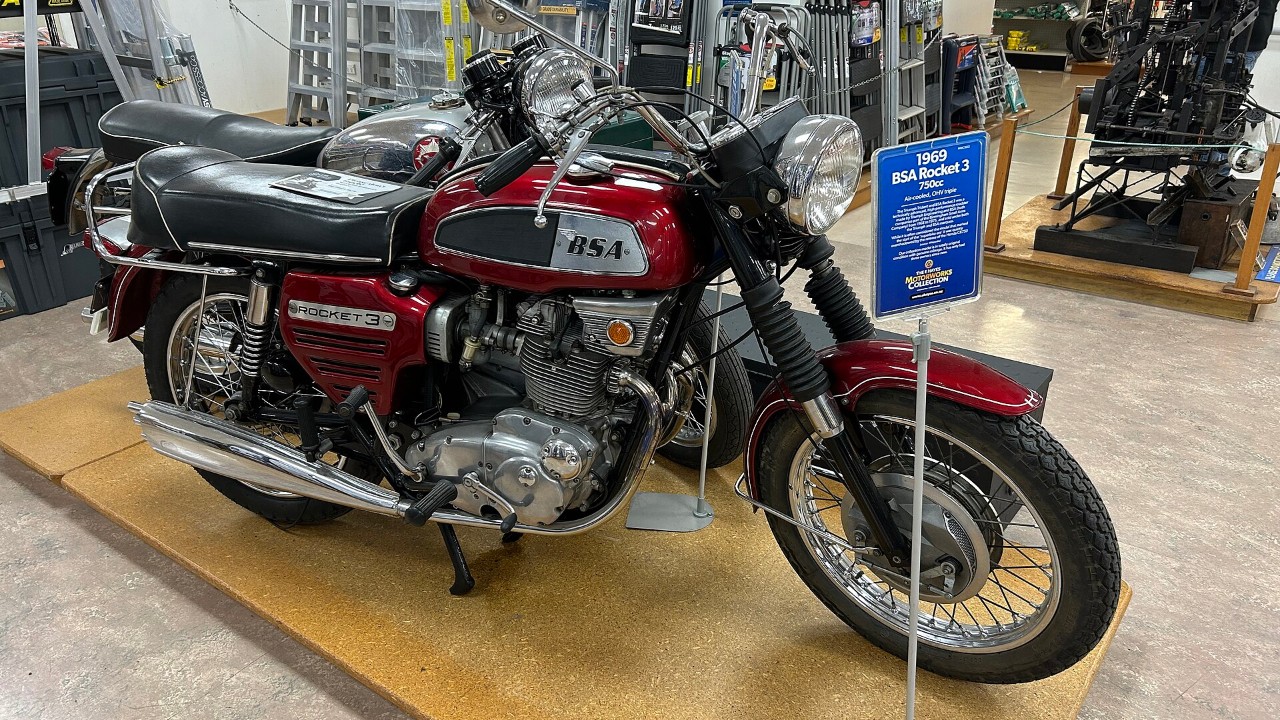
BSA and Triumph launched their three-cylinder superbike in the summer of 1968 to critical acclaim. Bert Hopwood and Doug Hele designed its 740 cc overhead-valve triple, which made 58 bhp at 7,500 rpm. In a 1968 road test, Cycle World recorded a top speed of 117.03 mph.
Bad timing hurt it badly. Honda’s CB750 arrived just four weeks later with an overhead camshaft, five speeds, an electric starter and a front disc brake. The triple won on the track, however. Dick Mann rode a BSA Rocket 3 to victory in the 1971 Daytona 200, and the British triples took the top three places. For more on the Honda that overshadowed it, see our list of 12 motorcycle engines we’d rank above everything else.
Our take: the Rocket 3 deserves more credit than history gave it. Its Daytona win proves the engine had real speed. Early bikes also wear Ogle Design’s square tank, a look that divides opinion but marks the first year of a landmark machine. We’d collect one for the story alone. Also, the triple debuted before Honda’s four, even though the CB750 grabbed the headlines.
4. 1960 BSA A7 Shooting Star
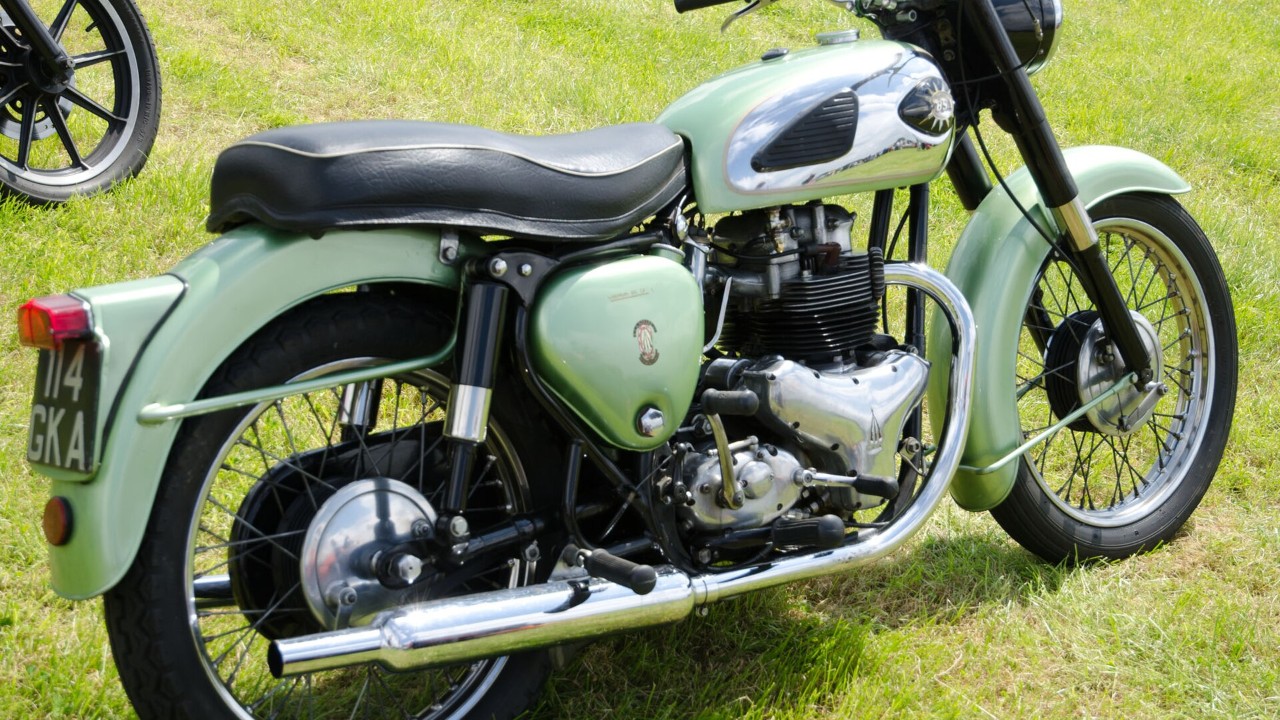
BSA launched the A7 twin in September 1946, just after World War II. The Shooting Star followed in 1954 with a new swinging-arm frame. BSA also gave it a hotter camshaft and raised compression from 6.6:1 to 7:1. The result was 30 bhp at 5,800 rpm and a top speed just under 90 mph.
That same year, the Shooting Star name made headlines in America. At the 1954 Daytona 200, Bobby Hill won on a rigid-framed Shooting Star. Shooting Stars took first, second, fourth and fifth places, and a BSA Gold Star finished third. It was a remarkable result for a 500 cc road twin.
In our view, the Shooting Star is the smart buy among 1950s BSA twins. Its swinging-arm frame was a clear step up from the plunger-framed Star Twin, and it carries that Daytona pedigree. For a rider who wants a classic British twin with real history, this one ticks every box. So if you can find a well-kept example, it makes an easy, rewarding first classic.
5. 1931 BSA S31 Sloper
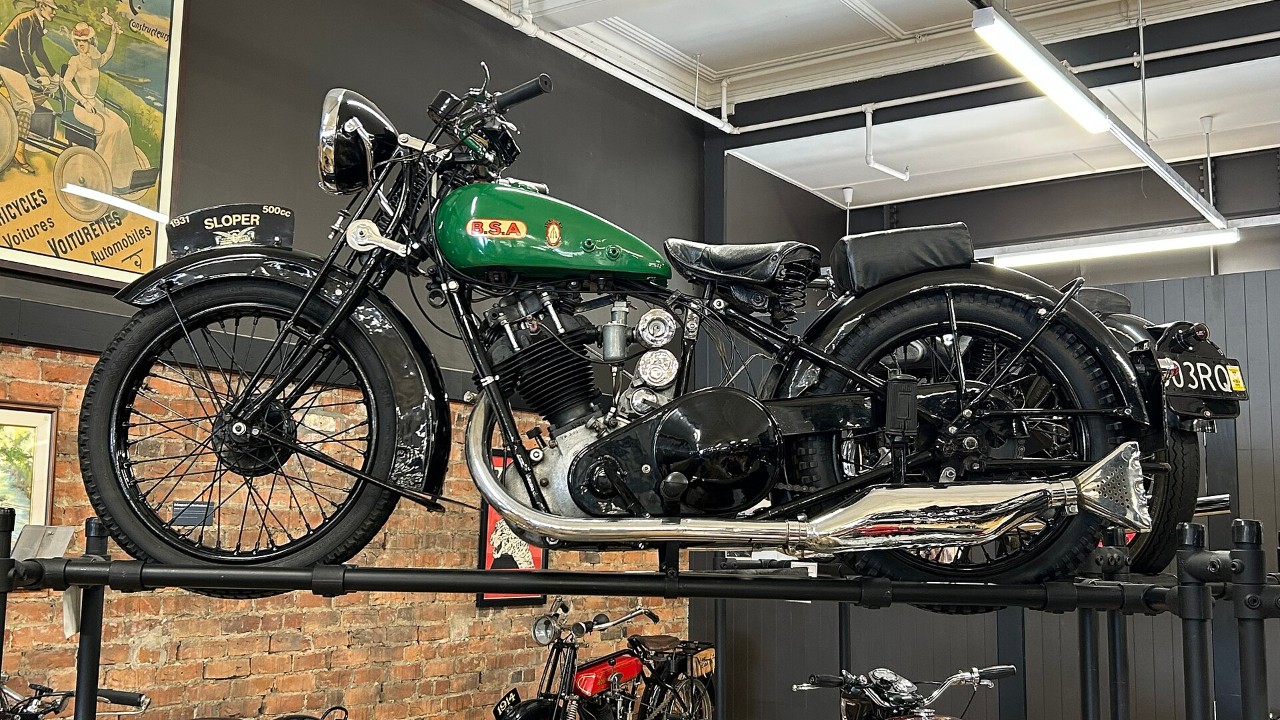
BSA built its “Sloper” from 1927 to 1935, and the name described its engine. The 493 cc overhead-valve single leaned forward in the frame. Meanwhile, a saddle tank wrapped over the top tube and allowed a low seating position. That lowered the center of gravity and improved handling.
The S31 appeared in BSA’s catalog for the 1931 season. That year, the standard OHV model was the S31-9, while the De-Luxe carried the S31-10 code. A standard Sloper could reach around 75 mph. It used drum brakes front and rear, a duplex cradle frame and a three-speed gearbox, which became a four-speed from 1932.
Our take: the Sloper is the BSA for collectors who love prewar design. That slanted engine gives it a look no other BSA shares. It also shows how adventurous BSA’s engineers were before the war. We’d want one with its correct engine and period fittings. Because it dates from 1931, though, expect slow parts searches and careful restoration work.
6. 1939 BSA M20
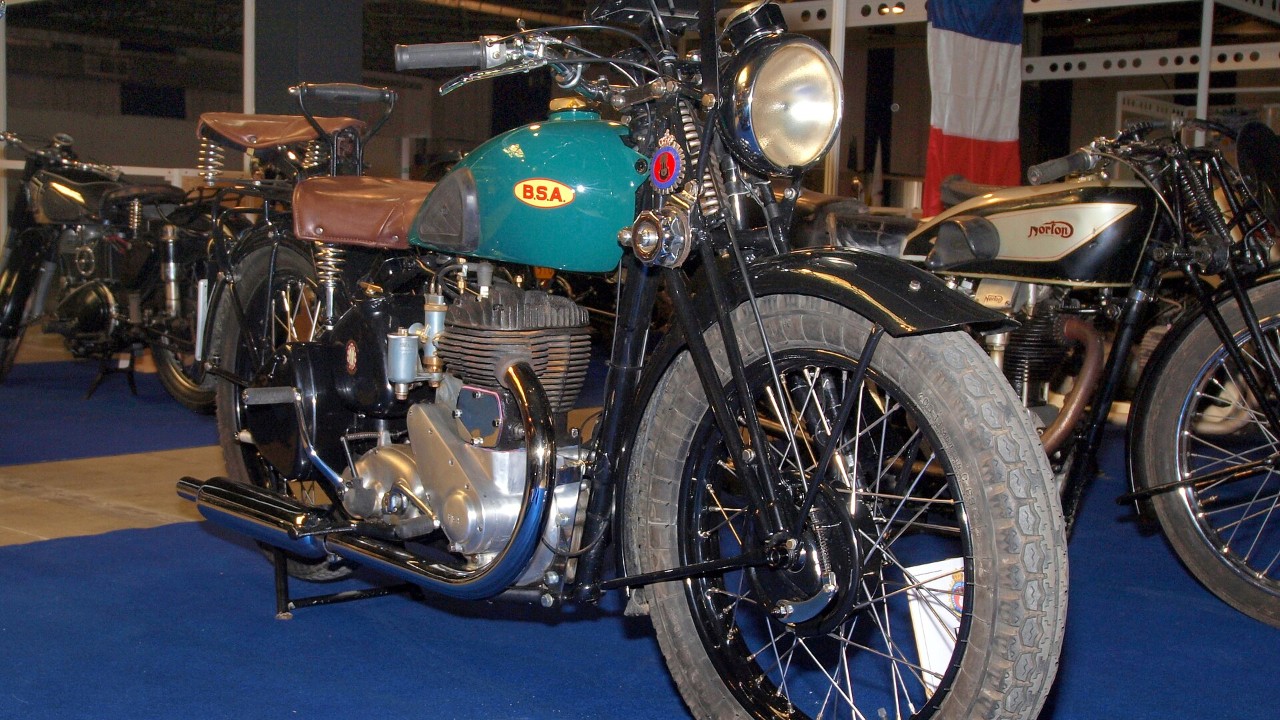
Val Page designed the M20, and development began in 1937 as a heavy-framed sidecar model. Its 496 cc side-valve single made just 13 bhp at 4,200 rpm. That modest engine proved ideal for war duty. About 126,000 M20s served during World War II, making it the most numerous type produced for that war.
In October 1939, BSA redesignated the military K-M20 as the W-M20 and fitted girder forks. After the war, BSA repainted surplus khaki machines black. Civilians took to them, and the M20 became particularly popular as a sidecar bike. Later, a heavily modified 1938 M20 even reached 108 mph at Bonneville with Bill Jenkins aboard.
Our take: an M20 is a piece of history you can ride. It’s slow, simple and understressed, which makes it a great entry into old British bikes. A 1939 machine, built right as the war began, carries an extra layer of history. Check the frame and engine numbers to confirm its story. Also, because BSA built so many, parts are easier to find than for most prewar British bikes.
7. 1966 BSA Hornet
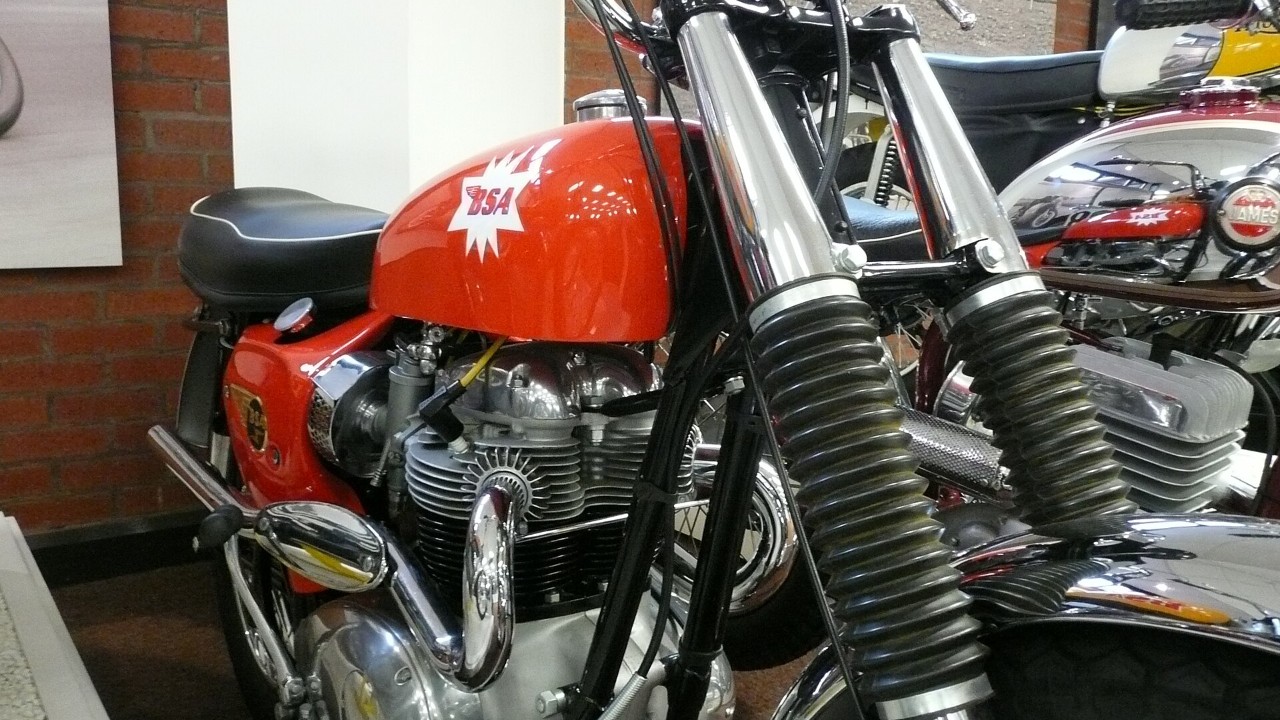
BSA built the Hornet because American dealers wanted a factory desert racer. The first Spitfire Hornets reached the United States in 1964 and sold well through 1965. Then, for 1966, BSA dropped “Spitfire” from the name. Production ended in 1967.
The Hornet used the 654 cc A65 twin with a racing cam and high-compression pistons. Its four-speed gearbox suited acceleration, and it stopped with eight-inch Gold Star drum brakes. It had no headlight, no taillight and no speedometer. According to RideApart, the 1966 bike added improved oiling, a quick-change gearbox sprocket and an optional Cherokee Red finish.
We’d call the Hornet one of the most characterful BSAs ever built. It was designed to beat the Triumph TR6C and Norton P11 in the desert. For the rival camp, see our list of 10 Triumph motorcycles we quietly admire. Many owners later added lights to register them for the road. If you find one in its original stripped-down race spec, it’s a true slice of 1960s off-road history. Meanwhile, a Hornet with period lights added has its own story, so don’t dismiss one just because it became road-legal.
8. BSA Gold Star
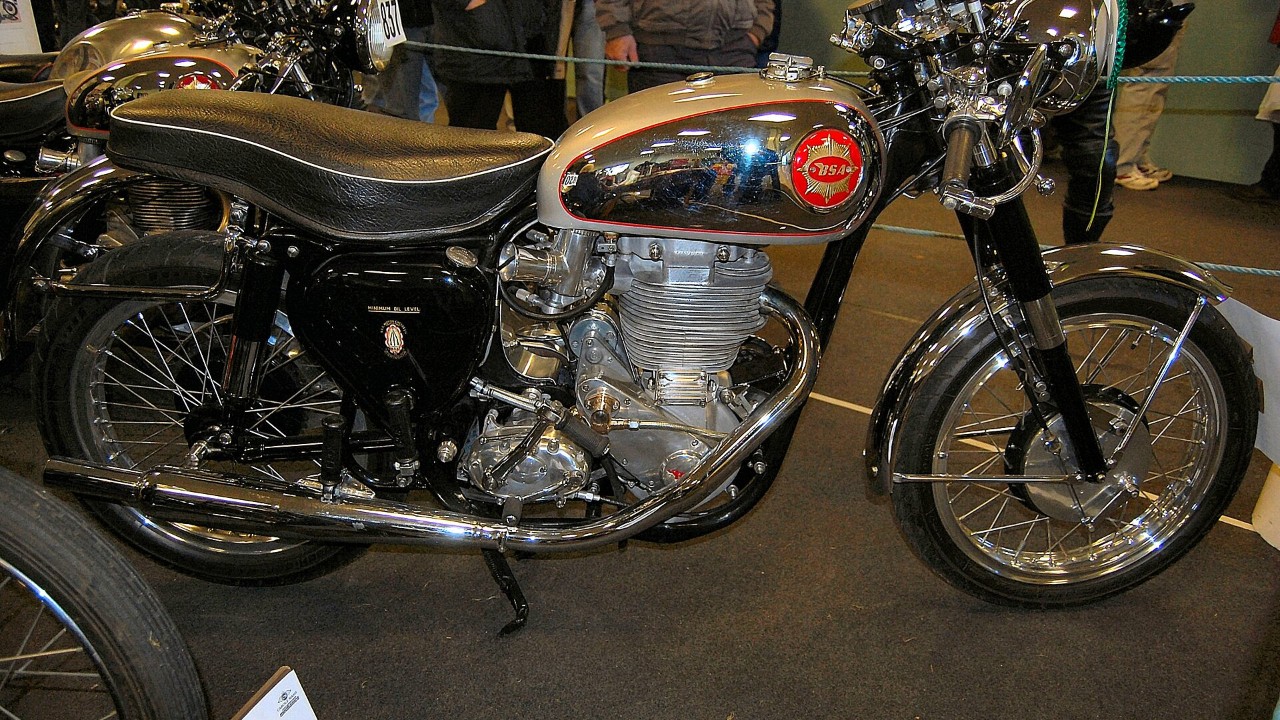
The Gold Star got its name from a single lap. In 1937, Wal Handley lapped Brooklands at more than 100 mph on a BSA Empire Star and earned one of the circuit’s traditional Gold Star badges. BSA then built a model to carry the name, and the line ran until 1963.
The final development, the DBD34, arrived in 1956 as a 500 cc single with clip-on handlebars. Hagerty notes its close-ratio RRT2 gearbox, whose first gear works up to about 60 mph, and a 1.5-inch Amal GP carburetor. Gold Stars dominated the Isle of Man Clubmans TT, which ran from 1947 to 1956. In fact, they won the Junior race every year from 1949 to 1956.
Our take: the Gold Star is the BSA every collector eventually wants. Its café-racer stance and racing record make it the benchmark British single in our book. Be careful, though, and verify the engine and frame numbers before you buy. In fact, provenance matters as much as the bike itself, because a well-documented Gold Star is the one we’d want most.
More from Fast Lane Only