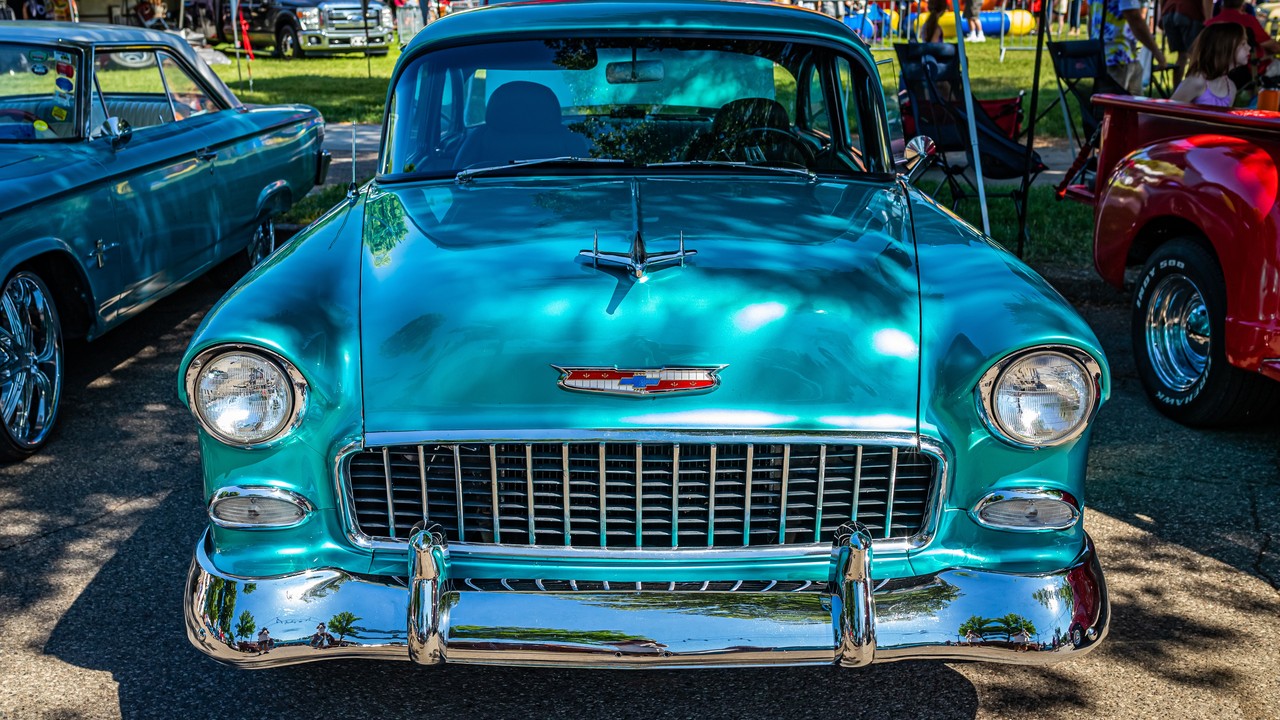
Chevrolet sold the 1957 Chevrolet 150 without stainless trim, and even the ashtray cost extra. Police departments, state governments and small businesses bought it anyway, because it did the job and nothing more. That idea of an honest, basic car runs through Chevrolet’s whole history.
Most enthusiasts remember the chrome-heavy Bel Airs, the big-block Chevelles and the Corvettes. However, the plain-wrapper Chevys often aged better. They had fewer parts to fail, less trim to replace and engines that a home mechanic could understand. For many owners, that still matters more than chrome.
These are our picks for nine Chevrolets that remind people why simplicity still matters. The verdict is our opinion. Each pick’s engines, prices and production totals come from period specifications, collector guides and model histories.
1. 1934 Chevrolet Standard Sport Roadster
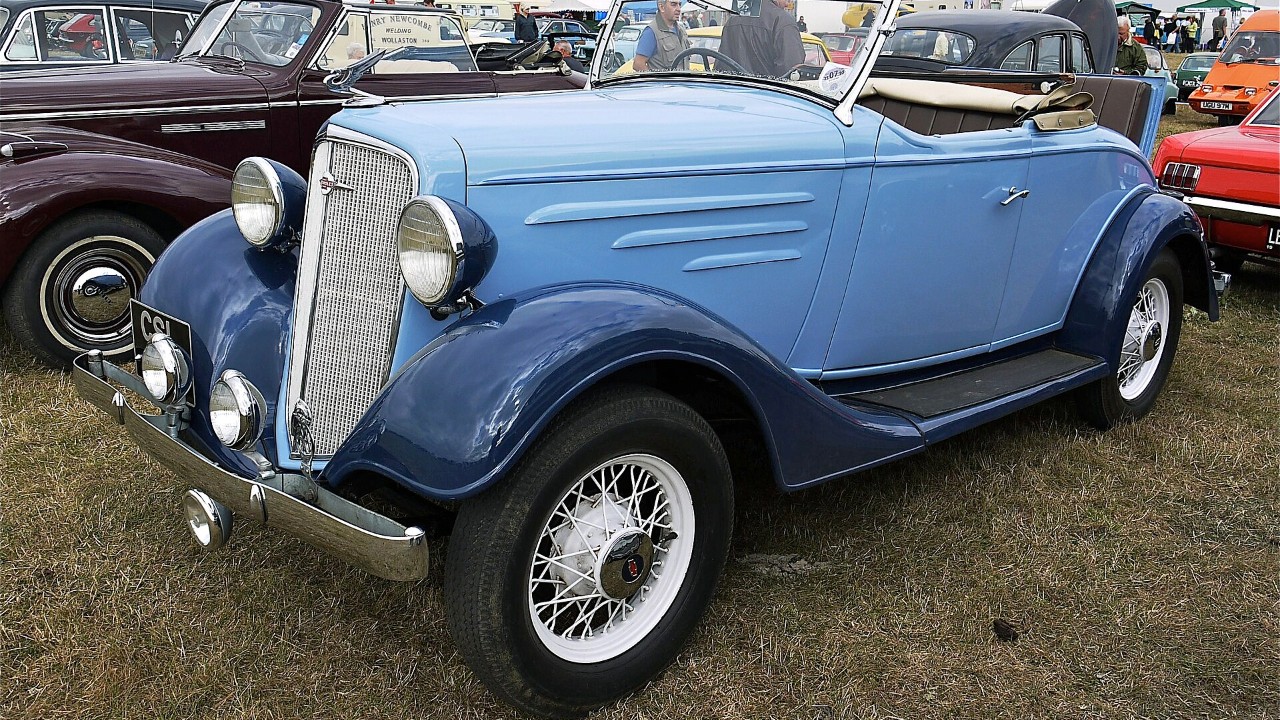
In 1934, Chevrolet split its cars into two lines. The Master got GM’s new Knee-Action independent front suspension and a 112-inch wheelbase. The Standard, by contrast, kept solid front axles and rode a shorter 107-inch wheelbase, according to Greg Wapling’s Chevrolet history. In other words, the Standard was the cheaper, simpler Chevy.
The Sport Roadster took that recipe and made it fun. It had an open body, a fold-down top and the honest Chevy six up front. That year, Chevrolet offered its six in two sizes, a 181-cubic-inch version rated at 60 bhp and a 206.8-cubic-inch version with 80 bhp. Roadsters didn’t last much longer, either. Chevrolet dropped them, along with phaetons, for 1936.
Our take: the 1934 Standard Sport Roadster shows that simple doesn’t have to mean dull. A solid front axle is easy to understand and easy to fix, which matters on a car more than 90 years old. Meanwhile, the open body gives you the wind-in-your-hair experience without fancy hardware. In our view, it’s one of the purest ways to enjoy a prewar Chevrolet. If you want one, inspect the body structure and door fit before the engine. Body repairs on an open car cost far more than mechanical work.
2. 1949 Chevrolet Styleline Deluxe wagon
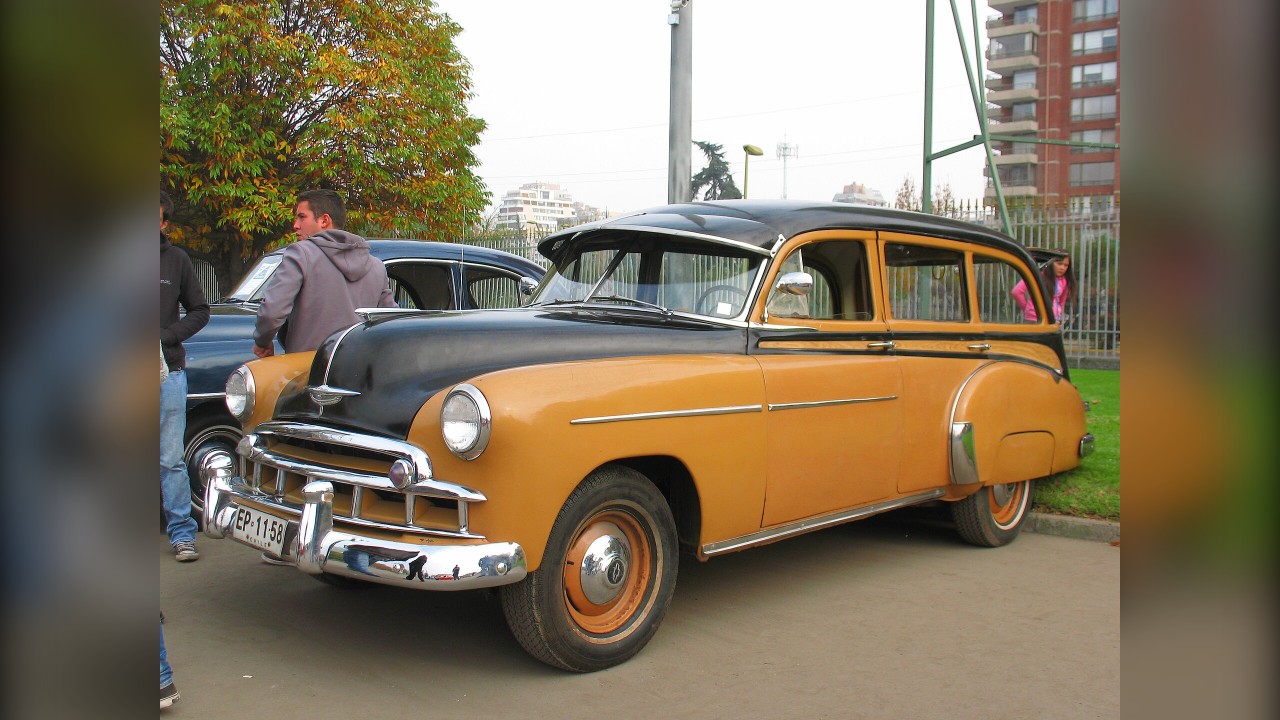
The 1949 models were Chevrolet’s first all-new postwar cars. They debuted at the Waldorf Astoria in New York in January 1949, with styling from Harley Earl’s design team. Chevrolet also trimmed the lineup to two series, the notchback Styleline and the fastback Fleetline. According to Mac’s Motor City Garage, station wagons came only in Styleline De Luxe trim.
At $2,267, the wagon was also the most expensive model. Midway through the year, Chevrolet switched its wagons from wood to all-steel bodies with no change in price. Every 1949 Chevy used the same 216.5-cubic-inch six, rated at 90 hp and carried over unchanged. The wheelbase also shrank by an inch to 114 inches, and the engine moved forward to open up the cabin.
Our take: the Styleline wagon is simplicity with room for the whole family. One engine, one trim level and a body built to haul people and luggage. That approach worked, because Chevrolet sold more than one million cars that model year. In our view, the steel-body wagon is the easier one to live with. If you’re shopping, check the tailgate hinges and the rear floor. Then confirm whether the body is wood or steel, because the two need very different restoration skills.
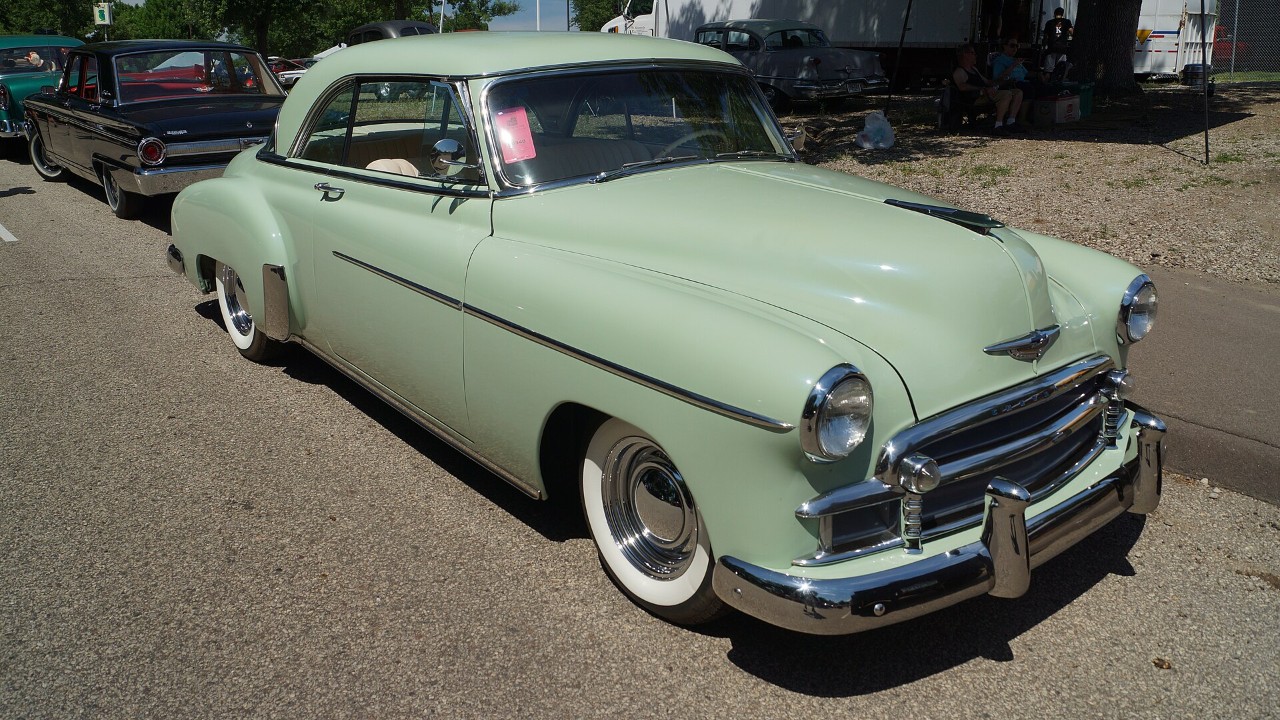
3. 1950 Chevrolet 3100 pickup
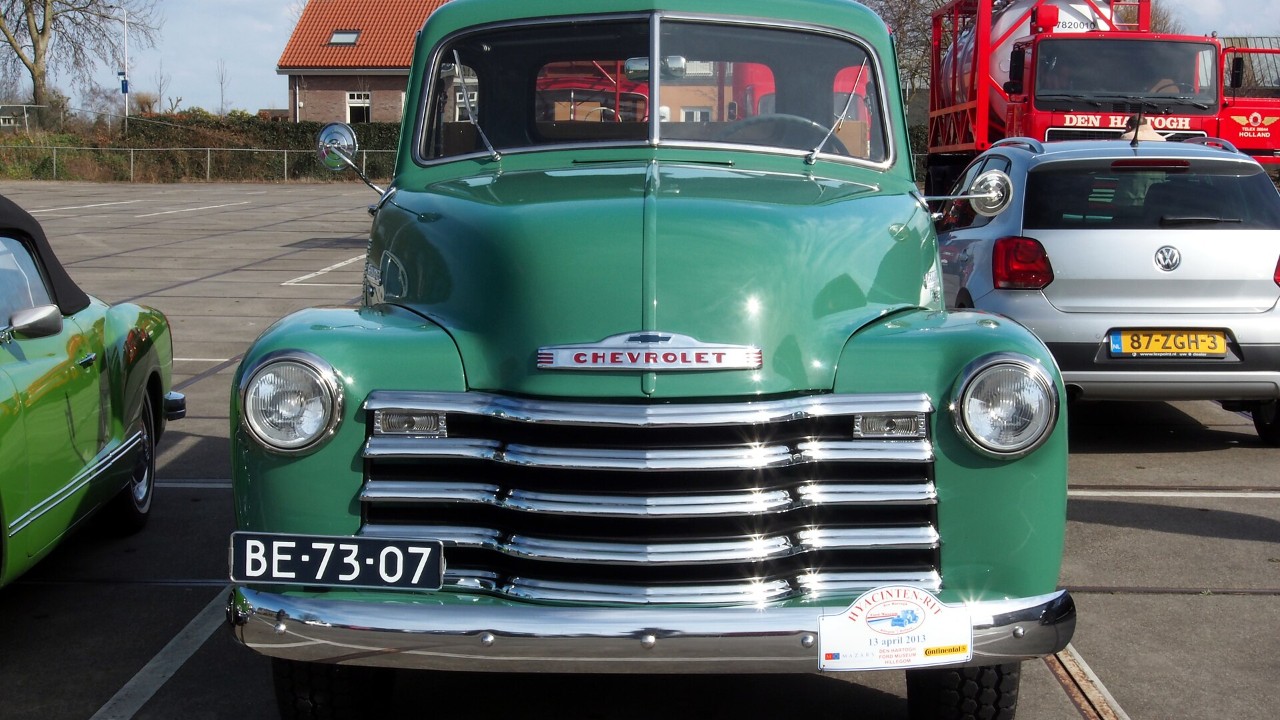
The 3100 was the half-ton in Chevrolet’s Advance-Design truck family. That series went on sale on June 28, 1947, and lasted until March 25, 1955. It was Chevrolet’s first major truck redesign after World War II. For 1950, the 3100 used a 216.5-cubic-inch six rated at 92 hp, on a 116-inch wheelbase.
Chevrolet also made a few small improvements that year. Telescopic shock absorbers replaced the older lever-action type, and 1950 was the last year for the driver’s side cowl vent. According to OldRide’s 1950 specifications, a factory pickup cost $1,243. The Chevy pickup also finished the year as the No. 1 seller in its class.
Our take: the 3100 is the simplest truck on this list, and that is its strength. A six-cylinder engine, a steel bed and a cab with very few gadgets. Nothing about it is hard to diagnose. In our view, it’s still one of the best first classic trucks you can buy. If you want one, pay more for solid cab corners and a straight frame. The six is simple to sort out, but rust repair adds up quickly.
4. 1957 Chevrolet 150 sedan

The One-Fifty was Chevrolet’s economy and fleet model from 1953 to 1957. For 1957, it skipped the stainless-steel trim of the 210 and Bel Air. Instead, buyers paid extra for ashtrays, cigarette lighters and mirrors. Chevrolet aimed it squarely at fleets, and it was most popular with police, state governments, small businesses and budget-minded families.
Yet the 1957 Chevrolet 150 could be surprisingly quick. The base engine was a 235-cubic-inch Blue Flame six rated at 140 hp. Beyond that, 283-cubic-inch V8s ranged from 185 hp up to 270 hp with dual four-barrel carburetors. On paper, a 283-hp fuel-injected version was also available. Chevrolet built about 56,266 four-door sedans and roughly 75,000 two-door versions that year.
Our take: the Chevrolet 150 sedan is proof that the plainest Tri-Five can be the smartest. After all, less trim means fewer pieces to hunt down. Also, the lighter body makes the most of any engine. Hot rodders figured that out early, and a race-ready 1957 version called the “Black Widow” came with heavy-duty brakes and six-lug wheels. In our view, a 150 is the Tri-Five to buy if you’d rather drive than polish. Check the body tag before you buy, so you know which series and options it started with.
5. 1958 Chevrolet Delray
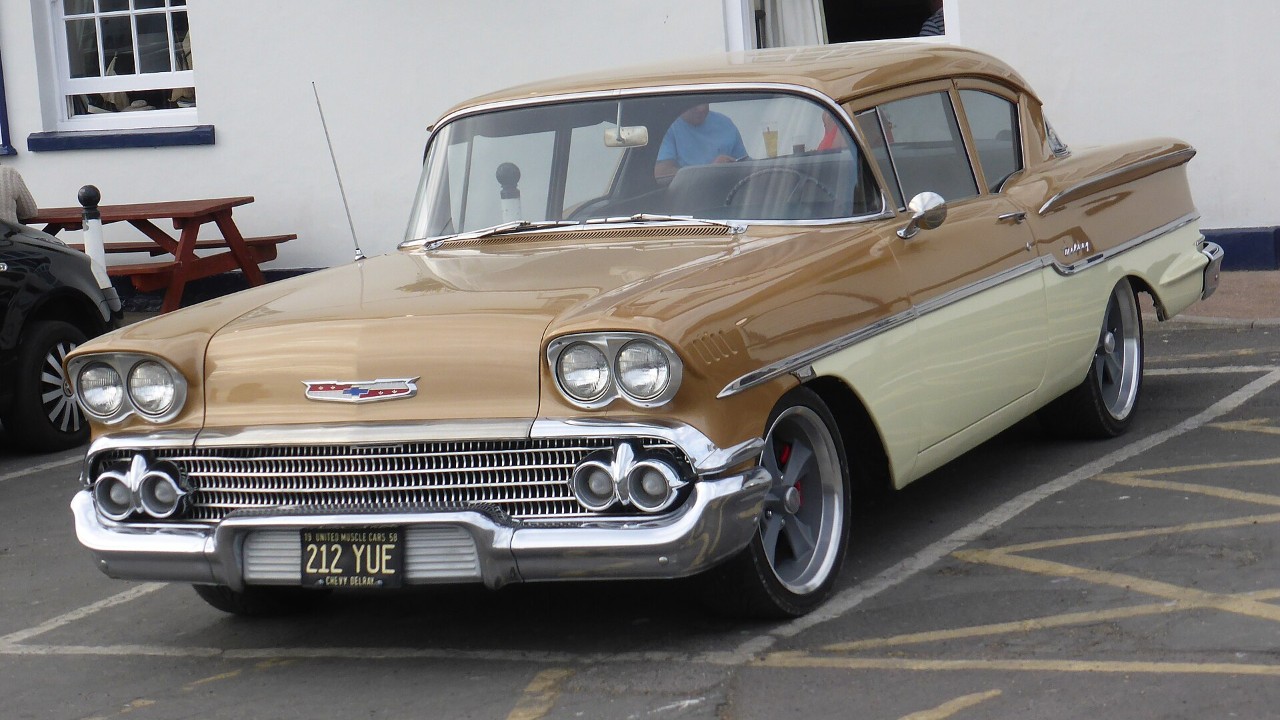
The Delray replaced the One-Fifty as Chevrolet’s bottom-trim car for 1958. It sat below the Biscayne, Bel Air and Bel Air Impala, and it was the lowest-priced full-size car from the Big Three that year. According to Mac’s Motor City Garage, the name started as an extra-cost interior package on the 1954 to 1957 Two-Ten. It came from Delray Beach in South Florida.
The Delray first reached dealers in October 1957. For example, a two-door Utility Sedan, with a parcel shelf in place of the rear seat, started at $2,013 with the 145-hp Blue Flame six. However, buyers could still order any Chevy engine, up to the 280-hp, 348-cubic-inch V8 with three two-barrel carburetors. Fleet operators, taxi companies and police departments bought many of them.
Our take: the Delray is simplicity with a sense of humor. It looks almost like a Bel Air from a distance, thanks to a full-length chrome spear that was unusual on a GM base model. Inside, though, it’s all business, much like the Chevrolet 150 it replaced. In our view, a six-cylinder Delray is one of the most honest cars of the 1950s. It lasted only one model year, because the Biscayne took over the bottom slot for 1959.
6. 1958 Chevrolet Delray Sedan Delivery
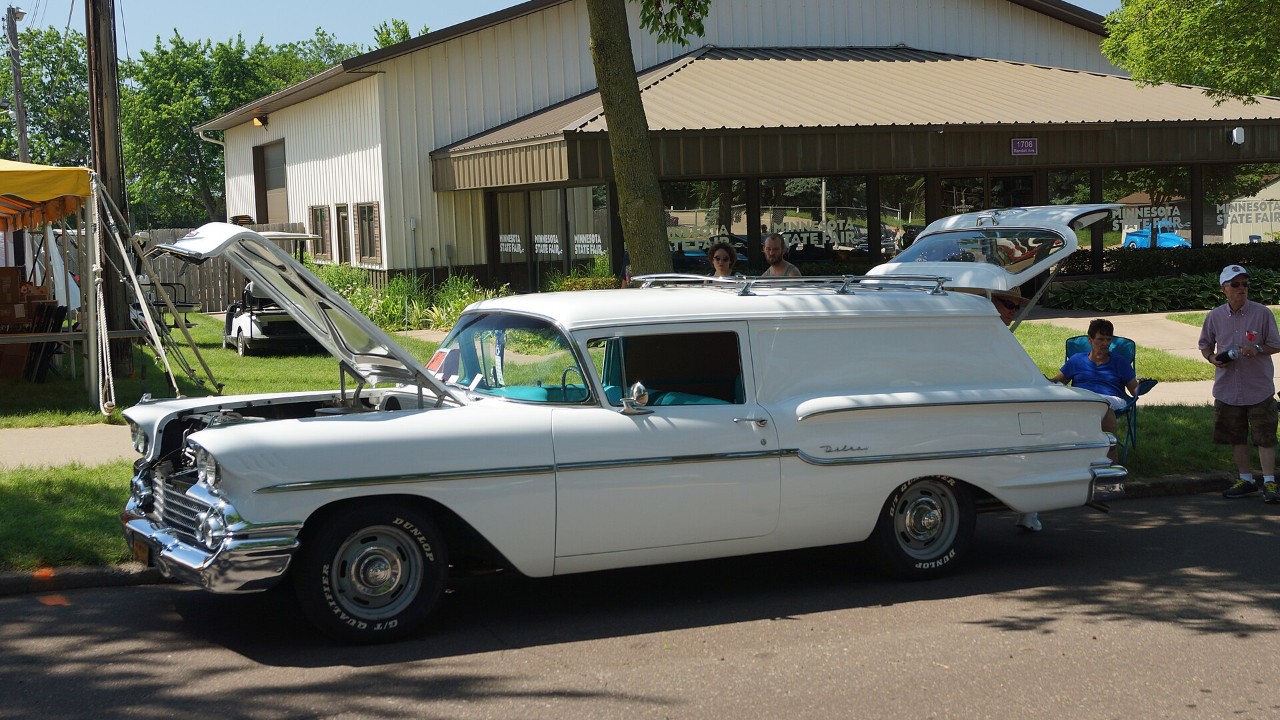
For businesses that needed to haul goods rather than people, Chevrolet sold a Sedan Delivery in Delray trim. The 348-409 club’s 1958 fact page lists it as model 1171 with the six-cylinder engine and model 1271 with a V8. The six-cylinder version started at $2,574 and weighed 3,721 pounds.
Its recipe was simple. Chevrolet took the two-door wagon shape and turned it into a panel van, with a long flat load floor behind the front seat. Instead of rear side windows, the body had plain metal panels, ready for a shop’s name and phone number. As a result, a small shop could make deliveries in something that drove like a car.
Our take: the Sedan Delivery is the most practical Delray of all. It has no rear seat to restore and no fancy trim to chase, so the money goes into the body and drivetrain. In our view, that makes it a smart classic for anyone who wants a useful 1950s Chevy. Today, it also makes a great base for a period-correct shop vehicle. If you’re shopping, check the rear door and the load floor first. Then confirm the model number on the body tag matches the engine you’re being sold.
7. 1960 Chevrolet Corvair 500 sedan
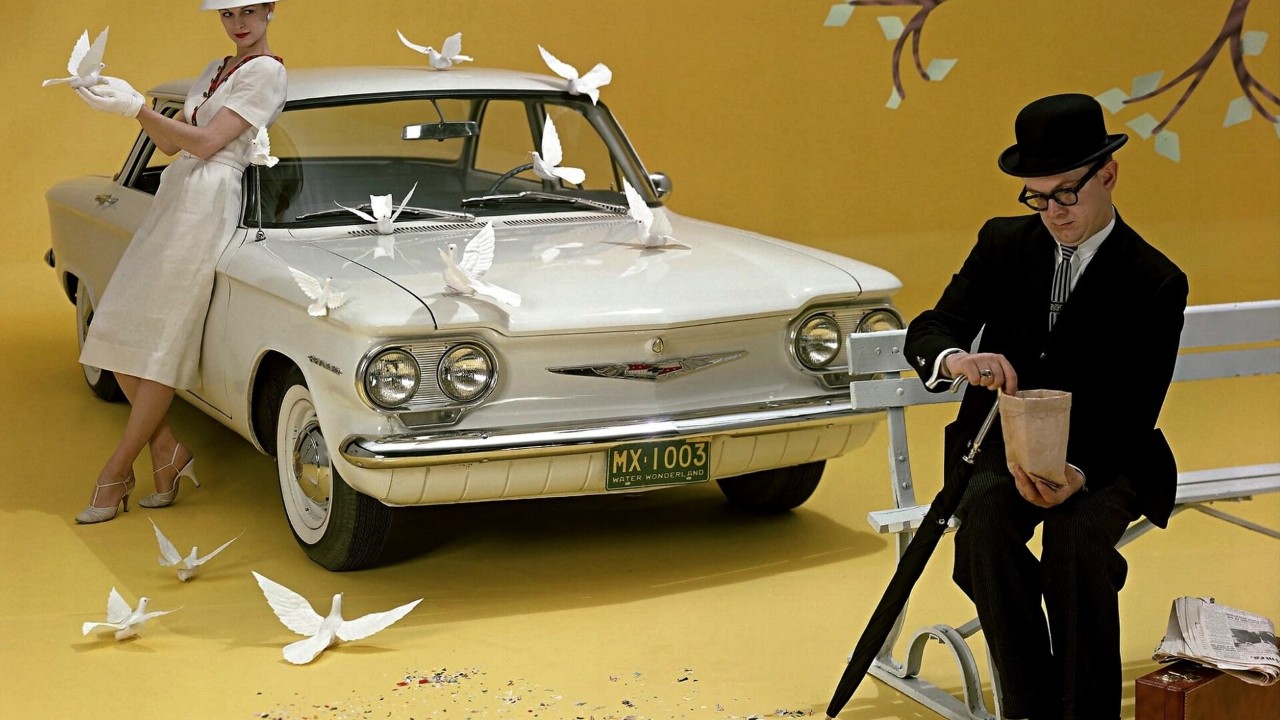
Chevrolet launched the Corvair on October 2, 1959, and at first only the 500 and 700 four-door sedans were on sale. Of the two, the 500 was the base model, with rubber floor mats, bench seats and very little trim. It sold for $2,038, and Chevrolet built 47,683 of them for 1960.
Simple didn’t mean old-fashioned, though. The Corvair put an air-cooled, aluminum flat-six in the back. That 140-cubic-inch engine made 80 hp, and buyers could pair it with a three-speed manual or a two-speed Powerglide automatic. With no radiator or coolant to worry about, routine care came down to oil, belts and tune-ups. Motor Trend named the Corvair its 1960 Car of the Year.
Our take: the 500 sedan is the Corvair stripped to its essentials, and that suits it. Without extra chrome or options, you notice the clever packaging and the flat floor. In our view, it’s a reminder that a basic car can still be an inventive one. Remember that the 1960 car used the first-generation swing-axle rear suspension, which critics later questioned. If you buy one, keep the tires at the factory pressures and check the engine’s fan belt often.
8. 1964 Chevrolet Chevelle 300 four-door sedan
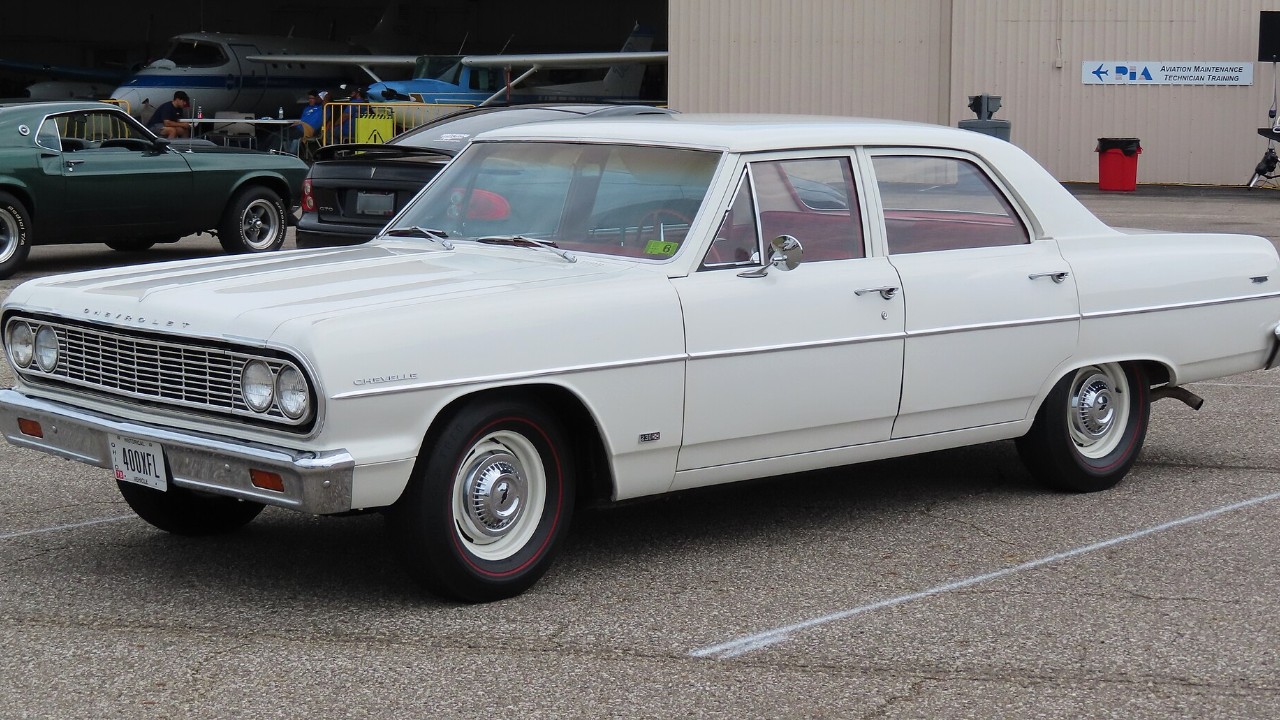
Chevrolet launched the Chevelle for 1964 as a midsize car, larger than the Chevy II and Corvair but smaller than the Impala. The 300 was the base trim, below the Malibu and Malibu SS. According to Hagerty’s 1964 to 1967 Chevelle buyer’s guide, it was the most basic, lowest-cost version of the car.
The simplest 1964 Chevelle used a 194-cubic-inch inline-six rated at 120 hp. Buyers could also choose a 230-cubic-inch six or V8s up to a 300-hp 327. Hagerty says Chevrolet sold about 1.6 million first-generation Chevelles. It also notes that six-cylinder sedans in excellent condition were priced just above $10,000, far below V8 coupes and convertibles.
Our take: the Chevelle 300 four-door is a classic Chevy for people who want to drive one, not just store it. It has four doors for passengers and a six that sips fuel compared with a big-block. Plus, the prices stay realistic. In our view, it’s one of the most sensible ways into a 1960s Chevrolet. If you’re shopping, look for an unmodified car with its original six and paperwork. A clean, stock one is worth keeping that way.
9. 1985 Chevrolet Nova sedan
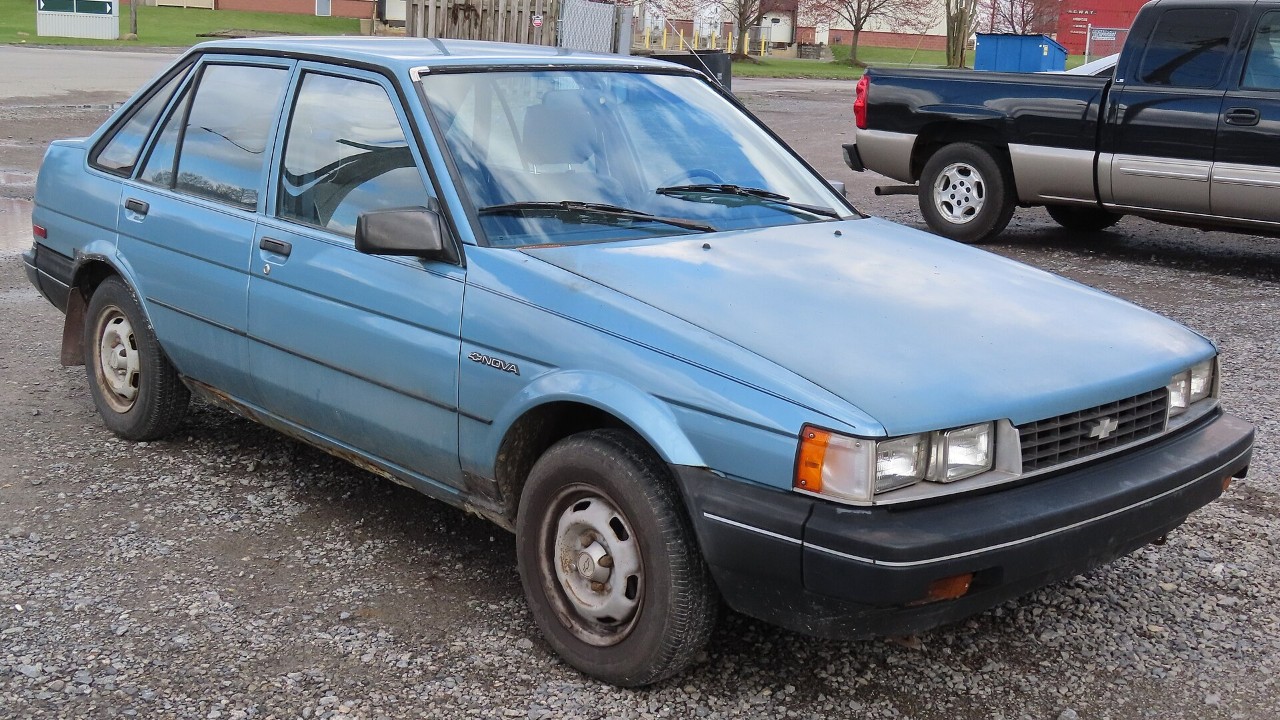
The 1985 Nova shared almost nothing with the rear-drive Novas of the 1960s and 1970s. Instead, it came from a joint venture between GM and Toyota at the NUMMI plant in Fremont, California. The first one rolled off the line in December 1984. According to SlashGear, it was a badge-engineered Toyota Corolla Sprinter on the front-wheel-drive AE82 platform.
In fact, the Nova used almost entirely Toyota parts, apart from items such as a Delco radio and different seat fabric. Even better, its original sticker price was under $7,500. With the five-speed manual, it returned about 30 mpg in the city and 37 mpg on the highway. Contemporary reviews also praised NUMMI’s quality control.
Our take: the Nova sedan is the most modern car here, yet it follows the same old Chevy rule. Give buyers a simple, durable car at a fair price. In our view, that’s why it deserves a spot alongside the Chevrolet 150 and the Delray. Production ran for four model years, from 1985 to 1988. If you find a clean one, we’d keep it original and enjoy the fuel bills.
More from Fast Lane Only