Chevrolet’s first Bel Air hardtop of 1950 sold 76,662 copies in its debut year, and the name stayed in the lineup until 1981. Most people picture one car when they hear it: a two-tone 1957 coupe with fins and chrome. That car deserves its fame, but it has crowded out three decades of other Bel Airs.
Some of those forgotten versions were family sedans and wagons. Others carried big V8s, pillarless rooflines or a famous badge before it became its own model. Each one drives differently. Together, they show how Chevrolet’s favorite name moved from the top of the range to the middle and, finally, to the base model.
These are our picks: nine overlooked Bel Airs we think driving fans should seek out, from the first hardtop to the last American-market car. The verdicts are our opinion, and every year, engine and figure comes from the record.
1. 1950 Chevrolet Bel Air hardtop coupe
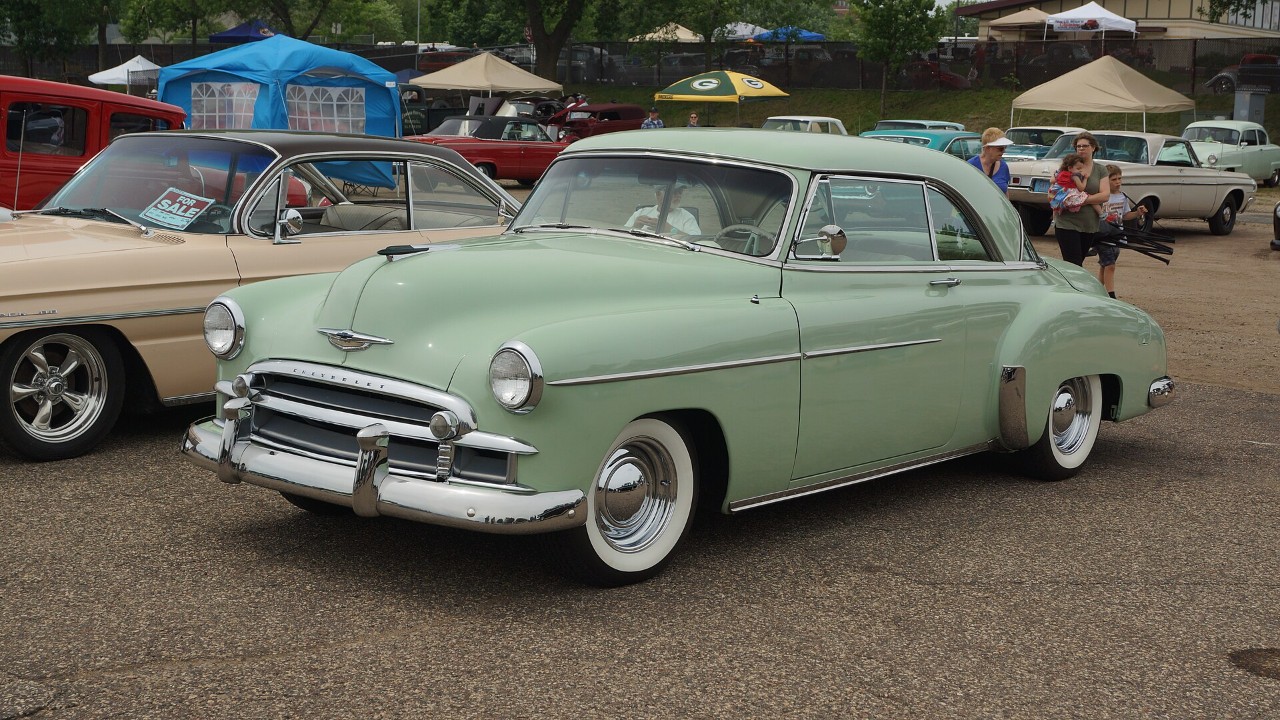
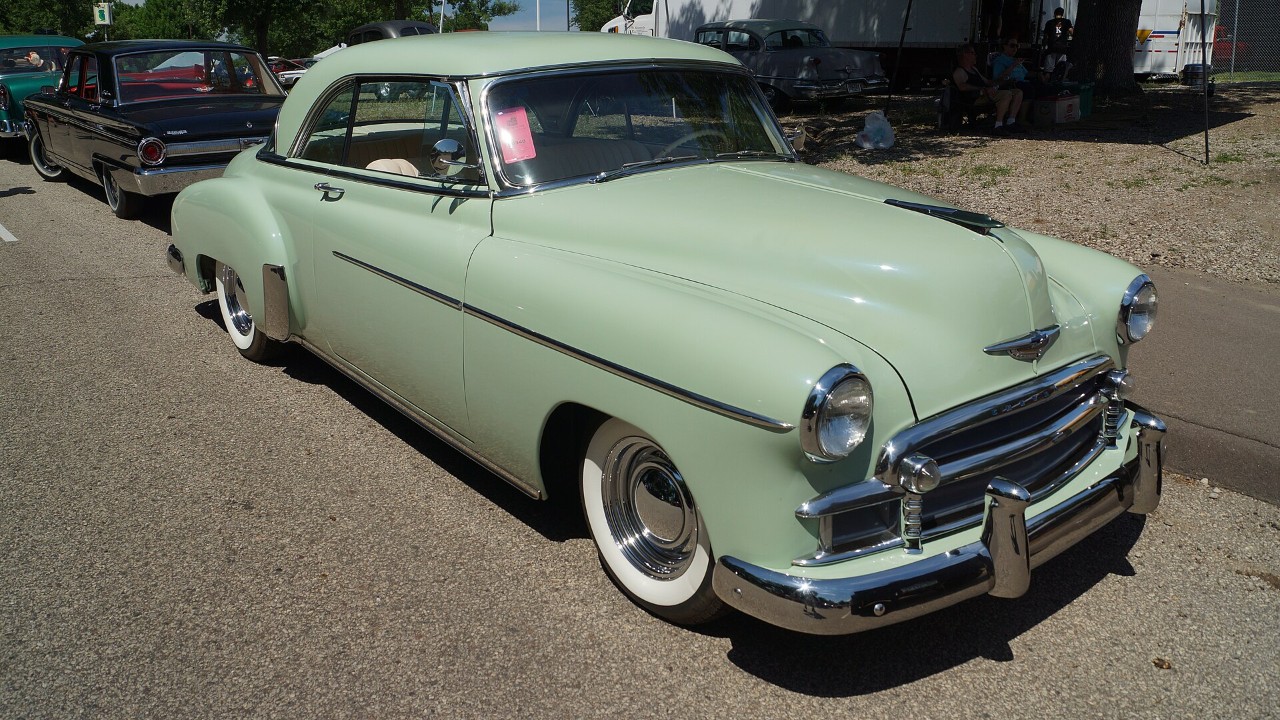
The first Bel Air wasn’t a trim level at all. Chevrolet officially called it the Styleline Deluxe Bel Air Coupe, and the name came from an upscale Los Angeles suburb. As Mac’s Motor City Garage explains, its pillarless “hardtop convertible” body gave buyers open-car looks with a steel roof. It also shared its roof stamping with the 1950 Pontiac Catalina and Oldsmobile Holiday hardtops.
The hardtop cost $1,741, which made it by far the most expensive coupe in the 1950 Chevy lineup. Even so, it outsold the convertible by two to one. Power came from the 216.5-cubic-inch Thriftmaster six, rated at 92 horsepower. Inside, buyers got genuine leather seats trimmed in wool cord fabric, plus chrome headliner bows and courtesy lights.
Our take: this is the Bel Air that started everything, yet in our view it gets far less attention than a ’57. It won’t win a drag race. Instead, it rewards a slow cruise with the windows down and no pillars in the way, which is exactly how we’d drive one. In addition, its modest power means the brakes and steering of the era never feel overwhelmed.
2. 1954 Chevrolet Bel Air four-door sedan

For 1953, Chevrolet turned Bel Air into its premium trim across several body styles, including two- and four-door sedans and a station wagon. The 1954 car kept that recipe with only a revised grille and taillights. Under the skin, though, it gained a full-flow oil system, a real mechanical improvement for an engine of that era.
The engine choice tells the story of the era. Cars with the Powerglide automatic got a 125-horsepower version of the 235-cubic-inch six. That’s a modest figure, but the six was smooth and simple, and Chevrolet wouldn’t offer a V8 until the next year. As a result, a 1954 Bel Air is the last of the six-cylinder-only Bel Airs.
Our take: a four-door sedan from this year is a practical way into an early Bel Air. We also think it’s a better driver than many expect. The ride is soft, the controls are light and the back seat actually fits adults. If you want a classic for family Sunday drives, this is the sensible pick we’d shortlist first. For the famous side of the family, see our Bel Airs that represent America’s golden age.
3. 1957 Chevrolet Bel Air Townsman
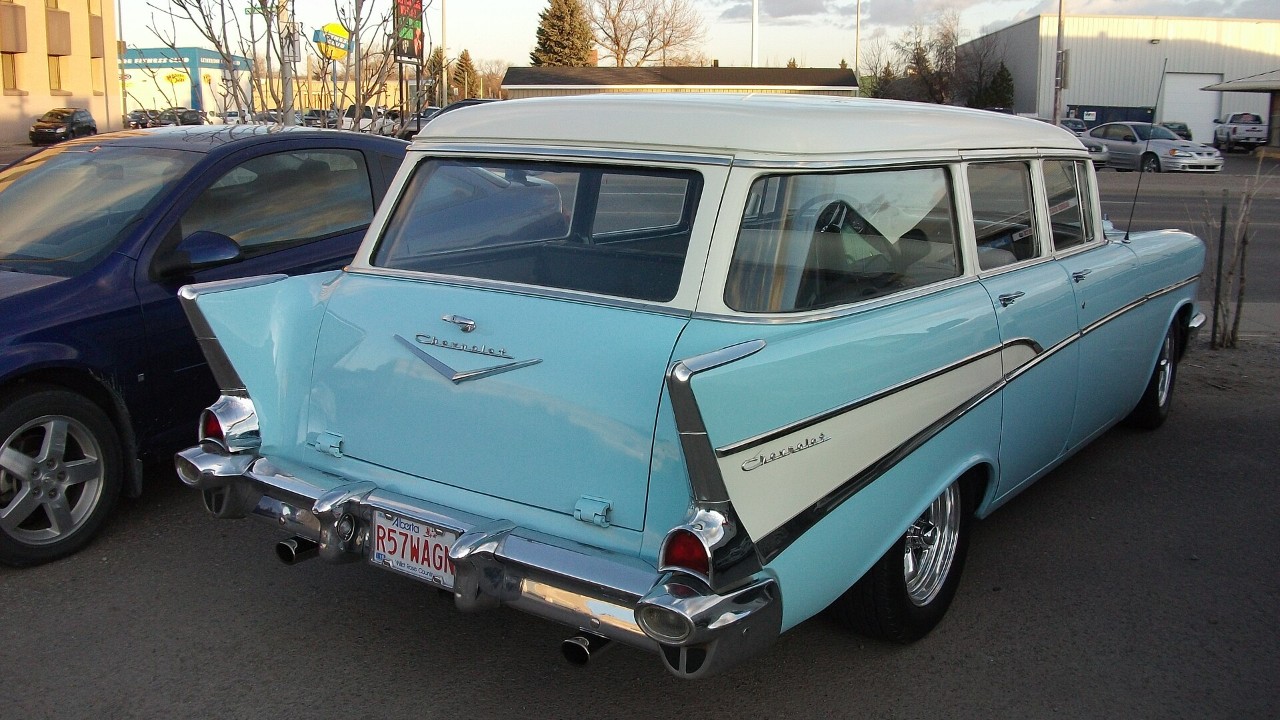
The 1957 Bel Air everyone knows is a two-door hardtop. However, Chevrolet also sold a Bel Air Townsman that year, a six-passenger, four-door station wagon. The Townsman name had moved between series, and 1957 was the year it appeared in both the 210 and Bel Air lines. The two-door Bel Air wagon, meanwhile, carried the Nomad name.
Engines followed the rest of the range. A 235.5-cubic-inch six was standard, and V8s were available. For 1957, the V8 grew to 283 cubic inches, and the fuel-injected version made 283 horsepower. One example offered by RM Sotheby’s at Auburn Fall in 2016 had a 283 V8 and a column-shift automatic, with an estimate of $18,000 to $22,000. It went unsold at that sale.
Our take: that estimate shows the gap between a Townsman and a Nomad or hardtop. You get the same 1957 face, fins and chrome, plus room for the whole family and a long cargo floor. For a driver-quality tri-five, we’d pick the four-door wagon before a pricier coupe. Also, a wagon this size makes a fine tow car for a vintage trailer.
4. 1956 Chevrolet Bel Air Sport Sedan
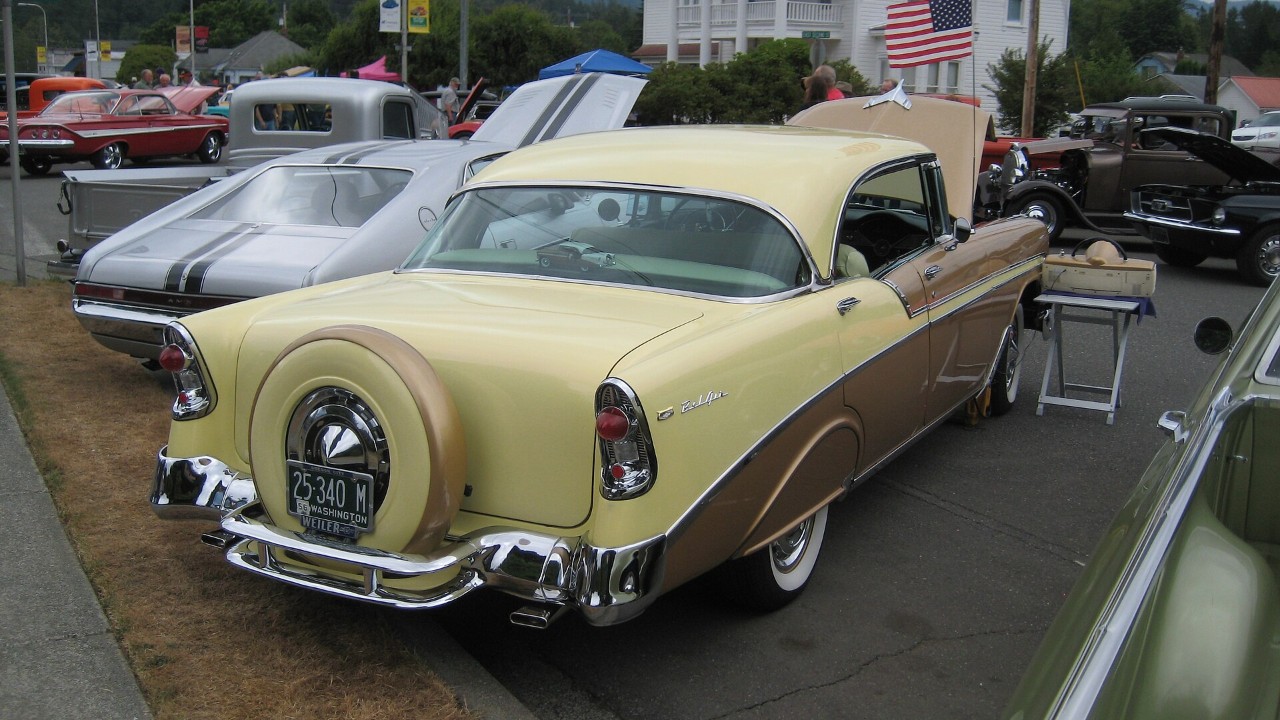
Chevrolet gave the Bel Air a face-lift for 1956 with a full-width grille, and it added a new body style that year. The Sport Sedan was a pillarless four-door hardtop. With every window down, there was no post between the front and rear doors, so the whole side of the car opened to the breeze.
Buyers liked the idea. Production of that body style passed 103,000 in its first year. The design also brought back a styling cue from the first 1950 hardtop. A distinctive three-sided rear roof pillar, last used in 1952, returned on the 1956–57 four-door Sport Sedans.
Our take: the Sport Sedan gives you 1956 style and the pillarless look of a coupe, with four doors for passengers. That combination makes it a forgotten favorite in our book. In our view, it cruises just as well as a two-door. As a result, the Sport Sedan gives families the hardtop look without squeezing into a coupe. Check the door and window seals before you buy, because a hardtop without pillars depends on them to stay quiet and dry.
5. 1958 Chevrolet Bel Air Impala
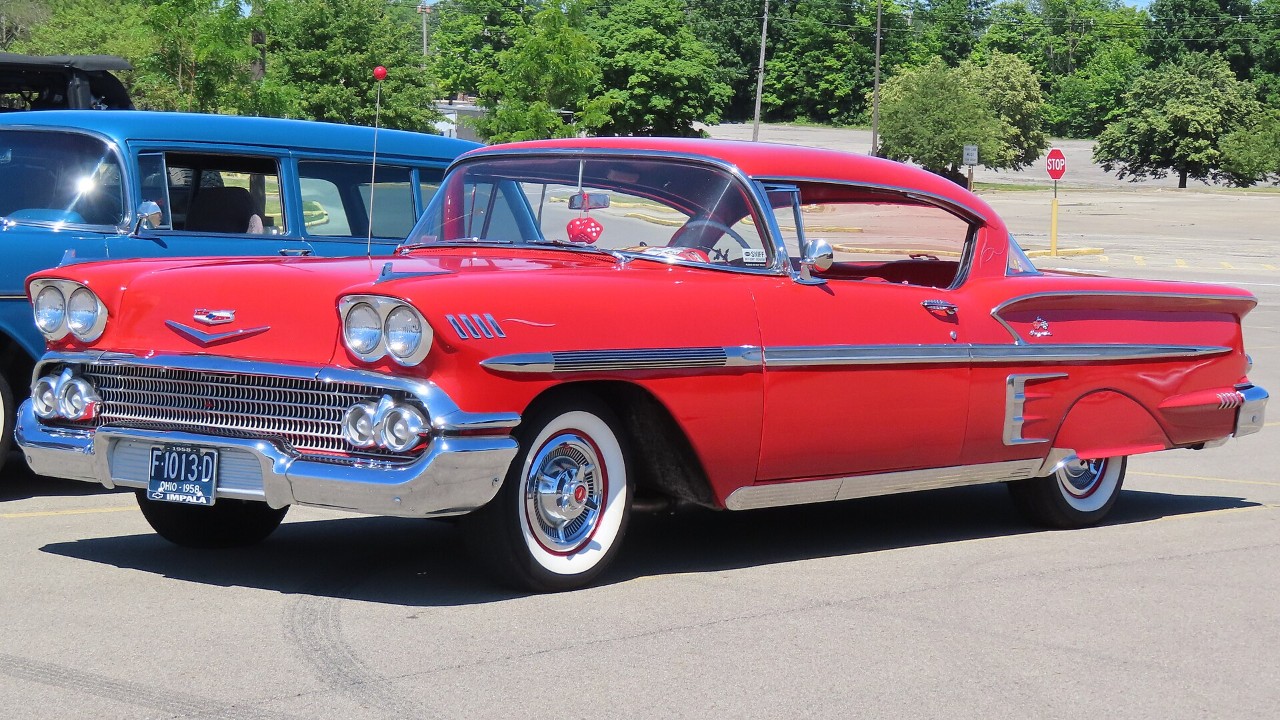
The Impala began life as part of the Bel Air family. For 1958, Chevrolet introduced it as the top-of-the-line Bel Air, offered only as a two-door hardtop and a convertible. Curiously, the Bel Air name didn’t appear on the car, in the brochures or in the ads. Instead, Impalas wore crossed-flag badges and three taillights on each side.
It was a year of firsts. The 1958 Chevrolet was the first with dual headlamps, and the Impala offered Chevrolet’s first big-block, the 348-cubic-inch W-series V8. That engine made 250 horsepower with a four-barrel, or 280 horsepower with three two-barrel carburetors. Chevrolet built 125,480 Impala coupes and 55,989 convertibles. The model also helped the brand regain the top production spot in a recession year.
Because the badge later became its own model, many people forget this car was a Bel Air at all. Our take: a 1958 Bel Air Impala with the 348 pairs a first-year design with Chevrolet’s first big-block. We think it’s one of the most rewarding Chevys of the decade to drive. If the later cars appeal too, see our list of Impalas you forgot existed.
6. 1959 Chevrolet Bel Air sedan
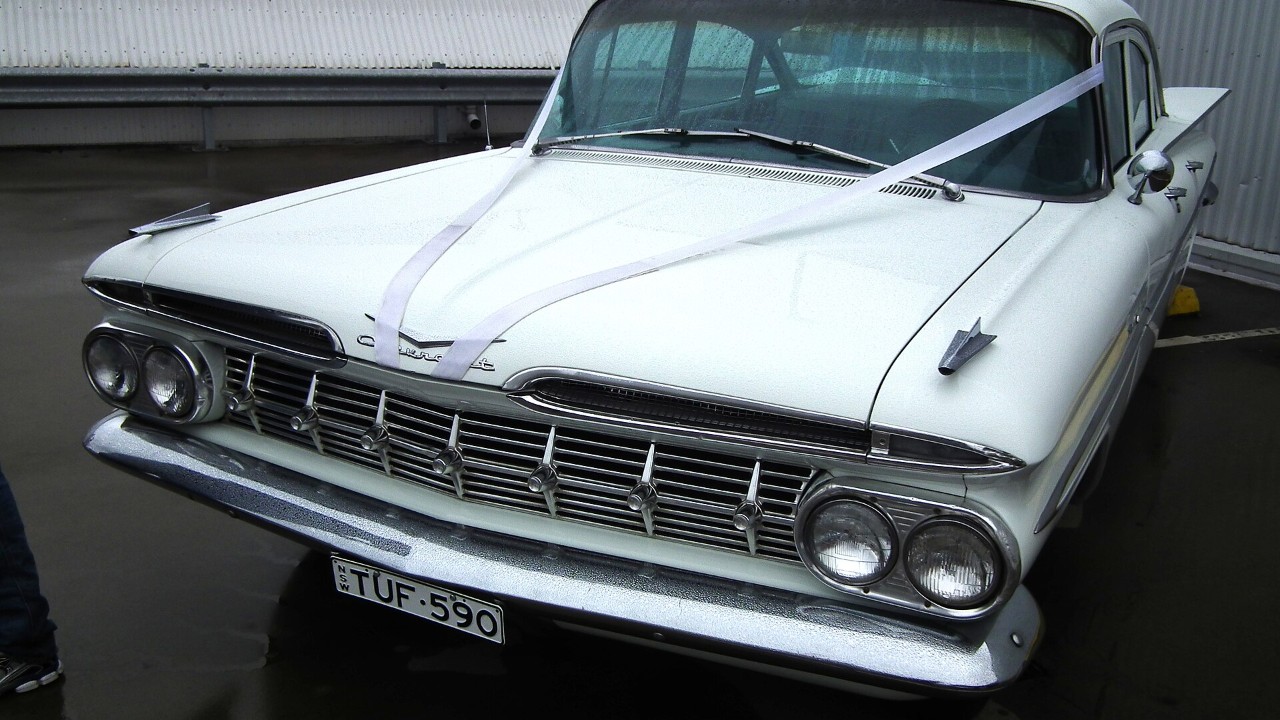
The 1959 Chevrolet was a major redesign. It rode on a longer 119-inch wheelbase, with a low roof and a wide, flat rear deck. For the first time, the Bel Air was no longer the top Chevrolet. The Impala became its own series, and the Bel Air moved into the middle of the range.
That shift didn’t hurt sales much. Chevrolet built 447,100 Bel Airs for 1959, while the Impala outsold it by about 20,000 cars. In other words, a lot of buyers chose the Bel Air sedan and got nearly the same body and engines for less money. That’s exactly why we think the middle-trim car deserves a second look.
Our take: we like the 1959 Bel Air sedan because it offers all the drama of the batwing body without Impala pricing. It’s a big, soft-riding car built for long highway runs, and the long wheelbase keeps it calm at speed, in our view. Before you buy, inspect the floors and lower rear quarters closely. A body this long has a lot of metal to restore if it has rusted.
7. 1962 Chevrolet Bel Air 409
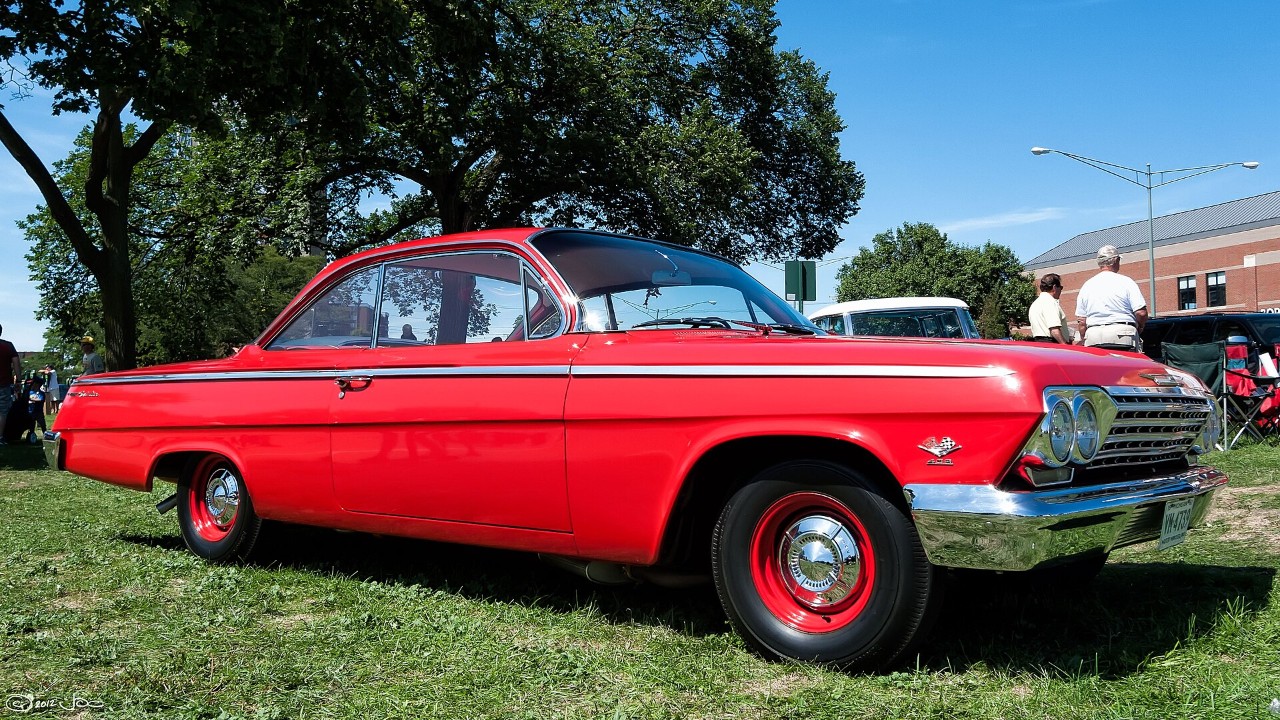
For 1962, Chevrolet offered five V8s, from a 170-horsepower 283 up to the 409. According to the GM Heritage Collection, the top 409 made 409 horsepower and could carry a Bel Air through the quarter-mile in 12.2 seconds. Its car in that collection has the optional 409, solid valve lifters and a manual transmission.
The Bel Air was Chevrolet’s mid-priced full-size line that year, and its two-door hardtop kept the airy “bubble top” roof from 1961. The Impala coupe, by comparison, got new sculpted roof styling for 1962. A car identical to the heritage example appeared on the Beach Boys’ album 409. Values reflect that history. RM Sotheby’s sold a 380-horsepower 409 bubble top for $78,100 at its Auburn Fall auction in 2015.
Our take: a Bel Air 409 is the plainer way into Chevrolet’s early big-block era. Driving fans should love that it puts a famous engine in a simpler body. In other words, the Bel Air offered the 409 in Chevrolet’s mid-priced line, which is why we’d pick it over a fancier Impala. Budget for authentication, though, because a real 409 car commands a big premium.
8. 1964 Chevrolet Bel Air wagon
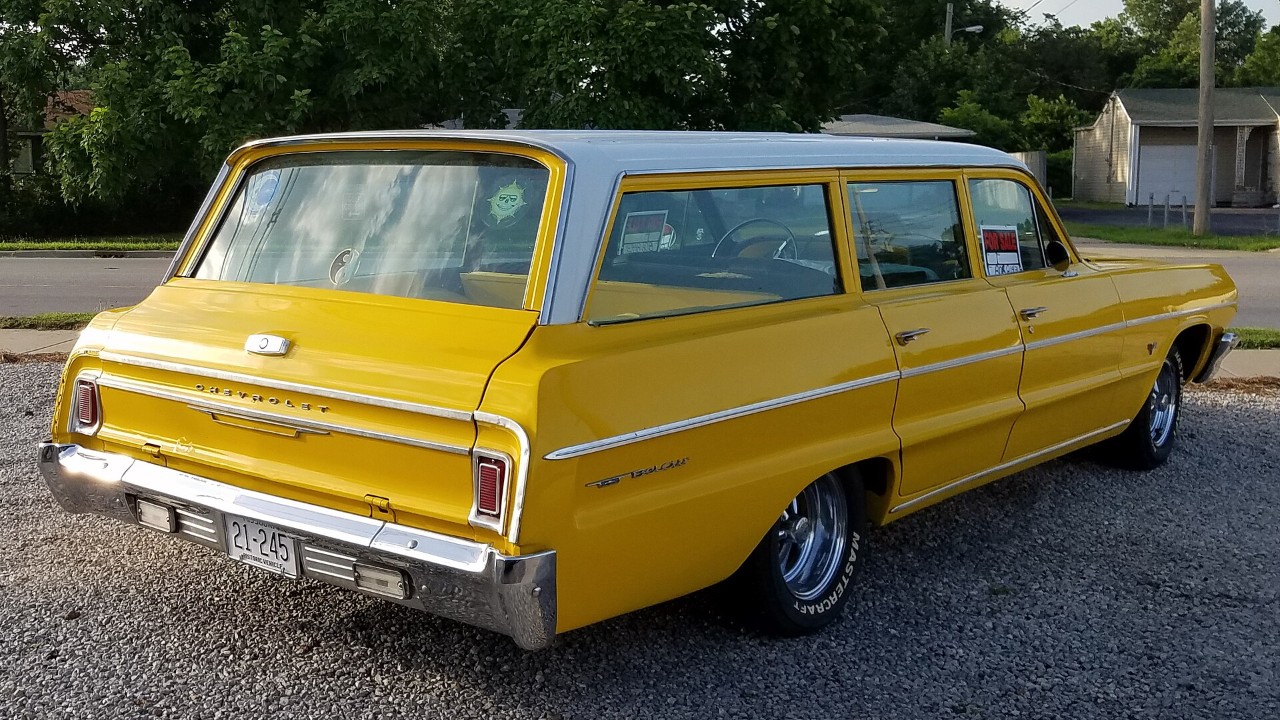
By 1964, the Bel Air had settled in as Chevrolet’s mid-range full-size car, below the Impala. The wagon came in six- and nine-passenger versions, after both returned to the lineup in 1963. Nine seats is a rare trait in any classic, and it makes this car a crowd-pleaser in the literal sense. That made it a practical pick for families who wanted a nicer wagon without paying for an Impala.
Engine choices went far beyond family duty. Buyers could order 327 and 409 V8s, with outputs from 250 to 425 horsepower. So, on paper at least, a Bel Air wagon could leave the dealer with the same top engine as the hottest full-size Chevy coupes.
Our take: a 1964 Bel Air wagon is the forgotten full-size Chevy we’d most like to drive across the country. Its clean, square styling has aged well, and a healthy 327 makes it a relaxed highway car. In fact, we’d take one over a hardtop for a road trip. If you find one with a big V8 and paperwork to prove it, buy it. Otherwise, check the tailgate and rear floor for water damage before you commit.
9. 1975 Chevrolet Bel Air
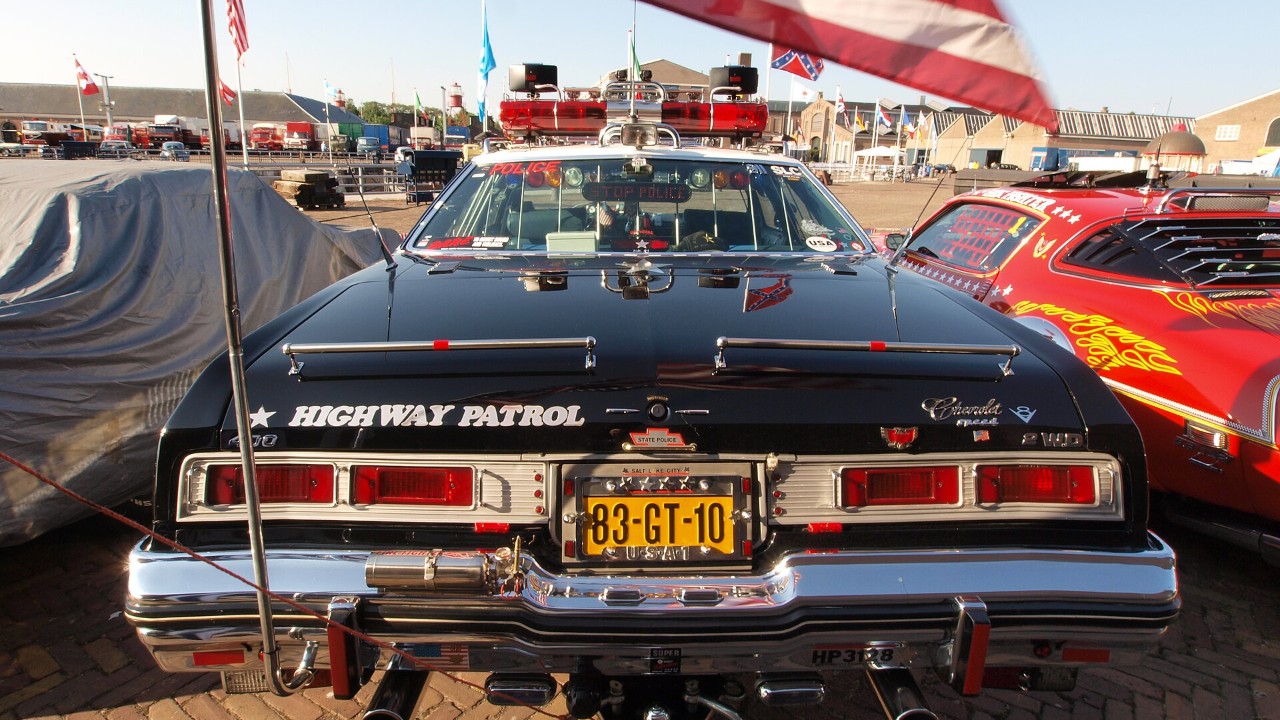
The Bel Air name ended its long run in the United States with the 1975 model year. By then, it had slid from Chevrolet’s flagship in 1950 to an economy base model. Canada kept the name alive for several more years, and the last Canadian Bel Air came in 1981.
That arc makes the 1975 car interesting in its own way. It is a big, mid-1970s full-size Chevrolet in plain clothes, built in the final year an American buyer could order a new Bel Air. Few people think of this generation when they hear the name. For us, that makes it worth a look from anyone who values comfort over chrome.
Our take: a 1975 Bel Air is a low-cost, comfortable cruiser with a fitting place in history. It closes the story that began with that 1950 hardtop. We’d look for a rust-free car with its original drivetrain, then enjoy it for what it is. Meanwhile, it’s the easiest car here to live with in modern traffic, in our view. Don’t expect performance, and don’t pay restored-car money for an average example.
More from Fast Lane Only