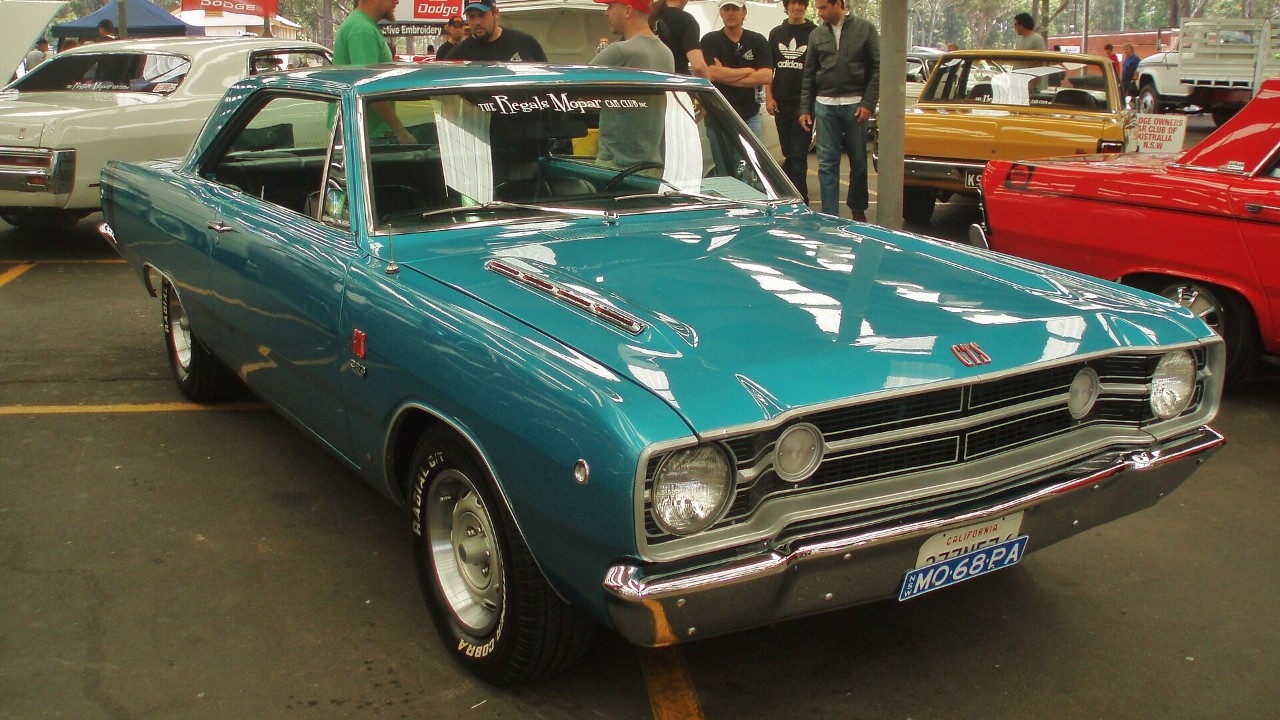
The 1968 GTO has shifted from used muscle to blue chip collectible, and recent market data shows why buyers now pay up. Collectors see a blend of design, performance, and cultural cachet that later cars struggle to match, and that mix is pushing values higher across auctions and private sales.
Reason 1: Iconic styling that defines late‑sixties muscle
Design drives desire, and the 1968 GTO delivers a shape that many enthusiasts now view as the purest expression of Pontiac’s muscle era. The hidden headlights, Endura nose, and clean Coke‑bottle profile give the car a cohesive look that stands apart from the busier lines of later years, which helps explain why buyers gravitate toward this specific model year when several generations sit side by side.
Enthusiast communities describe the 1968 GTO as “The Great One,” a nickname that captures how the car’s styling, stance, and detailing still resonate with modern collectors who prize period correctness and visual drama in equal measure. One discussion from Mar 23, 2025, highlights how the GTO is celebrated for its performance, style, and the way it reflects the muscle era, with fans noting that these traits make it a favorite among enthusiasts and help sustain demand for The Great One in today’s market.
Reason 2: Performance credentials that still impress
Power remains central to any muscle car’s value story, and the 1968 GTO backs its looks with serious hardware that continues to impress modern buyers. Strong factory horsepower, robust torque, and a chassis tuned for straight‑line speed give the car performance that feels authentic to the era yet still entertaining on present‑day roads, which matters to collectors who actually drive their investments.
Drivetrain flexibility also boosts appeal, because shoppers can find cars tailored to their preferred experience, from boulevard cruisers to track‑ready builds. A detailed feature list from Jul 30, 2025, notes that Transmission options included a 4‑speed manual or a Turbo Hydra‑Matic automatic, and that Pontiac’s Safe‑T‑Track limited‑slip differential helped put power down effectively, details that underline how Pontiac engineered the GTO for serious use and why buyers now pay premiums for cars with the right Transmission options.
Reason 3: Market recognition and rising price benchmarks

Values do not climb in a vacuum, and recent rankings show that the 1968 GTO has moved into a higher pricing lane than many casual observers expect. A market survey from Jul 16, 2024, lists the 1968 Pontiac GTO with an Average Starting Used Price of $47,327, a figure that signals strong demand relative to many other classic models and confirms that buyers now treat this car as a serious collectible rather than an entry‑level muscle purchase.
That same ranking places the 1968 GTO within a broader hierarchy of Pontiac GTO model years, which helps contextualize why this specific year commands stronger prices now. The analysis notes that the Pontiac GTO line as a whole remains desirable, yet the 1968 model’s combination of styling, performance, and cultural status supports that $47,327 Average Starting Used Price, reinforcing the perception that this particular Pontiac GTO has broken away from the pack.
Reason 4: Enthusiast consensus around the 1968–1969 sweet spot
Collector markets often follow enthusiast wisdom, and many long‑time GTO owners now steer buyers toward the late‑sixties cars as the best balance of design and drivability. In one discussion dated Apr 11, 2024, enthusiast Ken Fisher states that 68 and 69 were basically the same, with the most noticeable difference being tail light placement, which puts the 1968 GTO in a tight pairing that many fans consider the sweet spot of the entire run.
That same conversation points out that the 68 tail lights sit in the bumper while the 69 units move, a subtle change that matters to purists who chase specific visual cues and factory details. When respected voices like Ken Fisher frame 68 and 69 as essentially equivalent in character, with only small styling differences, buyers who want that classic look often lean toward whichever car appears cleaner or more original, a dynamic that helps sustain strong prices for the 68 and 69 cars together.
Reason 5: Halo effect from high‑profile variants and later Judges
Even buyers who never plan to own a top‑spec car feel the influence of halo models, and the GTO story is no exception. High‑profile variants and later packages have pulled the entire family upward, creating a rising‑tide effect that benefits earlier cars like the 1968 GTO, which share much of the same engineering and image even without the rarest options.
Market analysis from Oct 29, 2023, notes that The Judge package can nearly double the value of a similarly equipped base GTO, and that a 1969‑70 Judge is vastly more collectible than standard cars, especially as buyers with more disposable income chase expensive cars that defined their youth. That kind of premium for The Judge has a spillover effect, because shoppers who get priced out of a 1969‑70 Judge often pivot to earlier models that deliver similar presence at lower cost, which helps explain why the 1968 GTO now benefits from the same Judge halo.
Reason 6: Auction visibility and expert storytelling
Visibility at major collections and auctions plays a quiet but powerful role in shaping what buyers think a car is worth. When respected commentators spotlight a specific model year, that attention often translates into stronger bidding and higher private sale expectations, because shoppers feel more confident paying up for a car they see validated on big stages.
Video coverage from Sep 12, 2025, shows Steve Manti in Bogart Georgia walking through the Tony Townley collection, which will be sold on October 24th, and his detailed discussion of a 1968 PONTIAC GTO RAMAIR 2 underscores how expert storytelling can elevate a car’s perceived importance. When a knowledgeable host like Steve Manti highlights the engineering, rarity, and condition of a 1968 GTO in a high‑profile collection such as the Tony Townley cars, that narrative reaches thousands of potential bidders and reinforces the idea that this model year deserves premium treatment at major auctions.