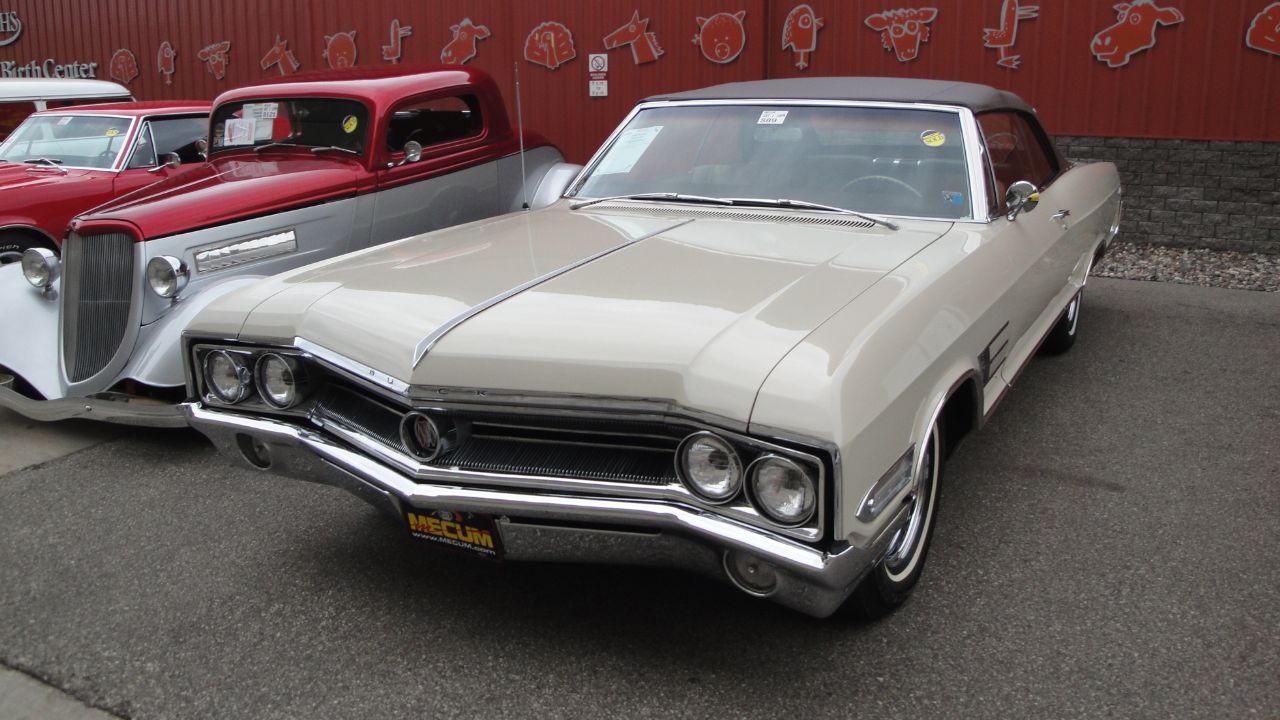
The 1965 Buick Wildcat gave you something Detroit rarely balanced well in the mid‑sixties: genuine big‑car comfort with real, usable speed. You got full‑size sheet metal, a deep, quiet cabin, and the kind of torque that could shove you back in the seat long before the interstate opened up.
If you are drawn to cars that mix long‑distance ease with muscle‑era punch, the Wildcat sits in a sweet spot. It took Buick’s reputation for refinement and wrapped it around serious power, turning a family‑sized cruiser into a highway predator that still feels surprisingly modern in how it covers ground.
From Invicta roots to full-size performance player
By 1965, you were looking at a Wildcat that had grown out of its early experimental phase and into a confident performance flagship. Earlier in the decade, the car started life as a hotter version of the Invicta, and by the mid‑sixties it had evolved into a distinct model that enthusiasts now recognize as a sporty take on the full‑size Buick formula. Period specifications describe the Buick Wildcat as a sporty version of the full‑size coupe, a car that kept the big‑body stance but sharpened the driving experience.
That positioning mattered because Buick was quietly building a performance story alongside its comfort image. While the brand would later be celebrated for the Buick Skylark Gran Sport and the GS Stage 1, you can see the groundwork in the Wildcat’s mix of size and speed. Contemporary coverage of the Buick muscle narrative notes that the Wildcat line, produced from 1963 to 1970, ran in parallel with the Skylark‑based performance cars rather than trailing behind them.
Engines that turned a cruiser into a sprinter
Under the hood, the 1965 Wildcat gave you serious hardware for a car of its size. The base engine was a 325-hp, 401-cid nailhead V8, a combination that let the Buick Wildcat share the LeSabre’s body while delivering a clear step up in thrust. Enthusiasts still talk about the nailhead’s broad torque curve, which made the car feel eager from low speeds rather than just strong at the top end.
If you wanted more, Buick let you climb the ladder into 425 cubic inches. Across the brand’s lineup, the Engine Options and data highlights a 425 engine and trim combination capable of quarter‑mile runs in the mid‑14‑second range at about 95 mph, numbers that put a full‑size Buick squarely in muscle‑car territory. In related Buick applications, a 425 cu‑in Super Wildcat V8 was rated at 360 horsepower, with period listings describing that Super Wildcat as the centerpiece of a package that blended luxury and serious power.
Transmissions and the feel of speed
Power is only half the story; how the Wildcat delivered it is what you really felt from behind the wheel. Buick paired its big engines with a 3-speed Super Turbine 400 automatic, a setup that period spec sheets list under Transmission details as the standard choice in a big‑bodied package. Owners still praise the Super Turbine for its smooth shifts and ability to keep the engine in its torque band without drama.
If you wanted a more involved drive, you could opt for a 4-speed manual that turned the Wildcat into a genuine driver’s car. Enthusiast write‑ups on the convertible describe a 4-speed manual as a highly sought‑after performance option, paired with the same Super Turbine 400 automatic as the more common, smooth‑shifting choice. That combination of a relaxed auto for cruising and a rare manual for enthusiasts helped the Wildcat bridge the gap between boulevard car and serious performance machine.
Gran Sport 400: sharpening the Wildcat’s claws
For you as a performance‑minded buyer in 1965, the most focused version of this big Buick was the Wildcat Gran Sport 400. Period descriptions of the Buick Wildcat Gran identify it as a two‑door hardtop coupe, built by Buick for drivers who wanted more edge without giving up comfort. The Gran Sport 400, often shortened to GSP, tightened the car’s character with performance‑oriented equipment while keeping the Wildcat’s upscale feel.
Enthusiast notes on the same GSP highlight that it was designed for drivers who wanted strong acceleration, bold styling, and a smooth ride in one package. The “400” badge tied directly to the Super Turbine 400 automatic, reinforcing that you were getting a drivetrain tuned for both quick launches and relaxed highway running, not just a cosmetic trim kit.
Convertible glamour and real-world presence
If you picture yourself in a Wildcat today, chances are you are imagining the convertible with its long, low profile and generous overhangs. Video walk‑arounds of a 1965 Buick Wildcat convertible show how the car fills the frame, from the wide grille to the sweeping rear quarters, yet still carries a certain lightness in its lines. That visual balance is part of why the car still turns heads at shows and cruise nights.
Owners and fans often describe the open‑top Wildcat as a stylish, powerful full‑size car that blends performance and comfort. One enthusiast overview of the 1965 Overview emphasizes its upscale amenities and refinement within Buick’s lineup, framing it as a car that could carry four adults in comfort while still delivering the kind of acceleration that made on‑ramps fun rather than stressful.
More from Fast Lane Only