Stephen A. Smith has never been shy about confronting star athletes, but his latest target is one of the most revered figures in sports. After Tiger Woods was arrested on suspicion of DUI following another serious crash, Smith erupted on air and online, arguing that the golf icon has no business driving himself anymore. His anger taps into a wider unease about Woods, whose pattern of car incidents and injuries now collides with fresh questions about drugs, pain management and personal responsibility.
Smith’s broadside is more than another hot take. It lands at a moment when friends, analysts and fans are openly wondering whether Tiger Woods can safely balance his privacy, his pride and his life behind the wheel, and whether anyone in his circle can get through to him.
The crash that reignited old fears
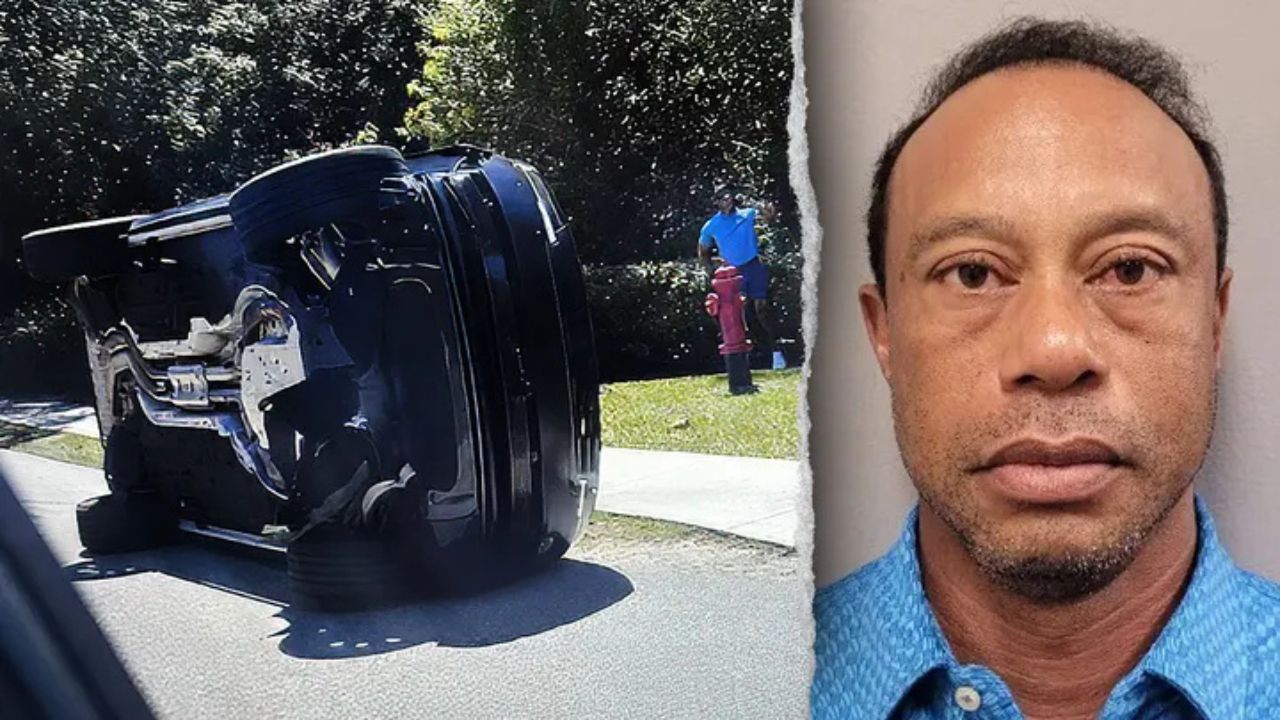
The latest crisis began in Florida, where Tiger Woods was involved in a rollover crash near his home while traveling at a high rate of speed and attempting to overtake a truck on the road, according to a televised report that described the golf pro’s vehicle flipping before coming to rest. That same coverage detailed how the incident led to Woods being charged with DUI, turning a frightening wreck into a criminal case linked directly to impaired driving in Florida and instantly reviving memories of his past off-course turmoil.
Another broadcast report explained that the golf superstar was arrested and charged with driving under the influence on a Friday afternoon after he was involved in a rollover crash, describing Tiger Woods in police custody after officers responded to the wreck. The timing, in the middle of the day on a Friday, only sharpened the shock, as did the fact that this was not a minor fender bender but a rollover that could easily have been fatal for Woods or other drivers on the road.
According to a newly released affidavit described in another television segment, Tiger Woods had two hydrocodone pills in his pocket when he was arrested for driving under the influence. That same report said his pupils were described as “extremely dilated,” a detail that raised immediate questions about whether prescription pain medication, long a shadow over his injury-plagued career, had again become entangled with his behavior behind the wheel.
Yet another video analysis noted that Tiger Woods refused a urine test after the incident and framed that decision as part of a troubling history that already includes his serious 2021 crash in California and the infamous 2009 crash in Central Florida. The refusal, combined with the hydrocodone detail, fed a narrative of a superstar who has repeatedly skirted the edge of disaster on the road and who now faces renewed scrutiny from law enforcement and the public.
Stephen A. Smith’s blistering message
Into that context stepped Stephen A. Smith, the outspoken commentator whose persona is so prominent that a search for Stephen A. Smith pulls up a long record of high-profile sports debates. On his platforms, including The Stephen A. Smith Show, he reacted to the news of Tiger Woods’ DUI arrest with a mix of frustration and blunt concern.
In a widely shared rant captured on video, Smith raised his voice and delivered a clear directive to the golf legend: “Stop getting behind the damn wheel.” The segment, which appeared as an explosive clip of Stephen Smith going after Tiger Woods after his latest incident, framed the arrest as part of a “troubling pattern” and argued that the time for gentle advice had passed.
His criticism did not stop at the decision to drive. In an Instagram post, labeled with the phrase “STEPHEN A. SMITH SPEAKS,” he addressed Tiger directly and said, “My brother u got issues w/ drugs. I think it’s conceivable that its pain meds. What I dont understand is why you keep putting yourself in this position.” The message, shared to a large audience on the platform, made clear that in Smith’s view the problem is not only legal but medical and personal.
A detailed write-up of his comments explained that on his show Smith called out Tiger Woods after the recent DUI arrest and repeated his plea that the golfer stop getting behind the wheel. That report described how reactions poured in throughout the weekend and spilled into Monday as fans and analysts debated whether Smith’s tone was harsh or necessary, but it emphasized that Smith saw his words as tough love aimed at protecting both Woods and the public.
“My brother u got issues w/ drugs”
Smith’s decision to publicly suggest that Tiger Woods has “issues w/ drugs” pushed the conversation into sensitive territory. In his Instagram caption, which carried the all-caps tag “STEPHEN A. SMITH SPEAKS,” he speculated that the issue might be pain medication and said he found it conceivable that pain meds were at the center of the problem. That speculation connected directly to the affidavit describing hydrocodone pills in Woods’ pocket and the note about his “extremely dilated” pupils, and it echoed long-standing concerns about how Tiger has managed chronic pain after multiple surgeries.
The mechanics of that Instagram post, which relied on tools described in Meta’s documentation for Instagram and related products, helped the clip spread quickly across social platforms where fans dissected every line. Guides on how Instagram content circulates, including developer documentation that explains how posts like “STEPHEN A. SMITH SPEAKS” can be embedded and shared, show how easily a single comment from a figure like Smith can reach millions of users in a matter of hours.
By framing his comments to Tiger as “my brother,” Smith signaled that he views the issue as something closer to an intervention than a simple critique of on-course performance. At the same time, by airing it publicly, he invited a wider debate about whether a television and podcast star should be diagnosing a global icon’s drug issues on social media.
Tiger Woods, privacy and the refusal to hire a driver
Parallel reporting has revealed another layer to the story: Tiger Woods has resisted hiring a full-time driver despite his history of crashes. A detailed account based on people close to him said he will not hire a driver because of privacy concerns and that he prefers to control his own movements rather than have someone else know every detail of his schedule and personal life.
An additional feature described why Tiger Woods will not hire a driver, quoting an exclusive source who said he is fiercely protective of his privacy and wary of letting outsiders into his inner circle. That account linked his reluctance directly to his status as one of the most scrutinized athletes in the world and suggested that he sees a driver not as a safety measure but as a potential threat to his personal boundaries.
The tension between that desire for privacy and the reality of his record on the road has now become central. Smith’s argument, that Tiger must stop driving himself, runs headlong into the golfer’s insistence on autonomy. The question is no longer hypothetical. With another DUI arrest on his record, the stakes of that choice are painfully clear.
Inner circle concern and a history of crashes
Inside Tiger Woods’ camp, there is clear anxiety. A detailed report by Jenna Lemoncelli said that some close with Tiger Woods explained he is “frustrated and depressed” after the latest DUI arrest and that the incident has sparked concern within his inner circle. That story painted a picture of friends and associates who are deeply worried but who also understand how stubborn and independent Woods can be.
The new arrest does not sit in isolation. The video analysis that described how Tiger Woods refused a urine test also reminded viewers of his serious 2021 crash in California and his infamous 2009 crash in Central Florida, tying the current case to a longer pattern of dangerous incidents. In that context, Smith’s plea for him to stop driving sounds less like a hot take and more like a reflection of what many in Woods’ orbit may already be thinking but are reluctant to say publicly.
Career crossroads on and off the course
All of this is unfolding while Tiger Woods is still trying to compete. A recent analysis noted that Woods returned to competition on March 24 at the TGL finals after a break due to surgery, playing for Jupiter Links GC in the tech-focused league. That return was framed as a tentative step in a comeback, but it also raised new questions about how his body can hold up and whether he can sustain any kind of regular schedule.
Stephen A. Smith has already been critical of Woods’ playing future. In an earlier segment, he referred to Tiger as a “recreational golfer” after another injury, saying, “We know how he’s the all-time great. We get that. But his health is so bad. He cant do it anymore.” That blunt verdict emphasized that, in Smith’s view, the Tiger of old is gone and only flashes remain, and it set the stage for his current focus on Woods’ life away from the tee box.
Those comments drew backlash. Another report described how Stephen Smith was slammed for a “disrespectful” Tiger Woods take after the legend’s latest injury, noting that critics felt he had crossed a line in dismissing a player with 15 majors as little more than a hobbyist. Yet even that criticism acknowledged that Smith was reacting to a long string of surgeries and withdrawals that have left Tiger’s competitive future in doubt.
Now the conversation has shifted from whether Woods can win again to whether he can safely manage his life. The DUI case, the hydrocodone details and the refusal to hire a driver have combined to place his off-course choices under a microscope that is even harsher than the one that follows his scorecards.
Smith’s platform and the echo chamber effect
Stephen A. Smith’s words carry particular weight because of his reach. The broadcaster anchors major television debates and also hosts The Stephen A. Smith Show, a platform that appears prominently in search results for Stephen A. Smith and that allows him to speak at length without the constraints of traditional studio formats.
Clips from that show, including his fiery message that Tiger should stop getting behind the wheel, quickly migrated to social networks. A sports news account linked to by Griffin McVeigh on X amplified Smith’s remarks to a broader audience that may not have watched the full segment, turning a few sentences into a viral talking point about Tiger Woods and DUI issues that dominated timelines for hours.
Official brand accounts also picked up the story. The On3 social feed on X, which is accessible through a profile link that highlights its coverage of Stephen Smith, Tiger Woods and DUI news, shared the original report that detailed Smith’s “stop getting behind the damn wheel” demand. That amplification from a sports-focused audience helped lock in the narrative frame: Smith as the blunt truth-teller, Woods as the troubled legend who refuses to change.
More from Fast Lane Only