Within a year or two, buying a new car in the United States could mean accepting a built-in surveillance system that watches a driver’s eyes, hands, and even breath for signs of impairment. Supporters frame the move as a life‑saving safety upgrade, but drivers and privacy advocates are increasingly alarmed at how much intimate data these systems could capture and who might ultimately control it.
As the federal mandate for in‑car monitoring edges closer to a 2027 deadline, the fight is no longer about whether cars will watch their occupants. It has shifted to how far that monitoring goes, how securely the information is handled, and whether drivers will have any meaningful way to say no.
How a safety law became a surveillance flashpoint
The roots of the coming requirement sit in a sprawling infrastructure package. The Infrastructure Investment and Jobs Act of 2021 instructed federal regulators to define technology that can detect impaired driving and prevent crashes, setting the stage for a rule that would apply to every new passenger vehicle. One analysis of the law explains that Infrastructure Investment and 2021 directs agencies to create standards for systems that can identify drunk or otherwise impaired drivers and intervene automatically.
Regulators have zeroed in on in‑car surveillance as the most practical way to meet that mandate. A detailed breakdown of the policy notes that a federal rule will require cameras trained on the driver, along with other monitoring tools, in all new vehicles by 2027. One report on Federal Surveillance Tech in New Cars describes a package of sensors meant to track driver attention and behavior in real time.
What might sound like a niche safety feature is about to become standard equipment. Another analysis of the rule explains that the United States will require all new passenger vehicles, from late 2026 into 2027, to include driver‑monitoring technology, with no opt‑out for buyers who prefer a more traditional cockpit. A separate explainer on New Cars makes clear that the requirement is not limited to luxury models or specific brands but covers the entire new‑car market.
What the mandate actually requires inside the cabin
Despite the political heat around the issue, the technical vision is relatively specific. Federal regulators want a system that can detect impairment passively, accurately, and without requiring driver input. A regulatory report described in one transportation briefing says officials evaluated several approaches, including breath sensors, touch‑based alcohol detectors, and cameras that track eye movement and head position. According to one summary, According to the report, the goal is a system that works in the background and does not rely on a driver blowing into a tube or tapping a screen.
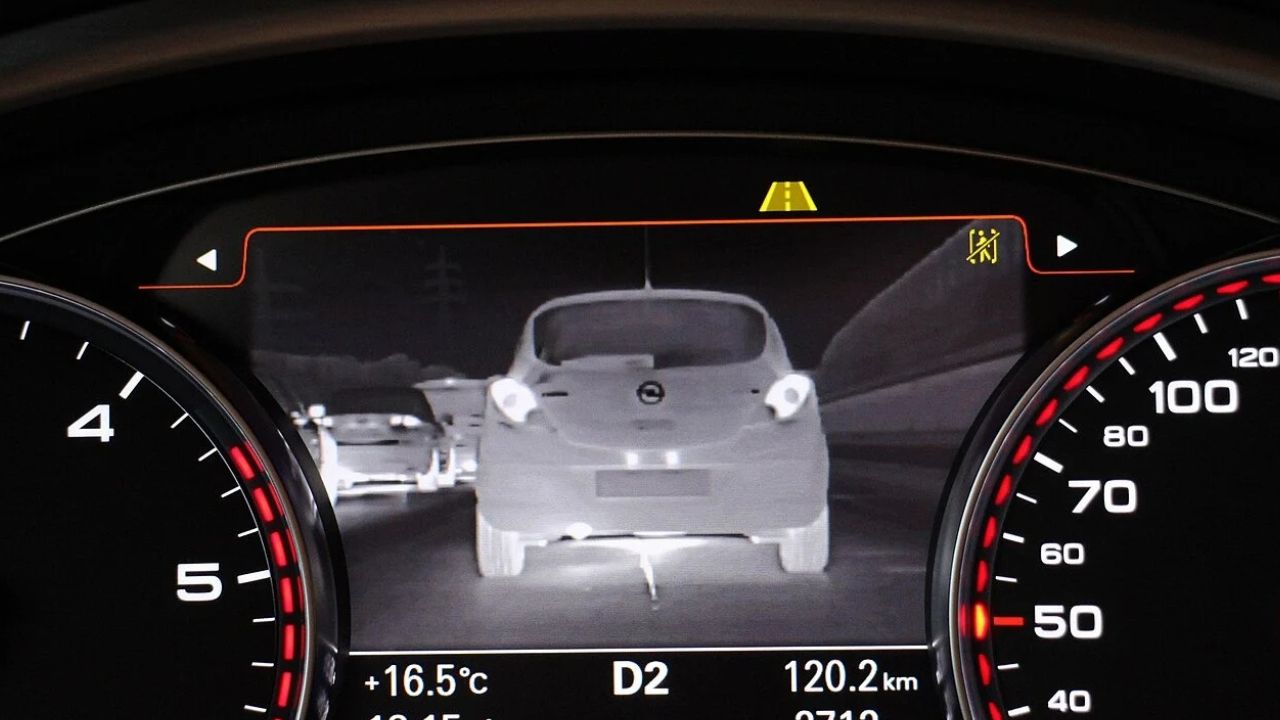
As a result, the emerging template looks like this. A camera mounted near the steering wheel or in the instrument cluster watches the driver’s face and eyes. Additional sensors may monitor steering input, lane position, and braking patterns. Some proposals add cabin air sensors that can detect alcohol concentration in the space around the driver. A broader overview of Federally Mandated Driver notes that regulators are still weighing exactly which combination of sensor types will be required.
In practical terms, that means a 2027 model sedan or pickup could constantly evaluate whether the person behind the wheel is drowsy, distracted by a phone, or impaired by alcohol. If the system decides the driver is unsafe, it could trigger escalating responses: warning chimes, automated braking, or even a refusal to start or continue moving. A commentary video on the federal government’s role in these systems describes scenarios where the car itself determines if a driver is allowed to operate the vehicle.
The political backlash and the “KillSWITCH” label
As details of the mandate have filtered out, political opposition has coalesced around the idea that the government is quietly installing a remote off switch in every car. One viral Facebook post by Representative Jeremy Munson warns that all 2027 cars and trucks will be required to have cameras and monitoring technology because of a 2026 drunk driving law for new cars, which he says is Based on the Infrastructure Investment and Jobs Act. His message, shared on Mar, frames the requirement as an unprecedented intrusion into personal freedom.
Another widely shared discussion in an online group highlights that Section 24220 of the law directs the National Highway Traffic Safety Administration to mandate an impaired‑driving prevention system in new vehicles. The same post singles out 57 Republicans who voted for what critics call the “KillSWITCH” provision, accusing them of enabling a built‑in government control mechanism. The group’s commentary on Section 24220 and the National Highway Traffic Safety Administration reflects a broader fear that the technology will not stay limited to drunk‑driving detection.
So far, there is no public evidence that regulators plan to use the systems for remote shutdowns outside of safety scenarios, and the law’s text focuses on impairment. It is unverified based on available sources whether law enforcement agencies will be able to trigger or access any such functions directly. The perception that a hidden control channel might exist, however, has become a powerful political talking point.
Delays, technical doubts, and shifting timelines
Even as the mandate moves forward, the technology itself has run into questions. A report on the implementation effort explains that new findings about false positives, environmental interference, and driver diversity have forced regulators to reconsider how quickly the systems can be rolled out. The analysis of Federally Mandated Driver notes that the rule is facing schedule pressure because engineers have struggled to design sensors that work accurately across different body types, skin tones, and seating positions.
A separate summary of the same report emphasizes that the evaluation process included multiple sensor technologies and that each came with tradeoffs. Breath sensors can be thrown off by open windows or passengers, touch‑based systems raise usability questions, and camera‑based monitoring has to function in bright sun, at night, and when a driver wears glasses or a mask. The section of the report discussed in the sensor review suggests that no single approach is flawless, which has fueled calls to slow the mandate until performance improves.
For drivers, that uncertainty translates into a moving target. Some reports suggest the rule will apply to model year 2027 vehicles, while others describe a phase‑in that begins in late 2026 and stretches into 2027. A briefing on how The US will mandate driver surveillance in all cars notes that regulators still have discretion over the exact compliance schedule, which could give automakers a bit more breathing room but does not change the eventual requirement.
Inside the car: a new kind of data exhaust
For privacy advocates, the most troubling part of the mandate is not the physical presence of cameras or sensors. It is the data those devices will generate. One advocacy group warns that in‑car monitoring will create a massive public‑private database of biometric information that could be irresistible to government agencies and commercial partners. Their analysis argues that the systems will capture facial imagery, eye‑tracking patterns, and behavioral data that can be linked to specific individuals, and that this information could be repurposed far beyond safety. The group’s warning that the technology could be “the envy of government” appears in a report on coming soon requirements for cars that decide if someone should drive.
Those concerns are amplified by the modern car’s existing connectivity. Many vehicles already sync with smartphones, log trip histories, and send telemetry back to manufacturers. Adding biometric‑grade driver monitoring on top of that stack creates a richer profile of where someone goes, when they drive, and how they behave behind the wheel. A discussion thread about how Your next car purchase will include federally mandated surveillance technology captures the sense that the cabin, once a relatively private space, is turning into a rolling sensor platform.
Some privacy advocates point to broader data ecosystems as a cautionary tale. Health and wellness platforms already collect sensitive information about sleep, stress, and sexual health, and often share or monetize it in ways that users did not anticipate. The network of Yahoo health sites, for example, covers wellness, mental health, and sexual health topics across Discovered portals such as wellness, mental-health resources, and sexual-health coverage, illustrating how personal data and advice can sprawl across platforms. Privacy advocates worry that similarly detailed driving and biometric data could be pooled and analyzed in ways drivers never expected.
Who owns the footage and the biometrics?
One of the most immediate questions from drivers is deceptively simple: who owns the images and sensor readings that the new systems collect. So far, the sources reviewed here do not describe any finalized federal rules on data ownership or retention. It is unverified based on available sources whether the law will require automakers to store data locally, delete it after a short window, or make it available to law enforcement on request.
Advocates for stronger privacy protections argue that any default should favor the driver. A short explainer on social media titled “Cars shouldn’t spy by default” notes that there are currently 2 federal bills aimed at giving drivers more control over in‑car data collection and sharing. The clip, shared in Cars focused content in Jan, calls for clear consent prompts, simple opt‑out options, and strict limits on how long data can be kept.
Without those guardrails, critics warn, insurers could use monitoring data to adjust premiums, employers could demand access to evaluate workers who drive on the job, and civil litigants could subpoena footage to reconstruct disputes that have nothing to do with drunk driving. None of those scenarios are confirmed in the available reporting, but they follow patterns already seen with smartphone location data and connected‑home devices.
How automakers and tech firms are positioning themselves
Automakers, for their part, have largely accepted that some form of driver monitoring is inevitable. Many brands already offer optional attention‑tracking features in advanced driver‑assistance packages, and suppliers are racing to sell camera and sensor modules that meet the new standards. A newsletter sign‑up site linked from a piece on Federal Surveillance Tech in New Cars hints at the growing ecosystem of companies and commentators building products and content around the shift.
Technology influencers and reviewers are also staking out positions. One profile for a commentator on New Cars and gadgets, surfaced through coverage of the mandate, suggests that consumer‑tech voices will play a major role in shaping how buyers perceive the tradeoff between safety and surveillance. Social media accounts such as Federal Surveillance Tech in New Cars focused feeds and New Cars themed boards on Pinterest are already curating stories and reactions about the rule, blending technical breakdowns with political commentary.
Some automakers may try to differentiate themselves by promising stronger privacy protections, similar to how certain smartphone brands market on-device processing and limited data sharing. It is unverified based on available sources whether any specific manufacturer has formally committed to stricter standards for driver‑monitoring data than the law requires.
More from Fast Lane Only