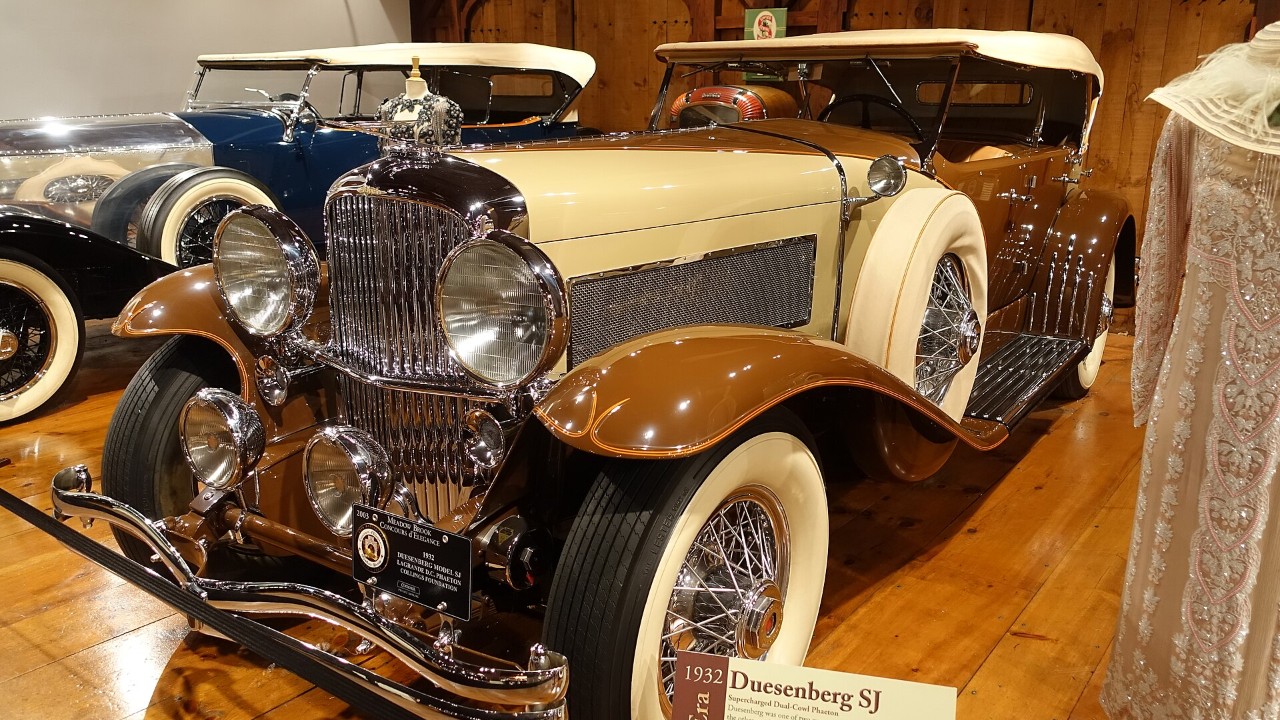
A Duesenberg SJ LaGrande dual-cowl phaeton is what happens when a straight-eight gets a supercharger and a rich owner gets a blank check. Long before the V8 took over, the inline eight was the engine of choice for anyone who wanted speed, smoothness and a hood that went on forever.
Eight cylinders in a row made a long, heavy engine. Even so, that layout ran naturally smooth, and engineers in Europe and America kept piling on twin cams, more valves and blowers. Some of these cars ruled Grand Prix racing. Others simply ruled the boulevard. A few were so strong that the rule makers eventually had to step in.
These are our 10 picks, the straight-eights we think rule makers should have reined in. Calling them that is our opinion, not a record of any ban. However, the displacements, outputs and results below come from museum, auction-house and factory records read for this story.
1. 1935 Duesenberg SJ LaGrande Dual-Cowl Phaeton
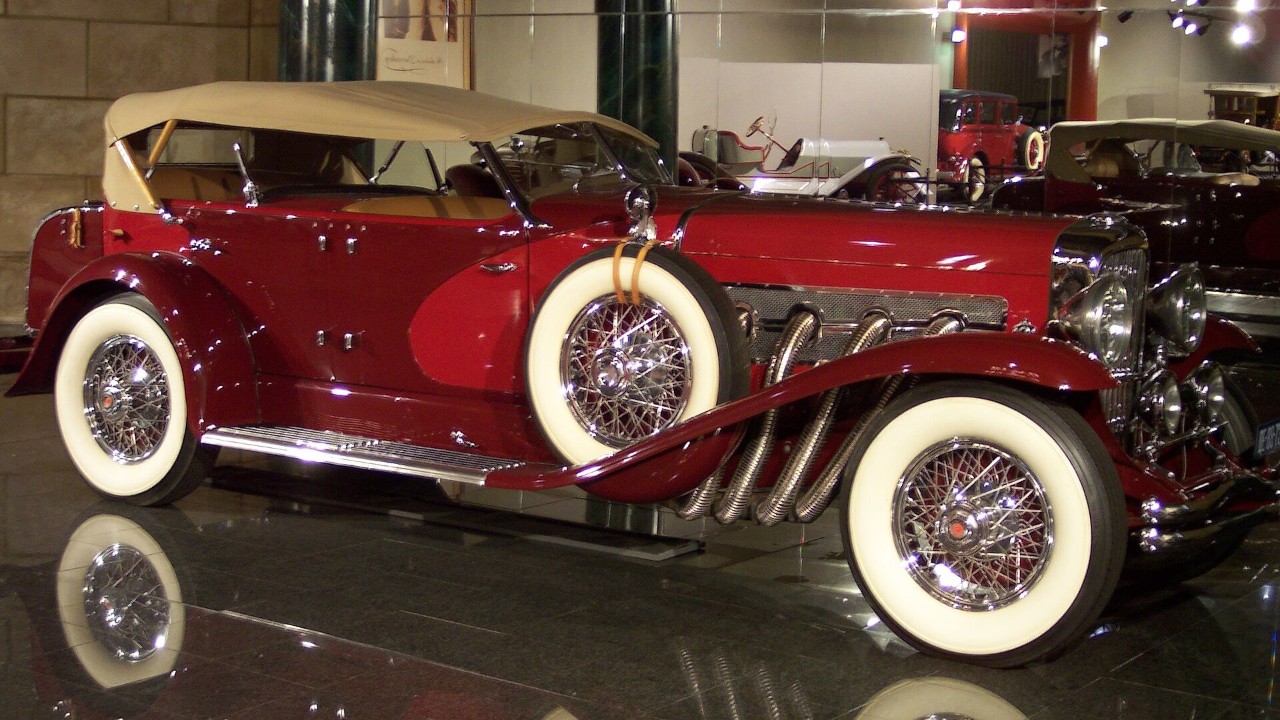
The S in SJ stood for supercharged, and the Louwman Museum says the blower lifted the 6.9-liter eight to 320 hp. Lycoming, another company in E.L. Cord’s group, built the engine to Duesenberg’s design with two overhead camshafts and four valves per cylinder. That was race-car hardware in a car meant for millionaires.
The supercharger took up so much room that the exhaust pipes had to exit through the side of the hood. In fact, the look caught on, and buyers of the regular Model J could order chromed pipes as a $1,000 option. According to the Louwman Museum’s record for its 1935 SJ LaGrande phaeton, a bare chassis cost $8,500 and the body another $12,000. For comparison, the museum notes that a Ford cost $500 at the time.
Our take: a Duesenberg SJ was the closest thing 1930s America had to a road-legal racer. The museum puts SJ output at about 35 cars, and it says Duesenberg closed in 1937. If you want the bigger story of the Model SJ, we covered why the 1935 Duesenberg Model SJ was one of the most impressive cars ever built.
2. Mercedes-Benz 540K
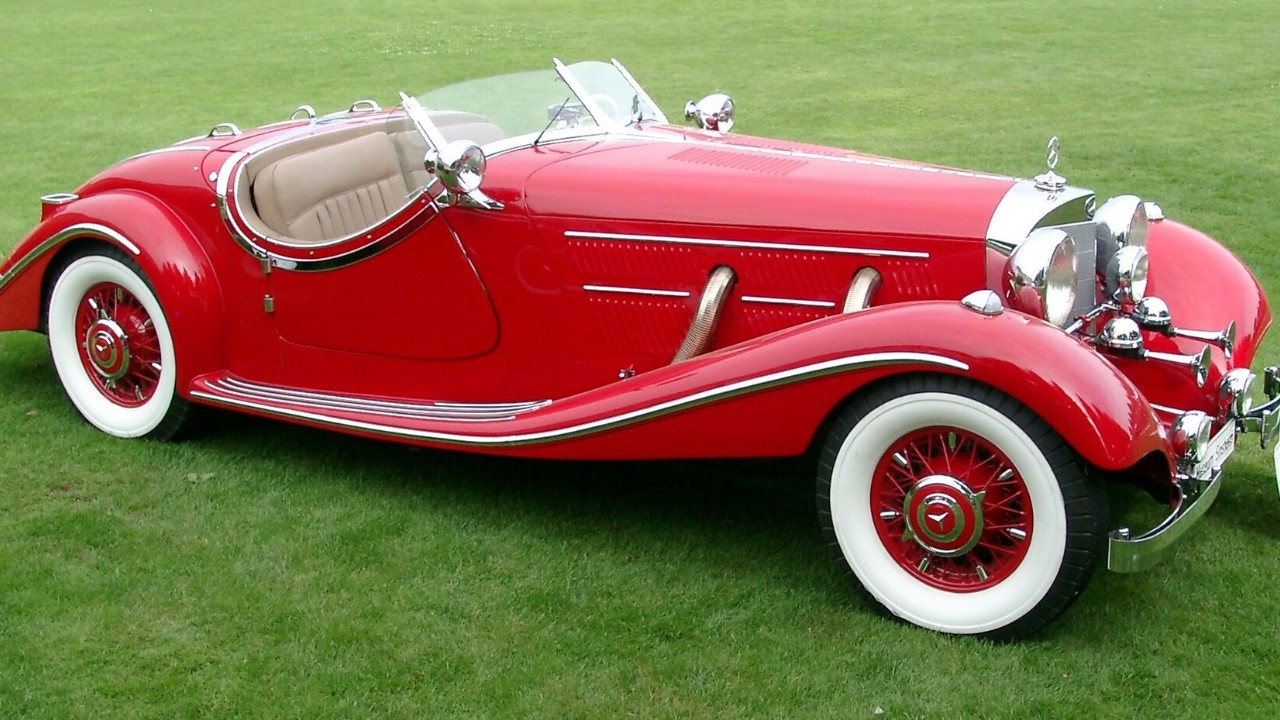
The 540K had a party trick that still sounds wild today. Its Roots-type supercharger could run for short bursts, and it kicked in automatically when the driver pushed the accelerator all the way to the floor. Without the blower, the 5,401 cc straight-eight made 115 hp. With it, output jumped to 180 hp.
That boost had a lot of weight to haul. Curb weight ran as high as 2,700 kg, about 6,000 lb, for the heaviest versions. Even so, the car could reach 170 km/h, or about 110 mph. Mercedes built 419 of them at Sindelfingen from 1936 to 1940, after 342 of the earlier 500K. That 500K had itself grown out of the SSK.
In our view, the 540K was a grand tourer with a hidden switch marked “more.” The flat-out sprint was meant for brief moments only, which is exactly why it feels a little naughty. As a result, it deserves a spot on any list of straight-eights that nobody should have trusted with an open road. It also shows how far Mercedes took supercharging before World War II. For more prewar company, see our list of automobiles that became legends of the 1930s.
3. 1938 Alfa Romeo 8C 2900B
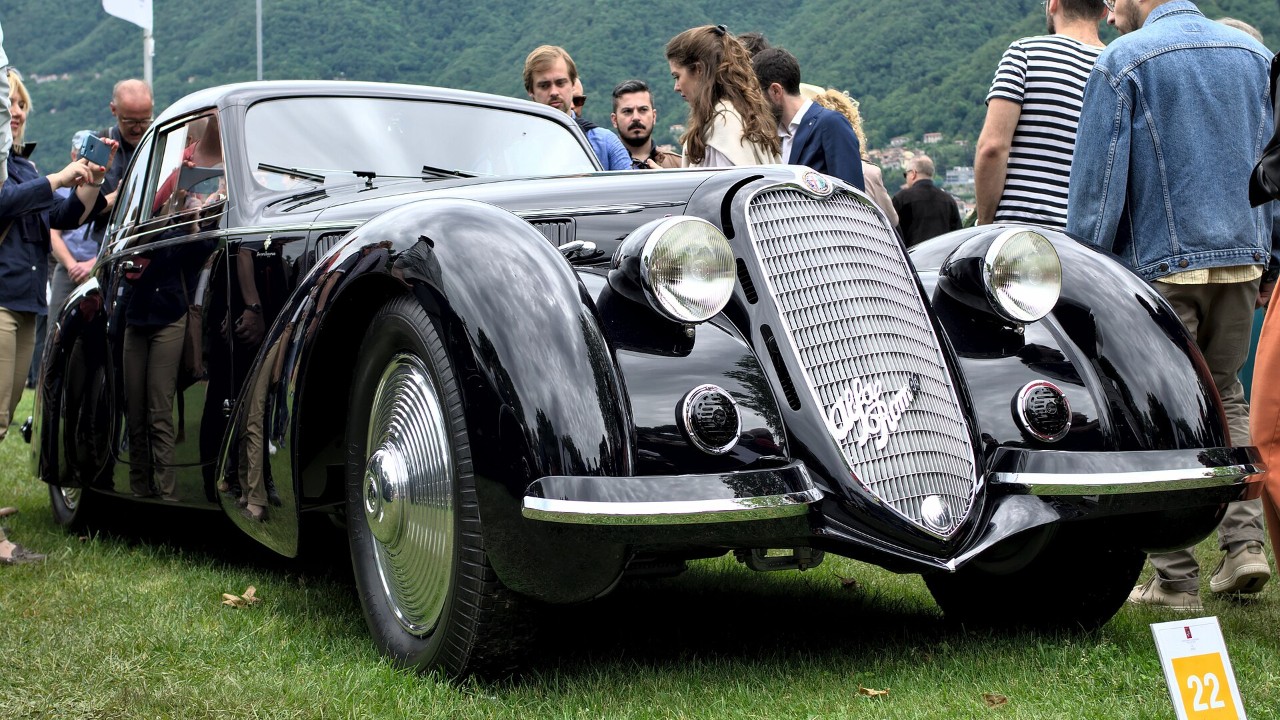
Alfa Romeo took a twin-cam alloy straight-eight and then fed it with two superchargers instead of one. Gooding & Company lists the 8C 2900B engine at 2,905 cc, with twin Roots-type blowers and 180 bhp at 5,200 rpm. Twin cams handled the breathing, while the pair of blowers forced in the air. For a road car of the late 1930s, those are serious numbers.
In our view, that spec sheet reads more like a race car than a touring car. The 8C 2900B also sat low and wore flowing bodies from firms such as Touring. In other words, it looked as fast as it was. Meanwhile, the money it commands today shows how collectors feel about that mix.
Our take: if any prewar car proves an engine can be too good for the street, this is it. Gooding sold a 1938 8C 2900B Lungo Spider for $14,030,000, according to its auction record for the car. The house also calls that car one of only five genuine long-chassis 8C 2900B Touring Spiders known to exist. If you ever get the chance to hear one run, take it.
4. 1937 Bugatti Type 57 Atalante
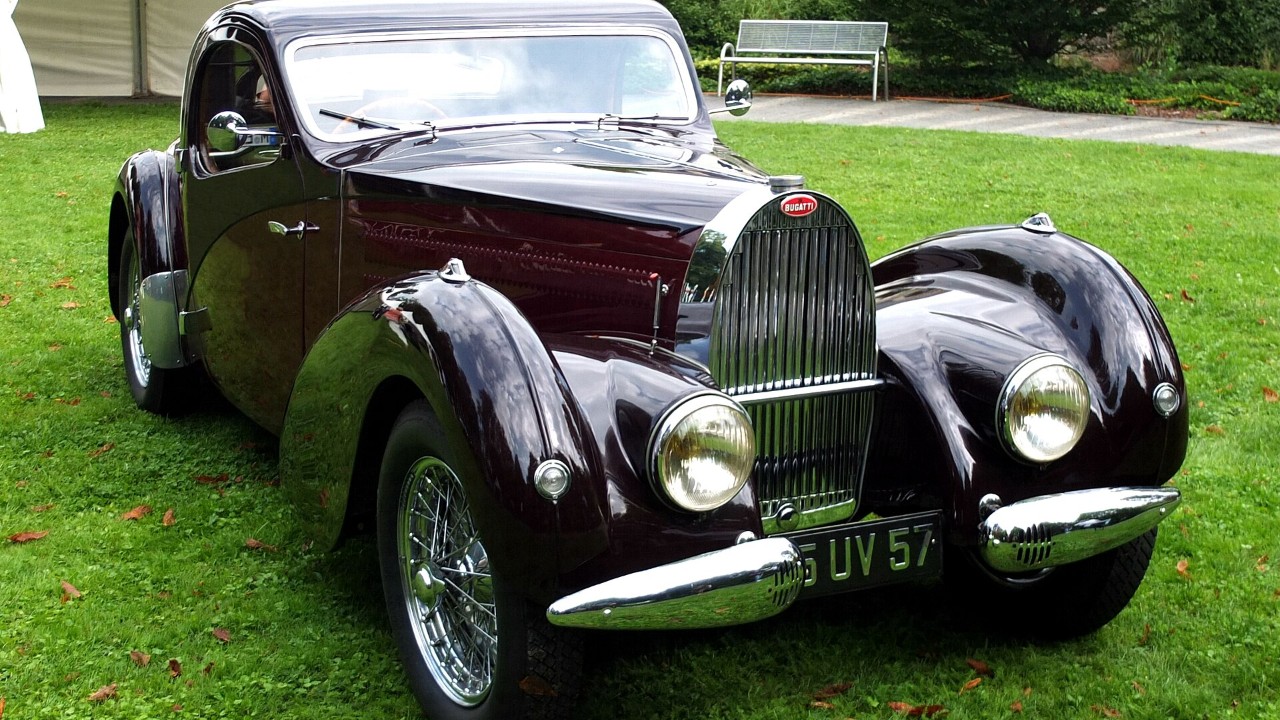
Jean Bugatti, son of founder Ettore, designed the Type 57 as an all-new car. It carried a 3,257 cc twin-cam straight-eight that made 135 hp in touring form. The sportier 57S chassis raised that to 170 hp, and adding a supercharger took it to 200 hp.
The Atalante was a two-door coupe on that 57S chassis, named after Atalanta from Greek myth. Bugatti made only 17 of them out of 710 Type 57 cars in all. That makes this car far scarcer than the long, low shape suggests. In our view, that shape still looks modern nearly 90 years later. By comparison, the even wilder Atlantic ran to just four cars.
The engine’s racing record backs up its looks. Streamlined “Tank” versions of the Type 57 won Le Mans in 1937 and again in 1939. The 1939 winner used the Type 57C as its base, the supercharged racing version, of which Bugatti built about 96. In our view, that is the clearest proof that this straight-eight was too quick for polite society. A road car that shares its engine family with a two-time Le Mans winner belongs on this list.
5. Auburn 851 Supercharged Speedster
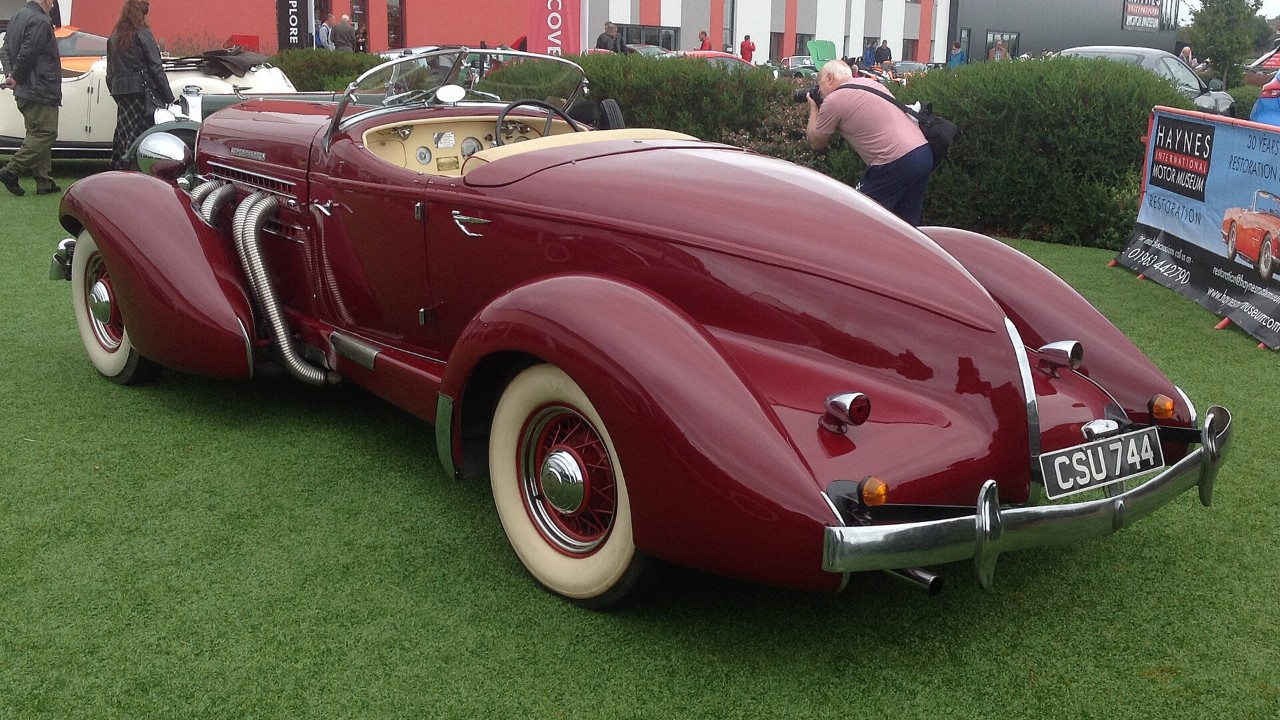
Gordon Buehrig styled the Auburn Speedster, and its boat-tail rear still stops people cold. The real story sits under that long hood, though. Auburn used a Lycoming straight-eight and offered a Schwitzer-Cummins supercharger. According to RM Sotheby’s, the blower raised output from 115 hp to 150 hp.
That bump turned a handsome car into a genuinely fast one for the mid-1930s. Auburn also made a point of it. Each Speedster carried a dash plaque with racer Ab Jenkins’s signature that claimed the car had topped 100.1 mph before it left. RM calls that claim fanciful, yet based in fact, since Jenkins did break 100 mph in a stock Speedster at Bonneville.
Our take: few American cars of the era paired show-car looks with this kind of punch. They still sell for serious money. RM Sotheby’s sold a 1935 851 Supercharged Speedster for $791,500 at Amelia Island in 2023, per its lot record. RM says that car was one of the first 50 Eight Supercharged Speedsters, and it notes the model came in limited numbers. The car in our photo dates from 1936.
6. 1933 Stutz DV-32 by Rollston
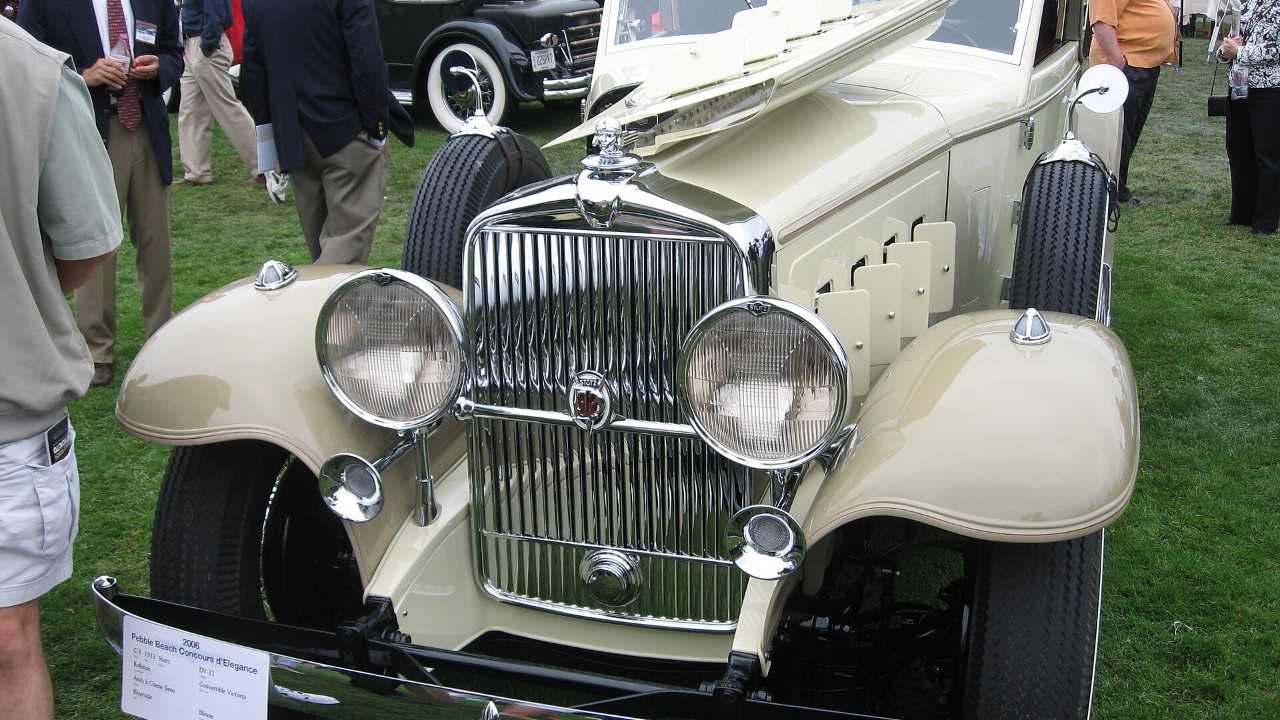
Stutz gave its straight-eight a name that spelled out its secret. DV-32 meant “Dual Valve,” and the engine carried two overhead camshafts with four valves per cylinder, 32 in all. RM Sotheby’s lists the displacement at 322.1 cubic inches. In the early 1930s, that kind of valve gear was exotic for any American car. RM’s spec sheet gives 156 bhp, but its own write-up says about 125 hp. So we’ll let the valve count do the talking.
The timing could hardly have been worse, however. Stutz launched the DV32 in early 1931, deep in the Depression, and only about 200 found buyers, according to RM. Then the company ended production altogether in 1935. In our view, that short run left behind a tiny group of cars with engines well ahead of their time.
Our take: the DV-32 was too much engine for its moment, and that is part of its charm. Rollston was among the coachbuilders that bodied it. RM Sotheby’s sold a 1933 DV32 Convertible Victoria by Rollston for $1,512,500 in 2013, according to its auction listing. That is a strong result for a car few people today could name.
7. 1937 Mercedes-Benz W125
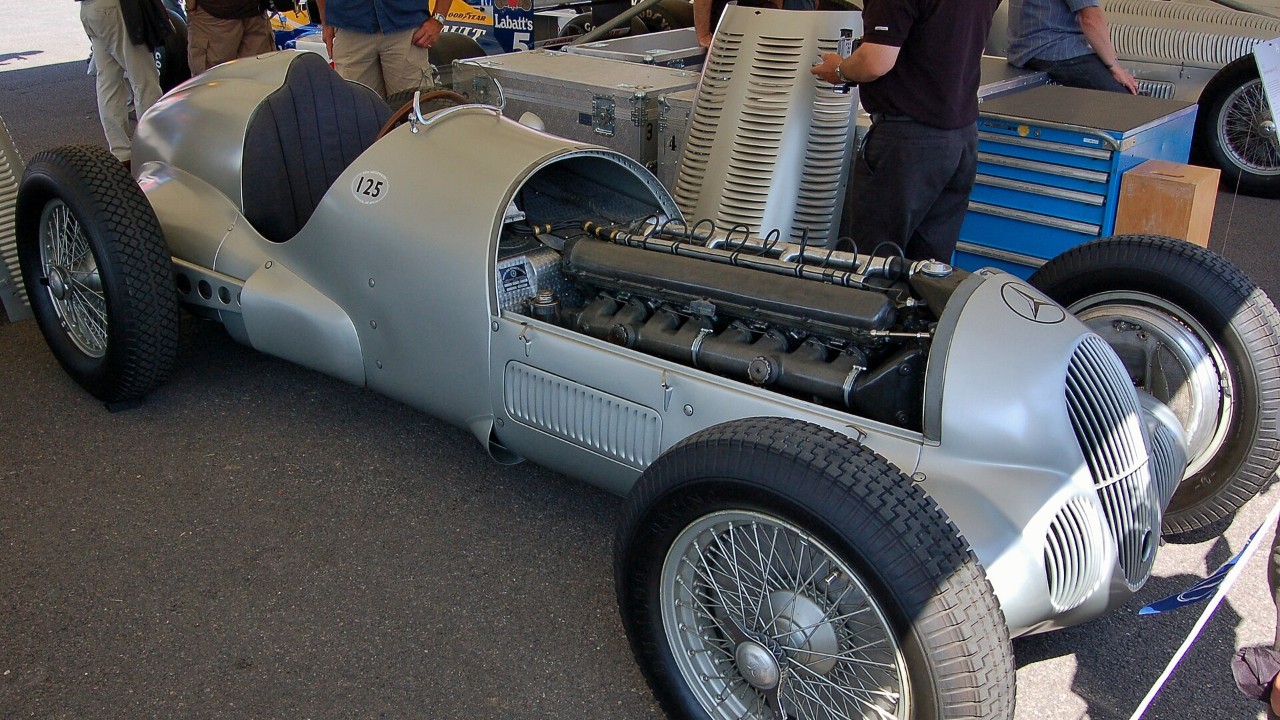
If one straight-eight truly earned a restriction, it was this one. The W125 raced under the 750 kg formula, which limited a car’s weight but not its engine. Mercedes answered with a 5,663 cc supercharged eight. Its own archive says the race engines made between 551 and 585 hp at 5,800 rpm.
One test engine went even further. The Mercedes-Benz archive lists a peak of 646 hp for engine number nine, although that version never raced on a circuit. Mercedes built eleven W125s. Rudolf Caracciola then drove one to the 1937 European Grand Prix Championship. He had also won that title in 1935, so 1937 made it two. Hermann Lang, Manfred von Brauchitsch and Dick Seaman also drove W125s that year.
And the rule makers did step in, in a sense. The archive notes that 1937 was the last year of the 750 kg formula. For 1938, a new formula capped supercharged engines at 3,000 cc, which ended the W125’s racing life. Our take: few cars have made a rulebook look so out of date in a single season.
8. 1955 Mercedes-Benz 300 SLR
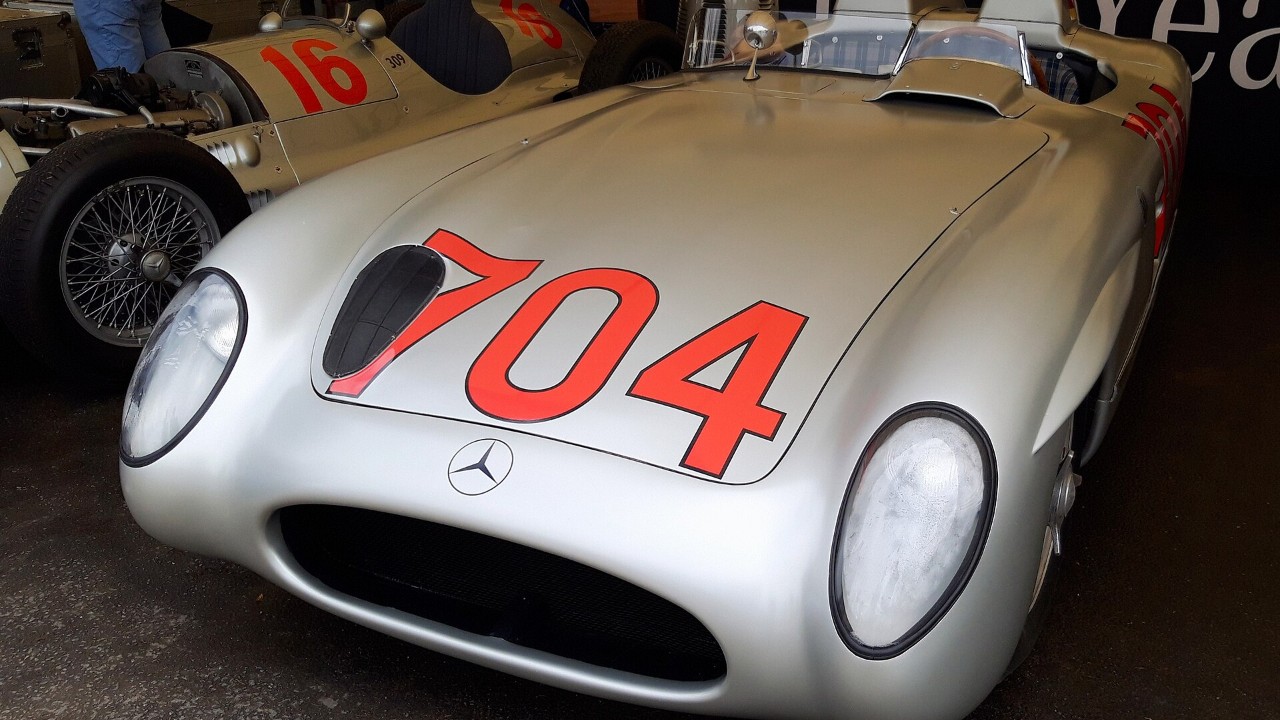
The 300 SLR ran a 2,982 cc straight-eight called the M196 S. It used direct fuel injection. It also used desmodromic valves, which close mechanically instead of relying on springs. One intake and one exhaust valve served each cylinder. That mix let it rev hard without floating a valve.
The car’s most famous day came on Italian roads. Stirling Moss and navigator Denis Jenkinson won the 1955 Mille Miglia in a 300 SLR. Their average speed was a record 157.650 km/h, or 97.96 mph, over roughly 1,600 km, about 990 miles, of public roads. Even today, that average reads like a misprint. Think about that pace for a moment, and the “should have been restricted” verdict starts to sound fair.
Our take: the 300 SLR packed a lot of history into a very short life. Mercedes built nine W 196 S chassis, seven roadsters and two coupes. The car won five races, two of them non-championship events, and it needed no supercharger to do it. In our view, it is the rare race car that never had a chance to lose its edge.
9. Bugatti Type 35B
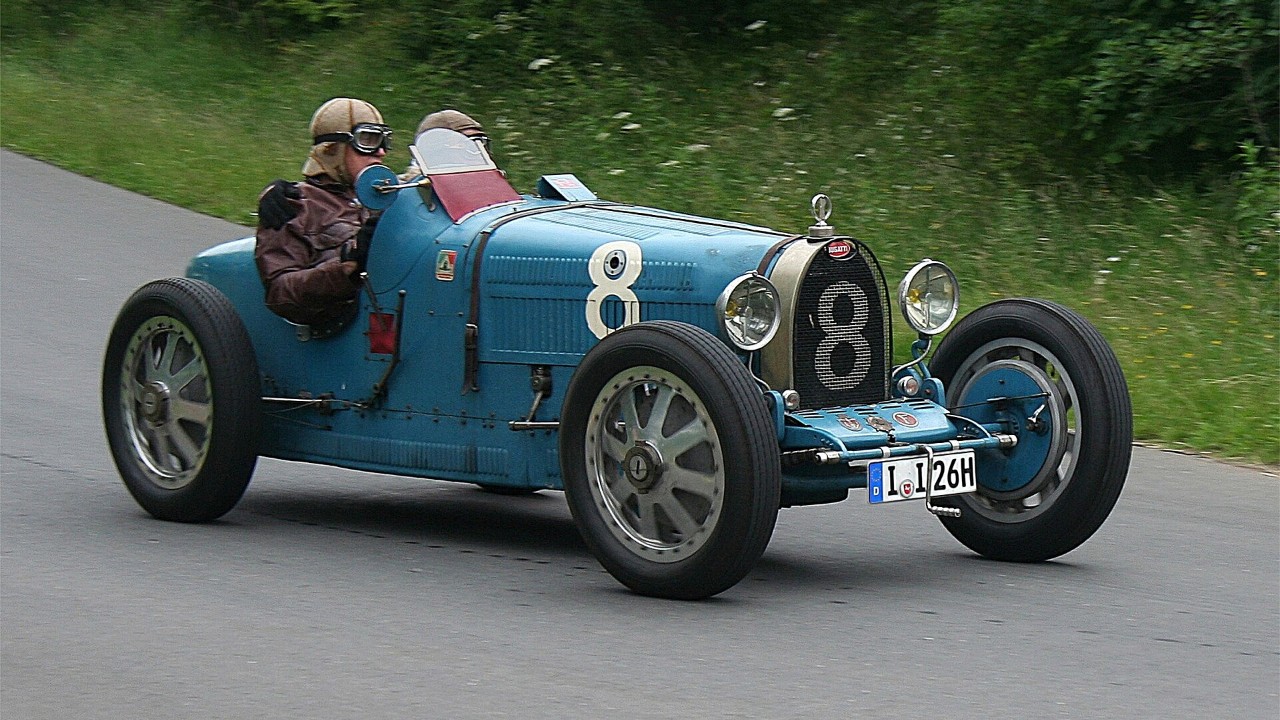
The Bugatti Type 35 first appeared at the 1924 French Grand Prix at Lyon. The 35B version used the same 2.3-liter eight-cylinder engine as the earlier Type 35T. However, it added a supercharger that RM Sotheby’s describes as slightly larger and more powerful than the one on the Type 35C.
That blower made a light car very quick. RM’s catalog says the 35B could reach 60 mph from rest in about six seconds and had a top speed of 125 mph. In our view, those figures would embarrass many family cars built decades later. Still, the 35B looks as purposeful as it performs.
RM Sotheby’s calls the Type 35 the most successful racing car in number of total victories. In our view, that record alone makes it a candidate for restriction. RM also sold a 1930 Type 35B Grand Prix car for $1,380,000, per its auction record. RM says Bugatti finished that car, chassis 4947, in the autumn of 1929 and sold it in March 1930. Its price shows how hard these cars are to pry loose today.
10. 1926 Miller 91 Front Drive
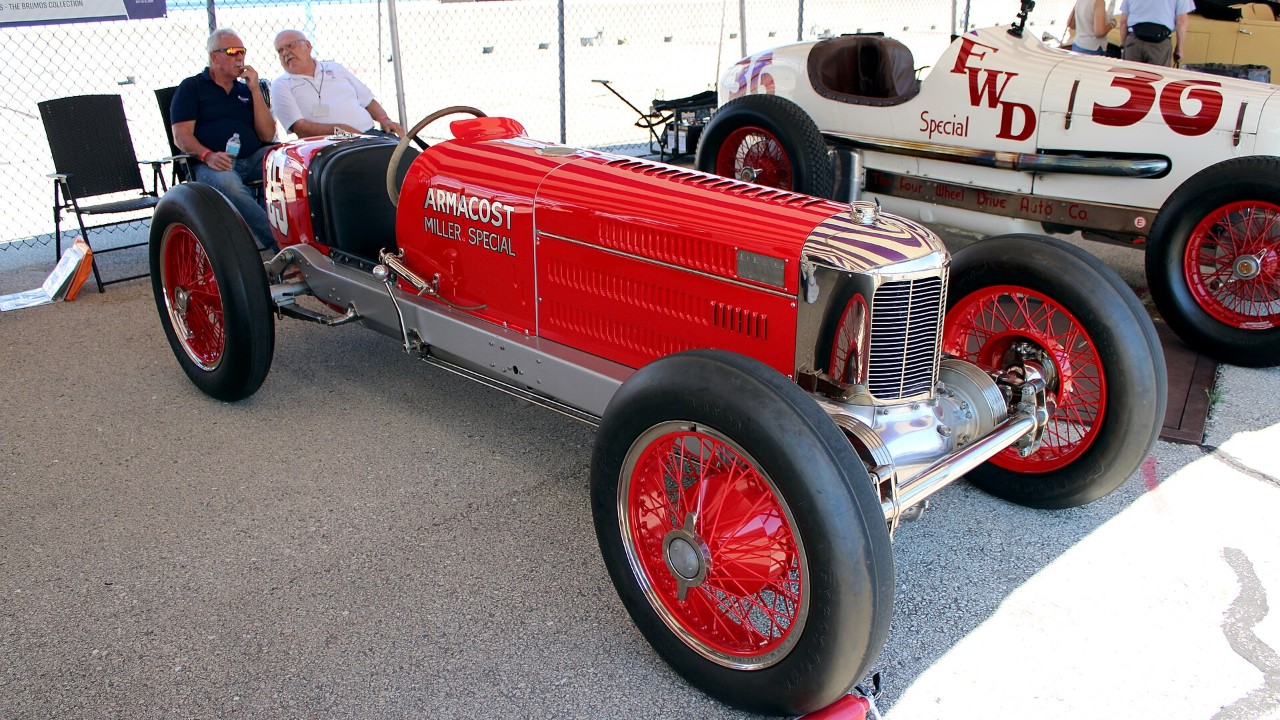
Harry Miller’s 91 had a tiny engine with an outsized punch. The name came from its 91-cubic-inch twin-cam straight-eight, and Miller supercharged it. According to RM Sotheby’s, the engine made 155 bhp at 7,000 rpm in its first form. Later development pushed it past 250 bhp at 8,000 rpm.
Miller also sent that power through the front wheels in a very low chassis. RM says the layout later inspired the Cord L-29. Meanwhile, Frank Lockhart reached 170 mph in a Miller at a time when the land speed record stood just over 200 mph. That is a remarkable speed for an engine smaller than many modern four-cylinders.
Our take: the Miller 91 shows how much a small, boosted straight-eight could do. Pete DePaolo paid $15,450 for one in 1927, then spent another $5,000 improving it. He won that year’s AAA National Championship. Later, RM Sotheby’s sold that 1927 car, the “Perfect Circle” Miller, for $650,000, according to its auction record. That is a lot of history for 91 cubic inches. The car in our photo is a 1926 Miller 91 Front Drive.
More from Fast Lane Only