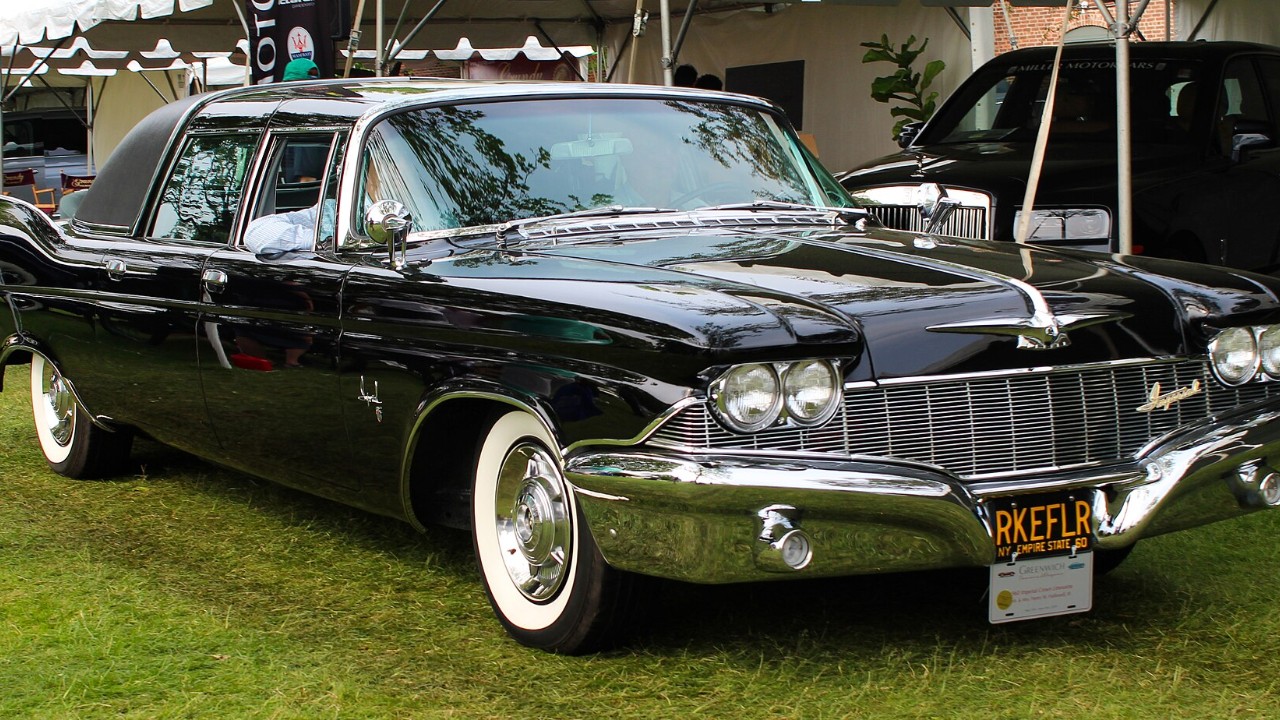
For 1955, Chrysler stopped selling the Imperial as a Chrysler and made it a make of its own. Over the next two decades, cars like the Imperial Southampton hardtop and the Ghia-built Crown limousines had one job. They had to convince buyers that Imperial stood level with Cadillac and Lincoln, not one rung below.
However, it was never an easy sell. Imperial production swung from more than 37,000 cars in its best year to fewer than 9,000 in its last. Even so, a handful of models did more than their numbers suggest. Each one changed the picture a little, through styling, engineering or sheer presence.
These are our nine picks, and the choice of which Imperials moved the needle is our opinion. The production counts, prices and dates come from the Imperial Club’s factory figures and period reporting. So you can argue with the list, but not with the numbers behind it.
1. 1955 Crown Imperial limousine
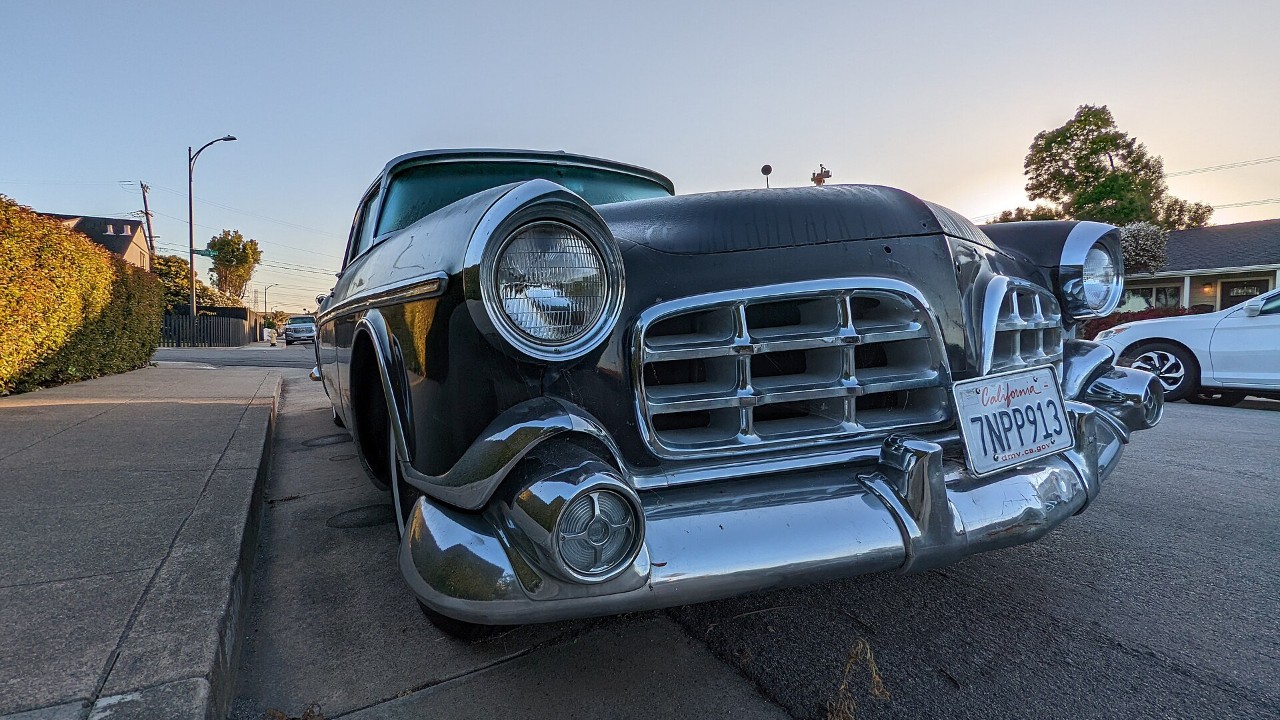
The first year of Imperial as a separate make needed a flagship, and the Crown Imperial filled that role. According to the Imperial Club’s 1955 production figures, Chrysler built just 127 Crown Imperial eight-passenger limousines. Each one also listed at $7,737. It also built 45 eight-passenger Crown sedans at $7,603. So the whole Crown Imperial line came to just 172 cars that year.
In fact, that’s a tiny number next to the 11,430 Imperials of all types sold that year. However, the limousine carried the brand’s image in places a sedan never could. The Imperial Club’s 1955 limousine pages show President Dwight Eisenhower riding in a parade in his Crown Imperial. They also list three special 1955 Derham Imperials built for Ike and Mamie Eisenhower.
The 1955 cars also introduced Virgil Exner’s styling and his “gunsight” taillights. In addition, the 1955 and 1956 limousine bodies came from Detroit, before Ghia in Italy took over the job. Our take: a brand that wants to be taken seriously needs a car for presidents. In our view, this was the Imperial that gave the new make its credentials from day one.
2. 1956 Imperial Southampton
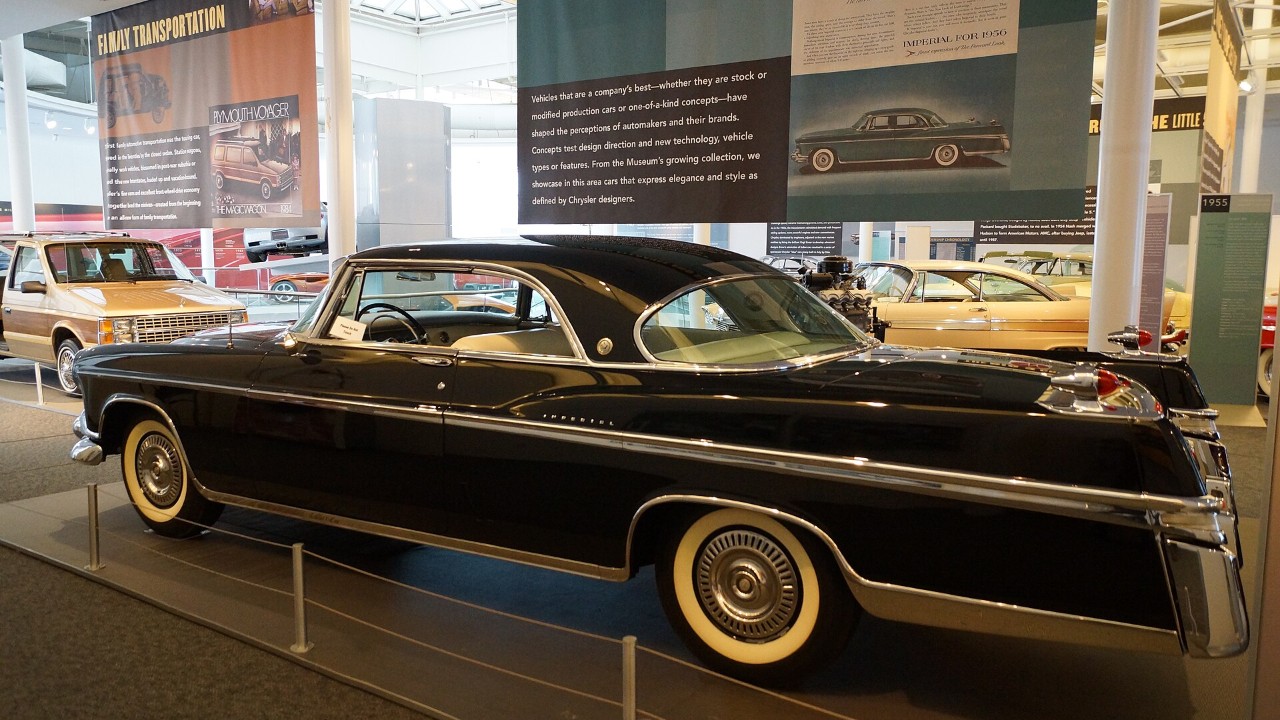
For 1956, Imperial renamed its Newport hardtop the Southampton. It also gave the line a bigger Hemi V8, now at 354 cubic inches. On top of that, the car rode on the longest wheelbase in Imperial’s history.
In addition, the 1956 Imperial Southampton came in two forms. According to the Imperial Club’s 1956 figures, Chrysler built 2,094 two-door hardtops at $5,094. It also built 1,543 four-door hardtops at $5,225. By comparison, the four-door sedan sold 6,821 copies, so the hardtops were the minority. The Crown Imperial limousine also carried on, with 119 built at $7,737. Meanwhile, a Crown sedan added 51 more at $7,603.
Why does it matter? In our view, a pillarless hardtop was the shape buyers wanted to be seen in, and Imperial had two. The Southampton showed that Imperial could be stylish as well as formal. Total 1956 production came to 10,268, slightly down from 1955. As a result, any surviving Southampton is a rare sight today. If you find one, check that the 354 Hemi is the original engine, because it’s a big part of the car’s story.
3. 1957 Imperial Crown 4-door Southampton
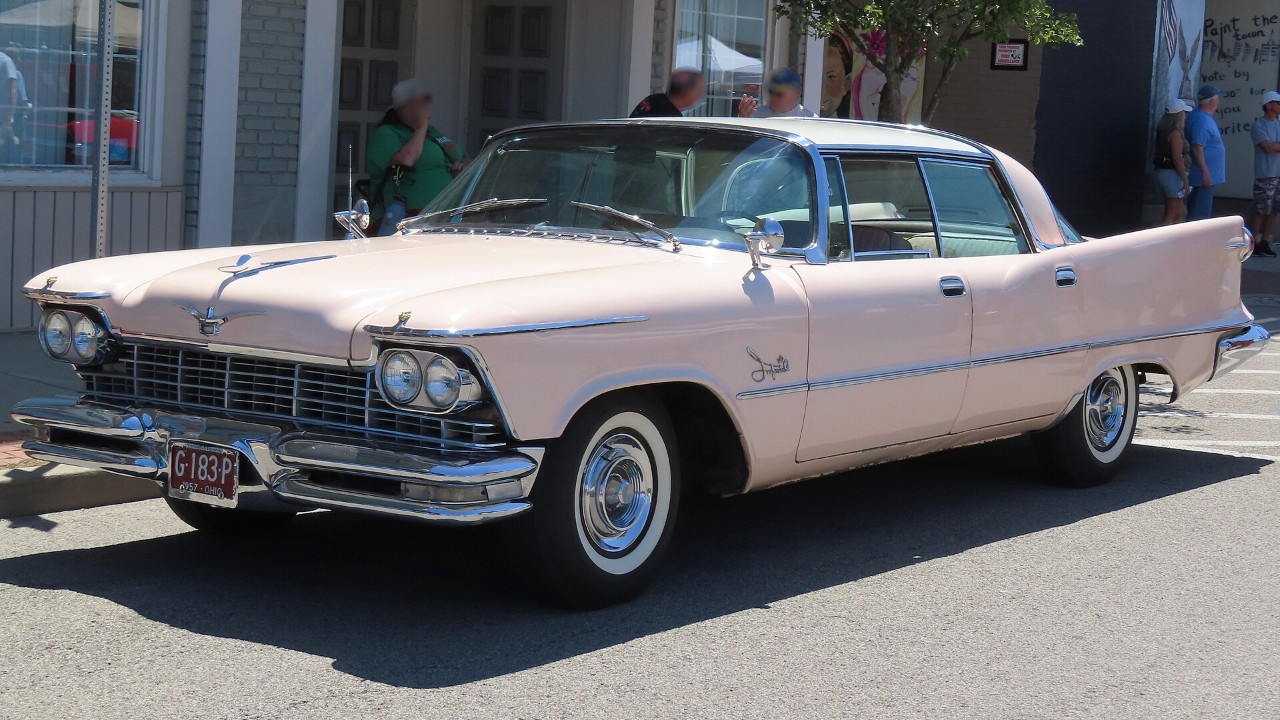
The 1957 Imperial changed everything. It got its own platform and Exner’s “Forward Look” styling, with taller fins and curved side glass. As a result, buyers responded. Imperial built 37,593 cars that year, its best-selling season ever.
The Crown four-door Southampton hardtop was the heart of that success. According to the Imperial Club’s 1957 production table, Chrysler built 7,843 of them at $5,406. That made it the most popular body style in the Crown series, ahead of the Crown sedan at 3,642. Imperial also sold 1,167 Crown convertibles at $5,598. Even the entry Custom four-door hardtop found 7,527 buyers. In other words, more than one in five 1957 Imperials was a Crown four-door hardtop. Meanwhile, at the very top, Ghia built 36 long-wheelbase Crown Imperial limousines at $12,000 each.
Our take: 1957 is the year Imperial looked like a true rival to Cadillac, not just Chrysler’s best sedan. The Crown Southampton is the car that carried that message into driveways across the country. In our view, it’s the single most important Imperial of the decade. A well-kept one also shows off the curved glass that set it apart.
4. 1960 Imperial Custom
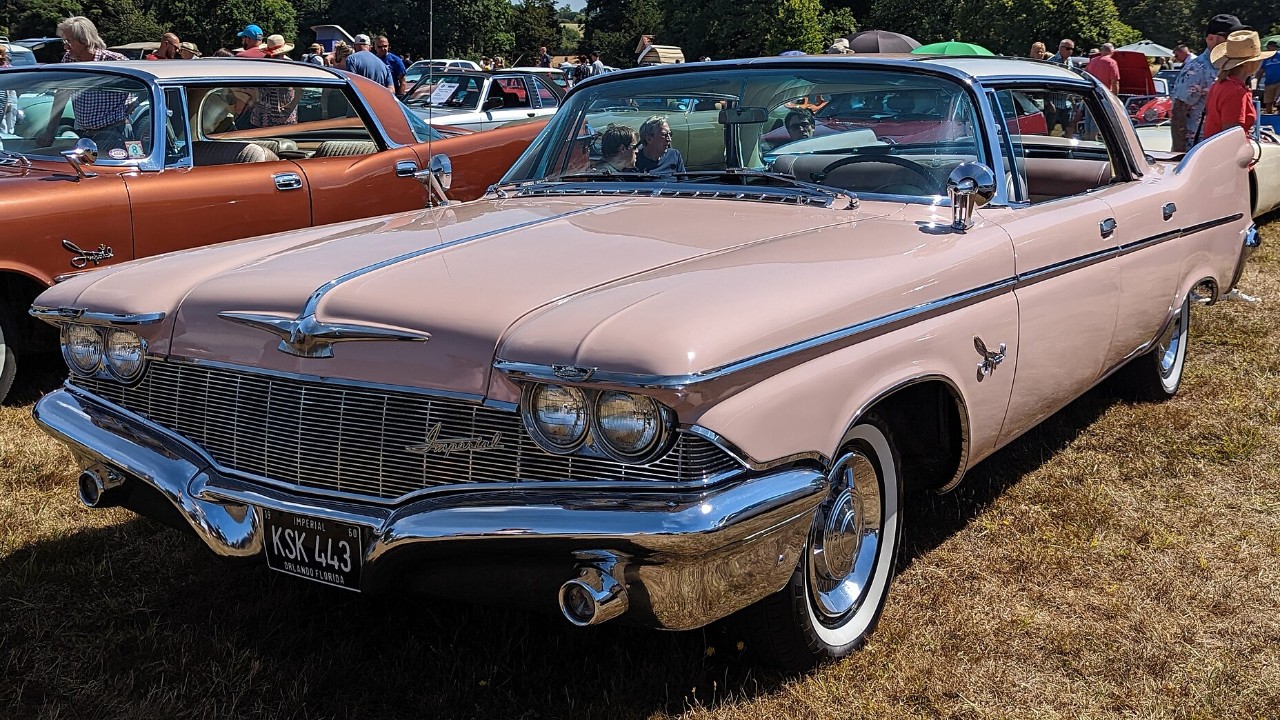
By 1960, most of Chrysler’s cars had switched to unibody construction. Imperial, however, didn’t. Instead, it kept a separate body bolted to a frame, which set it apart from its corporate cousins.
The Custom was the entry point to that experience. According to the Imperial Club’s 1960 production figures, the Custom four-door hardtop sold 3,953 copies at $5,029. By comparison, the four-door sedan came to 2,335, and the two-door hardtop to 1,498 at $4,923. Total Imperial production for 1960 reached 17,719. At the top of the range, Ghia’s Crown Imperial limousine sold just 16 copies at $16,000 or more.
Styling that year leaned even harder into Exner’s dramatic look. In our view, that’s why the 1960 car deserves a place here. It’s the moment Imperial doubled down on being different, both in looks and in how it was built. Our take: the Custom gives you that body-on-frame story at the most approachable price in the range. For buyers today, a four-door hardtop is the body style to find, since it was the most popular Custom of the year.
5. 1964 Imperial LeBaron
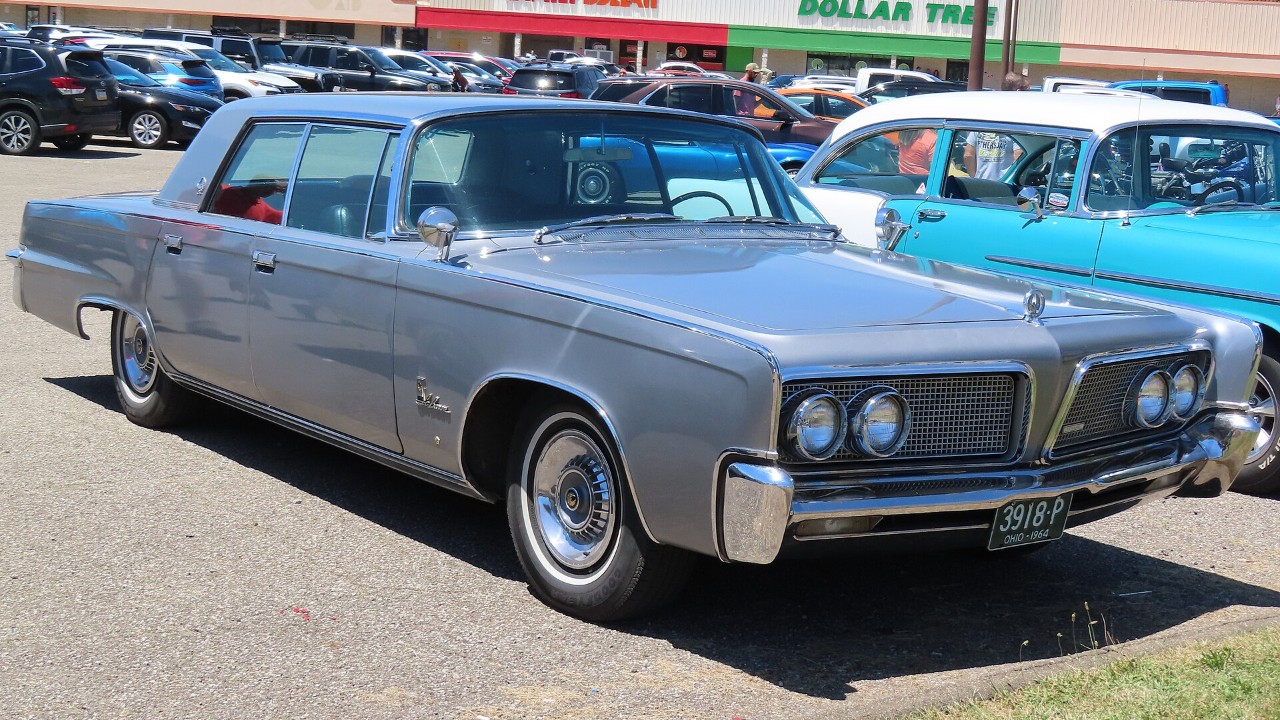
For 1964, Imperial got a new face from designer Elwood Engel. His first full Imperial design dropped the Exner fins for a crisper, more formal shape. In fact, its shape drew comparisons with the Lincoln Continental.
The LeBaron sat at the top of the range. According to the Imperial Club’s 1964 figures, it came only as a four-door hardtop, and Chrysler built 2,949. It also listed at $6,455 and weighed 5,005 pounds. That price sat $874 above the Crown four-door hardtop. Meanwhile, the whole Imperial line climbed to 23,295 cars, a big jump over the prior year. The Crown four-door hardtop led the way with 14,181 cars. At the other extreme, Ghia built only 10 Crown Imperial limousines for 1964, at $18,500 each.
Our take: the 1964 redesign shows Imperial chasing modern luxury instead of 1950s spectacle. The LeBaron was the clearest expression of that idea. We wrote more about the year in standing apart was the 1964 Chrysler Imperial. If you’re shopping, check that the trim and power accessories are complete and working before you buy.
6. 1965 Imperial Crown coupe
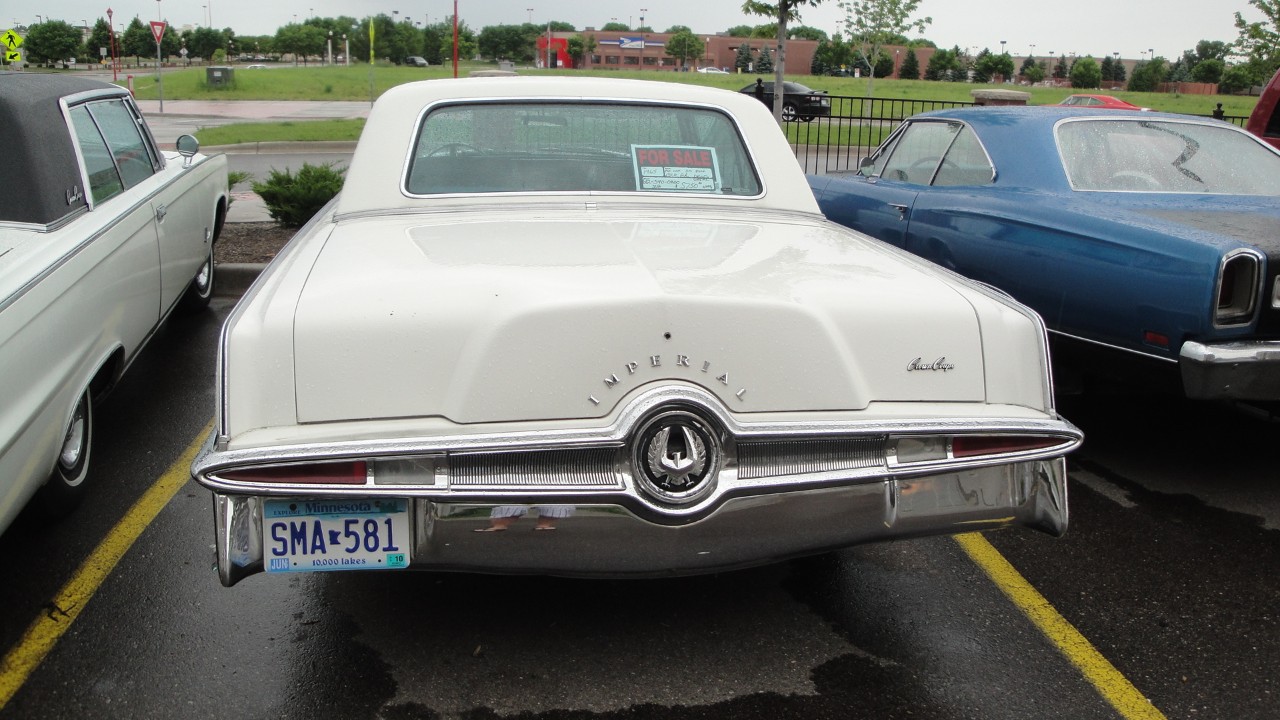
The 1965 Imperial was the last car on the platform that started in 1957. It also added one memorable detail. Imperial moved the headlights behind glass covers, giving the front end a clean, jewel-like look.
The two-door Crown hardtop was the personal-luxury pick of the line. According to the Imperial Club’s 1965 production table, Chrysler built 3,974 of them at $5,930. Those cars also weighed 5,075 pounds. The convertible was the heaviest of the group, at 5,345 pounds. By comparison, the Crown convertible reached only 633 cars, and the LeBaron four-door hardtop 2,164. Total production for the year was 18,409. Ghia added 10 more limousines at $16,000, while the Crown four-door hardtop led sales at 11,628.
Our take: a big two-door Imperial with glass-covered lights is a rare thing on the road today. It’s also the final version of a design that carried Imperial for nine years. In our view, that farewell gives it extra weight. We looked at the model’s appeal in why the Chrysler Imperial Crown Coupe turns heads. Check the glass headlight covers before buying, since they define the front end.
7. 1971 Imperial LeBaron hardtop sedan
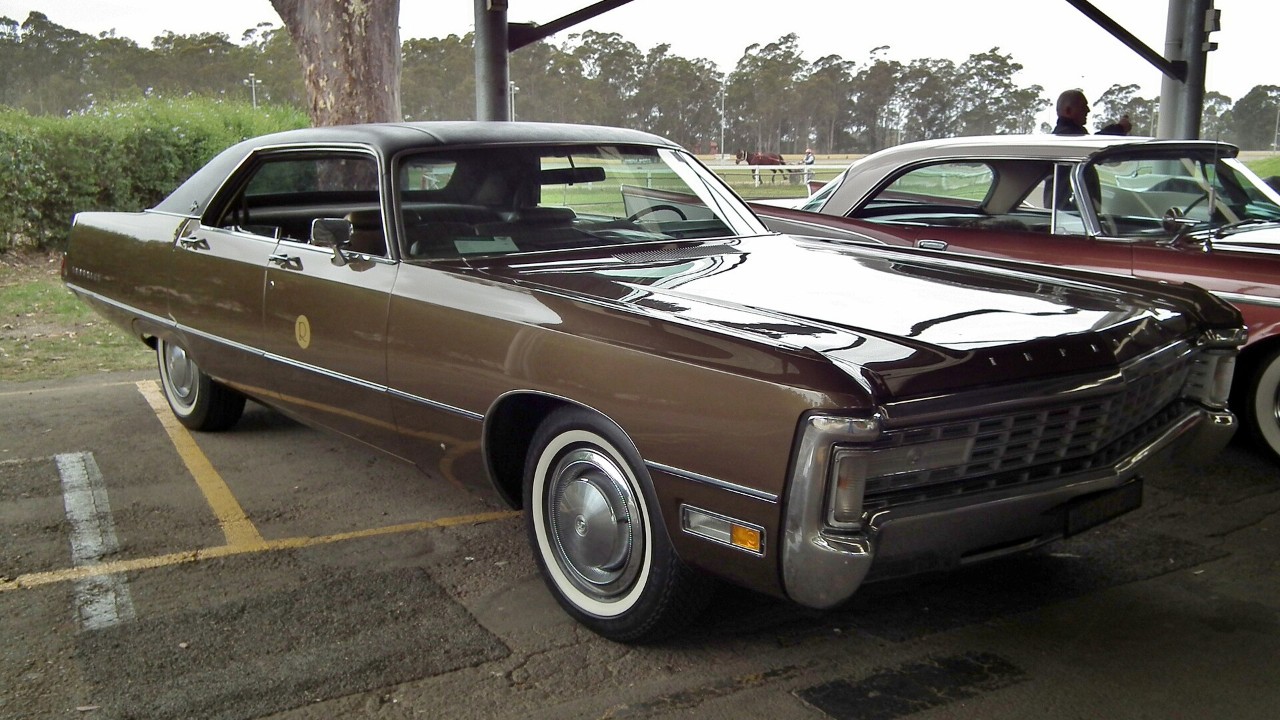
The 1971 Imperial carried an engineering first that most people never hear about. It offered Sure-Brake, a four-wheel anti-skid system developed by Bendix. Hagerty’s look at early anti-lock brakes says the option cost $351.50 on a car that started at just over $6,000.
Hagerty notes that Mercedes-Benz’s Bosch system reached production in Europe only in 1978. So, as Hagerty puts it, an American luxury model got there first. The catch, however, was demand. Hagerty estimates Sure-Brake went on fewer than 5 percent of Imperials through 1973, which means a few hundred cars a year at most. The price fell to $344 for 1972 and 1973, and Imperial dropped the option for 1974.
The four-door hardtop was the volume model. According to the Imperial Club’s 1971 figures, Chrysler built 10,116 at $6,276, against 1,442 two-door hardtops. Our take: a Sure-Brake LeBaron would be a remarkable find. For a closer look at the car itself, read how formal elegance arrived with the 1971 Imperial LeBaron. If you’re shopping, ask whether the car has the anti-skid option, and expect it to need specialist attention.
8. 1975 Imperial LeBaron 4-door hardtop
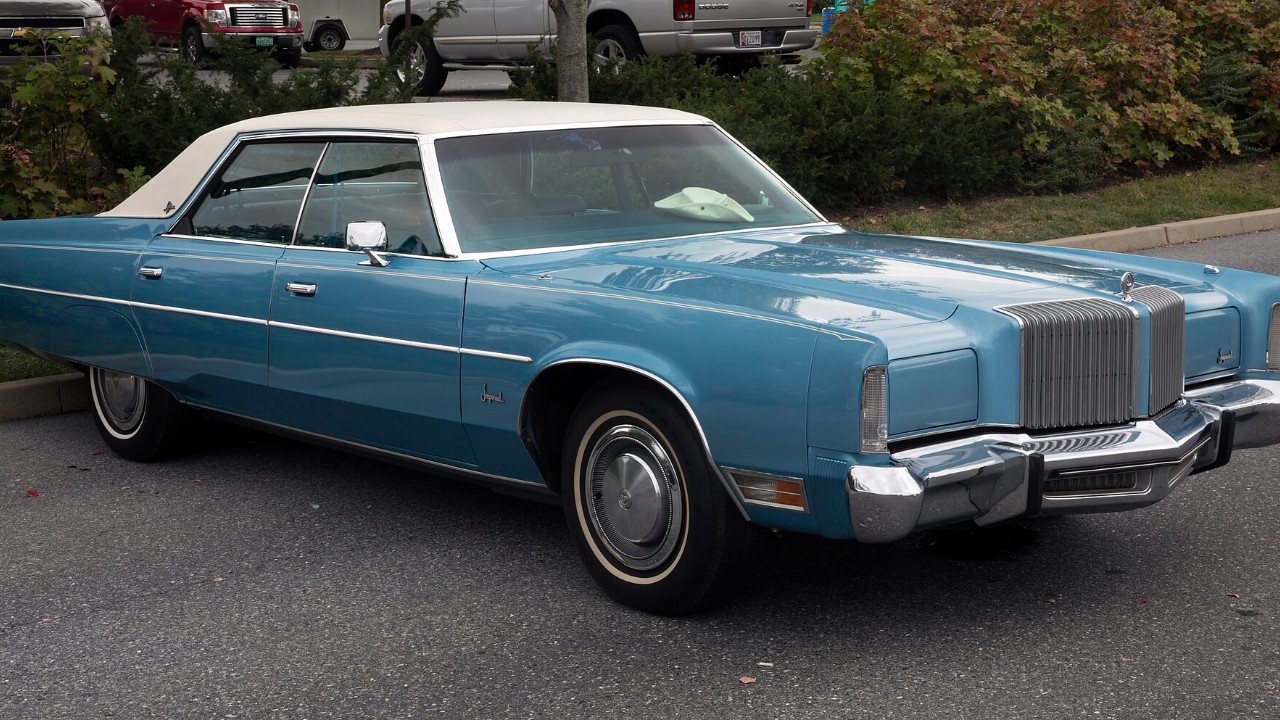
The 1975 model year was the end of Imperial as an independent make. The final car rolled out on June 12, 1975. Total production that year came to 8,830. That’s less than a quarter of the 37,593 Imperials built in 1957.
Most of those cars were LeBaron four-door hardtops. According to the Imperial Club’s 1975 figures, Chrysler built 6,102 at $9,046. Meanwhile, the two-door LeBaron listed at $8,900. The line also included 1,087 LeBaron two-door hardtops and 1,641 LeBaron Crown Coupes, which brought back the Crown name. The Crown Coupe was also the priciest Imperial that year, at $9,277. Since 1974, the big cars had shared body panels with the Chrysler New Yorker and worn a waterfall grille.
Our take: the last Imperials show how the brand’s identity faded as it drew closer to Chrysler. That’s exactly why they matter. In our view, the 1975 four-door hardtop is a time capsule of the moment the make ended. Look for a car with complete records and an intact interior, since the trim is the heart of the appeal.
9. 1981 Imperial coupe
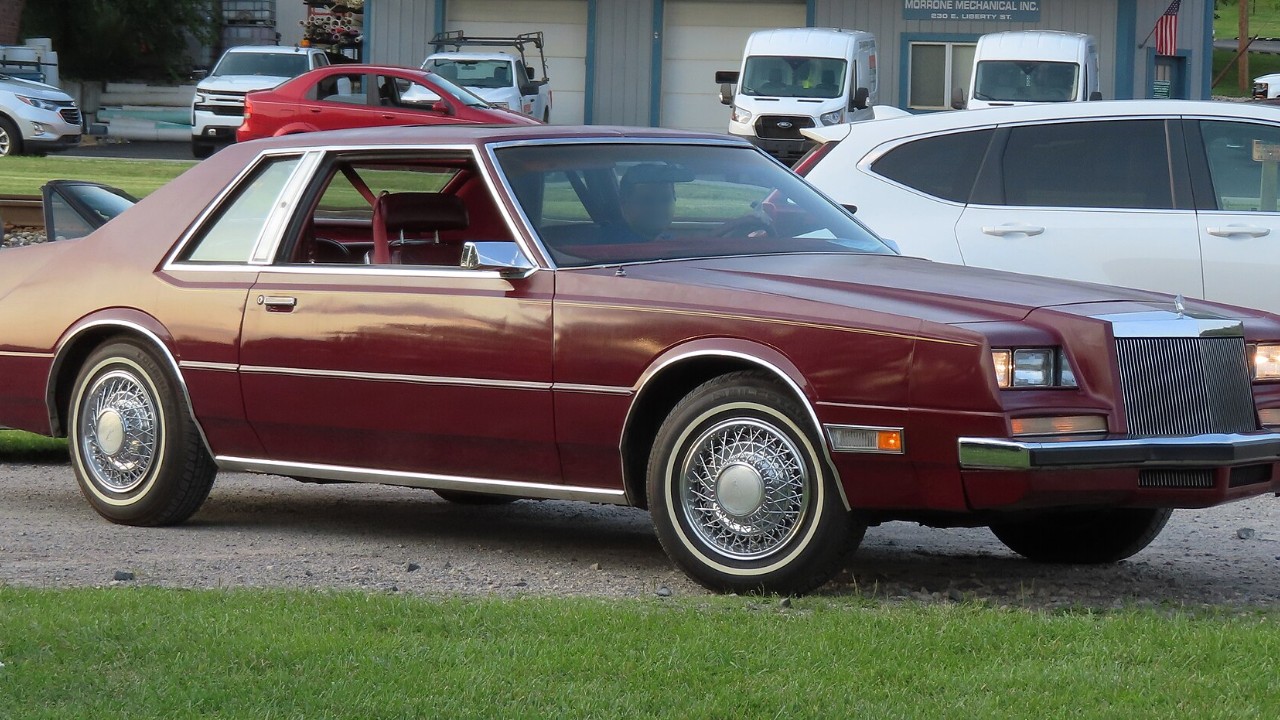
Six years after the first Imperial era ended, Chrysler revived the name on a bustle-back two-door coupe. According to Old Cars Weekly’s 1981 Imperial profile, it used an electronically fuel-injected 318-cubic-inch V8 rated at 140 hp, with a three-speed automatic. The base price was $18,311. According to the Imperial Club, it weighed 3,870 pounds.
In addition, the equipment list was generous. It included power steering, seats, brakes and windows, air conditioning, cruise control and digital instruments. Crystal-style accents even appeared on the opera lights, hood ornament and key. Mark Cross leather was a no-cost option, and so were the stereo and wheel choices. Frank Sinatra also served as the pitchman, and a special edition carried his name. Old Cars Weekly counts 7,225 cars for 1981, and production ended entirely in 1983.
Our take: the 1981 coupe was a bold attempt to make Imperial matter again. However, the fuel injection proved balky, and Old Cars Weekly’s featured car got a factory carburetor swap. In our view, a running original-injection car is the rarest kind. If you shop for one, ask what’s been done to the fuel system first.
More from Fast Lane Only