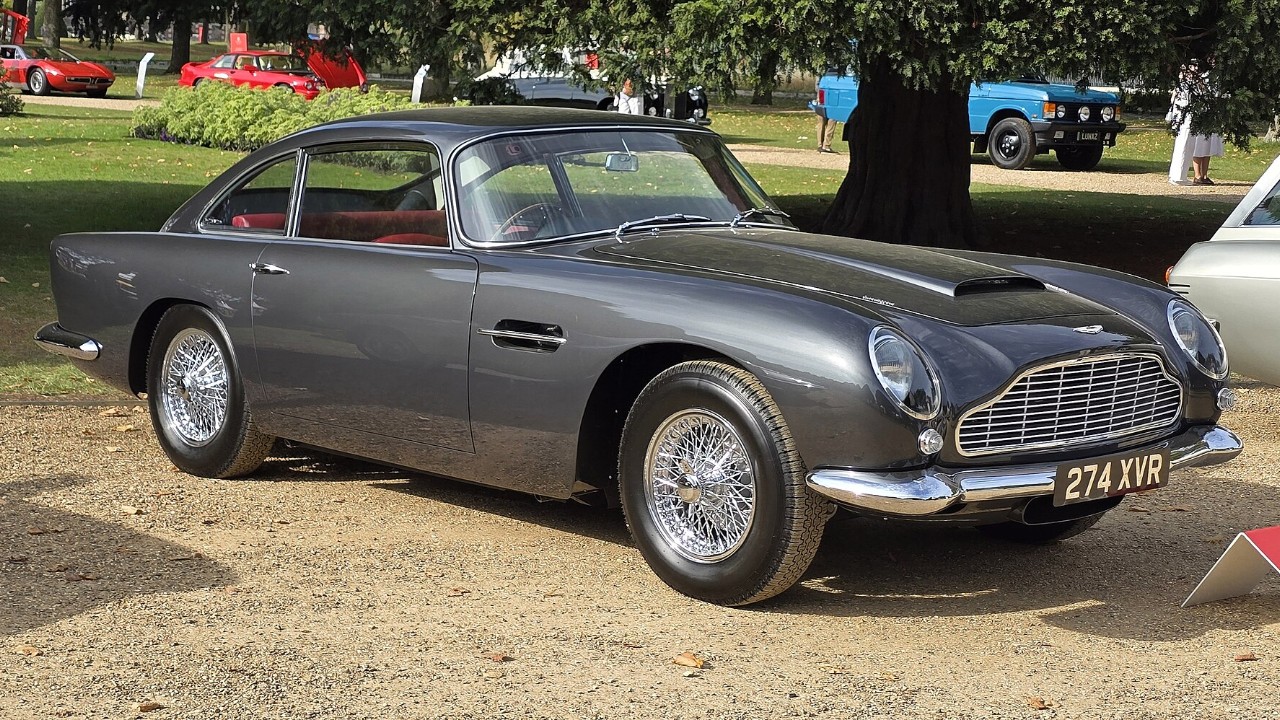
The Aston Martin DB4 wore a lightweight body designed by Carrozzeria Touring of Milan. It was built over a frame of small tubes and wrapped around a powerful straight-six. That blend of tailoring and muscle is the whole idea behind this list.
Plenty of fast cars look aggressive, and plenty of beautiful cars are slow. The rare ones manage both, with clean lines that turn heads in a parking lot and an engine that backs up the looks. Decades later, we’d bet people pull out their phones when one rolls by.
These are our picks, 12 performance cars so elegant they stop traffic. Our choices and verdicts are opinion, plain and simple. The years, engines, outputs and production figures come from the references we read for this story.
1. 1963 Aston Martin DB4 Vantage Series V
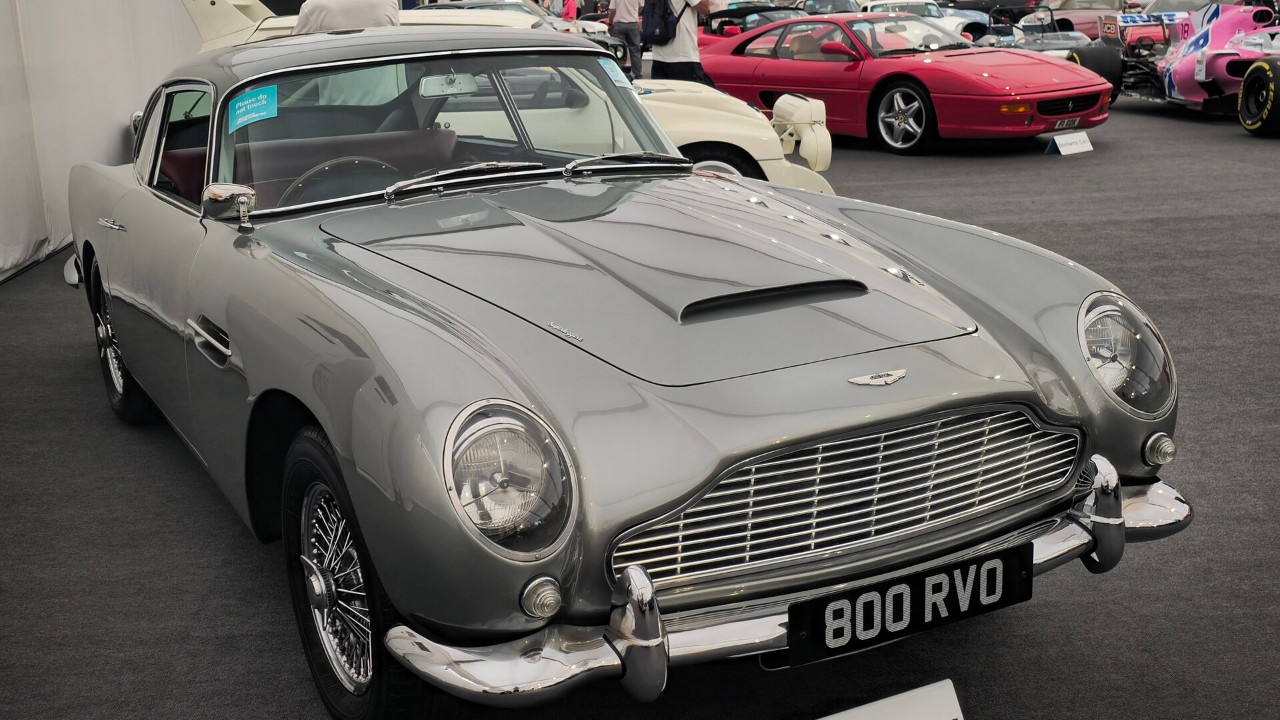
Aston Martin built the DB4 from 1958 to 1963, and the Series V was its final evolution. According to RM Sotheby’s, Aston Martin stretched the body by 9 cm, which gave passengers more legroom and allowed a higher roofline and bigger boot. Aston also fitted smaller wheels, so the car kept its low stance.
The Vantage engine turned the elegance up a notch. It used three SU HD8 carburettors, a higher compression ratio and larger valves, and RM quotes 266 bhp. That is nearly 30 bhp more than the standard DB4 engine made at the time. Vantage cars also borrowed the DB4 GT’s faired-in headlights with chrome surrounds, which gave the nose a smoother face.
Across every version, Aston Martin built 1,204 DB4s, including 75 DB4 GTs and 19 Zagatos. For more of the marque’s best, see our list of classic Aston Martins that defined cool.
Our take: the Aston Martin DB4 Vantage Series V is the most complete DB4, and the Aston Martin DB4 we’d pick first. You get the extra room of the late body, the cleaner faired-in nose and the Vantage engine, all in one car.
2. 1968 Jaguar E-Type Series 2 coupe
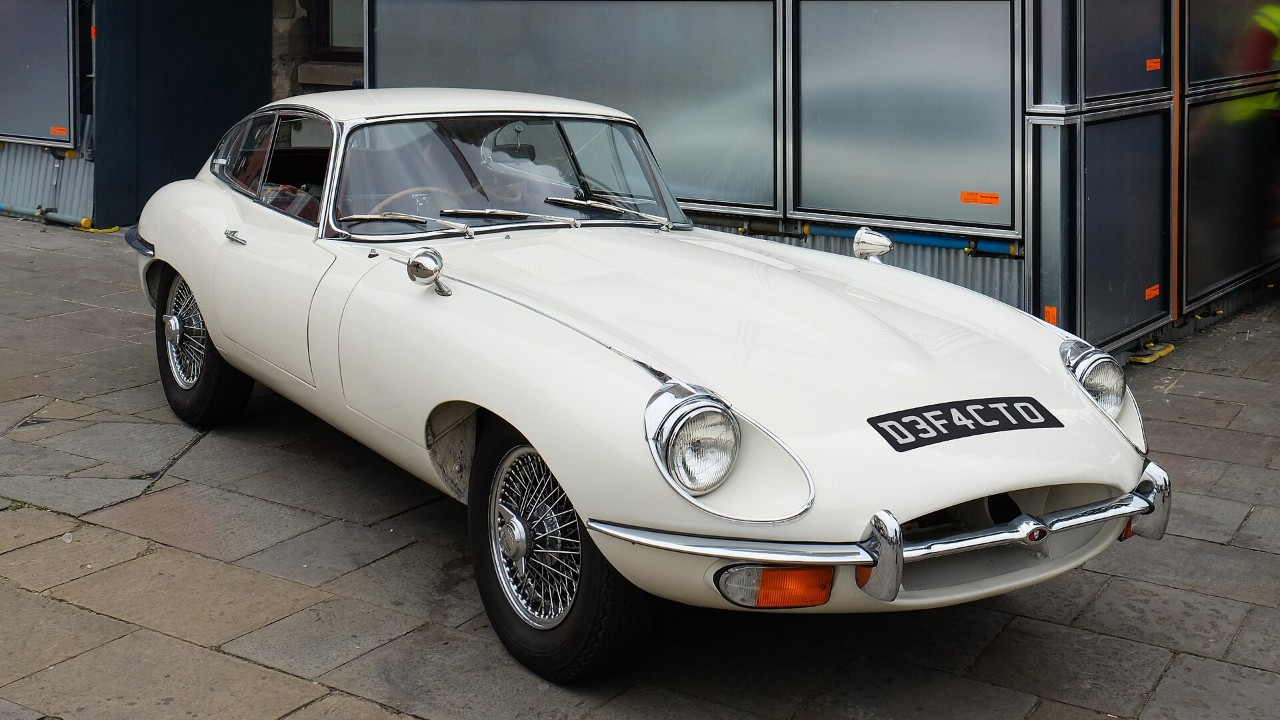
Jaguar introduced the Series 2 changes gradually, and the most visible one applied worldwide. The glass headlight covers disappeared, leaving open lamps. Jaguar also enlarged the grille, fitted larger front indicators and a wrap-around rear bumper, and moved the tail lights below the bumpers.
Under the skin, the Series 2 gained twin electric cooling fans, a collapsible steering column and new seats that allowed head restraints. The ignition moved to the steering column, replacing the dashboard key and push-button starter. However, U.S. emissions rules swapped the three SU carburettors for twin Zenith-Strombergs, and claimed output fell from 265 to 246 horsepower.
Jaguar built 4,855 Series 2 fixed-head coupes, along with 8,628 roadsters and 5,326 of the longer 2+2. That makes the coupe the least common two-seat body of the series.
In our view, the Series 2 coupe is the smart E-Type buy. It keeps the long nose and fastback roof that made the car famous. It also adds better cooling and safety, and it looks just as striking in a crowded lot. A European-spec car with the triple SUs is the one to find.
3. 1969–1971 Mercedes-Benz 280 SE 3.5 Coupe
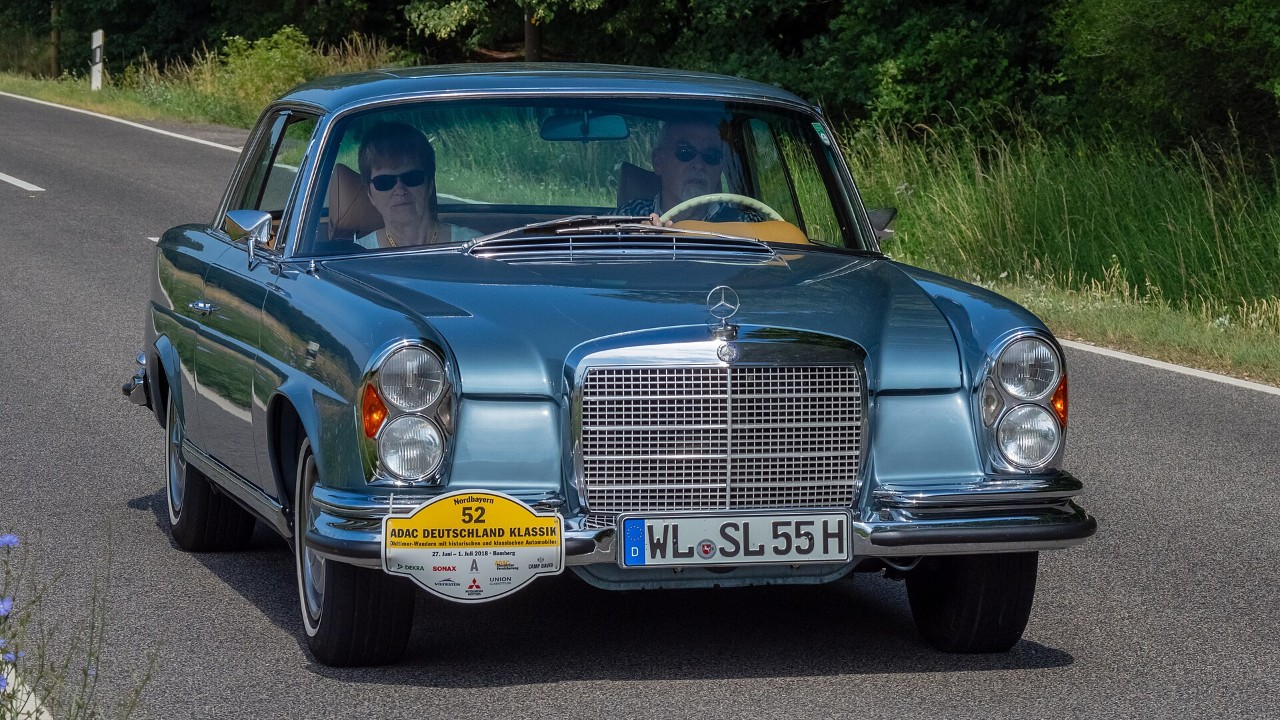
Mercedes-Benz added the 280 SE 3.5 to its W111 coupe and cabriolet line in August 1969. It was the final addition to the family. A 3.5-liter M116 V8 rated at 200 horsepower at 5,800 rpm replaced the six, and top speed reached 210 km/h. With the automatic, that figure dipped slightly to 205 km/h.
The V8 cars also wore a lower, wider grille, which gave the long body a more planted face. Mercedes kept the rest of the shape, with its tall glass area and gentle tailfin hints at the rear. As a result, the car looks formal and fast at the same time.
Production was short. Mercedes built 3,270 coupes and 1,232 cabriolets before the line ended in July 1971, for 4,502 in all. That is a small number for a coupe this complete.
Our take: the 280 SE 3.5 Coupe is the gentleman’s express of the group. It loves long, quiet miles at speed, and it turns heads without ever shouting. If you shop for one, look for a car with a documented V8 rebuild history.
4. BMW E9 3.0 CS
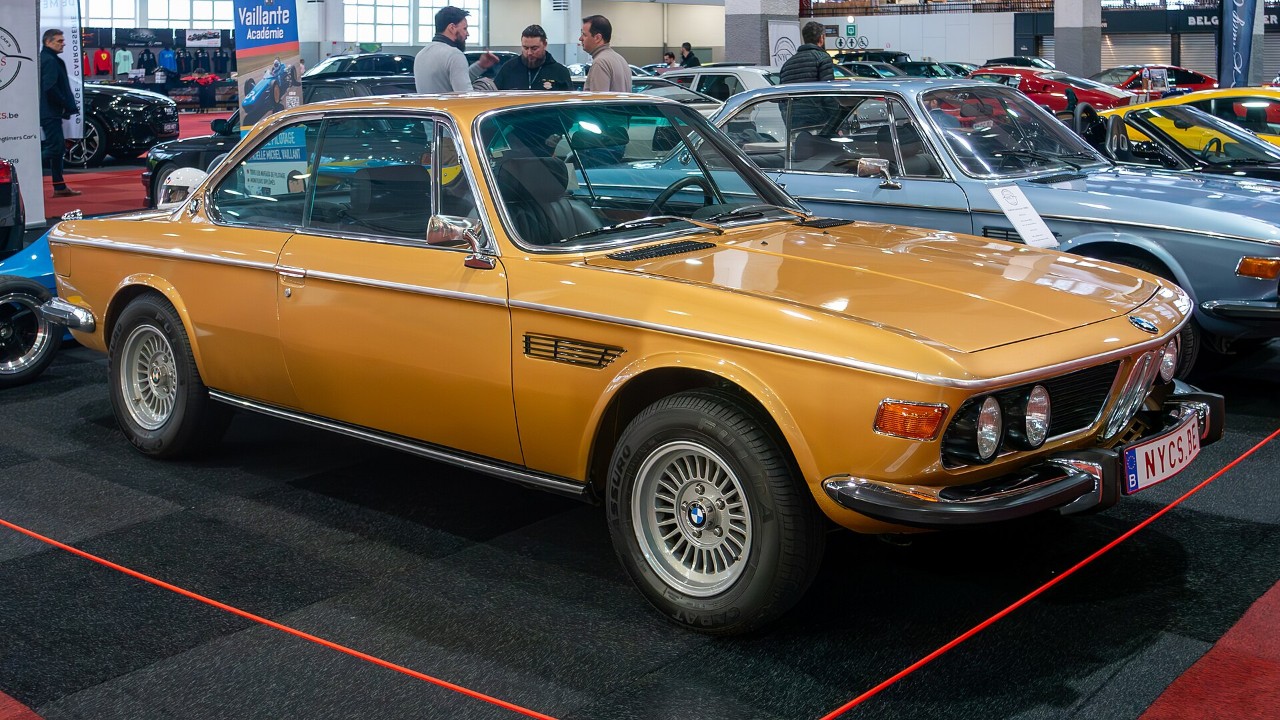
Designer Wilhelm Hofmeister led BMW’s E9 coupe line, and Karmann built the bodies at its Rheine plant. In 1971, the 3.0 CS replaced the 2800 CS. BMW bored the inline-six out to 2,986 cc, and it made about 180 horsepower at 6,000 rpm with twin carburetors.
The result was a slim, glassy coupe with a shark-like nose and a low beltline. Buyers could pair the six with a four-speed manual or a three-speed automatic. Meanwhile, the thin pillars and big windows make the cabin feel airy, which suits a car built for long drives.
BMW built 4,455 examples of the 3.0 CS. Across every E9 model, the total reached 30,546, so this particular version is a modest slice of an already limited run.
In our view, the 3.0 CS is the best balance of the E9 range. It has enough power to feel quick, enough comfort to drive daily and a profile that looks lighter than most modern cars. Because any steel body of this age can hide corrosion, a professional inspection is worth every dollar.
5. Aston Martin Virage
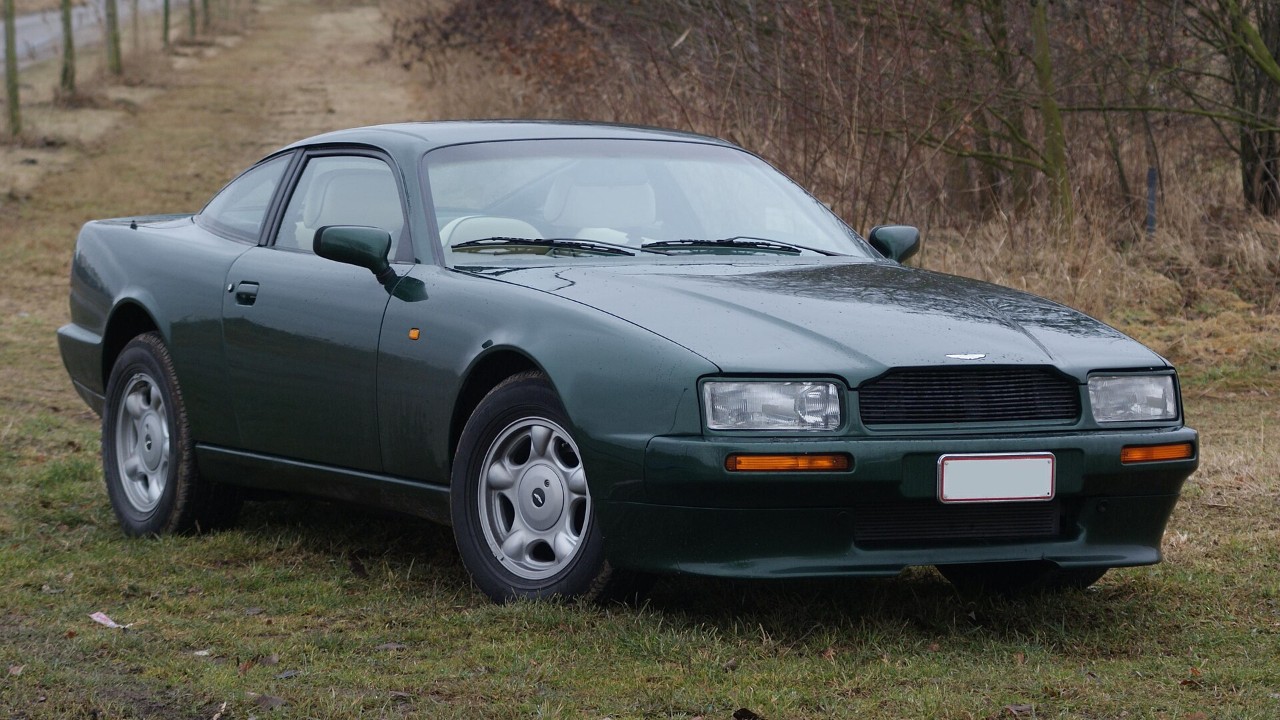
Aston Martin introduced the Virage at the 1988 Birmingham Motor Show. It used a 5,340 cc, 32-valve V8 rated at 330 horsepower and 364 lb-ft of torque. That gave the big coupe real pace to match its broad, muscular stance on the road.
Small Aston Martin had to be resourceful. The headlights came from the Audi 200, while the taillights came from the Volkswagen Scirocco. Even so, the wide, low body hid those parts-bin pieces well, and the overall shape looked thoroughly modern for its day.
The coupe was rare from the start. Aston Martin built just 411 Virage Coupes from 1989 to 1996. Meanwhile, the wider Virage family reached 1,050 cars by the end of the 2000 model year. Later, Aston revived the Virage name for 2011 and 2012.
Our take: the Virage is the overlooked Aston of this group. It lacks the fame of the DB cars, yet it has real presence and a big V8. Also, with just 411 coupes, few people will have seen one up close. That makes it a head-turner on almost any street.
6. 1990 Jaguar XJ-S V12
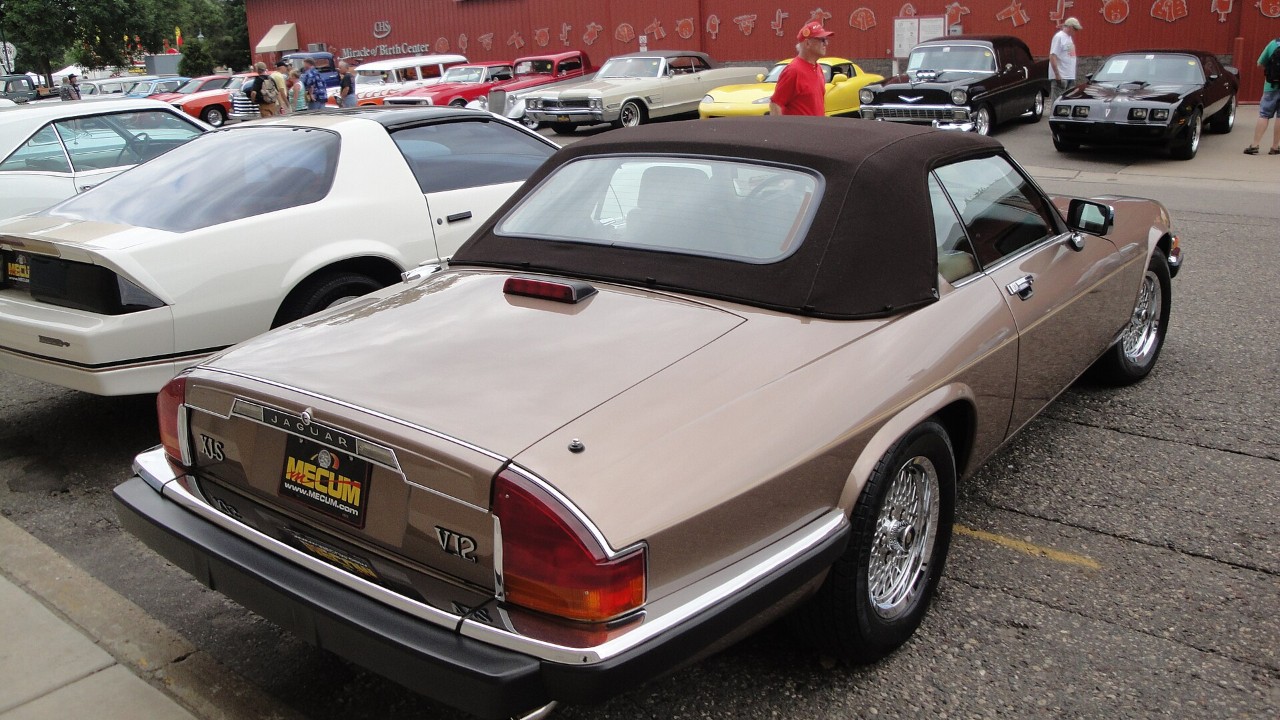
Jaguar launched the XJ-S on September 10, 1975. Malcolm Sayer drew the early shape before his death in 1970, and Jaguar’s in-house team under Doug Thorpe finished it. The rear roof carried the car’s signature “flying buttresses,” which sweep down toward the tail.
From July 1981, the car used the 5.3-liter HE V12, rated at 295 horsepower. The XJ-S also proved itself on track. Tom Walkinshaw won the 1984 European Touring Car Championship drivers’ title in TWR’s car. That same year, the team also won the Spa 24 Hours.
A 1990 car is one of the last with the original hyphenated name. Jaguar launched a facelift in May 1991 under Ford ownership and dropped the hyphen to make it the XJS. In all, Jaguar built 115,413 cars from 1975 to 1996.
In our view, a late XJ-S V12 is the most relaxed grand tourer here. The V12 is silky, the buttresses look better every year and, in our eyes, the car gets less credit than it deserves. Just budget for careful maintenance, since any aging V12 rewards an owner who keeps up with it.
7. 1957 Facel Vega FV4
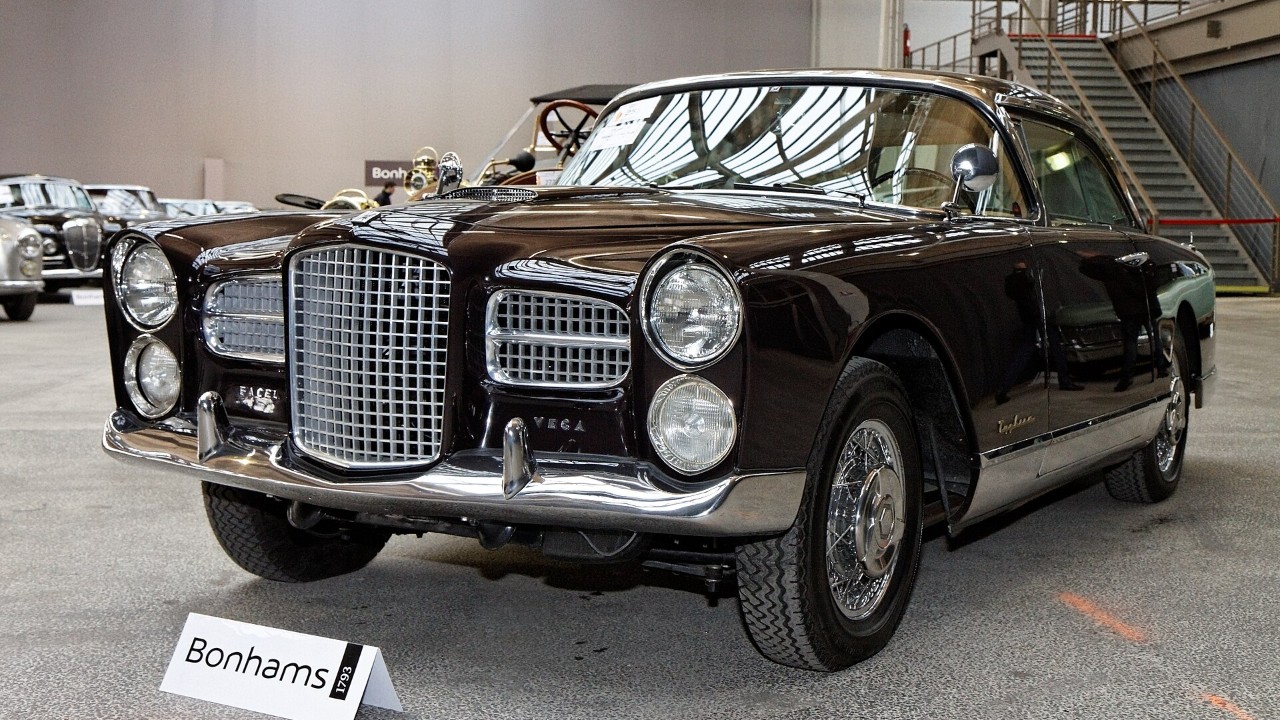
Jean Daninos created the Facel Vega marque on July 22, 1954. Then the first cars appeared at that October’s Paris Motor Show with Chrysler V8 power. The idea was a French luxury coupe with American muscle. Because France taxed cars by horsepower, about 77 percent of Facel production went for export.
The FV4 is a short chapter of that story. According to RM Sotheby’s, Facel built 67 FV4s between May 1957 and February 1958, and 46 are accounted for today. By comparison, the earlier Vega used a 180-horsepower DeSoto Hemi. RM estimates that about 36 cars from Series 2 through 4 carried the dual-quad, 325-horsepower Chrysler “Typhoon” Hemi.
Facel’s customer list became famous in its own right. Over the years, the marque’s owners included Pablo Picasso, Ava Gardner, Christian Dior, Stirling Moss and Frank Sinatra.
Our take: the FV4 is the most exotic car on this list. It pairs Parisian tailoring with Detroit power, and with only 67 built, we suspect most enthusiasts have seen one only in photos. If you ever spot one, stop and look. You may not get another chance.
8. 1962 Jaguar Mark 2 3.8
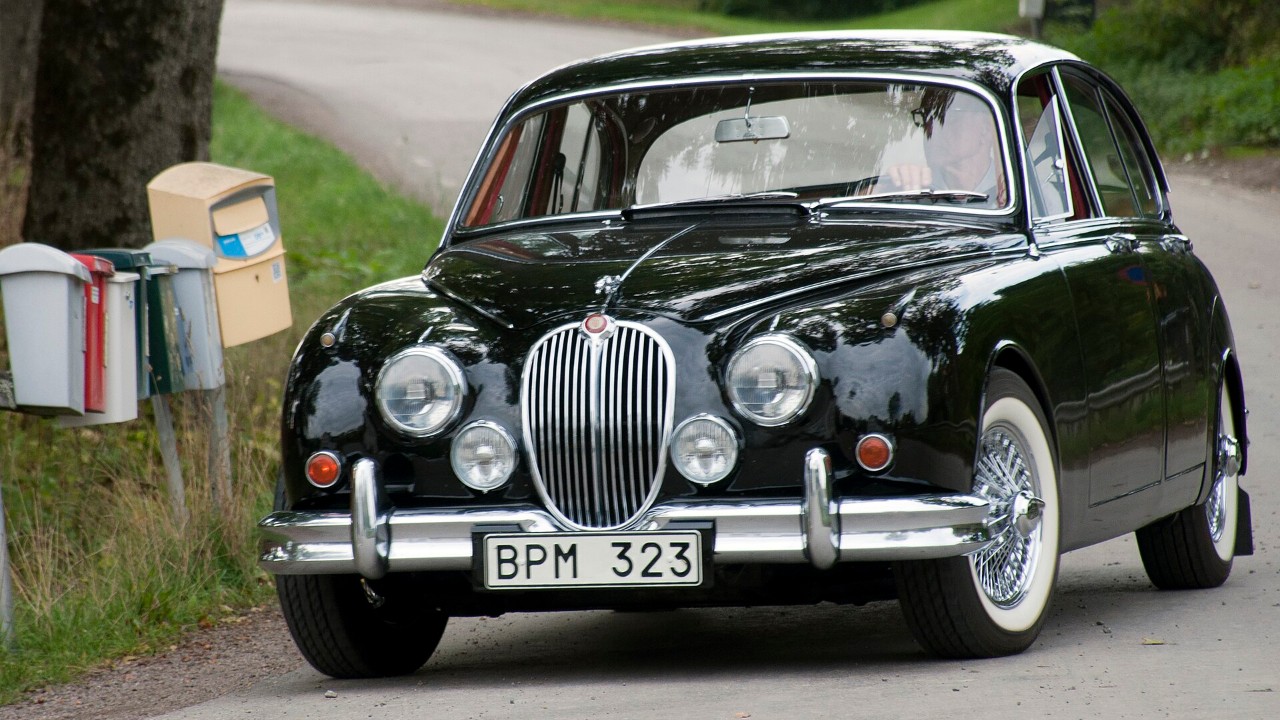
Jaguar built the Mark 2 in Coventry from late 1959 to 1967. The top engine was the 3,781 cc XK inline-six, rated at 220 bhp gross. With four-wheel disc brakes as standard, the 3.8 could reach 60 mph in 8.5 seconds and top out at 125 mph.
That was serious speed for a four-door sedan, and the racing results proved it. For example, Bob Jane won the 1962 Australian Touring Car Championship in a Mark 2. Michael Parkes and Jimmy Blumer also won that year’s Six Hours International Saloon Car Race. Later, British police used the car to patrol motorways.
The 3.8 was also the most popular engine choice. Jaguar built 30,141 Mark 2 3.8 cars, more than either of the smaller engine sizes. Production of the 3.8 then ended around September 1967.
In our view, the Mark 2 3.8 is the classiest sedan ever to hustle down a back road. Its curved roof and slim pillars look tailored, yet it drives like a sports car with room for four. Look for a car with a solid body and a documented engine rebuild.
9. 1972 Aston Martin DBS V8
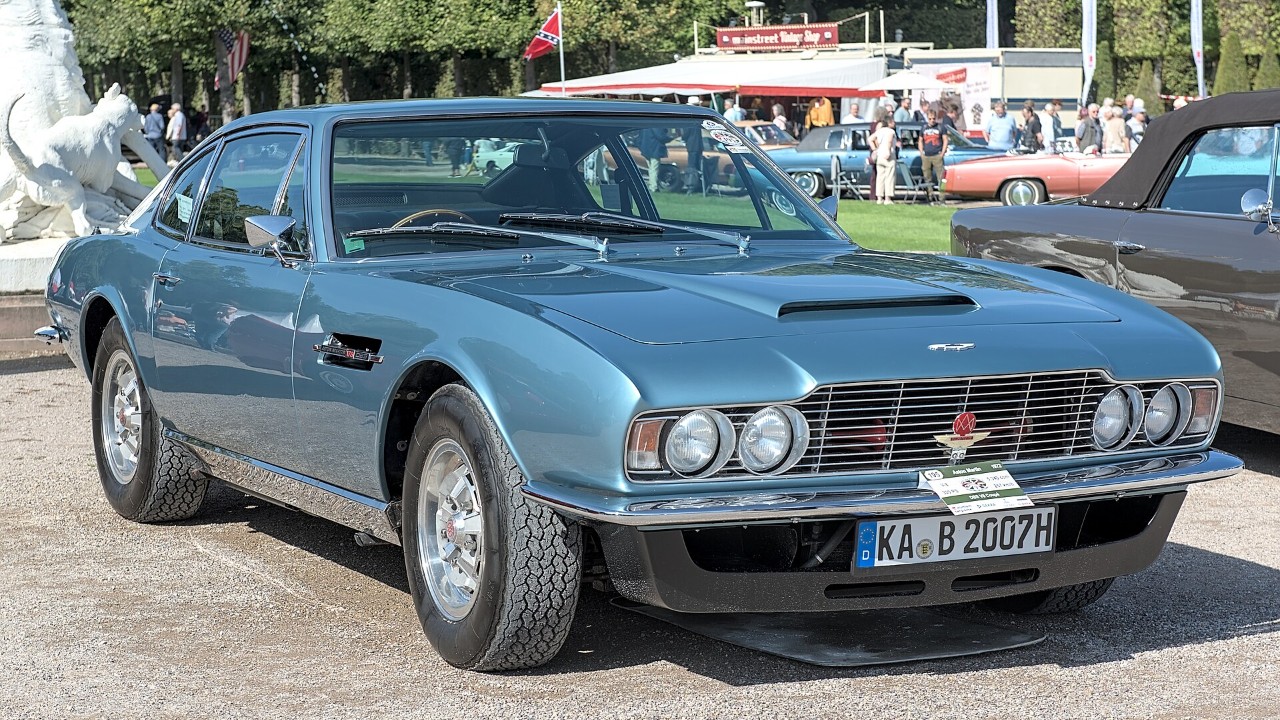
Aston Martin brought in William Towns to design the DBS in a hurry, after the Touring prototypes fell through. At first, the car used Aston’s six. Then, in September 1969, it finally got the 5,340 cc V8 it had always been meant to carry. That engine made 320 bhp and 330 lb-ft of torque.
The V8 car also traded the six-cylinder model’s wire wheels for light alloy wheels, which suited the crisp, square body. It was not light, at 1,727 kg, but the extra muscle made the big four-seater feel urgent.
A 1972 car sits at the end of the line. Aston built the DBS V8 until May 1972, when it became the Aston Martin V8 with a single-headlamp front end. Across the whole DBS family, the total reached 787 cars.
Our take: the DBS V8 is the muscle car of the Aston world. Its wide stance and flat flanks look nothing like the curvy DB cars before it, and that difference is exactly why it gets attention. We’d choose one with the earlier front end, before the 1972 single-headlamp change.
10. 1963 Studebaker Avanti
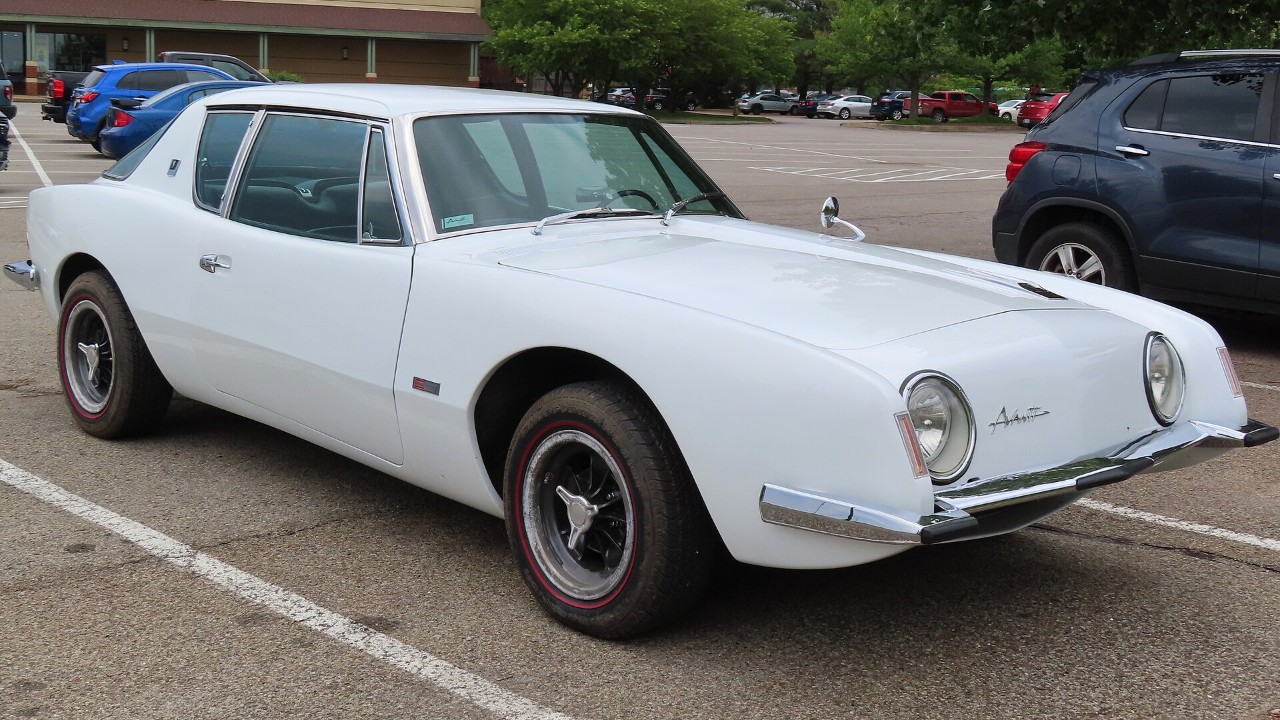
Raymond Loewy’s team of Tom Kellogg, Bob Andrews and John Ebstein designed the Avanti in a 40-day crash program. Studebaker built it from June 1962 to December 1963. The fiberglass body came from Molded Fiberglass Body Company in Ashtabula, Ohio.
The front end broke the rules of its time. Instead of a conventional grille, the Avanti was a “bottom breather,” taking cooling air from under the nose. It also carried British Dunlop-designed front disc brakes, made under license by Bendix. The 1963 model used a 289-cubic-inch V8 rated at 240 horsepower. Later, a modified Avanti with a supercharged R3 engine topped 170 mph at Bonneville.
Production stayed small because the run was so brief. Studebaker built about 1,200 cars in 1962 and fewer than 4,600 in 1963. As a result, a 1963 car is the most common of a rare breed.
In our view, the Avanti is the most daring American shape on this list. Six decades later, it looks like nothing else in a parking lot. If you shop for one, confirm the car’s history and originality with a marque specialist before you buy.
11. BMW 850i (E31)
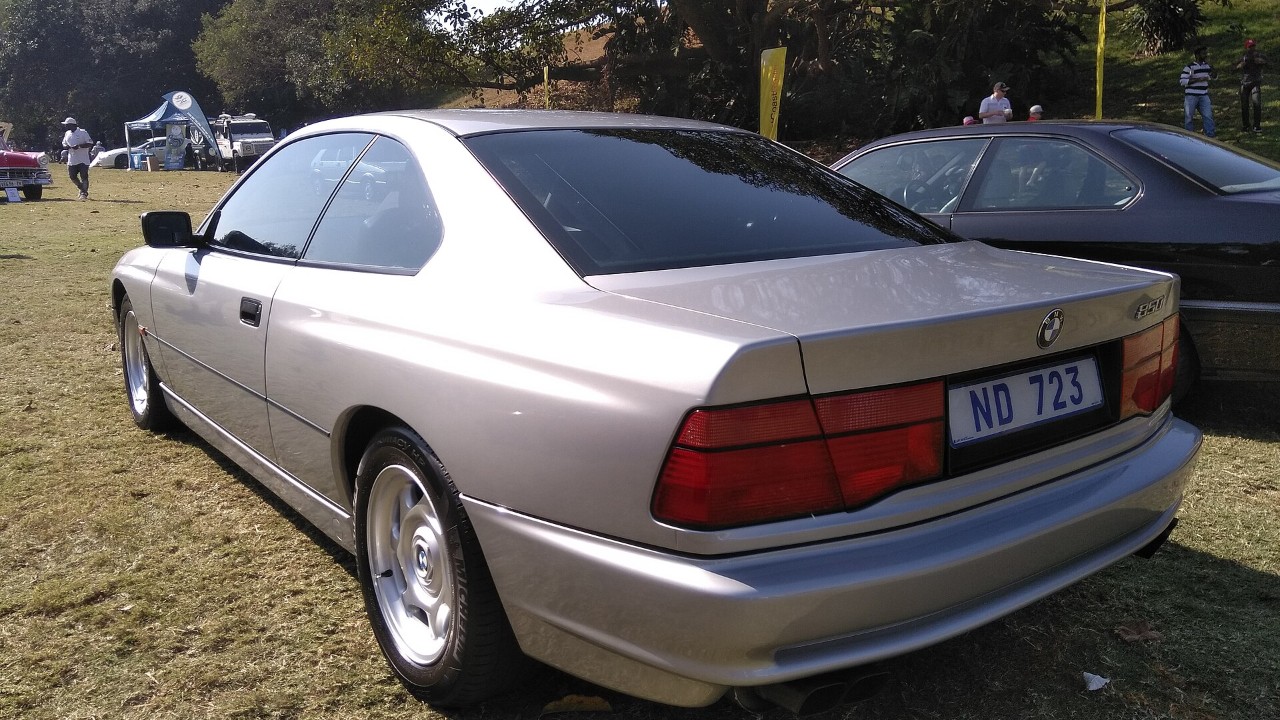
BMW unveiled the 8 Series at the Frankfurt show in September 1989. Then the 850i became the first model to reach buyers in 1990. It used a 5.0-liter V12 rated at 300 PS and 450 Nm of torque. Buyers could choose a six-speed manual or a four-speed automatic.
The body was a pillarless hardtop with no B-pillar, so the side glass opens into one clean span. That gave the long, low coupe a sleek profile. BMW spent more than 1.5 billion Deutsche Marks developing the 8 Series, which shows how seriously it took the project.
BMW sold 30,609 cars of the 8 Series in all markets, and 20,072 of them were the V12 850i and 850Ci. For a closer look at this car, see our story on how the 1991 BMW 850i chased grand touring excess.
Our take: the 850i is the modern classic here. Its wedge shape has aged beautifully, and a six-speed manual car feels special in a way few 1990s coupes can match. Budget for V12 servicing before you buy, since two banks of everything means two of every repair.
12. Mercedes-Benz 230 SL Pagoda
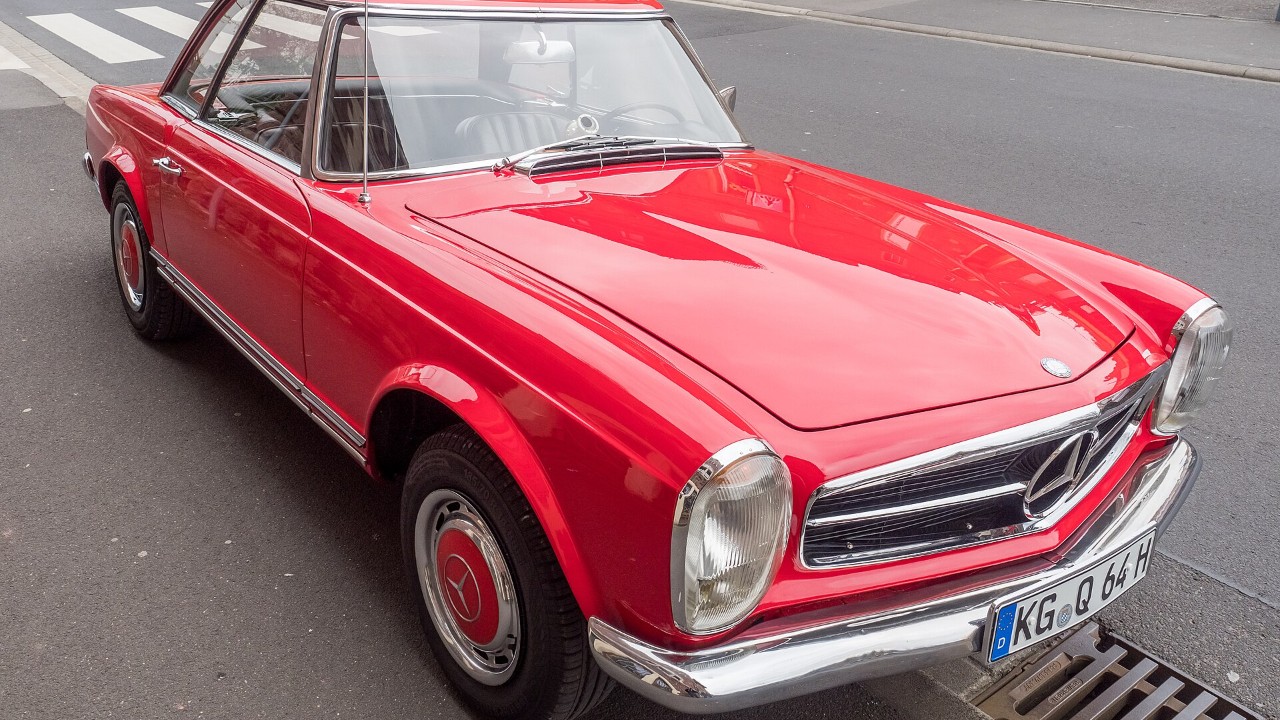
The 230 SL made its debut at the Geneva Motor Show in March 1963. Paul Bracq and Béla Barényi led the design. They gave it a slightly concave hardtop that earned the “Pagoda” nickname, and the related U.S. patent was issued on February 16, 1965.
The car was also a safety pioneer, with a rigid passenger cell and crumple zones. Under the hood, a 2,308 cc inline-six with mechanical Bosch fuel injection made 150 PS. It was no soft cruiser, either. Eugen Böhringer won the 1963 Spa-Sofia-Liège Rally, a 6,600-kilometer run from Belgium to Bulgaria, in a race-prepared 230 SL.
Mercedes built 19,831 cars of the 230 SL from June 1963 to January 5, 1967. Our story on the 1963 230SL and its Pagoda roof covers its launch in more detail.
In our view, the 230 SL is the most graceful car on this list. It is small, light and perfectly proportioned, and the Pagoda roof makes it instantly recognizable. Look for solid floors and a healthy fuel-injection system, since both matter on a car this age.
More from Fast Lane Only