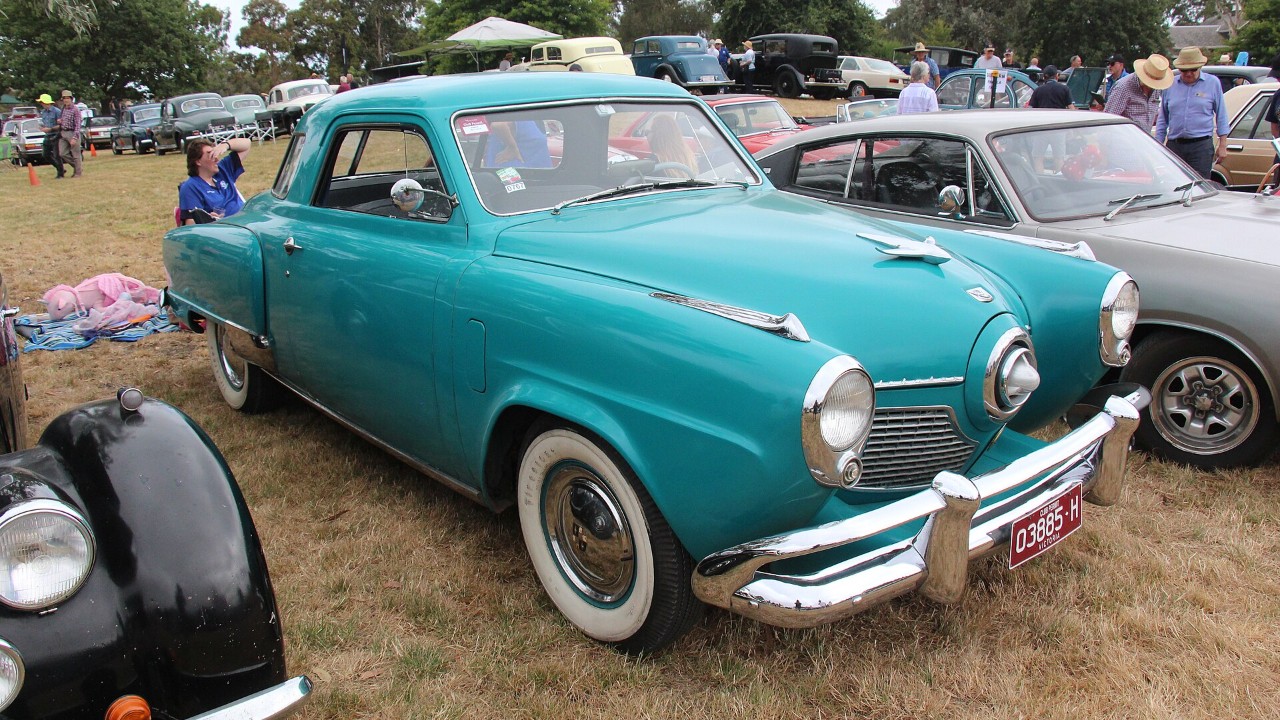
Studebaker’s Starlight Coupe greeted the 1950s with a rear window that wrapped all the way around the roof. Critics joked that you could not tell which way the car was going. That joke captured a decade when American cars, and the roads under them, changed faster than anyone expected.
In 1956, President Eisenhower signed the law that created the Interstate Highway System. Before and after that moment, Detroit and its smaller rivals raced to build cars for longer trips, higher speeds and growing suburbs. Pillarless hardtops, overhead-valve V8s, tail fins and two-door wagons all arrived within a few short years.
These are our picks, ten American cars we think defined the changing roads of the 1950s. Some sold in huge numbers, and others barely found buyers. Each one, in our view, shows a different side of how Americans drove in that decade, and every figure here comes from factory records, auction results or marque histories.
1. 1950 Studebaker Champion Regal DeLuxe Starlight Coupe
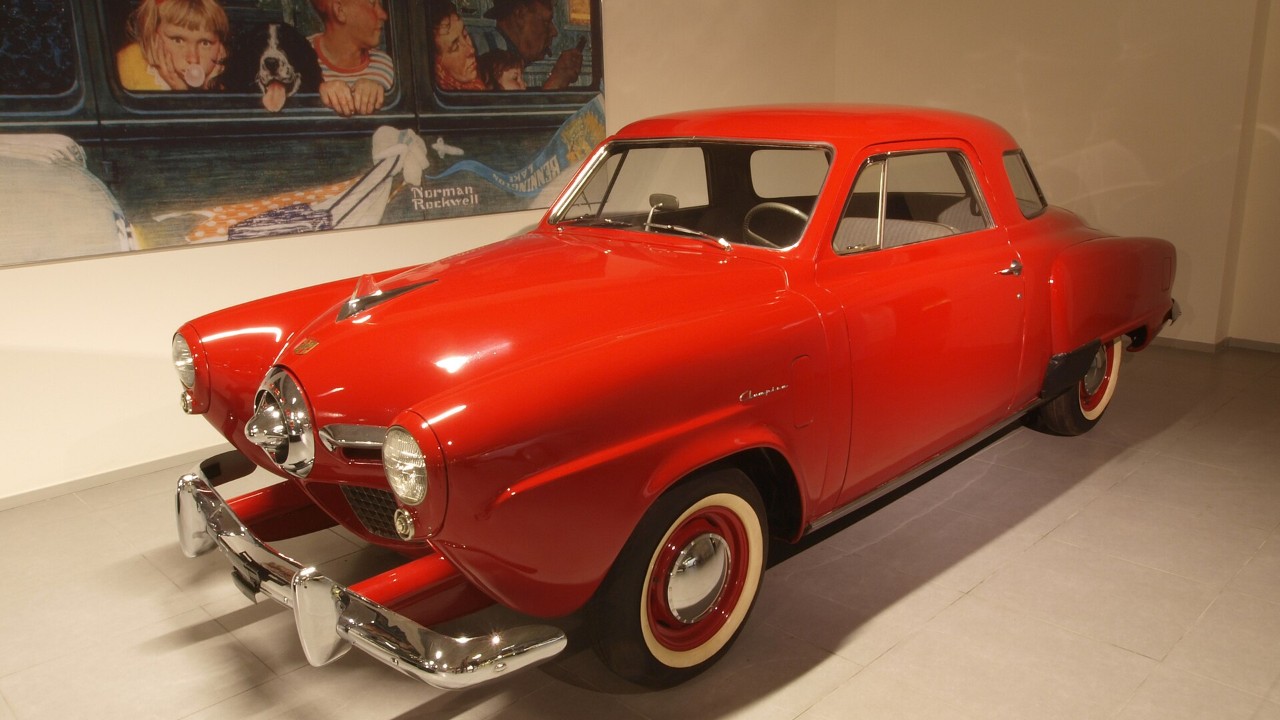
For 1950, Studebaker gave its whole range a new face. The so-called bullet nose, or spinner, sat in the middle of the grille, and nobody could mistake it for anything else. Raymond Loewy’s studio handled the Champion’s styling.
Above all, the Studebaker Starlight Coupe stood out. Its rear glass used four fixed panels that wrapped around the back of the roof. As a result, the cabin felt like the observation car on a train. In 1950 the Starlight even got its own trim line. Under the hood, the Champion’s 169.9-cubic-inch six made 85 horsepower that year, up from 80 in 1947.
Our take: no car better shows how the 1950s began in a rush to look modern. Even today, a Studebaker Starlight Coupe draws a crowd, because nothing else from 1950 looks quite like it. The Starlight Coupe was not fast, but it made the open road feel like part of the view. Comedian Fred Allen joked that a future Studebaker might be hard to tell from one moving sideways. If you want one, make sure the four-piece rear glass is intact, since it is the car’s signature.
2. 1953 Willys Aero-Eagle
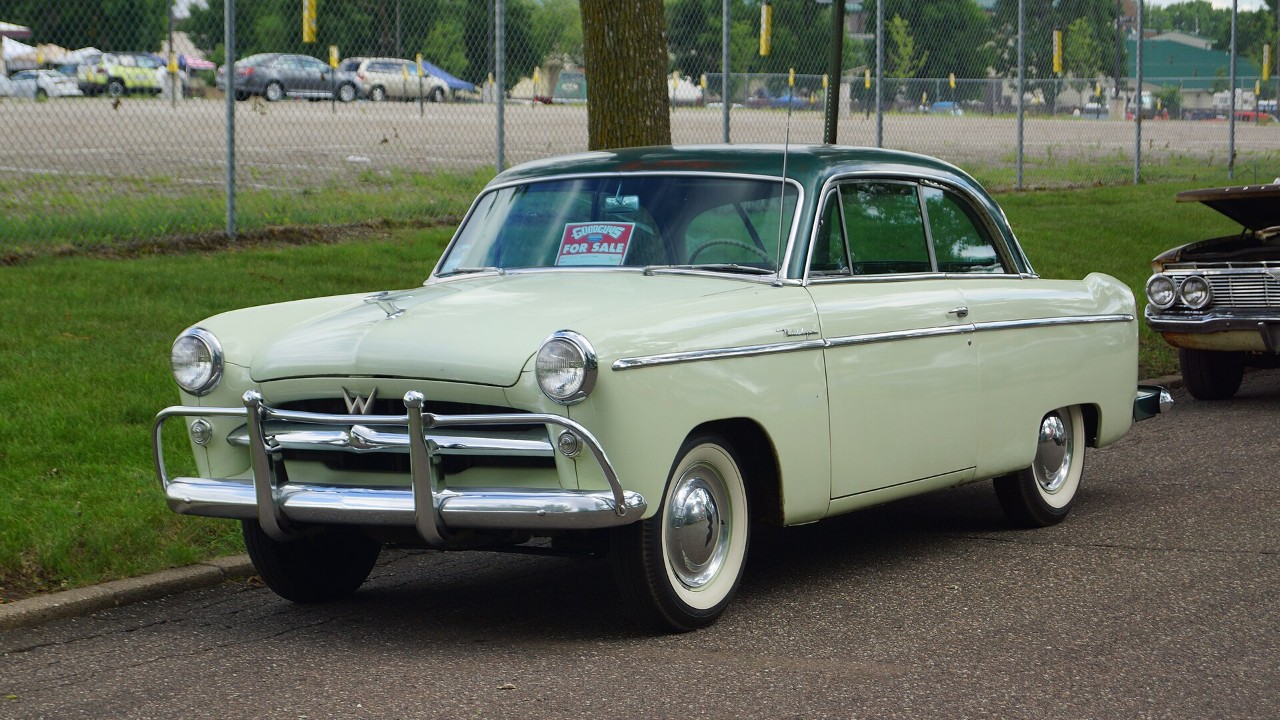
Willys was best known for Jeeps, so its Aero passenger car surprised many buyers. Production ran from 1952 to 1955, mostly in Toledo, Ohio, and Willys built about 91,377 Aeros there. The car used a welded unit body rather than a separate frame.
The Aero-Eagle was the two-door hardtop of the range for 1953. It paired that pillarless roof with Willys’s 161-cubic-inch F-head Hurricane six. The result was a compact, airy coupe at a time when many American cars kept growing longer and heavier. In our view, its compact size suited the two-lane roads most Americans still drove before the interstates arrived.
Our take: the Aero was a smart answer for drivers who wanted modern style without a big car’s appetite. It deserved better than its short American run. In fact, its story did not end in Ohio. The tooling moved to Brazil, where workers built 116,967 more between 1960 and 1971. That second life suggests the design had more to give than its American sales showed.
3. Chrysler New Yorker Newport hardtop
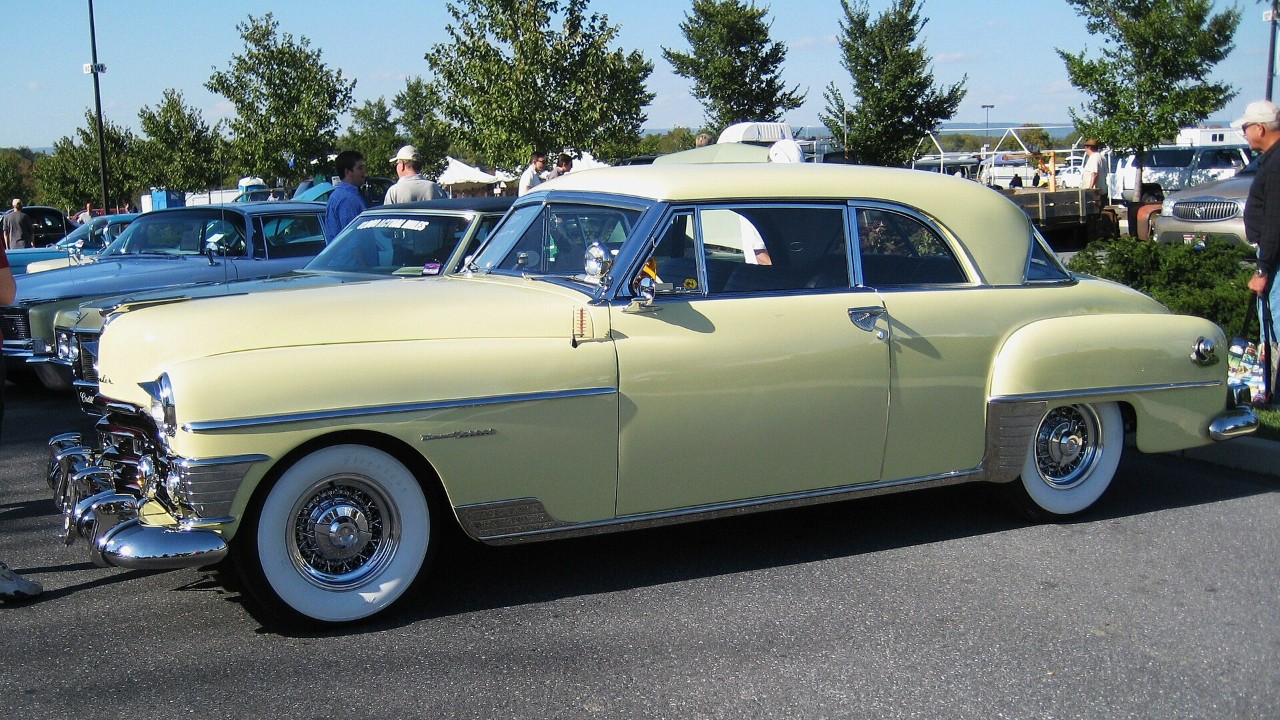
The Newport name first appeared on a Chrysler two-door hardtop in 1950. That body style had no fixed pillar between the windows, so the side glass rolled down to leave one clean opening. It looked like a convertible with a steel roof. Within a year, rivals such as Ford’s Victoria, number four on this list, followed the same formula.
Chrysler’s big engineering move came next. For 1951, it introduced the 180-horsepower FirePower Hemi V8. Meanwhile, the Newport name spread across the company, and by 1955 even the Imperial had a Newport hardtop. Later, the name moved on. Once the Chrysler Newport became its own model line for 1961, New Yorker hardtops stopped using it.
Our take: the Newport hardtop gave buyers the open, breezy look of a convertible with the comfort of a closed car. In our view, that made it ideal for long highway trips. If you shop for one, check the year closely, because Chrysler used the Newport name across several model lines during the decade. We think it is a smart buy for anyone who wants 1950s style without a soft top to maintain.
4. 1951 Ford Victoria
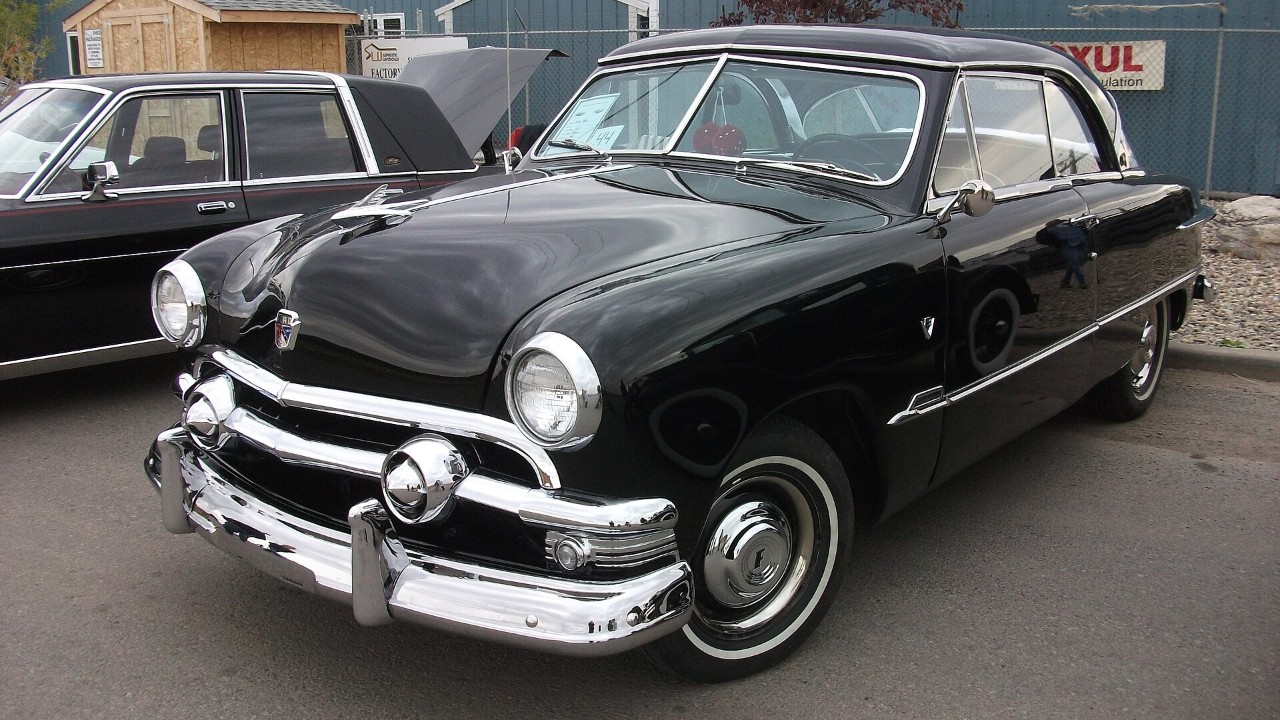
Ford started building its Victoria hardtop coupe in the first week of February 1951. It arrived late, but it made up for lost time. According to RM Sotheby’s, Ford sold 110,286 of them, eclipsing the Chevrolet Bel Air. In other words, a latecomer beat the established low-price leader in its own segment.
Power came from Ford’s 100-horsepower flathead V8. That engine was familiar to Ford buyers. Ford’s postwar design story starts earlier, as we covered in how the 1949 Ford changed American car design. The hardtop roof was what made the Victoria new. With all the windows down, it gave families an open-air feel without a soft top.
Our take: the Victoria showed that Ford could beat Chevrolet at its own style game. We think it is one of the friendliest 1950s hardtops to own today. With every window down and no center pillar, it delivers the open-air look that defined the era. RM Sotheby’s sold a 1951 Custom Deluxe Victoria for $38,500 at Hershey in 2017.
5. 1955 Imperial Newport hardtop
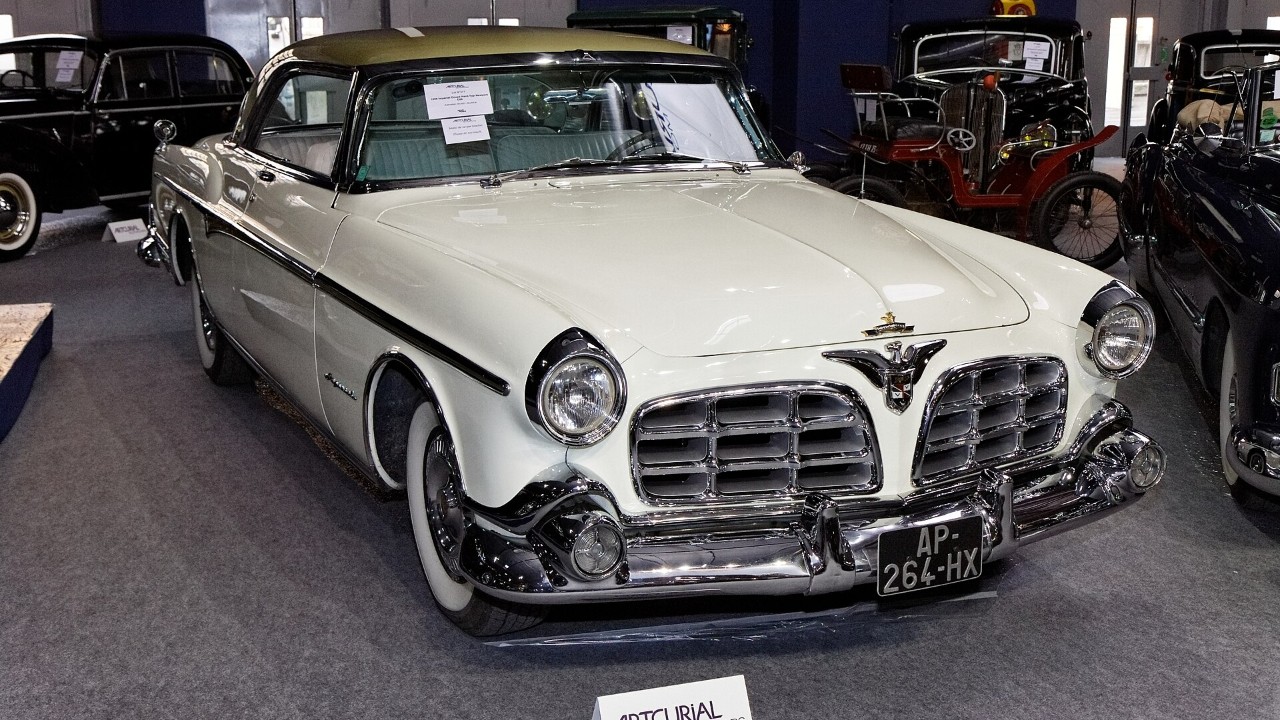
For 1955, Chrysler stopped calling its top car a Chrysler Imperial. Instead, it registered Imperial as a separate make with its own division. Virgil Exner styled the new car, and it carried free-standing “gunsight” taillights above the rear fenders.
Under the hood sat the 331-cubic-inch FirePower Hemi V8, rated at 250 horsepower. Imperial built 11,430 cars that year. Of those, 3,418 were Newport two-door hardtops, which listed at $4,720. By comparison, the four-door sedan sold 7,840 copies. So buyers chose the sedan more than twice as often as the hardtop.
Our take: in our view, the 1955 Imperial was Chrysler’s clearest bid to take on Cadillac and Lincoln. The Newport hardtop was the most elegant way to do it. It had a big Hemi, pillarless glass and a look all its own. If you find one, check that the gunsight taillights are original, because they define the car. Chrysler had used the Imperial name on its top cars before, but 1955 made it a brand in its own right.
6. 1959 Edsel Corsair convertible
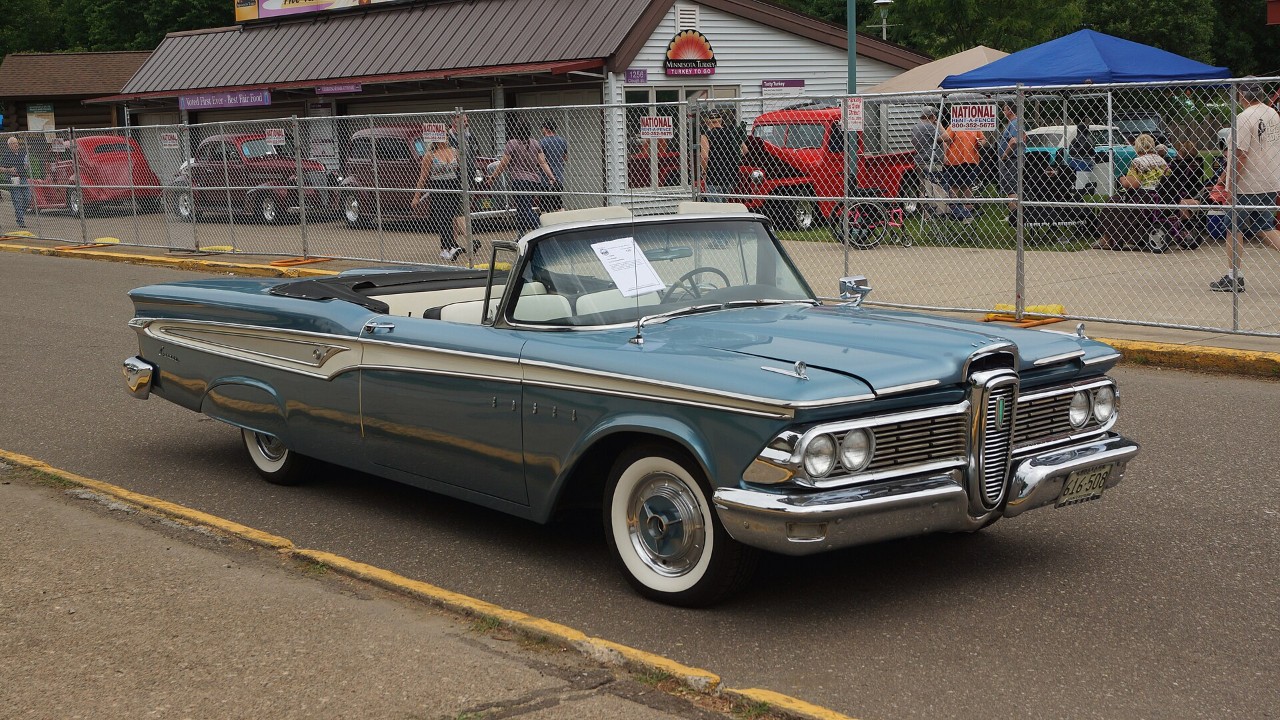
The Edsel arrived in 1958 with big expectations. For 1959, however, Ford changed course. The Corsair moved to a shorter, narrower platform shared with Ford. In fact, Ford based it on the 1959 Fairlane 500.
That made the 1959 Corsair a much more sensible car. It rode on a 120-inch wheelbase and shared its body panels with the Edsel Ranger. Ford built 9,318 Corsairs for 1959. Only 1,343 were convertibles, and every one of them came from American plants. Meanwhile, the 361-cubic-inch FE V8 was standard in Corsair sedans, with either a two- or four-barrel carburetor.
Our take: the 1959 Corsair convertible shows how quickly Ford rethought the brand. In our view, a smaller, simpler Edsel was the right idea at the wrong time. We think this is the most appealing Edsel to own, partly because so few exist. After 1959, Ford dropped the Corsair for good. If you find one, confirm the body style, since convertibles made up only a small share of 1959 Corsair output.
7. 1956 Dodge Custom Royal Lancer D-500
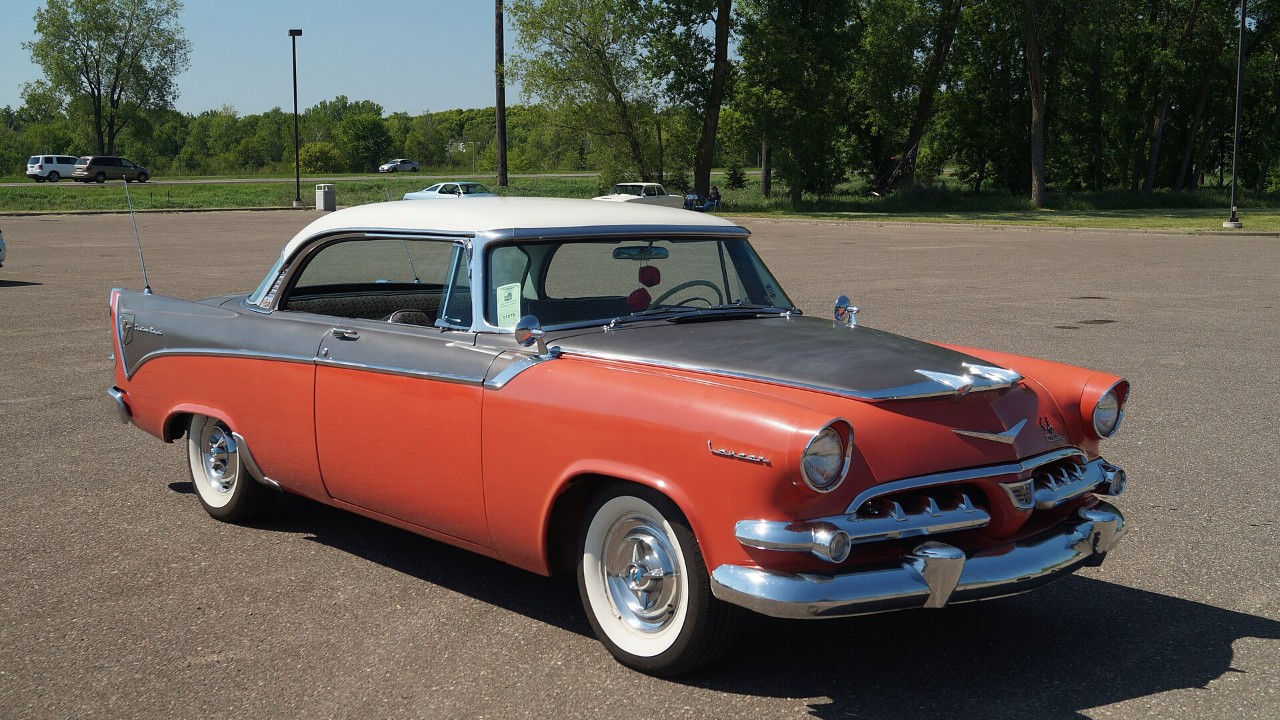
Dodge sold the Custom Royal Lancer as both a two-door and a four-door hardtop for 1956. The D-500 option turned it into something else. It added a 315-cubic-inch V8 with hemispherical combustion chambers from Chrysler’s FirePower family. In effect, it put a racing engine on a dealer order form.
According to autoevolution’s history of the D-500, that engine made 260 horsepower with a four-barrel carburetor. Meanwhile, a NASCAR-focused D-500-1 version used two four-barrels for an extra 25 horsepower. To prove the point, a stock four-door hardtop set 306 speed and endurance records at Bonneville over 14 days. In our view, that run sold the idea that a family car could also handle long, fast trips.
Our take: the D-500 showed that a family hardtop could also be a highway express. We think it is one of the most underrated performance cars of the decade. If you want one, documentation matters, because the D-500 package is the whole story. The two-door hardtop is, to our eyes, the best-looking way to have it.
8. 1957 Oldsmobile Super 88 convertible
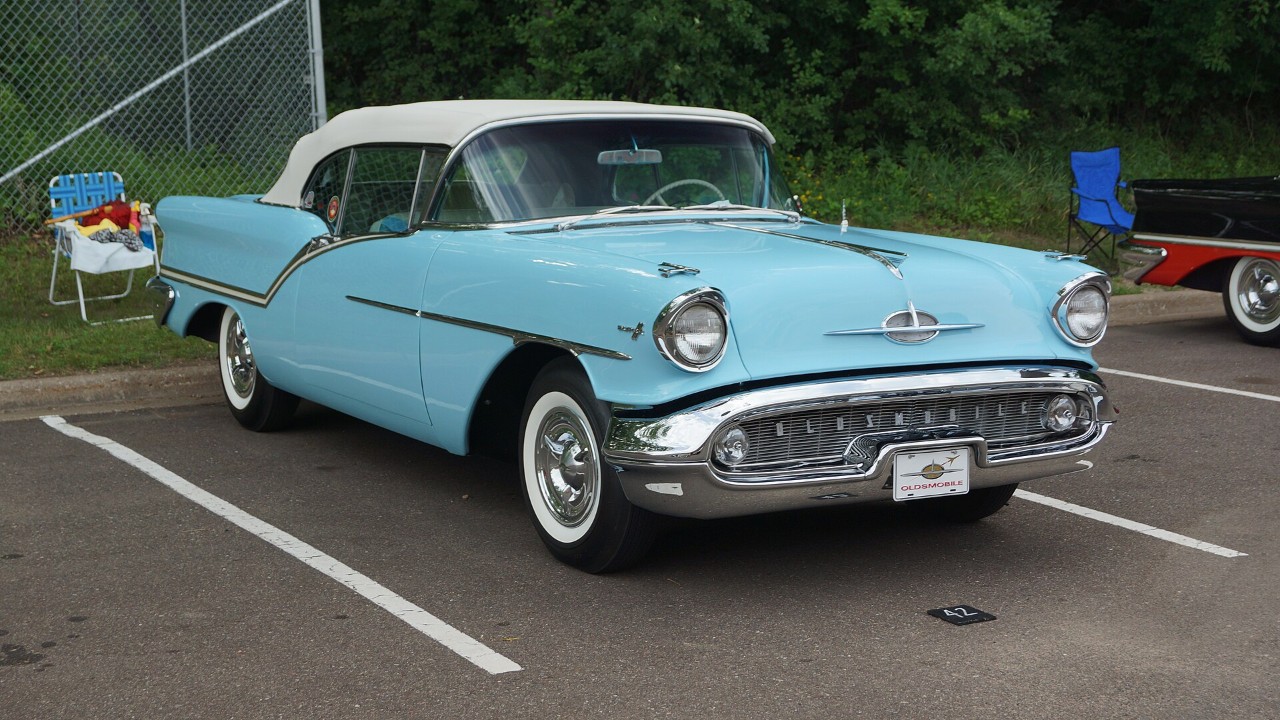
Oldsmobile turned 60 in 1957, and it celebrated with longer, lower bodies. According to GM Heritage, the new cars sat two inches lower than before. The Rocket V8 also grew to 371 cubic inches and 277 horsepower.
For $83, buyers could add the J-2 option. It brought three two-barrel carburetors and higher compression for 300 horsepower. Racing setups went further still. Oldsmobile offered a $385 package with a radical camshaft and heavy-duty internals, but buyers seldom ordered it. Lee and Richard Petty raced Oldsmobile convertibles at Daytona that year. Altogether, Oldsmobile built 398,569 cars for 1957. The brand’s V8 story began earlier, with the car we covered in how the 1950 Oldsmobile Rocket 88 made horsepower mainstream.
Our take: the 1957 Super 88 convertible mixed big-car comfort with serious speed. In our view, it is the definitive late-1950s American cruiser. If you shop for one, look for the J-2 option on the paperwork, since the three-carburetor setup is the heart of the story. RM Sotheby’s sold a J-2 Super 88 convertible for $63,250 as part of the John Staluppi Collection.
9. 1956 Chevrolet 150 Handyman wagon
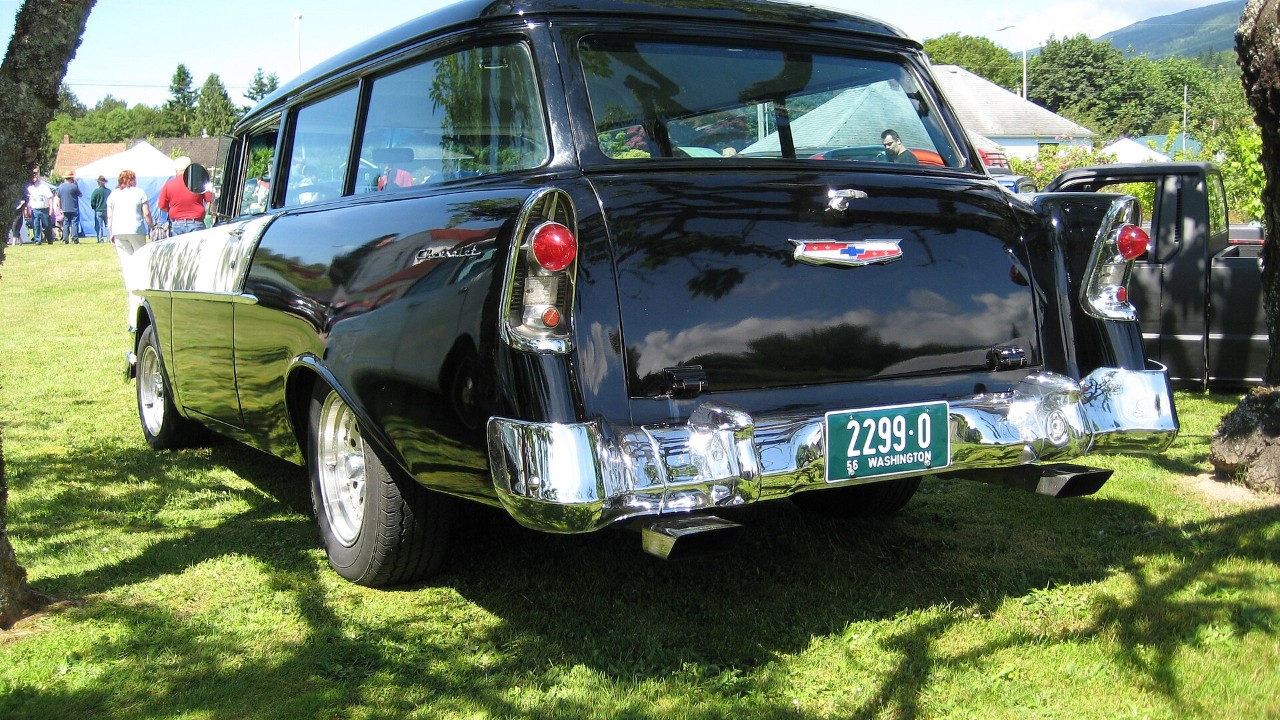
The One-Fifty was Chevrolet’s base car from 1953 to 1957, aimed at budget buyers and fleets. From 1955, the Handyman was its two-door station wagon. That made the 1956 Handyman one of the plainest cars Chevrolet sold.
However, plain did not mean slow. Chevrolet’s new 265-cubic-inch small-block V8 arrived in 1955, and it came in tunes from 170 to 225 horsepower. A One-Fifty buyer could order any available powertrain. As a result, a basic wagon could carry the same engine as a Bel Air. The Federal Highway Administration credits the interstates with making the great American road trip possible, and wagons like this one carried the families.
Our take: the Handyman was a working car for growing suburbs. We think that is exactly why it matters now. In our view, it is the most honest car on this list, built for errands and family trips rather than show. That plain-wrapper character makes a well-kept survivor special. Hagerty’s sales records list a 1956 One-Fifty Handyman with a six and an automatic that sold for $60,500.
10. 1957 Plymouth Belvedere Sport Coupe
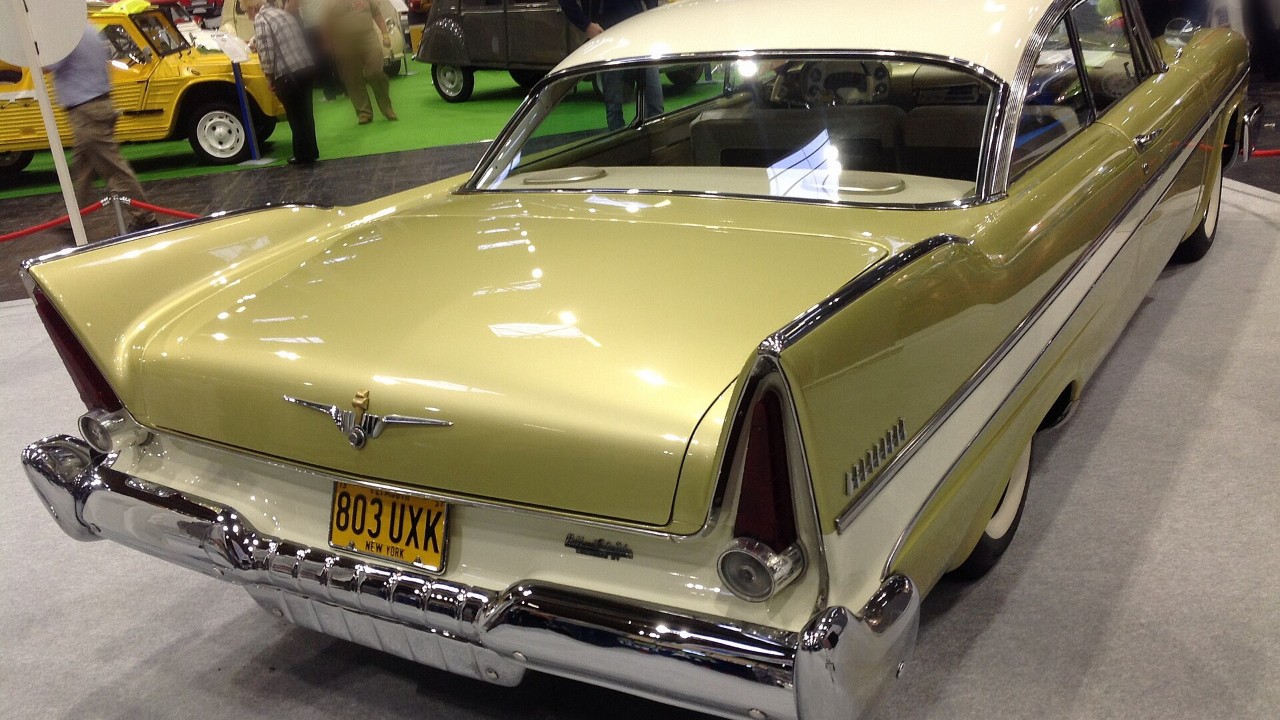
Plymouth’s 1957 cars wore Virgil Exner’s Forward Look, with tall fins and a low, wide stance. Chrysler promoted the new design with a bold slogan: “Suddenly, it’s 1960!” The Belvedere carried that look into Plymouth showrooms. In our view, it made many rivals look a year or two behind.
The changes went deeper than styling. For 1957, Chrysler introduced its Torsion-Aire torsion-bar front suspension across its brands. Buyers could also choose a 301-cubic-inch Fury V8, and convertibles came only with V8 power. In our view, those changes gave a low-priced car the feel of something bigger.
Our take: the 1957 Belvedere looked like the future, and in many ways it drove like it too. We think it is the clearest sign of how far American cars had come since 1950. If you shop for one, check the torsion-bar front end carefully, since it shapes how the car drives. The Interstate law Eisenhower signed on June 29, 1956, authorized 41,000 miles of highway for cars like this one.
More from Fast Lane Only