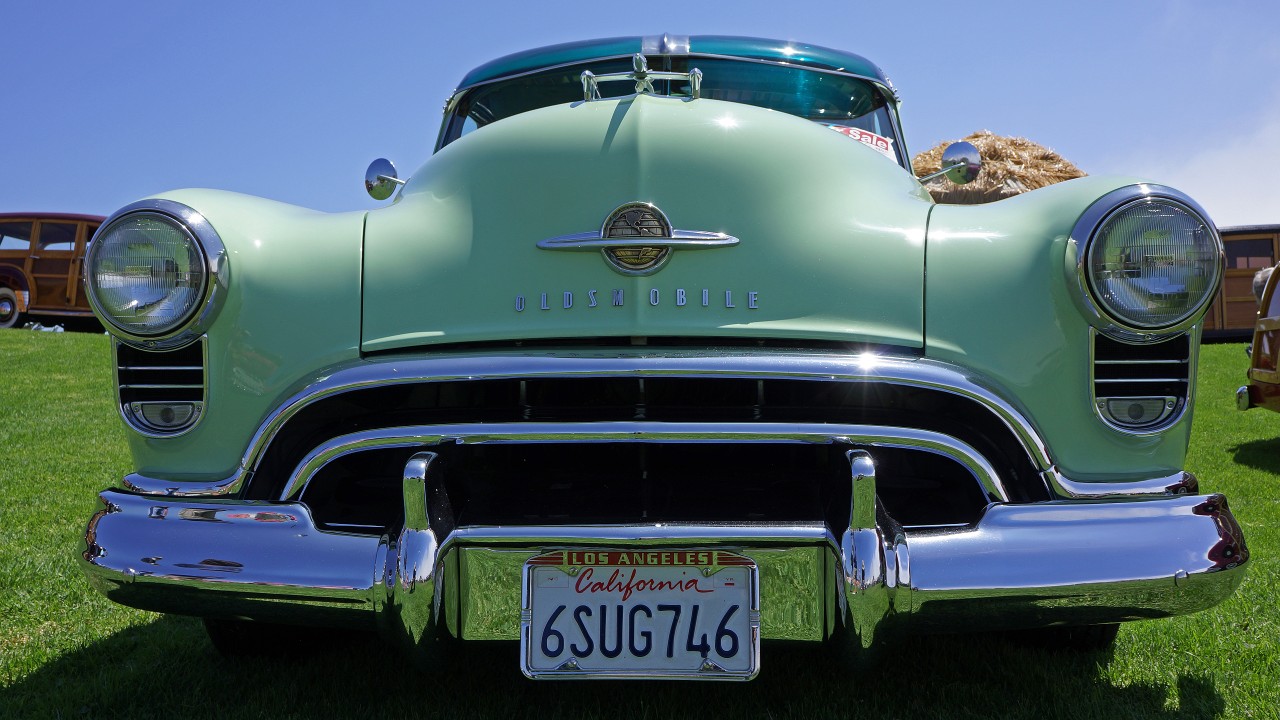
The 1950 Oldsmobile Rocket 88 did something radical for its time: it took serious horsepower out of the realm of luxury sedans and race specials and put it in a relatively affordable family coupe. By combining a modern high compression V8 with a lighter body, Oldsmobile turned raw power into a mainstream selling point rather than a niche curiosity. In the process, the Rocket 88 helped set the template for the American muscle car and reshaped how drivers thought about performance.
From postwar “boats” to a lighter, faster formula
In the late 1940s, American roads were dominated by large, softly sprung cars that prioritized comfort over speed, a landscape often described as full of massive, sluggish boats. Against that backdrop, Oldsmobile’s decision to pair its new overhead valve V8 with a smaller body was a sharp break from convention. The engine had been Planned for the heavier Oldsmobile 98, but engineers realized that dropping the same powerplant into the shorter wheelbase 88 series created a very different kind of car.
That decision produced a striking power‑to‑weight combination. The Oldsmobile V8 delivered 135 horsepower in a package smaller and lighter than the 98, giving the 88 a performance edge that drivers could feel in everyday use. Earlier six‑cylinder models like the 76 had been unremarkable, but once equipped as the “Rocket 88” they became serious performance contenders while still offering the usability of a family car. That blend of practicality and speed is what allowed horsepower to move from the margins of car culture into the center of the showroom pitch.
The Rocket V8 that changed the rules
The heart of the Rocket 88’s appeal was its engine, a modern overhead valve V8 that many historians now describe as America’s first high compression mass‑market V8. Instead of relying on older flathead designs, Oldsmobile pushed compression and breathing to deliver more power from a relatively compact package. Later analysis of the Oldsmobile Rocket V8 has emphasized that it was not just powerful, it was engineered for reliability across different models, which made it suitable for everyday drivers rather than just racers or enthusiasts.
This technical leap mattered because rivals were slower to move away from older layouts. While Ford and Chevrolet were still struggling with flathead engines that traced their roots to prewar designs, Oldsmobile’s Rocket V8 signaled a new era of overhead valve performance. The engine’s success in the 88 series showed that advanced V8 technology could be built in volume and sold at prices within reach of middle‑class buyers. That shift helped center the postwar horsepower race on the V8, a trend that later defined the broader muscle‑car era as described in overviews of 1950s American automobile culture.
Why many call it America’s first muscle car
When enthusiasts debate the first American muscle car, names like Mustang and GTO usually dominate the conversation. Yet a growing body of historical commentary points back to the early 1950 Oldsmobile 88 as the real starting point. Analysts have argued that the car fits the later muscle‑car formula: a relatively ordinary two‑door body, a powerful V8, and a price and practicality level that kept it firmly in family‑car territory. One detailed breakdown of the 1950 Oldsmobile 88 notes that many historians now single it out instead of the Mustang or GTO when they trace the origins of the segment in America.
That argument gains strength when you look at how the Rocket 88 was positioned. It was not a limited‑run halo car, but a mainstream model that shared its basic platform with more modest Oldsmobile sedans. The earlier six‑cylinder 76 was transformed into the Rocket 88 simply by adding the V8, turning a workaday car into a performance standout without sacrificing space or comfort. That combination of everyday usability and straight‑line speed is exactly what later muscle cars tried to replicate, which is why the Rocket 88 now sits at the center of so many “first muscle car” discussions.
On the track, the car to beat
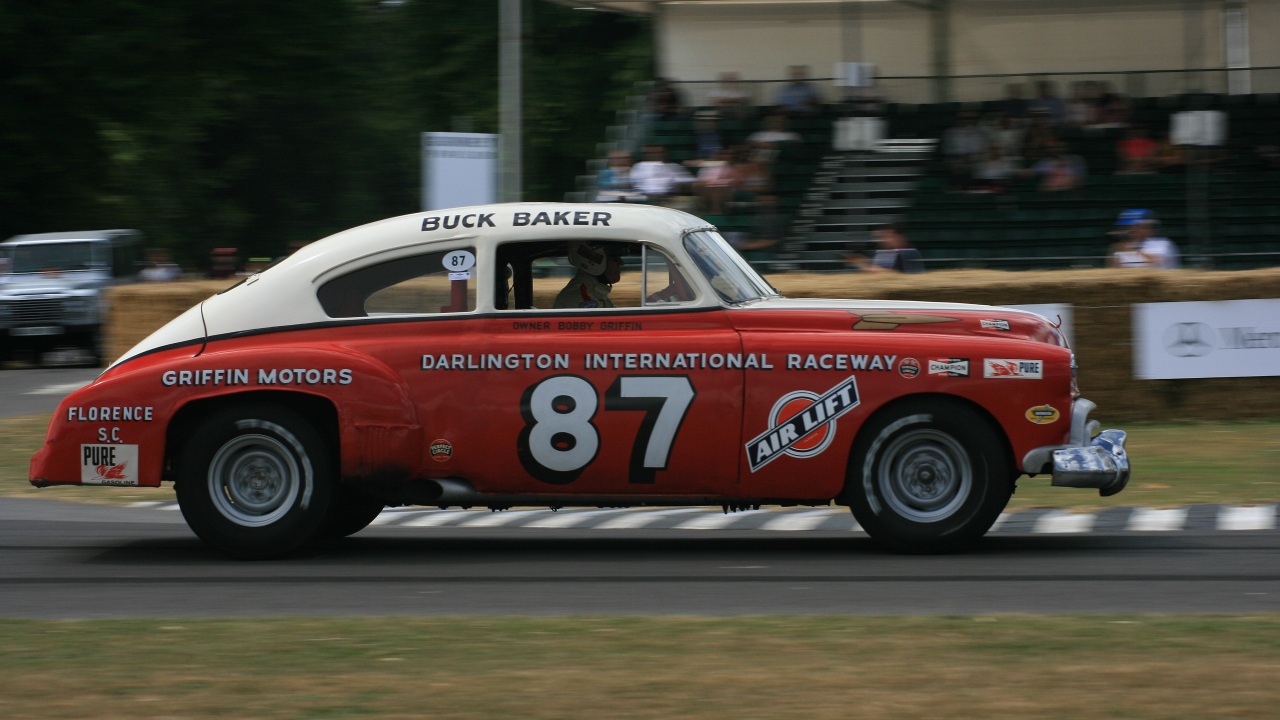
The Rocket 88’s reputation was not built on brochures alone, it was forged in competition. In the early years of NASCAR, the Oldsmobile 88 Coupe quickly became the car to beat, using its power and relatively low weight to dominate stock car races. Contemporary accounts from figures like Tom Jensen March describe how the 88’s combination of the Rocket V8 and lighter bodywork gave it a decisive edge over heavier competitors in the same series.
That success on oval tracks mattered because it translated directly into showroom traffic. NASCAR’s growing popularity turned race wins into marketing gold, and the Rocket 88’s performance helped cement the idea that horsepower was not just a technical specification but a lifestyle choice. Overviews of 1950s American automobile culture note that stock car racing became a highly popular sport, and the Rocket 88 was one of the early cars that linked weekend victories with weekday sales. In that environment, horsepower became a central part of how ordinary buyers evaluated cars, not just something racers cared about.
Making performance livable and aspirational
What truly made the Rocket 88 a mainstream force was how livable it remained despite its performance. The car still offered the space, comfort, and usability expected of a family Oldsmobile, even as it delivered acceleration that rivaled more expensive models. Fact sheets on the 1950 Oldsmobile note that the company even offered a modified Cadillac manual gearbox on V‑8 models, returning the Hydra Matic automatic to six‑cylinder cars. That choice underscored how seriously Oldsmobile took the performance side of the equation, giving Rocket 88 buyers more direct control over the engine’s power.
At the same time, the Rocket 88 became a cultural symbol of postwar optimism and mobility. Later retrospectives describe the Oldsmobile Rocket 88 as reflecting the values and aspirations of its era, capturing a moment when Americans associated more power with progress and freedom. In that sense, the car did more than introduce a new engine or a clever chassis pairing. It taught a generation of buyers to expect strong acceleration and high horsepower as part of the everyday driving experience, a shift that would shape the market for decades.
More from Fast Lane Only: