Oldsmobile built 27,521 Super 88 Holiday Sedans for 1958, and the chrome on each one was hard to miss. That kind of excess defined the jet age. Tail fins grew, grilles spread, and makers named engines after rockets.
The famous cars of that era are easy to name. For example, think of the 1957 Chevy, the 1959 Cadillac and the early Thunderbird. In our view, their prices reflect that fame, too. However, the same factories built plenty of hardtops and sedans that shared the style and the V8s without the headline status.
These 10 are the cars we’d be quietly scooping up. After all, they are our picks and our opinion. Even so, every year, engine, horsepower rating and production figure below comes from factory records, period fact sheets and histories we read for this story.
1. 1958 Oldsmobile Super 88 Holiday Sedan
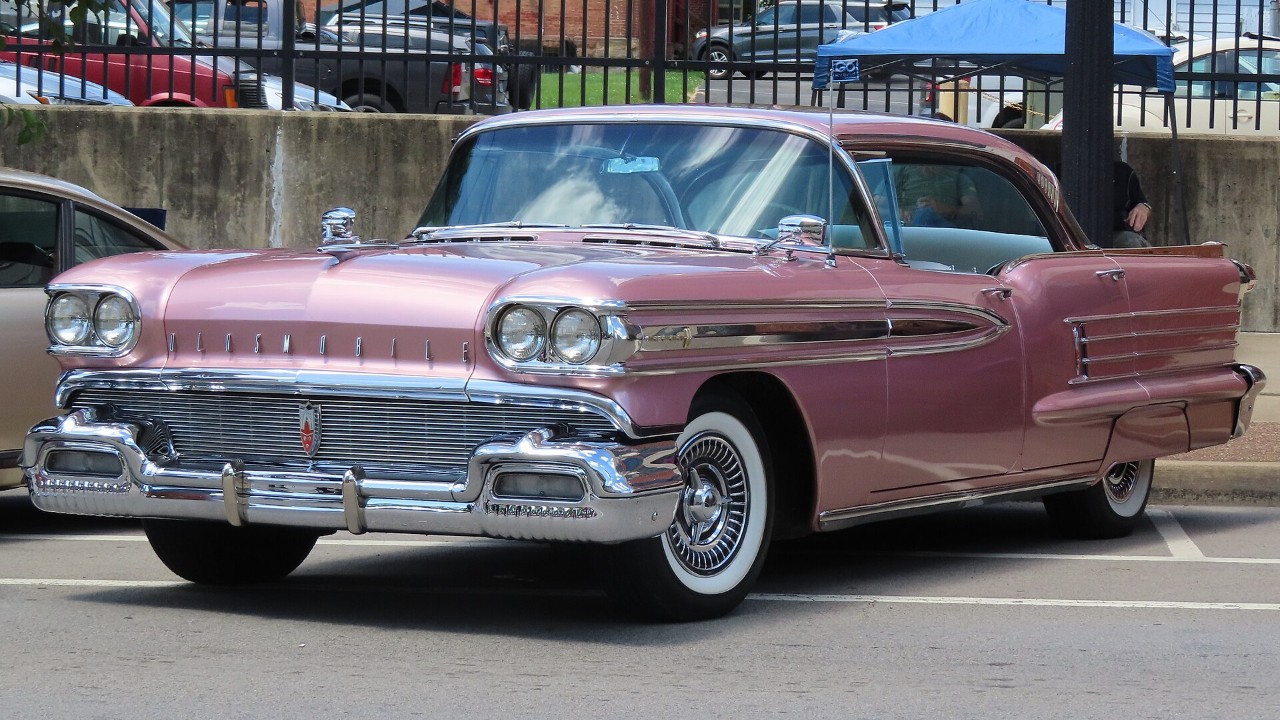
Oldsmobile marketed its 1958 styling as the “Mobile Look.” It soon earned the nickname “Chromemobile,” and many later judged it the height of 1950s excess. Yet the cars sold well. In fact, Oldsmobile climbed to fourth place in the industry that year.
The Super 88 used the 371-cubic-inch Rocket V8 with a four-barrel carburetor. Buyers could also order the J-2 setup with three two-barrel carburetors, which raised output to 312 horsepower, according to the Over-Drive fact sheet for 1958 Oldsmobile. The pillarless Super 88 Holiday Sedan was the second-most popular version of the car, behind only the four-door sedan.
That’s why we’d go after a Super 88 Holiday Sedan. With 27,521 built, a Super 88 Holiday Sedan isn’t a unicorn. Still, the four-door hardtop gives you the open-window look of a coupe and room for the whole family. In our view, it’s the most practical way to own a Chromemobile.
2. 1959 Ford Fairlane 500 Club Victoria hardtop
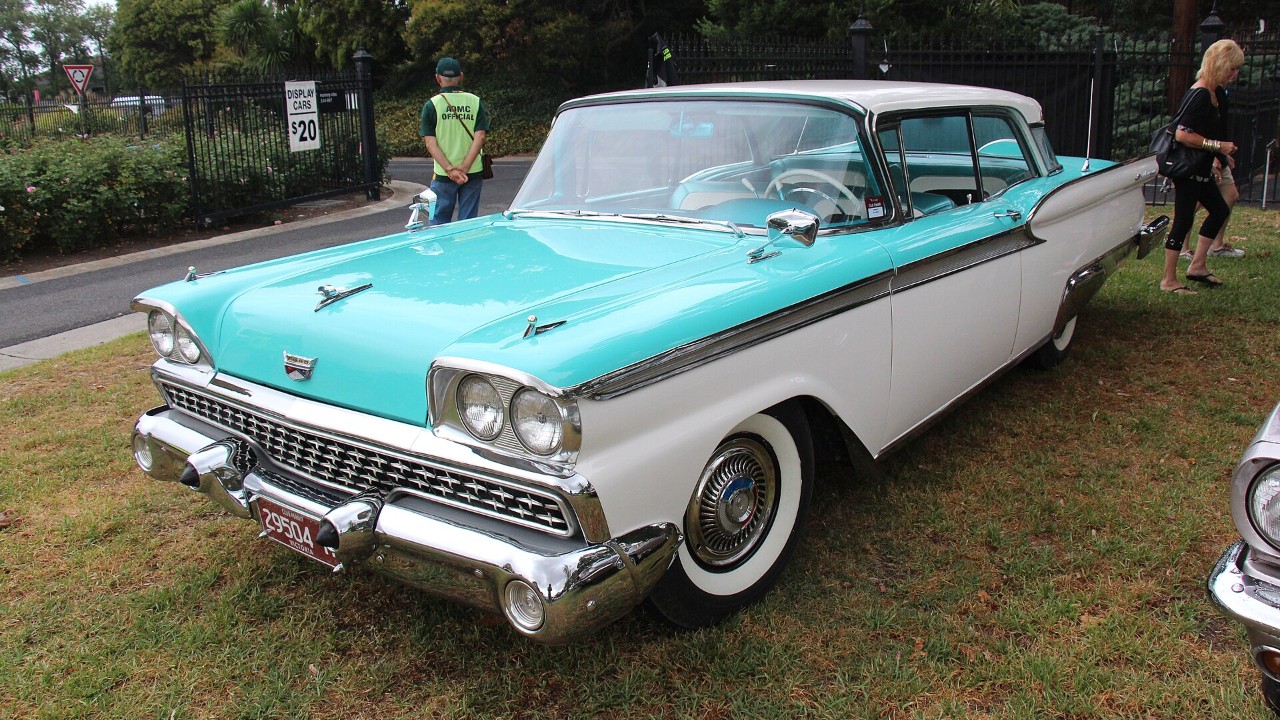
Ford added the Galaxie to its range during the 1959 model year. That left the Fairlane 500 Club Victoria as the second-level two-door hardtop, and the Galaxie got most of the attention.
At the same time, every 1959 Ford rode on a 118-inch wheelbase. In the V8 line, the standard engine was a 292 rated at 200 horsepower. Buyers could also step up to a 332 with 225 horsepower or a 352 with 300 horsepower.
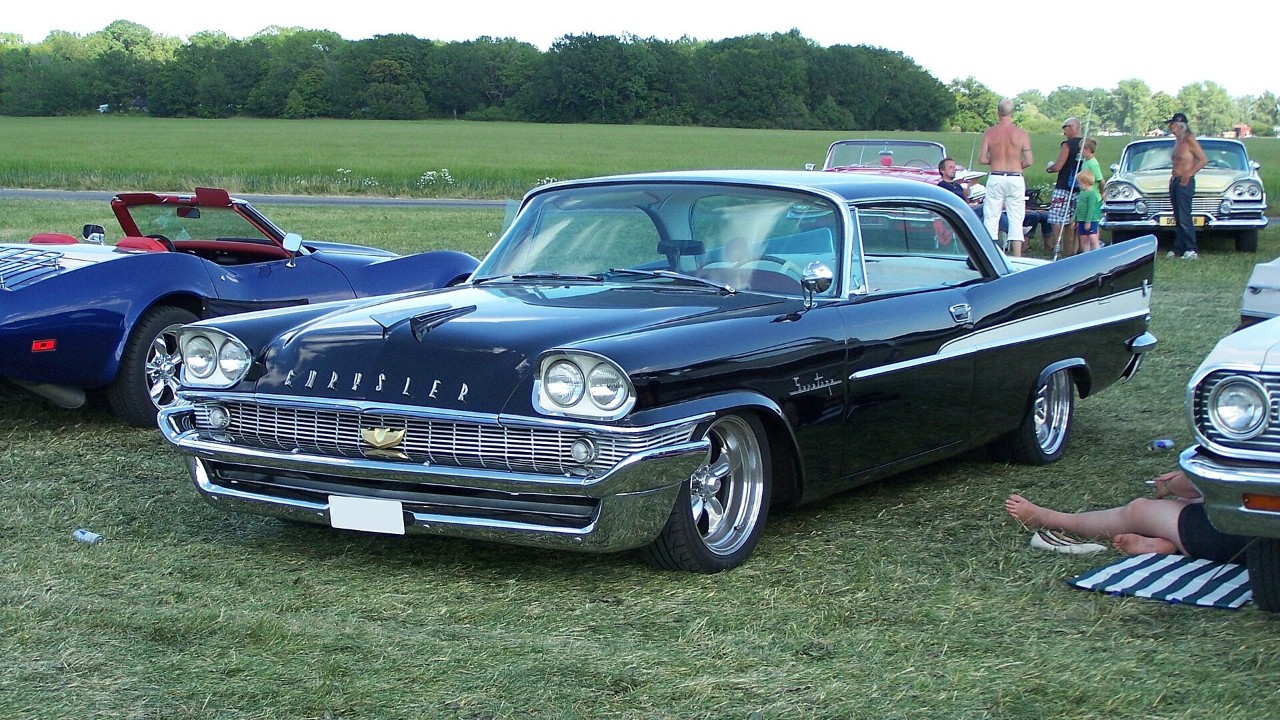
That’s the case for a Club Victoria in a nutshell. You get the same long, flat 1959 Ford shape on the same wheelbase. Meanwhile, in our view, the Galaxie badge gets most of the attention. We’d hunt for a Fairlane 500 hardtop with the biggest V8 we could find, because it looks the part from every angle.
3. 1957 Dodge Coronet Lancer 2-door hardtop
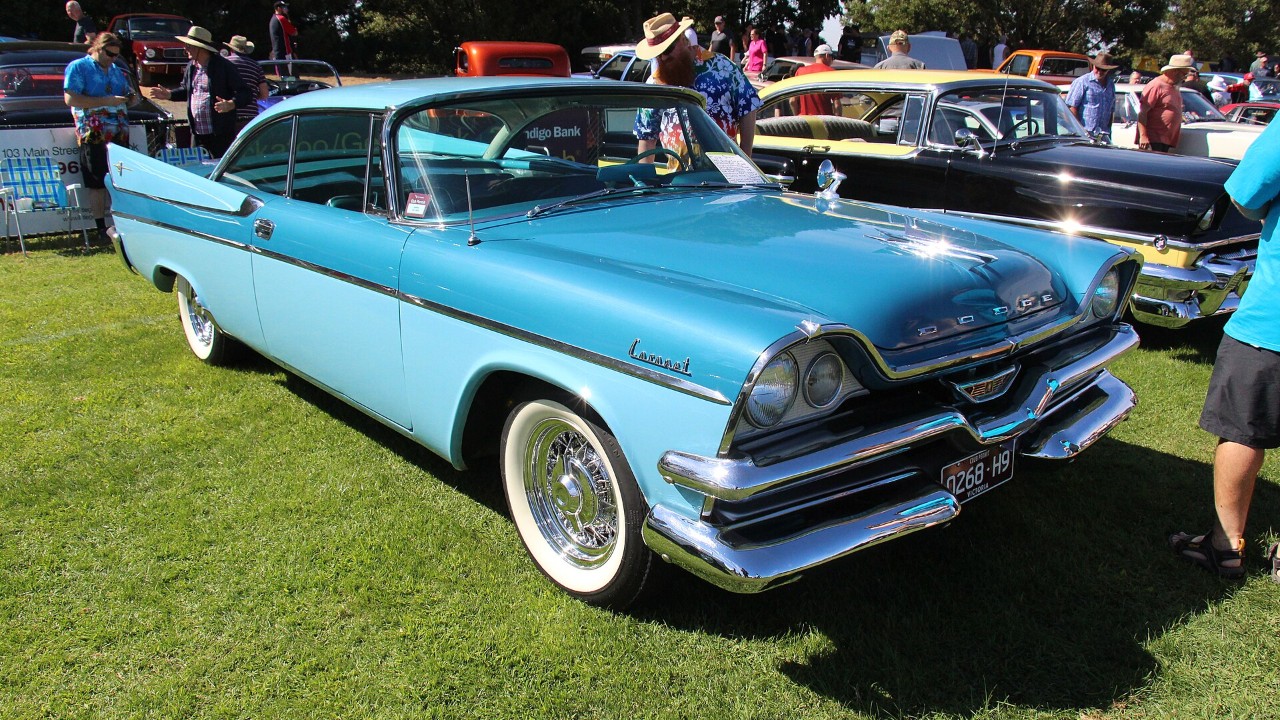
Chrysler’s “Forward Look” restyle reached Dodge in 1957. The cars grew a gull-wing grille bar and tall rear fins, and the wheelbase stretched from 120 to 122 inches. Underneath, Dodge also added Torsion-Aire, a torsion-bar front suspension.
The Coronet Lancer was the entry-level two-door hardtop that year. Dodge built 160,500 Coronets in 1957, according to the Over-Drive fact sheet for 1957 Dodge. The standard V8 was a 325-cubic-inch engine with 245 horsepower. Buyers could add a Power Pack for 260 horsepower or the D-500 Hemi at 285 or 310 horsepower. Meanwhile, the new three-speed TorqueFlite automatic cost $220.
We’d pick the Lancer because it carries the same Forward Look fins as pricier Dodges. Our list of forgotten Dodges that dominated their era shows how strong the brand was then. If you find one, check for a D-500 code first.
4. 1956 DeSoto Fireflite Sportsman
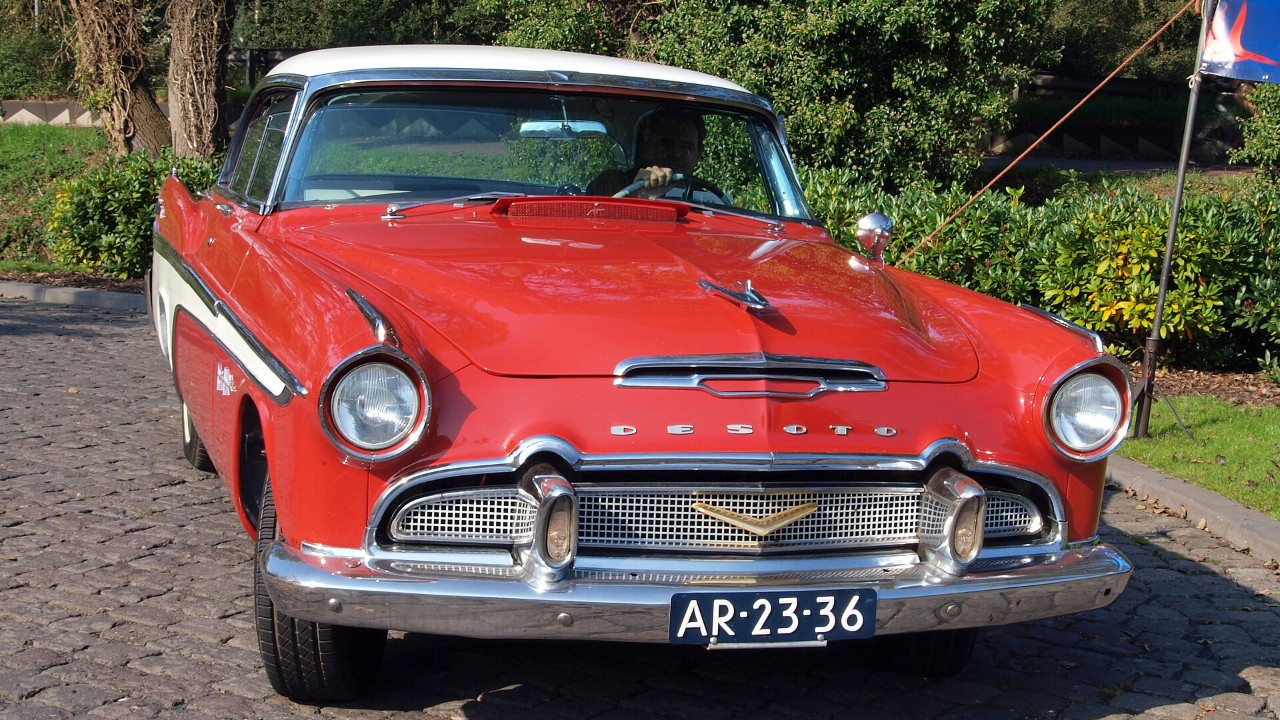
On January 11, 1956, DeSoto announced that a Fireflite convertible would pace the Indianapolis 500. DeSoto then built 186 pace car convertibles. Even so, the Fireflite Sportsman hardtop is the better buy in our view, because it carries the same engine and the same new fins.
Every Fireflite used a 330.4-cubic-inch Hemi V8 with 255 horsepower and a Carter four-barrel. A PowerFlite automatic came standard, with push-button controls in a pod left of the steering wheel. According to the Over-Drive fact sheet for 1956 DeSoto, buyers could even order a Highway Hi-Fi record player.
DeSoto sold 7,479 Sportsman two-door hardtops and about 3,350 four-door hardtops that year. By comparison, those are small numbers next to Chevy or Ford. Our list of forgotten DeSotos that outran everything in their class covers more of the brand’s Hemi era. We’d grab a Sportsman because it gives you a Hemi, push buttons and fins in one package.
5. 1959 Pontiac Catalina Vista hardtop sedan
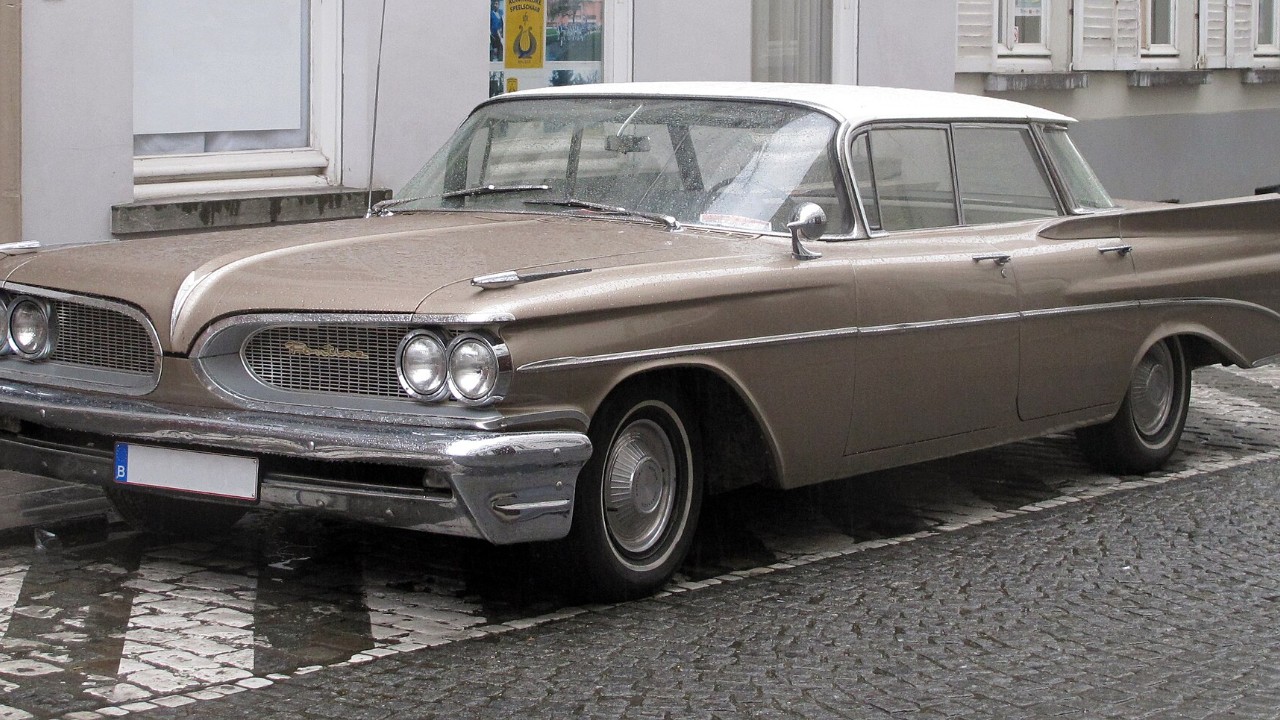
Catalina started as a hardtop trim name in 1950. For 1959, Pontiac made it a separate model, and it launched the “Wide-Track” theme at the same time. As a result, the track grew by 5 inches, to 63.7 inches up front and 64.0 inches at the rear.
Vista was Pontiac’s name for its pillarless four-door hardtops. The 1959 version had a flat roof that hung out over the big rear window. It sold well, too. Pontiac built 45,012 Catalina Vistas, according to the Over-Drive fact sheet for 1959 Pontiac. Engines were all 389-cubic-inch V8s, from 215 to 345 horsepower.
Motor Trend named the whole 1959 Pontiac line its “Car of the Year.” Yet in our view, people overlook the four-door Vista. We’d scoop one up because the twin grille and floating roof look dramatic, and the Wide-Track stance makes the car look planted, even parked on a street in Bruges.
6. 1958 Buick Special 2-door hardtop
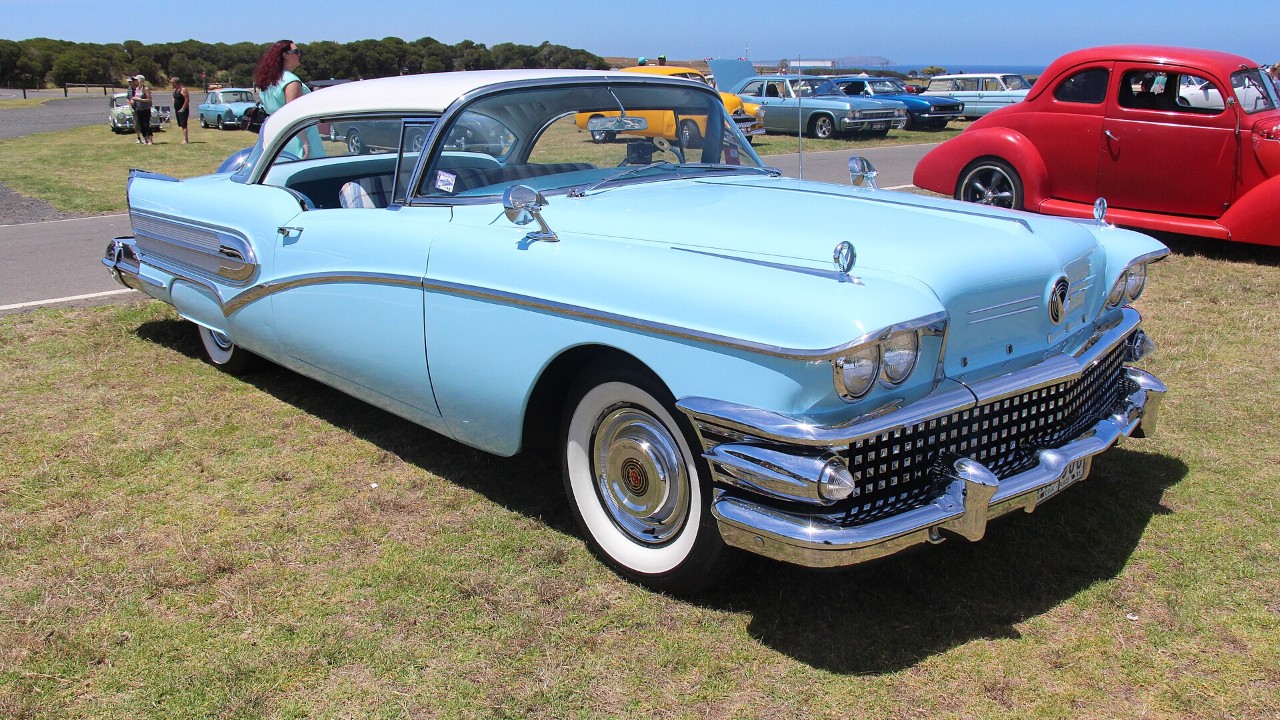
1958 was a hard year for Buick. The company built 241,892 cars, good for a 5.7 percent market share. Meanwhile, sales of the Super fell to their lowest since the wartime 1942 model year. The entry-level Special, though, still found plenty of buyers.
The Special two-door hardtop was the second-best-selling Buick that year, with 34,903 built. It used a 364-cubic-inch V8 rated at 250 horsepower, while the 300-horsepower engine stayed reserved for the costlier lines. Up front sat the new grille of rectangular chrome squares, and the Limited’s version used 160 of them, according to the Over-Drive fact sheet for 1958 Buick.
We’d go after a Special hardtop for the simplest reason. It gives you the full 1958 Buick look, chrome and all, without Roadmaster or Limited money. If you’re shopping, check the chrome closely first, because replating that much brightwork adds up. In our view, it’s a cruiser, not a hot rod.
7. 1961 Plymouth Fury sedan
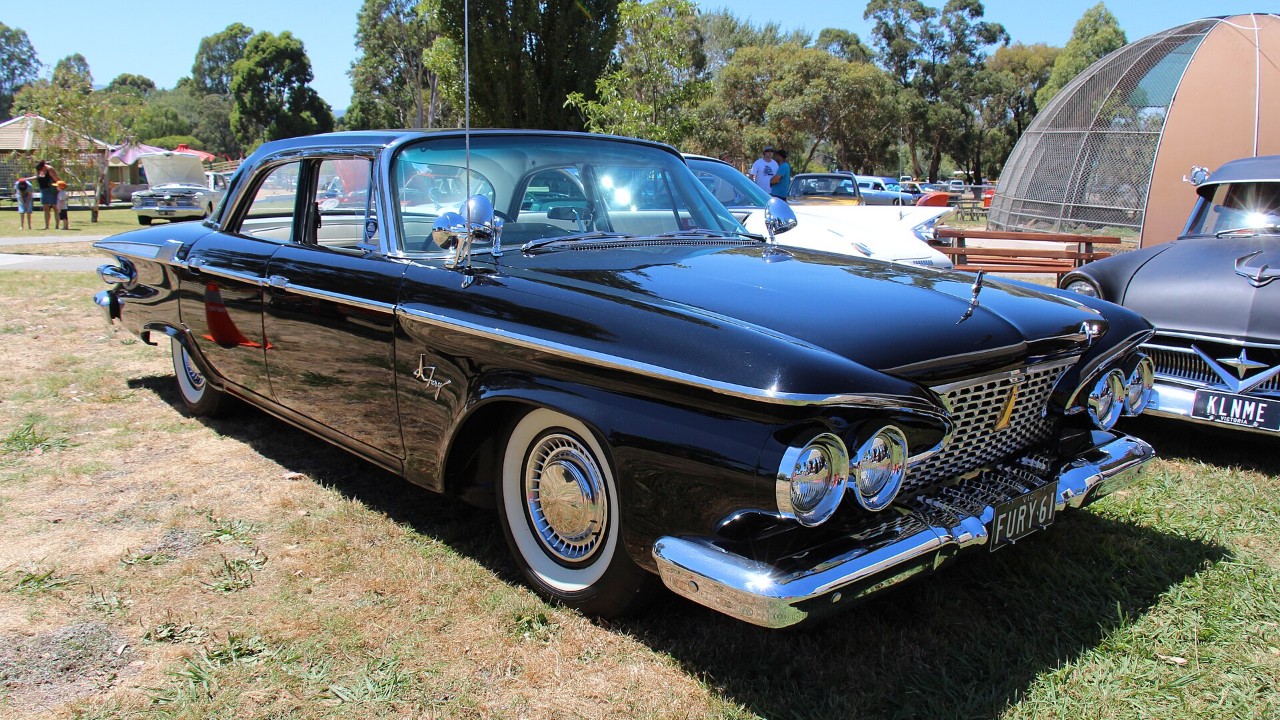
Virgil Exner’s team reshaped the full-size Plymouth for 1961 with straight lines and sculpted curves. However, Plymouth’s full-size sales fell from 242,725 in 1960 to 206,907 in 1961, and critics knocked the cars for being too different.
The Fury was the top trim, and the four-door sedan sold 22,319 units, according to the Over-Drive fact sheet for 1961 Plymouth. Like other full-size Plymouths, it rode on a 118-inch wheelbase. Engines ran from a 225 six with 145 horsepower to a 318 V8 with 230 horsepower. Beyond those, buyers could order a 361, a 383 or even a 413 with up to 375 horsepower.
We’d scoop up a 1961 Fury sedan because the styling that hurt it then is what makes it stand out now. After all, very few cars look like it. If you want one, a 318 car is the sensible pick, while a 383 is the fun one.
8. 1958 Ford Custom 300
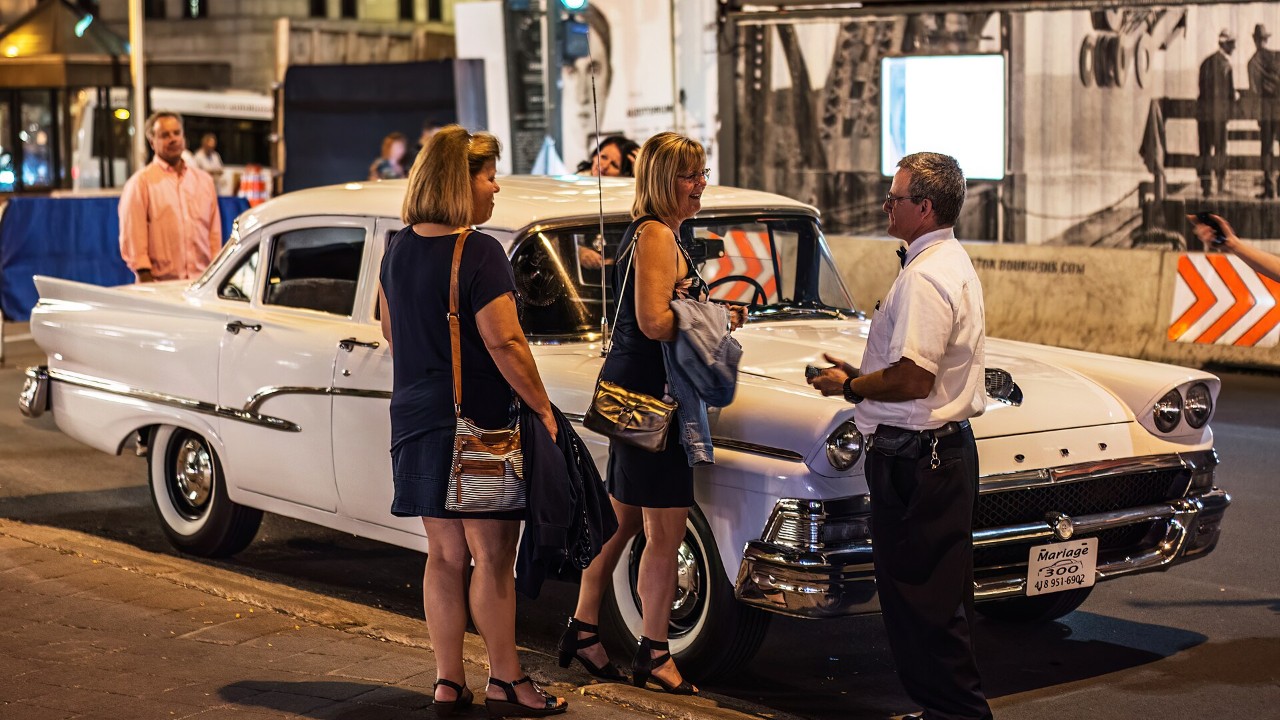
The Custom 300 was Ford’s base car for 1958, and it sold in huge numbers. Ford built 173,441 Custom 300 Tudor sedans and 163,368 Fordor sedans that year. It also built 4,062 two-door Business models.
The base car still got the year’s big changes. For instance, it had new dual headlights and a grille that matched the 1958 Thunderbird. Its wheelbase measured 116 inches, 2 inches shorter than a Fairlane’s. Power came from a 223 six with 145 horsepower or a 292 V8 with 205, according to the Over-Drive fact sheet for 1958 Ford. For just $59, buyers could add the 240-horsepower 332 Interceptor V8.
That $59 option is the reason we’d hunt for one. A Custom 300 with the Interceptor V8 has the look of a Thunderbird-era Ford at a working-car price. This one turned up in Quebec City, and it shows how good a plain-Jane Ford can look.
9. 1957 Hudson Hornet Hollywood hardtop
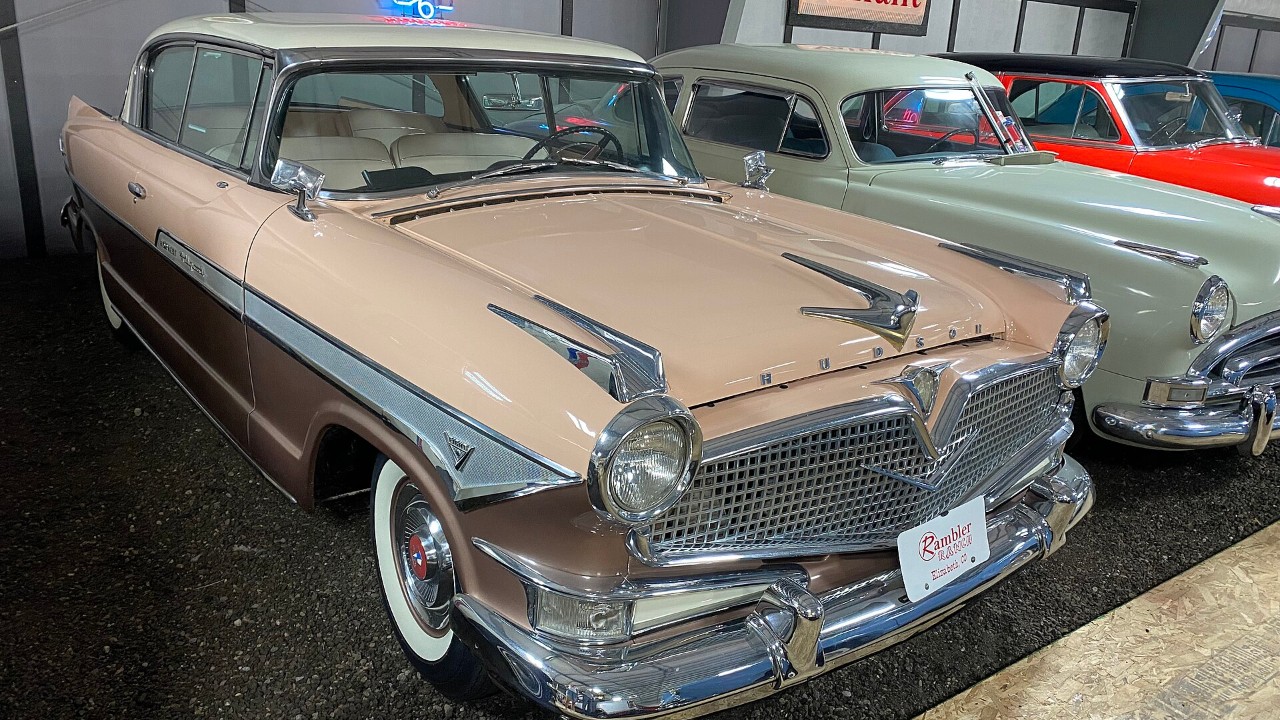
The 1957 Hornet was the last Hudson. It came in two body styles, a four-door sedan and the pillarless Hollywood hardtop. American Motors built it in Kenosha, Wisconsin, on a body shared with the Nash Ambassador.
Power came from a single engine. That was a 327-cubic-inch AMC V8 with a Carter four-barrel and dual exhausts, rated at 255 horsepower, according to Mac’s Motor City Garage. Buyers could also add a GM Hydra-Matic automatic. However, sales kept sliding, from nearly 56,000 in 1955 to barely 4,100 in 1957. The last Hornet left the Kenosha line on June 25, 1957.
Our list of 1950s cars becoming increasingly difficult to find includes the earlier Hornet. We’d chase the 1957 Hollywood because it marks the end of a famous name. Plus, the tri-tone paint schemes look wild even by jet-age standards.
10. 1958 Chrysler Saratoga 2-door hardtop
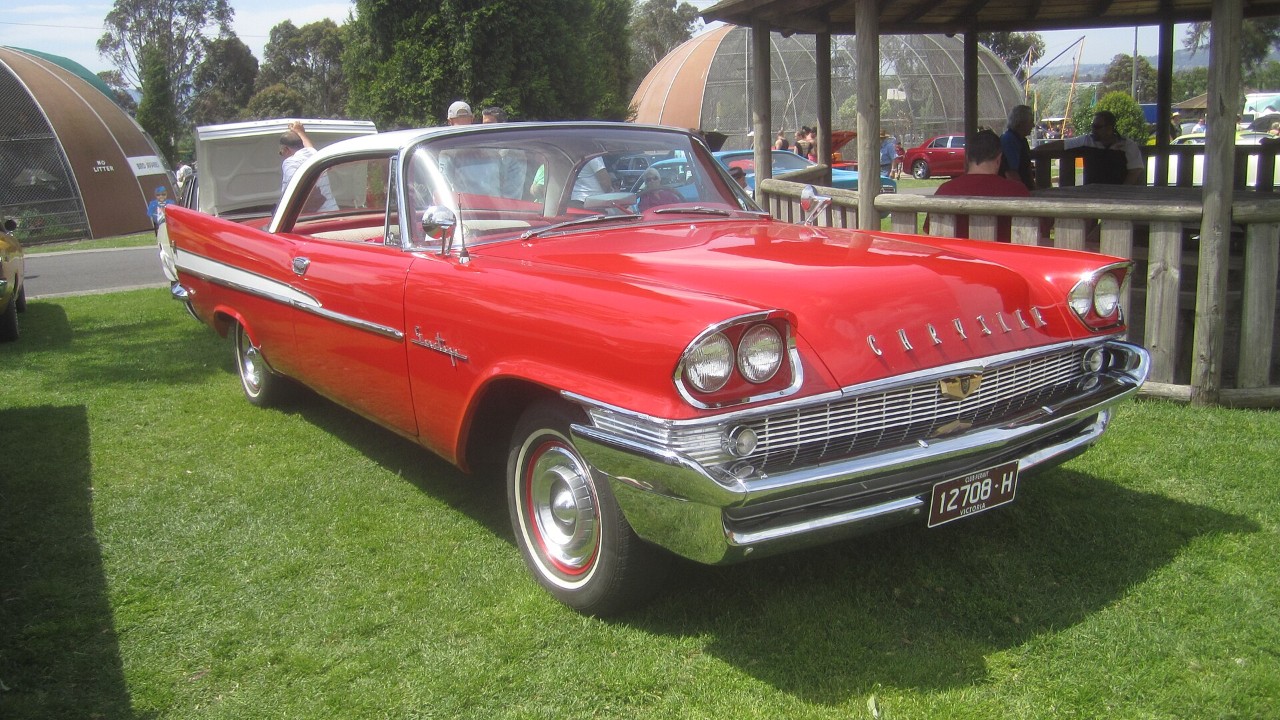
For 1958, the Chrysler Saratoga changed little from 1957, apart from dual headlights, new tail lamps and new trim. That was a tough year to sell a Chrysler, because Chrysler-brand sales fell from 122,273 in 1957 to 63,671 in 1958.
The Saratoga had real muscle, though. Its 354-cubic-inch V8 made 310 horsepower with a Carter four-barrel. A TorqueFlite automatic came standard, and the car rode on a 126-inch wheelbase, according to the Over-Drive fact sheet for 1958 Chrysler.
We’d be quietly scooping up a Saratoga two-door hardtop because it offers big-Chrysler power without the New Yorker’s fame. It is also scarce. In the end, Chrysler sold just 4,456 Saratoga two-door hardtops in 1958.
More from Fast Lane Only