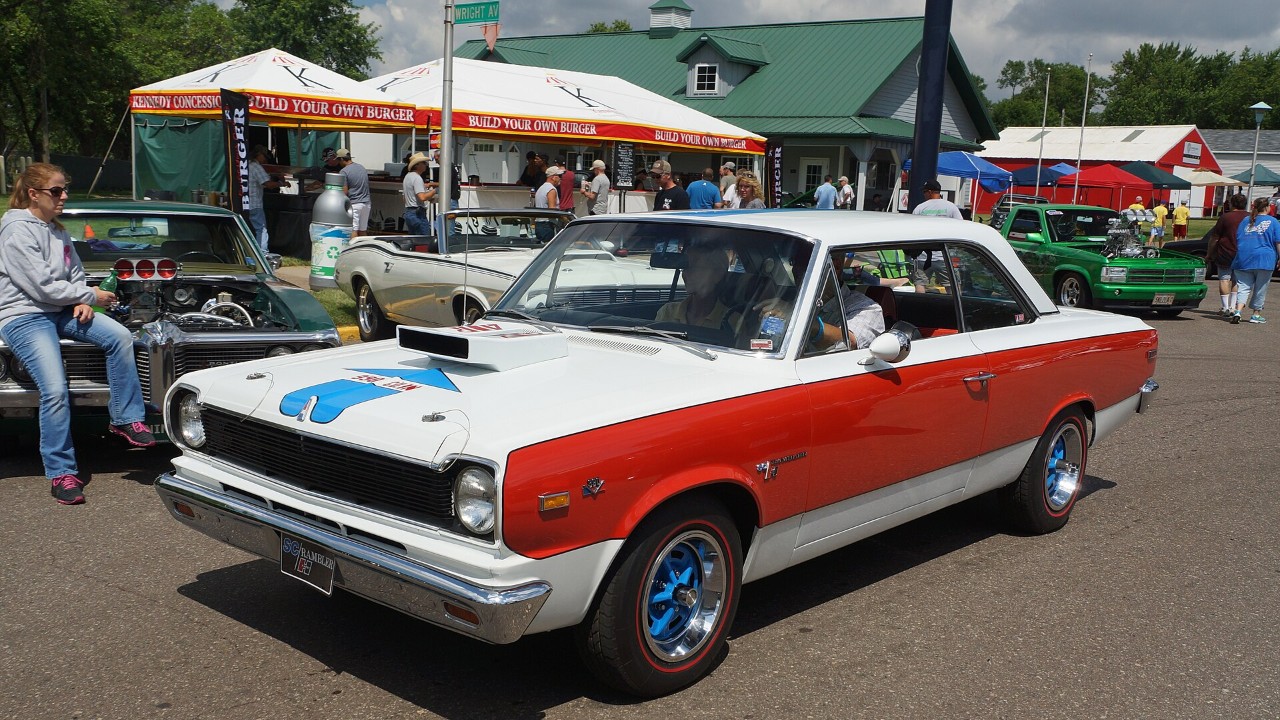
A 1969 SC/Rambler can stop a crowd before anyone hears it run. AMC took its humble compact, painted it like a flag and stuffed a big V8 under a giant hood scoop. In short, that mix of loud looks and real speed sums up the best cars of the 1960s.
The decade gave buyers everything at once. Detroit built cheap muscle, Italy built hand-shaped grand tourers and Britain built a spy car that became a movie star. Yet not every 1960s car still draws a circle of people at a show. Instead, some just blend into the rows of trailers and folding chairs.
These 12 are our picks for the cars that still impress at every car show. The verdict is our opinion. However, the years, engines, horsepower ratings and production figures come from auction records, museum files, registries and period sources we read for this story.
1. 1969 AMC SC/Rambler
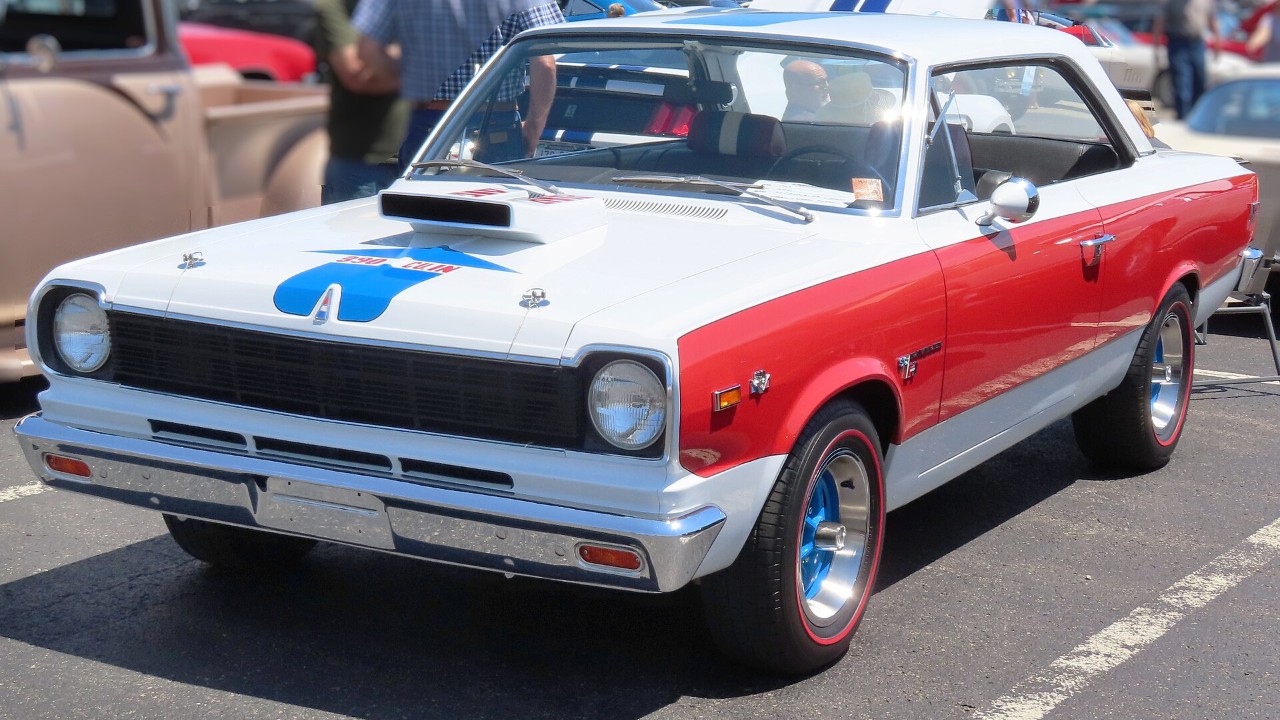
The idea for the 1969 SC/Rambler came from Hurst Performance Products, a Pennsylvania company, and AMC bought it. According to Old Cars Weekly, the partners built 1,512 cars. Each one carried a 390-cubic-inch V8, a Borg-Warner four-speed with a Hurst shifter and a 3.54:1 Twin-Grip rear axle. Its spec sheet also lists 315 horsepower and 425 lb-ft of torque.
On a 1969 SC/Rambler, the paint is what people remember, though. At first, the cars wore the A scheme, with red side panels and wide blue stripes over the hood, roof and deck. A later batch switched to a mostly white B scheme with thin red and blue stripes. Up front, a blue arrow points to a tall ram-air scoop lettered “AIR” along with the engine size.
It wasn’t just costume, either. Road Test magazine ran the quarter mile in 14.4 seconds at 100.44 mph. In our view, that is why the 1969 SC/Rambler still works at a show: it looks like a joke, and then the numbers settle the argument.
2. 1962 Ferrari 250 GT Lusso
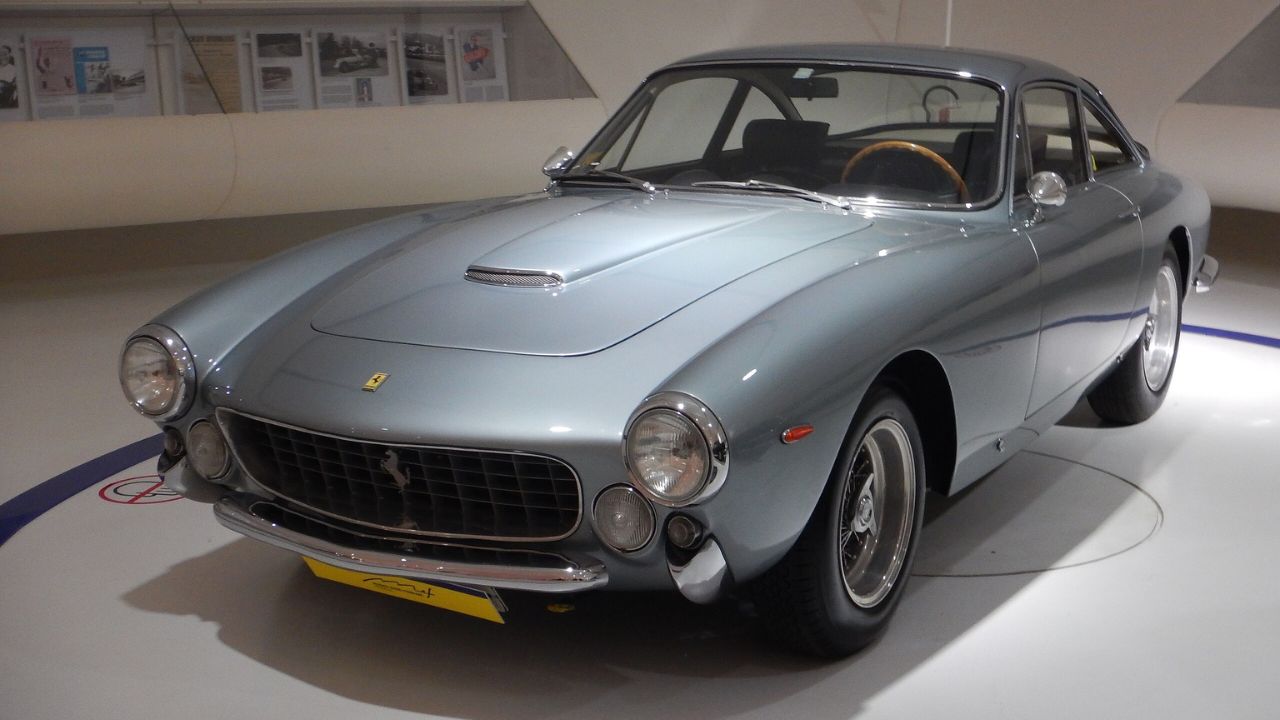
Ferrari showed the Lusso prototype at the Paris Motor Show in October 1962, then took a second car to Turin a month later. Customer deliveries then began in early 1963. Pininfarina drew the body, and Scaglietti built the production shells in Modena.
Under the long hood sits a 3.0-liter Colombo V12 fed by three Weber carburetors. The tube-frame chassis kept the same 2,400 mm wheelbase as the outgoing SWB Berlinetta, but the track grew wider. Ferrari built about 350 Lussos, according to the model history at Supercar Nostalgia. Steve McQueen owned one, and so did James Coburn.
Inside, the dashboard is also a show of its own. The speedometer and tachometer sit in the center of the dash, while a slim pod behind the wood-rimmed wheel holds the smaller gauges. We think the Lusso earns its crowd because it was a road car first, and the name itself means luxury. As a result, people can picture actually driving one.
3. 1966 Pontiac GTO Tri-Power
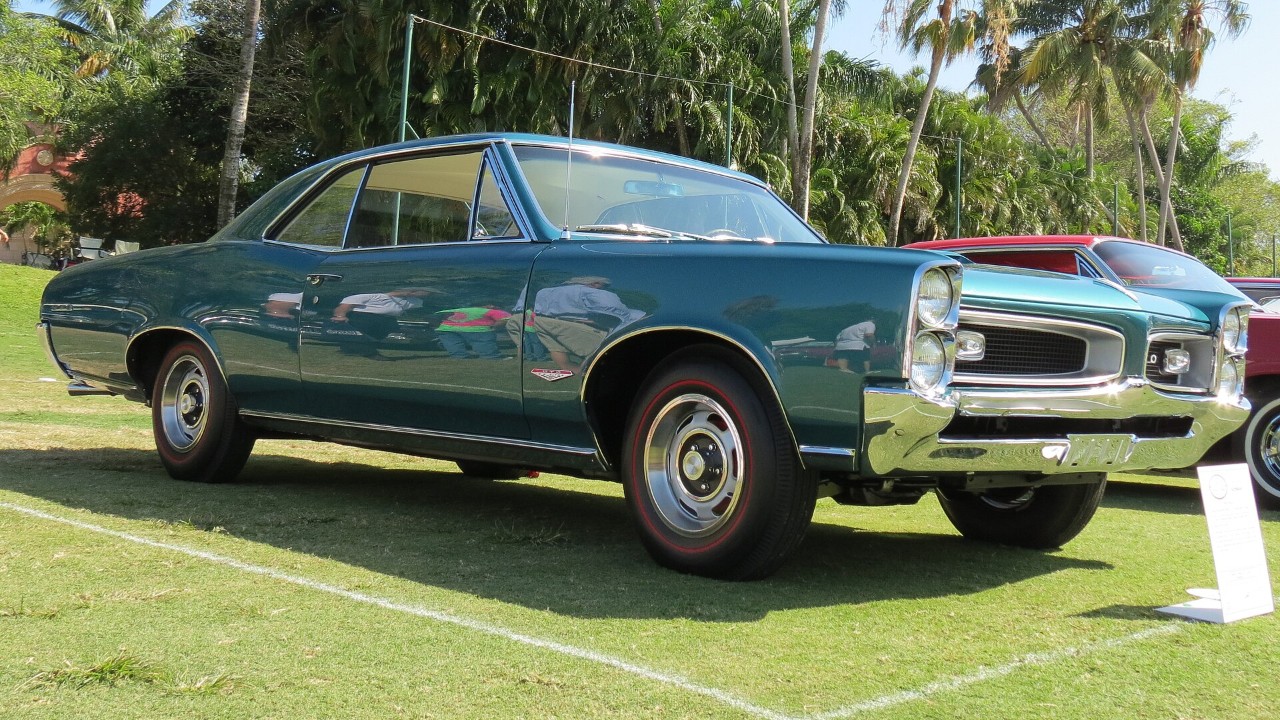
For 1966, the GTO stopped being an option package and became its own model. Buyers responded, too. Pontiac sold 96,946 GTOs that year, a record, according to Mac’s Motor City Garage. The new body added kicked-up rear fenders and a “Coke-bottle” profile, along with a plastic grille.
The standard 389 V8 made 335 horsepower. However, the car to find is the Tri-Power, with three two-barrel carburetors and a 360-horsepower rating. More than 80 percent of 1966 buyers stuck with the standard engine. Then Pontiac dropped Tri-Power partway through the model year, and the 1967 GTO switched to a single four-barrel.
That short run makes a Tri-Power car a talking point at any show. Owners get to pop the hood and point at three carburetors in a row. It’s a big part of why the GTO remains the car many fans name first, and we covered more of that story in our list of Pontiac GTOs that helped start the muscle car revolution. In our view, the 1966 car is the best-looking of the bunch.
4. 1969 Chevrolet Camaro Z/28 Rally Sport
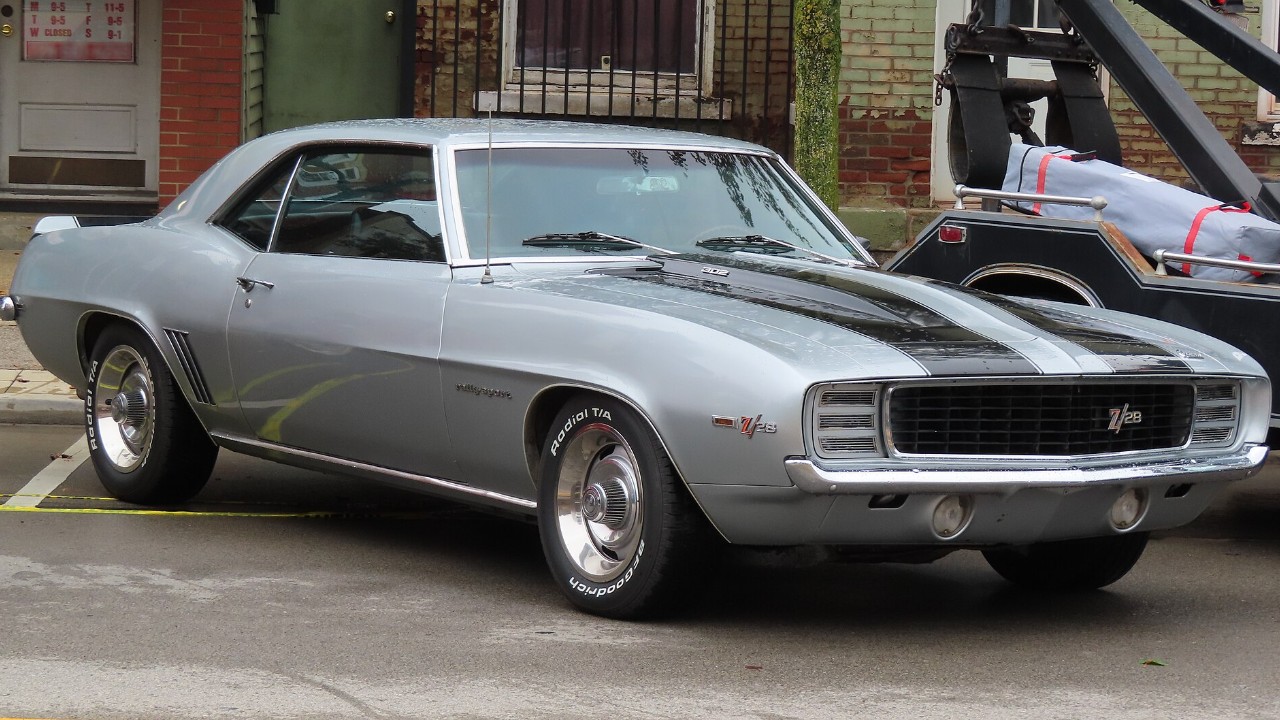
Chevrolet built the Z/28 to go racing in the Trans-Am series, which capped engines at 5.0 liters. So engineers paired a 327’s 4-inch bore with a 283’s 3-inch stroke and made a 302-cubic-inch V8 used only in the Z/28. It ran solid lifters and a 780-cfm four-barrel carburetor.
On paper, Chevrolet advertised 290 horsepower at 5,800 rpm. The Newport Car Museum lists the real figure at 375-plus, though, and says dynamometer tests came close to 400. The museum counts 20,302 Z/28s built for 1969 and notes that the Penske team won that year’s Trans-Am title.
This car adds Rally Sport equipment, which brings hidden headlights behind the grille. As a result, the hard-edged Z/28 gets a cleaner face. We’d argue it’s the best combination of the first-generation Camaro: a race-bred engine wrapped in the dressiest trim. At a show, the stripes draw people in, and the 302 badge keeps them there.
5. 1968 Shelby GT500KR
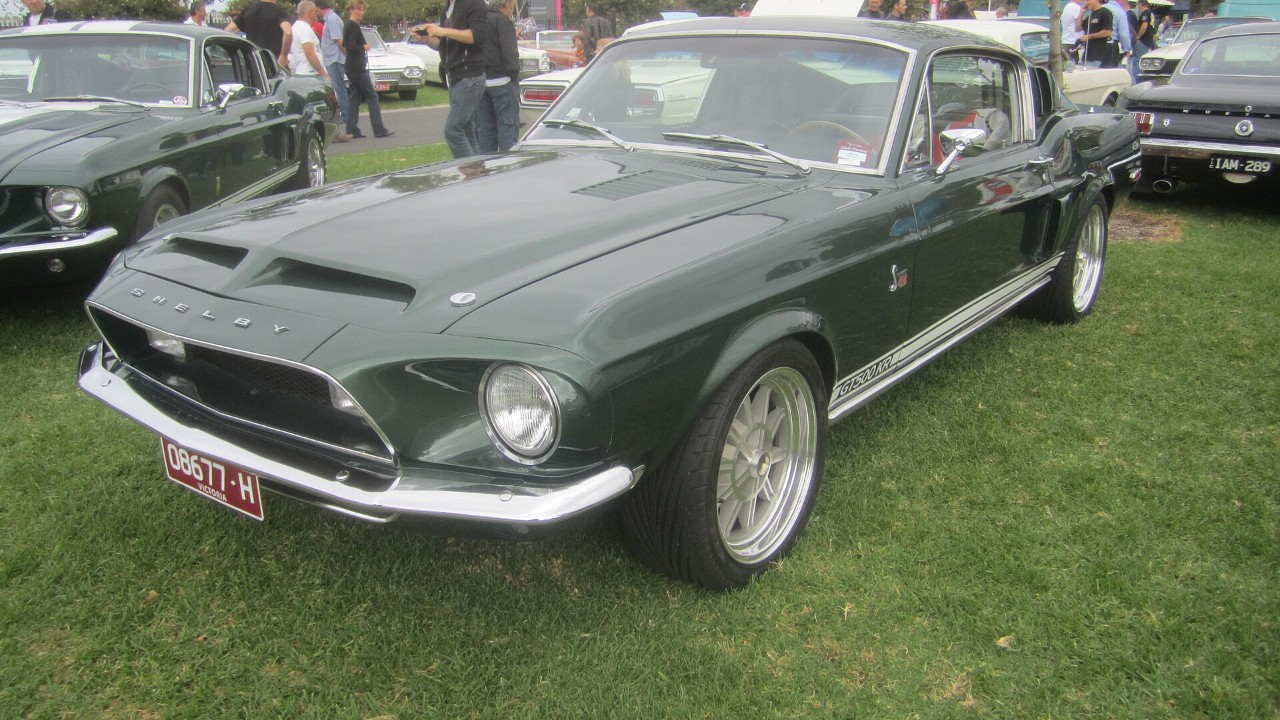
KR stands for “King of the Road,” and Shelby added the badge once the 428 Cobra Jet arrived. Ford rated the Cobra Jet car at 335 horsepower. That was lower than the 360 quoted for the standard GT500, and the RM Sotheby’s catalog calls the figure a ruse aimed at rivals and insurers. RM puts the real output at 400 horsepower or more.
The changes went beyond the engine. The KR used 427 low-riser heads and a stronger crankshaft, rods and pistons. It also gained larger brakes, extra bracing and staggered rear shocks to fight wheel hop. RM’s catalog says the factory built 1,053 KR fastbacks for 1968.
By then, Ford was building Shelby Mustangs instead of Shelby American. Even so, the KR feels like the high point of the big-block Shelby. RM Sotheby’s sold one fastback in its Open Roads sale for $209,000. In our view, that kind of money explains the crowd, because few people ever get this close to one.
6. 1967 Chevrolet Corvette Sting Ray 427 convertible
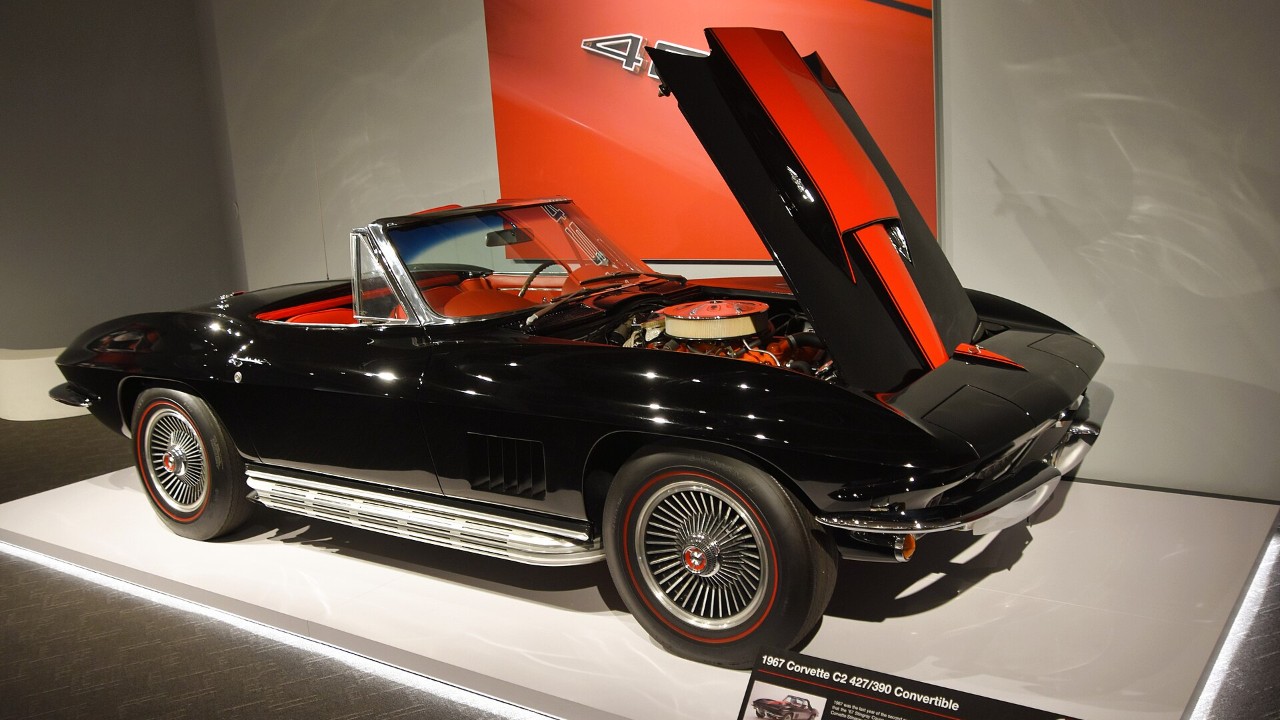
The 1967 car was the last Corvette Sting Ray of the C2 generation, and Chevrolet built 22,940 of them. Convertibles outsold coupes by a wide margin, 14,436 to 8,504, according to production figures compiled by the Corvette Action Center. At the time, a base convertible cost $4,240.75.
The 427 options are where the 1967 car gets interesting. Buyers could pick the 390-horsepower L36, the 400-horsepower L68 or the 435-horsepower L71. The L71 found 3,754 buyers. Meanwhile, the race-focused L88 carried a 430-horsepower rating, and only 20 left the factory with it.
In our view, the 1967 is the cleanest-looking C2, and the big-block makes it the one to find. With the top down, it is one of the few cars at any show that looks fast while standing still.
7. 1965 Aston Martin DB5 Vantage
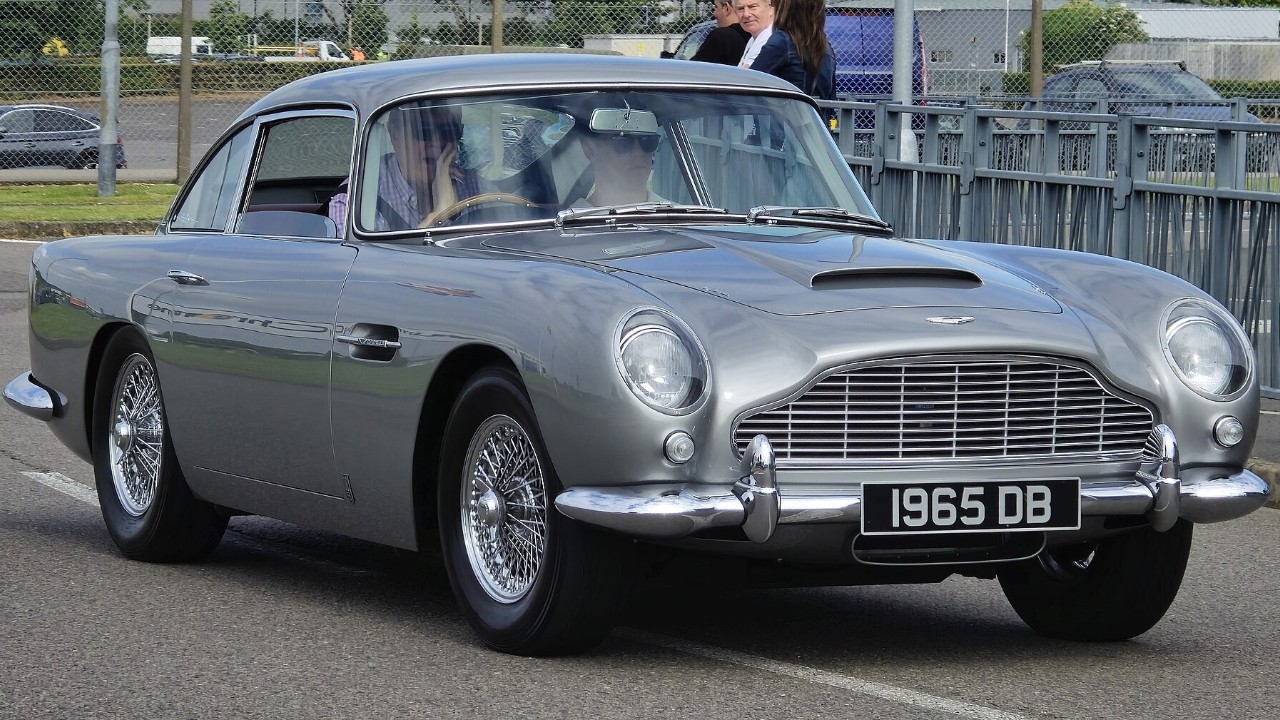
The DB5 grew out of the DB4, and Aston Martin built it from 1963 to 1965 with a Touring Superleggera-style body. Then the 1964 film Goldfinger turned it into what RM Sotheby’s calls the most famous car in the world. Yet the version enthusiasts chase is the Vantage.
The Vantage engine was a 3,995cc twin-cam straight-six with three Weber 45DCOE carburetors. According to RM Sotheby’s, it made 40 more horsepower than the standard engine. Aston Martin built only 65 DB5 Vantages, and about 40 of those were right-hand drive. A ZF five-speed manual also became standard on every DB5 in mid-1964.
RM Sotheby’s sold a 1965 DB5 Vantage in London in 2015 for £784,000. At a show, almost everyone assumes they’re looking at the Bond car. Our take is that the Vantage badge is the better story, since it marks one of the rarest versions of a car nearly everyone already knows.
8. 1966 Dodge Polara
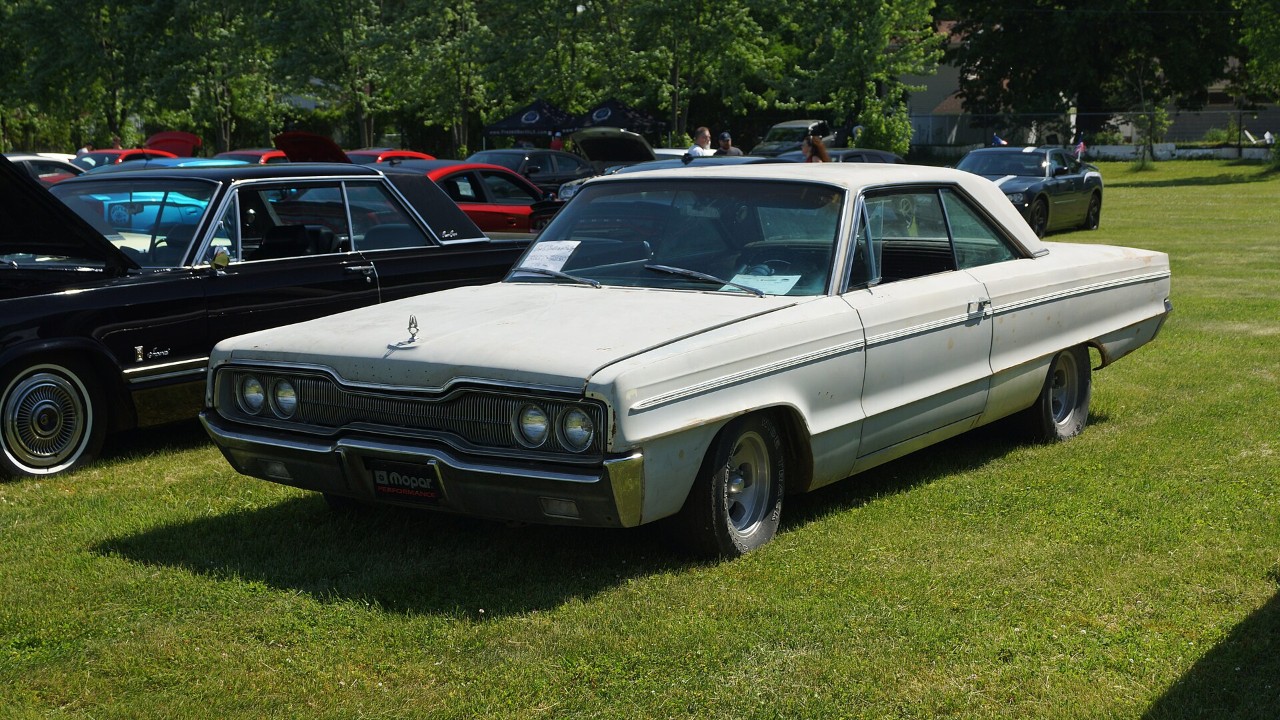
The Polara returned to full size for 1965 on Chrysler’s C platform, which it shared with big Chryslers and Plymouths. Its square-edged body changed a little each year through 1968. For 1966, the new Monaco took over the Custom 880’s spot in the lineup, so the Polara sat below it.
A 383-cubic-inch V8 was the usual power. Fuel economy wasn’t the point, either. In fact, critics knocked these big Dodges for their thirst, and 383-powered cars averaged 13.8 mpg. Still, that size gave the Polara a long, flat hood and a wide stance that look good from across a parking lot.
The Polara has a deep history with Dodge, and it turned up in our list of forgotten Dodges that dominated their era. We think a clean 1966 Polara impresses for a simple reason. Most people expect a Charger or a Coronet at a Mopar show. Instead, they find a full-size car that is cleaner and more restrained than either.
9. 1965 Chevrolet Corvair Corsa Fitch Sprint
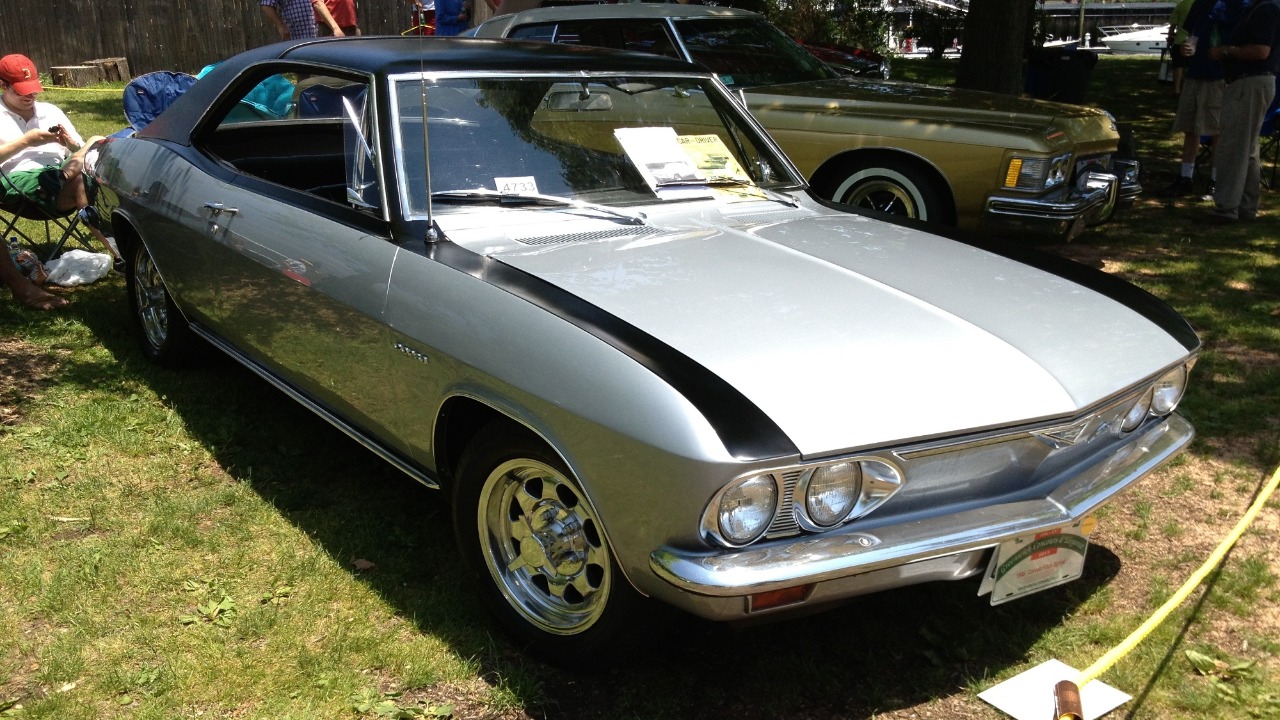
John Fitch had one of the great motoring résumés. He was the only American on the Mercedes-Benz racing team, the first manager of the Corvette racing team and the first general manager of Lime Rock Park. He also invented the Fitch Barrier, the sand-filled yellow barrels on American highways.
Fitch saw the rear-engine Corvair as the base for an affordable American GT. His Sprint package raised the Corsa engine from 140 to 155 horsepower, according to My Car Quest. It also improved the suspension, wheel alignment and steering ratio. Inside, a wood steering wheel set the tone. For the roof, Fitch offered a fiberglass “Ventop” that his sales literature compared to the Porsche 904 and Ferrari 275 LM.
The Sprint even made the cover of Car and Driver in 1965. In our view, it’s the perfect show car for people who think they know Corvairs. Most visitors walk past it, and then they see the Fitch badges and stop.
10. 1963 Studebaker Lark Daytona
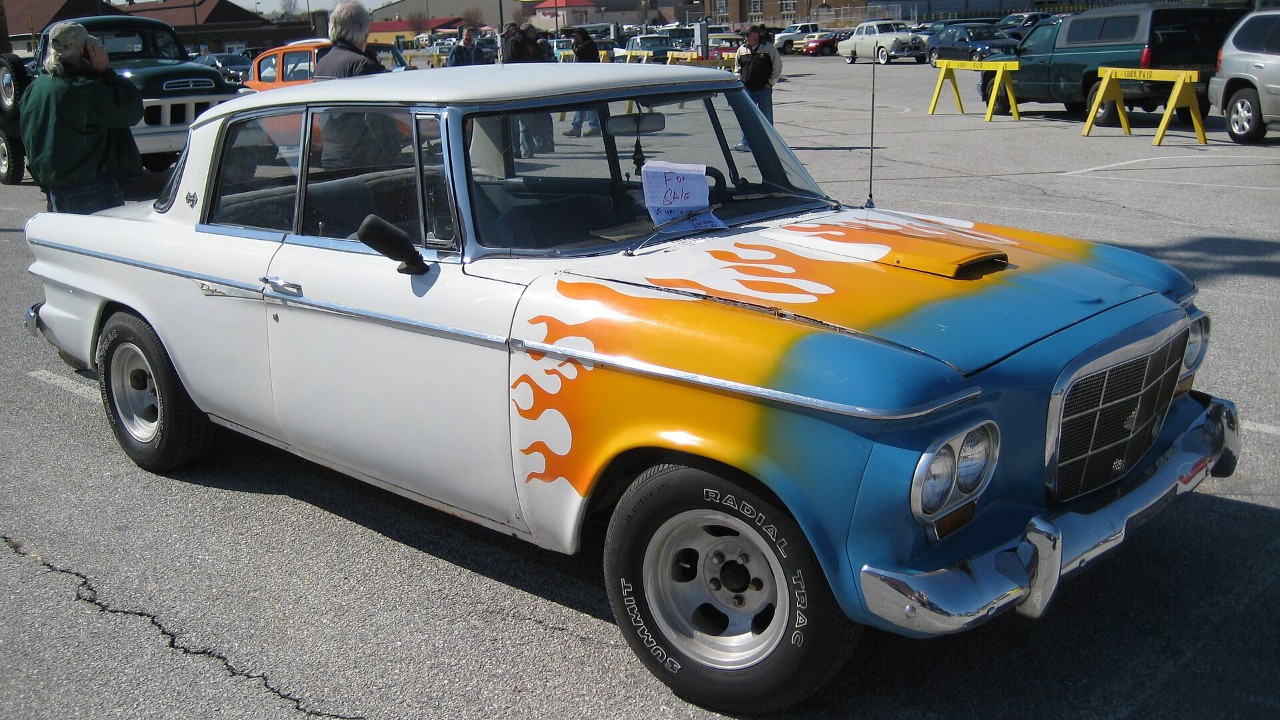
Brooks Stevens restyled the Lark again for 1963. He dropped the wraparound windshield, thinned the pillars and gave it a new instrument panel with full gauges. The Daytona came as a hardtop, a convertible and a wagon, and the two-doors rode on a 109-inch wheelbase.
Under the hood, the choices ran from a six to the Avanti’s engines. The R1 289 made 240 horsepower, and the Paxton-supercharged R2 made 289, according to the Over-Drive fact sheet for the 1963 Lark. Late in the year, a Super Performance Package with the R3 engine created the “Super Larks.” Studebaker sold 3,763 Daytona and Regal hardtops and 1,015 convertibles combined.
Overall, Studebaker sold just over 75,000 Larks that year. So a Daytona with the right engine is a genuine surprise at a show. We’d look for one with an R-series V8, and our list of Studebakers that mechanics still respect shows how much engineering hid under these modest bodies.
11. 1962 Chevrolet Impala SS 409
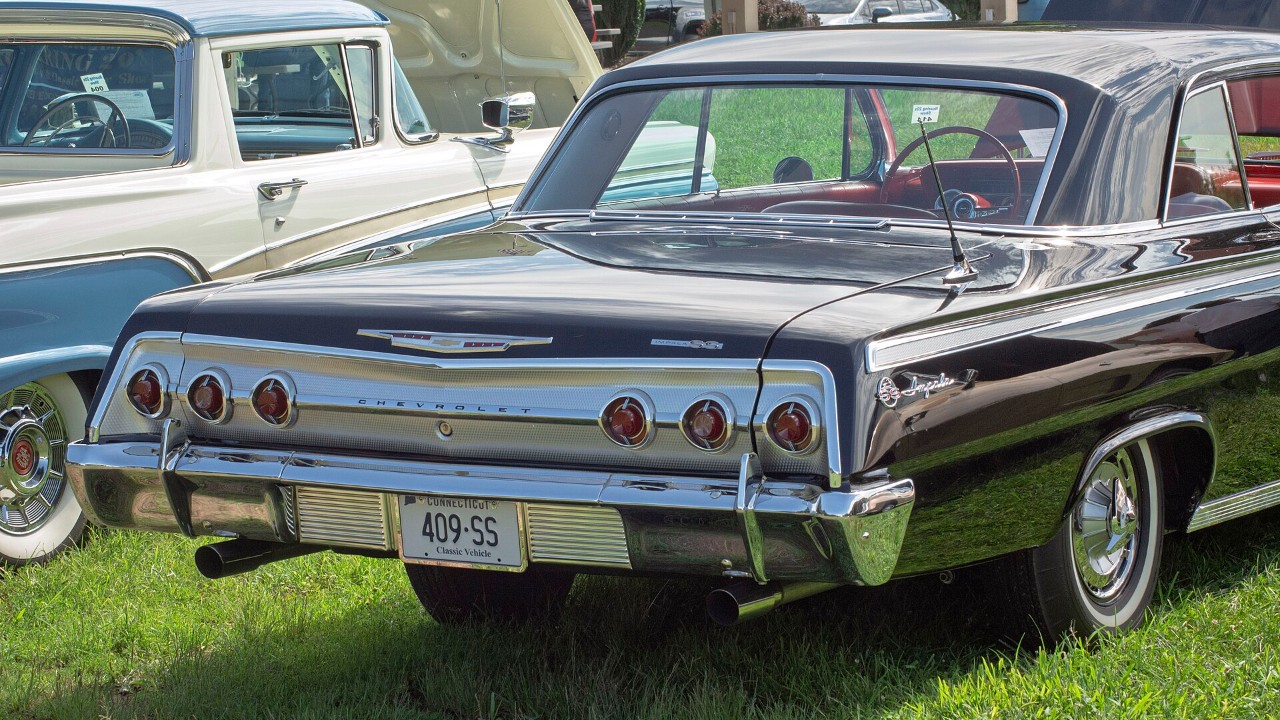
The 409 began as the 348-cubic-inch Turbo-Thrust V8 of 1958, and Chevrolet enlarged it to 409 cubic inches for 1961. For 1962, the four-barrel engine made 380 horsepower. A dual-quad version made 409 horsepower, one for every cubic inch.
The Beach Boys turned the engine into a hit with their 1962 song “409.” Meanwhile, the drag strips did the rest. According to the NHRA, Dave Strickler, Don Nicholson and Hayden Proffitt all ran 409 Chevys that year. Later that season, Proffitt won Stock Eliminator at the 1962 NHRA U.S. Nationals.
The Impala SS 409 also shows up in our list of rare Chevrolets that collectors struggle to find. In our view, the 1962 car is the one to see. It has the crisp new body, the SS trim and the engine the radio made famous. Few cars at any show come with their own soundtrack.
12. 1963 Ford Galaxie 500 XL Sports Roof 406
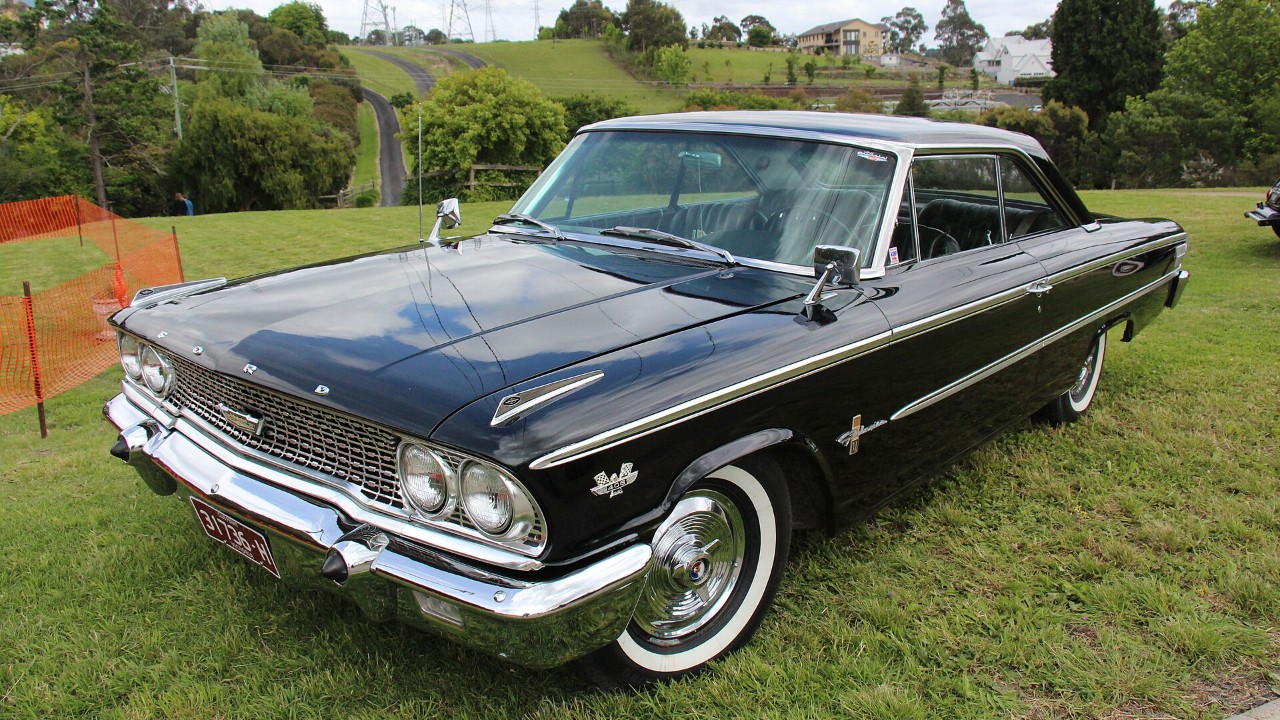
Ford lost ground on NASCAR’s fast ovals in 1962. Its answer for 1963 was a mid-year fastback roofline, sold as the Sports Hardtop in the Galaxie and Galaxie 500 XL lines. Buyers liked it, too. Ford built 33,870 of the 500 XL fastbacks, compared with 29,713 notchback hardtops, according to the Over-Drive fact sheet for 1963 Ford full-size cars.
Every 500 XL was a V8, but the 406 was the serious choice. For example, with one four-barrel it made 385 horsepower. The three-two-barrel version made 405 horsepower and 448 lb-ft of torque. Then Ford replaced both 406s with 427s partway through the year.
That short window is why we’d stop for a 406 Sports Roof car. It pairs the slippery new roof with an engine that lasted only part of a model year. In fact, Ford rated the 427 that replaced it at up to 425 horsepower with two four-barrel carburetors.
More from Fast Lane Only