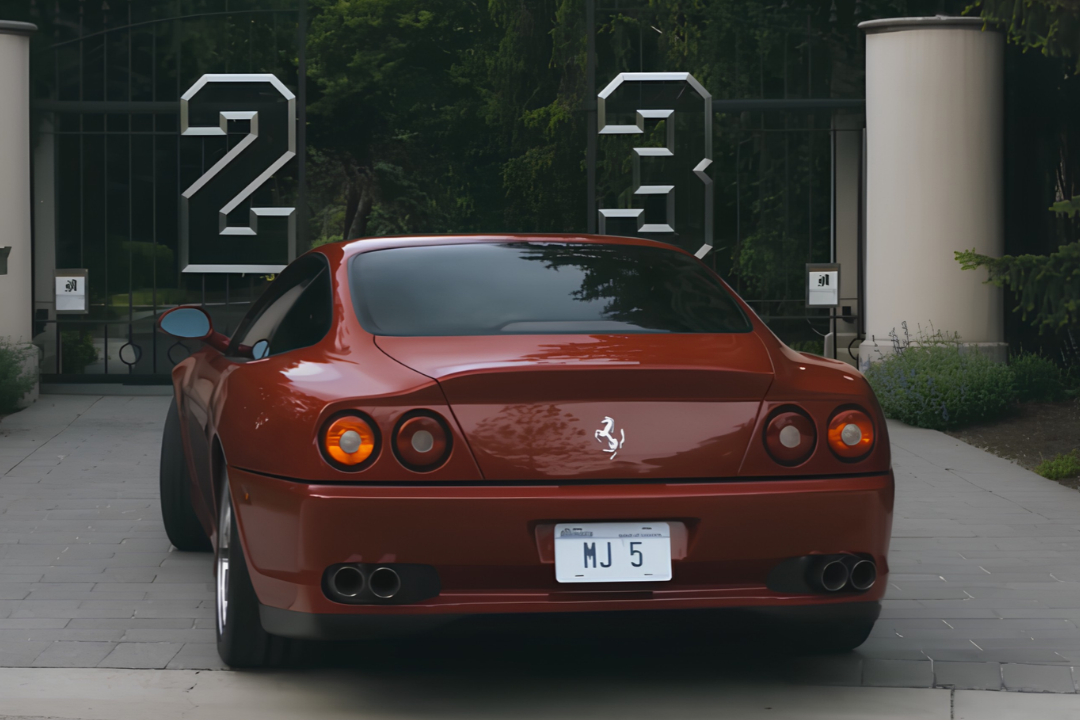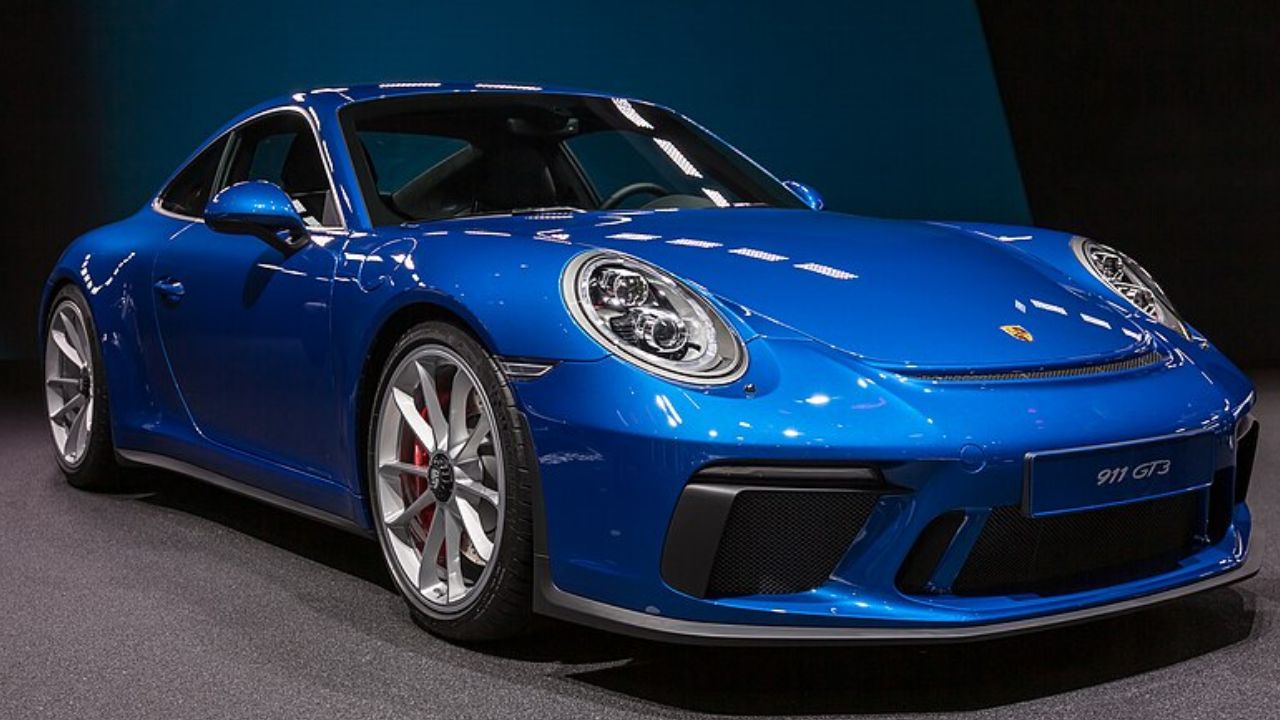
Supercars have become so explosively quick that the weak link is no longer the engine, the aerodynamics, or even the driver’s courage, it is the four black hoops trying to keep everything pointed in roughly the same direction. The fastest cars on earth have forced engineers to invent new tire technology just to stop lap times from outrunning physics. I want to walk through how we got to the point where the tires, not the horsepower, are the real plot twist in modern speed.
When the car is fine but the tires are terrified
I like to think of modern performance cars as overachieving students who keep asking for extra credit until the classroom furniture gives up. In racing, that furniture is the tire, and lately the chairs have started to creak. Earlier in the current Formula 1 rules cycle, the pace of the 2023 cars climbed so quickly that officials found the rubber was being pushed harder than expected, with lap times outstripping the original durability targets. As Racer reported, the response was to bring more robust slick compounds earlier than planned so the cars could keep their speed without shredding their contact patches mid-race.
That scramble did not happen in a vacuum. F1 had already gone through a major shift to a new wheel and tire size, a change that was supposed to balance grip, aerodynamics, and racing quality rather than simply bolting on more stickiness. Engineers had to rethink sidewall stiffness, heat management, and how the larger wheels affected airflow around the car, a process that involved far more than just scaling up the old design and calling it a day. When you hear radio messages about drivers “getting a grip,” you are listening to the end result of a long chain of design choices that start with how much abuse a tire can take before it politely resigns from its job.
Race-bred rubber for road-going rockets
On the road car side, the same story plays out with a nicer interior and worse speed limits. Supercars and sports cars rely on high performance tires that are purpose built to deliver extreme grip and traction, and those tires are as central to the car’s personality as the engine layout or the badge on the hood. Supercars and their more modest cousins use compounds and tread patterns tuned to maximize cornering stability and braking, because at the speeds these machines can reach, a vague steering response is not just annoying, it is hazardous.
That is why so many modern exotics leave the factory on ultra high performance, or UHP, tires that are designed to stay composed during aggressive driving on public roads. They offer sharper turn in, better feedback, and more resistance to sidewall and tread damage when the driver decides that a highway on-ramp is actually a qualifying lap. Even on everyday pavement, they transform how a car feels, trading some ride comfort and tread life for the kind of responsiveness that makes a 600 horsepower coupe feel less like a missile and more like a scalpel.
Porsche’s time-traveling Carrera GT
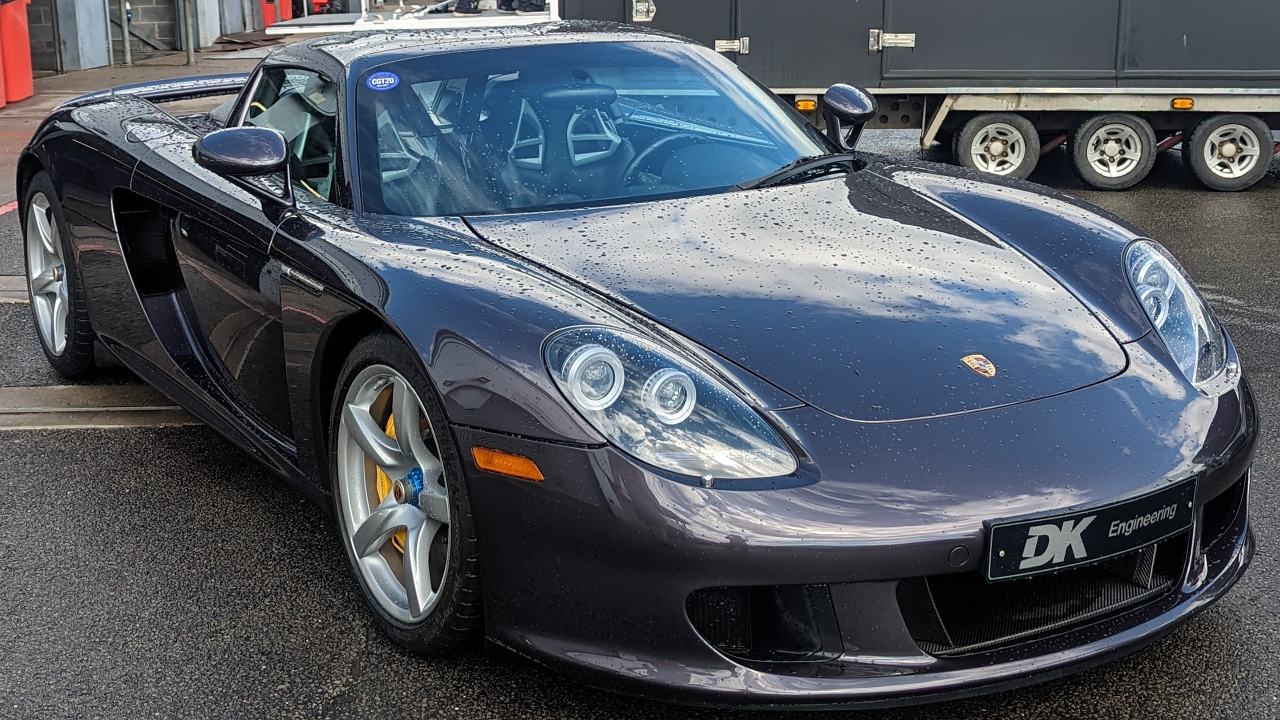
Nothing exposes the quiet revolution in tire tech quite like what happened to the Porsche Carrera GT. When it first attacked the Nurburgring in the mid-2000s, the car was already a legend in the making, with a shrieking V10 and a reputation for demanding respect. Yet when the same model returned to the same circuit on modern rubber, it obliterated its previous lap time, proving that the chassis had been waiting two decades for the tires to catch up. The Porsche Carrera GT did not suddenly gain power or lose weight, it simply gained grip.
Porsche and Michelin went as far as developing a new tire specifically for the Carrera GT, treating the early-2000s supercar like a current model that deserved a fresh engineering program. The new rubber did not just make the car faster, it made it easier to drive at the limit, softening some of the car’s infamous bite while unlocking more of its potential. For the Carrera GT, the updated tires carried an “N” designation that marks them as Porsche approved, with the number indicating the revision, a quiet code that tells owners their car is now running on technology that did not exist when Walter Röhrl first set a benchmark lap. Watching an old hero set a new record on nothing more than better shoes is a reminder that in the arms race of speed, the tire engineers are the ones quietly rewriting history.
From data nerds to rubber heroes
Behind every miraculous lap time and heroic save is a small army of people staring at spreadsheets. When companies like Pirelli develop new tires for high profile events, the first step is not a dramatic track test, it is gathering data. Engineers pore over simulations, load profiles, and temperature maps to understand exactly what the car will demand from the tire, then they build prototypes that are tortured indoors before they ever see a racetrack. Only after the lab work checks out do the outdoor tests begin, where drivers and engineers chase the sweet spot between grip, durability, and predictability.
That process is getting even more high tech as tire makers experiment with embedded sensors and real time monitoring. Systems such as Sensing Core are being tested on track to measure what the tire is experiencing from the inside, rather than guessing from external temperatures and wear patterns. The potential is enormous, but the designers are cautious, because tire development is a complicated process and not every clever idea survives contact with a curb at racing speed. Still, the foundation has been laid for tires that can tell engineers exactly how close they are to the edge, which is a polite way of saying the rubber will soon know more about your driving than you do.
Electric torque, hybrid brains, and smarter sidewalls
Electric and hybrid supercars have added a new twist, because instant torque is wonderful for acceleration and absolutely brutal for tires. In Formula E, the latest GEN3 Evo iON Race Tire is built to handle the violent power delivery of high powered electric race cars while still offering improved traction and cornering stability compared with the previous generation. The goal is not just to survive the torque hit out of every slow corner, but to keep performance consistent over a race distance so drivers can lean on the car without nursing the rubber like a fragile houseplant.
Road going hybrids are getting clever too. McLaren’s Artura, an electric hybrid supercar, uses computer chips in its tires so the car can monitor what is happening where the rubber meets the road. That information feeds into the car’s control systems, helping it manage traction and stability as the powertrain juggles internal combustion and electric shove. It is a small but telling sign that in the hierarchy of performance hardware, the tire is no longer a passive component, it is a sensor rich partner in crime.
Why your supercar’s tires matter more than your ego
All of this technology would be pointless if it did not change how these cars behave in the real world, and it absolutely does. Supercars and sports cars on modern high performance tires can brake later, corner harder, and accelerate sooner, which means the driver can use more of the car’s potential more of the time. That extra grip does not just make the car faster, it makes it more stable and predictable, which is the difference between a thrilling drive and an expensive phone call to a tow truck.
Enthusiasts sometimes argue about how much credit tire technology deserves for modern performance, but the honest answer is a lot. Cars are often designed with specific tires in mind, and the suspension, aerodynamics, and electronics are tuned around the characteristics of that rubber. Swap to a different compound or construction and the whole personality of the car can change, for better or worse. When a set of new tires can turn an already ferocious Porsche into a time traveling record breaker, or force an entire racing series to rethink its durability targets, it is clear that the real supercar arms race is happening in the sidewalls and tread blocks, not just under the hood.
More from Fast Lane Only: