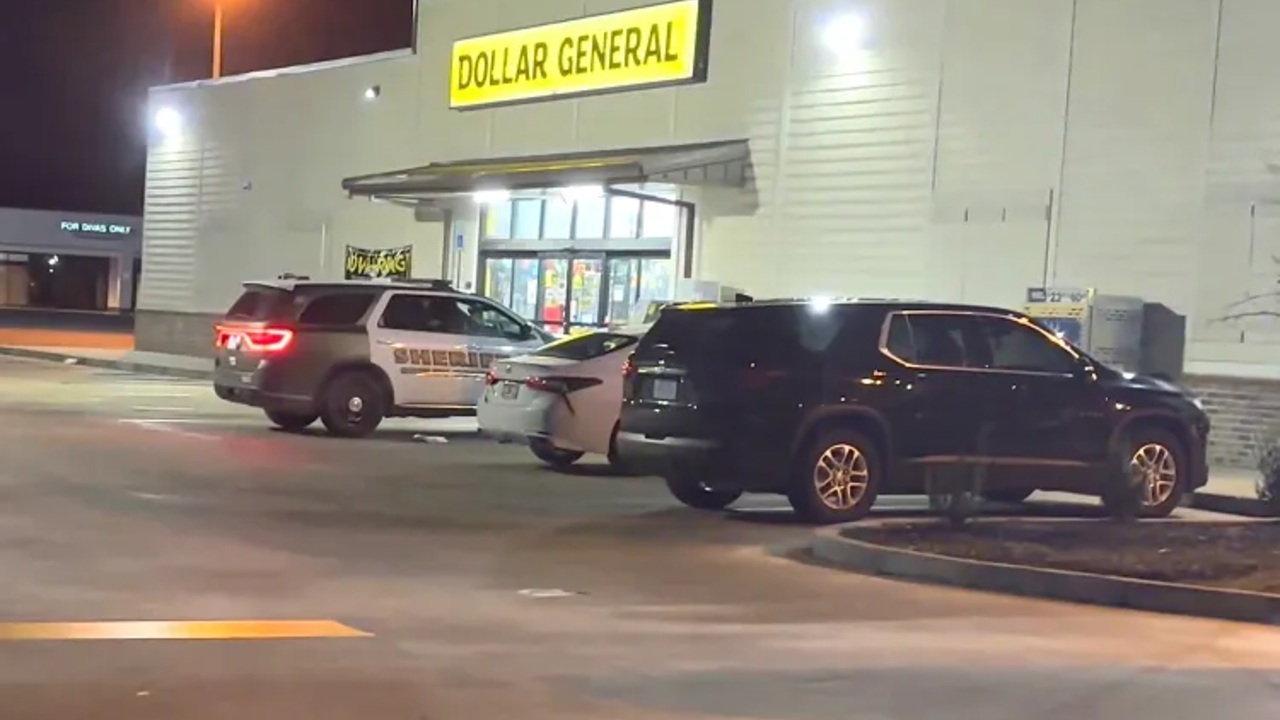
A nighttime traffic stop outside Memphis turned into a calculated abduction when a Tennessee driver pulled over for what appeared to be an unmarked police vehicle and instead met a group of armed impostors. The carjacking, which investigators have described as a targeted attack, has intensified concern about criminals using fake emergency lights and law enforcement gear to ambush motorists. It has also forced a difficult question onto everyday drivers: how to respect real officers while guarding against those who only look the part.
The staged traffic stop that became a kidnapping
According to investigators, the victim was driving in Shelby County when a dark colored sedan equipped with what looked like police lights signaled for him to pull over. Believing he was being stopped by law enforcement, he complied, only to be confronted by several people who were not officers at all. Investigators later determined that the sedan had been impersonating a law enforcement vehicle, and that the group used the fake traffic stop as the opening move in a planned carjacking and kidnapping.
Once the driver was out of his vehicle, the situation escalated with startling speed. Authorities said he was attacked at the roadside, then forced back inside his own car as two of the suspects climbed in with him while a third followed in the impersonator vehicle. The group then drove to the victim’s home, turning what had begun as a seemingly routine stop into a rolling hostage situation that continued into his driveway and front door.
A “targeted attack” that followed the victim home
Law enforcement officials have been explicit that this was not a random encounter. Authorities have described the incident as a targeted attack, indicating that the victim was selected in advance rather than ambushed at random on a busy roadway. After forcing him back into his car, the suspects directed him to his residence, where they attempted to push the crime further by getting inside his home. The decision to move from the roadside to a private address underscored how far the group was willing to go once they had control of both the driver and his vehicle.
According to SCSO Chief Deputy Anthony Buckner, the suspects’ plan began to unravel the moment they crossed the threshold. Buckner said that once they got inside the victim’s home, his alarm system activated, startling the intruders and cutting short whatever they intended to do next. Spooked by the blaring alarm, they forced the victim back into his vehicle and left his home, then fled the area. The sheriff’s office later said the suspects ended up getting away, and detectives are now working to identify those responsible for the impersonation, carjacking, and kidnapping.
Inside the suspects’ tactics and the ongoing search
Investigators have emphasized how carefully the group mimicked a real traffic stop, using a dark sedan outfitted with emergency style lights to look like an unmarked patrol car. The victim’s decision to pull over was exactly what most drivers are trained to do, which is why the case has unsettled residents who now wonder how to tell the difference between a legitimate stop and a staged one. Authorities have also noted that the suspects appeared coordinated, with multiple people moving in concert as they shifted from the roadside confrontation to the forced trip to the victim’s home.
The Shelby County Sheriff’s Office has said detectives are actively investigating and working to identify and locate the group involved. Officials have urged anyone who may have seen the dark sedan or unusual traffic stops in the area to come forward, stressing that even small details about the vehicle or the suspects’ appearance could help. They have also framed the case as part of a broader concern about police impersonators, pointing to other incidents in which criminals have used fake lights or badges to gain access to victims’ cars, homes, or personal information. Unverified based on available sources whether any arrests have been made in this specific case.
How drivers can respond if a stop feels wrong
The brazen nature of the Shelby County kidnapping has prompted authorities to offer specific guidance for drivers who feel uneasy when a vehicle tries to pull them over. Officials have stressed that motorists are allowed to prioritize their safety while still signaling respect for law enforcement. They recommend that if a driver is unsure about the authenticity of a vehicle behind them, the driver should slow down, turn on hazard lights, and proceed to a well lit, populated area such as a gas station or large parking lot before stopping. This approach shows the driver is not attempting to flee while also reducing the risk of being isolated with a potential impostor.
Experts have also urged drivers to use their phones as a verification tool when something feels off. They advise calling 911 to confirm that the vehicle attempting the stop is actually a law enforcement unit, and to stay inside the car with doors locked until that confirmation is received. One local safety advocate noted that people “need to really look before they get out of their cars, look around, make sure that people are authentic when they walk up,” underscoring the importance of checking uniforms, marked units, and visible identification. Authorities have further suggested that drivers pay attention to details such as whether the vehicle has permanent license plates, whether the person approaching identifies themselves clearly, and whether the interaction matches what residents typically see from local agencies.
Balancing trust in real officers with fear of impostors
For law enforcement, the Tennessee kidnapping presents a difficult balancing act. Agencies want drivers to comply promptly with legitimate traffic stops, since hesitation can endanger both officers and the public. At the same time, they recognize that incidents involving fake officers erode trust and can make people second guess what used to be a straightforward instruction to pull over. SCSO officials have tried to address that tension by publicly explaining how real deputies conduct stops and by encouraging residents to call dispatch if they have doubts, rather than simply ignoring lights in the rearview mirror.
The case has also highlighted the role of basic home and vehicle security in limiting the damage when a crime does occur. In this instance, Buckner has pointed to the victim’s alarm system as a key factor that disrupted the suspects once they reached the house, suggesting that visible security measures can change a criminal’s calculus in the moment. For drivers, the lesson is not to live in constant fear of every flashing light, but to build a simple safety routine: verify when something feels off, favor well lit public spaces, keep doors locked until identities are clear, and invest in alarms or cameras where possible. The Tennessee driver’s ordeal shows how quickly a fake traffic stop can turn into a kidnapping, but it also shows that small layers of preparation can give victims a critical opening to survive and help investigators piece together what happened.
More from Fast Lane Only