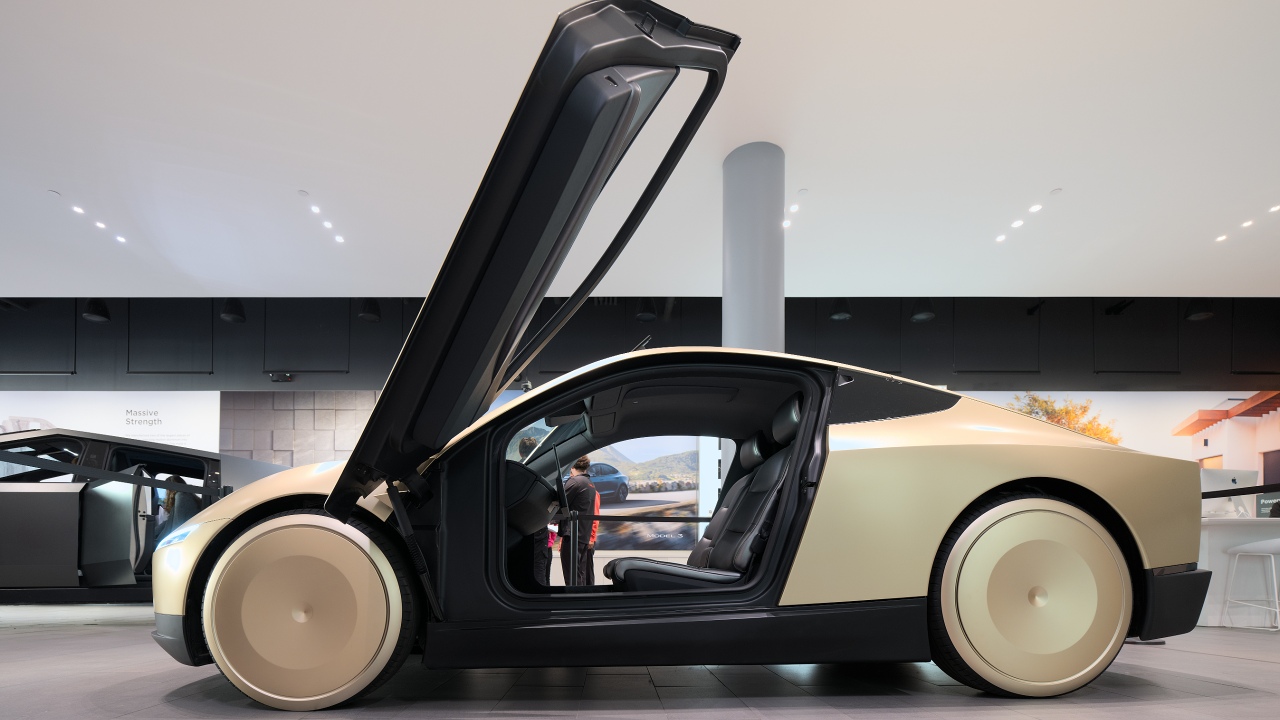
Tesla’s latest naming drama unfolded in real time, with trademark lawyers scrambling only moments after Elon Musk floated new branding on an earnings call. The company’s rapid move to secure “Cybercar” and “Cybervehicle” marks a sharp contrast with its earlier stumble over “Cybercab,” a misstep that has already cost it control of a high profile name. Together, the filings highlight how a few words from Musk can trigger a legal race that shapes the future of Tesla’s autonomous ambitions.
The rush to protect fresh labels, coming on the heels of a very public loss, underscores how central branding has become to Tesla’s strategy in robotaxis and next generation vehicles. It also exposes the tension between Musk’s improvisational style and the rigid timelines of trademark law, where hesitation or a clerical error can hand valuable names to rivals or opportunistic registrants.
The split second scramble for “Cybercar” and “Cybervehicle”
When Musk mentioned “Cybercar” and “Cybervehicle” on a recent Tesla earnings call, the terms sounded like off the cuff additions to his growing lexicon of futuristic product names. Behind the scenes, however, the company moved almost immediately to lock them down, filing two new trademark applications within minutes of the remarks. The filings, attributed to Tesla and covering the names “Cybercar” and “Cybervehicle,” were widely described as a panic move that reflected how quickly the company now reacts when Musk coins a phrase in public.
The speed of the response is striking given Tesla’s size and the usual pace of corporate legal departments. Trademark attorney Josh Gerben, the Founder of Gerben IP and a Trademark Attorney who has built a career dissecting such filings, highlighted how a single Musk comment can trigger a full legal sprint, noting in a LinkedIn Post that the company rushed to secure the new names almost in real time. The episode illustrates how Tesla’s brand strategy is increasingly reactive to Musk’s public statements, with the legal team effectively shadowing his appearances to avoid leaving any new label unprotected.
A cautionary tale: how Tesla lost “Cybercab”
The urgency around “Cybercar” and “Cybervehicle” is easier to understand in light of Tesla’s recent failure to secure “Cybercab.” The company unveiled the Cybercab name for its autonomous ride hailing vehicle, but did not file a trademark before the reveal and then waited weeks to submit an application. During that window, another party moved first, and the United States Patent and Trademark Office (USPTO) later refused Tesla’s attempt to claim the mark, leaving the company without exclusive rights to a term it had already promoted.
Reports on the Cybercab saga describe it as a self inflicted wound. Tesla had ample time after the unveiling to file, yet still delayed, and by the time it acted, the USPTO cited prior filings and other conflicts. One account noted that Tesla “had weeks to secure its trademark” and still missed the opportunity, while another detailed how the company tried to claim the Cybercab name months after someone else had already staked a claim, with the phrase “Cybercab Is A Popular Name” capturing how widely the label had been used. The result is that Cybercab now joins “Robotaxi” as a no go for Tesla branding, a setback that has forced the company to rethink how it names and markets its autonomous fleet.
USPTO pushback on “Robotaxi” and generic tech branding
The Cybercab loss did not occur in isolation. Tesla has also run into resistance on “Robotaxi,” another term central to Musk’s vision of a driverless ride hailing network. The USPTO refused Tesla’s attempt to trademark Robotaxi, describing the word as “merely descriptive” of autonomous taxi services rather than a distinctive brand. That decision reflects a broader pattern in which regulators are reluctant to grant exclusive rights over generic or widely used technology labels, even when a high profile company is the one asking.
In correspondence cited in recent coverage, USPTO attorney Meghan Reinhart outlined the issues that blocked Tesla from claiming Cybercab, including conflicts with existing applications and the descriptive nature of the term. Similar reasoning has been applied to Robotaxi, which the office views as a straightforward description of a robotic taxi rather than a unique source identifier. The pushback has come despite Musk’s public insistence that Tesla is “an AI, robotics company,” a framing he used last April to position the firm at the center of autonomous mobility. For trademark examiners, however, that positioning does not transform common industry language into proprietary branding.
Inside Tesla’s trademark missteps and “comical” errors
Beyond timing and descriptiveness, Tesla’s handling of the Cybercab application has been criticized for what one report called a “comical” internal error. According to that account, the company hit a procedural snag while trying to secure the Cybercab trademark, a mistake that compounded the existing problems of prior filings and generic usage. The episode has been framed as a textbook example of how even a sophisticated company can undermine its own legal position through a mix of delay and administrative missteps.
Additional reporting on Tesla’s trademark issues notes that the company has been in discussions with other parties that hold overlapping rights, but that “no agreement” has been reached. That stalemate leaves Tesla in a weaker negotiating position, since it has already publicly tied the Cybercab name to a specific product concept without owning the underlying mark. The contrast with the near instantaneous filings for Cybercar and Cybervehicle is stark: where Cybercab was treated casually until it was too late, the newer names were treated as urgent assets that had to be captured before anyone else could react.
What the “Cybercar” rush reveals about Tesla’s future strategy
The scramble to secure Cybercar and Cybervehicle suggests that Tesla has learned at least one lesson from the Cybercab debacle. The company now appears determined to close the gap between Musk’s public rhetoric and its legal paperwork, reducing the window in which competitors, opportunists, or existing registrants can complicate its branding plans. By filing within minutes of Musk’s comments, Tesla signaled to trademark watchers that it intends to treat every new label as a potential cornerstone of its product roadmap.
At the same time, the company still faces structural challenges that rapid filing alone cannot solve. Terms like Cybercar and Cybervehicle may encounter the same descriptiveness objections that have dogged Robotaxi and Cybercab, especially if examiners view them as generic combinations of “cyber” and common vehicle words. Trademark specialists such as Josh Gerben have emphasized that speed does not guarantee success if the underlying name is weak from a legal standpoint. For Tesla, the path forward may require not only faster filings but also more distinctive branding that can survive USPTO scrutiny while still fitting Musk’s futuristic narrative.
More from Fast Lane Only