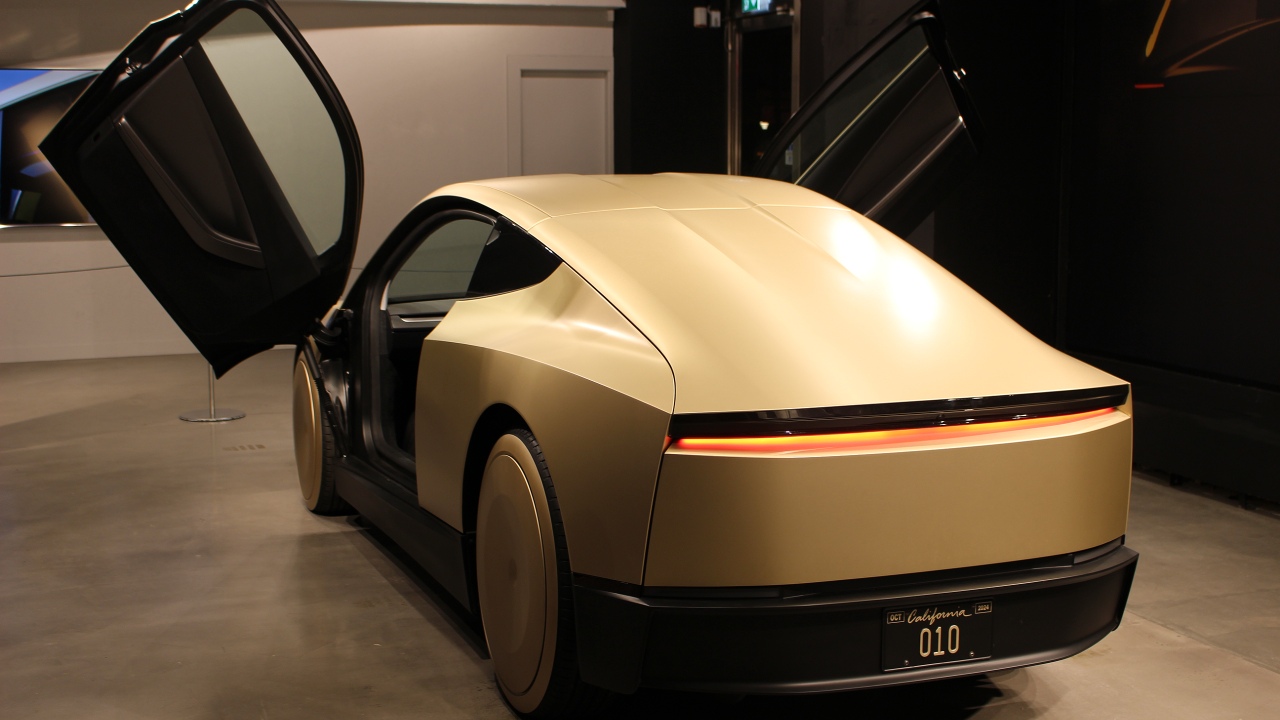
Tesla’s plan to turn “Cybercab” into the brand name for its autonomous ride service has run into an old fashioned problem: someone else got there first. Instead of a clean march to market, the company is now wrestling with a trademark suspension that exposes both the risks of name squatting and the limits of Tesla’s own trademark strategy. The clash shows how even a company that prides itself on moving fast can be slowed by the fine print of intellectual property law.
How Tesla’s Cybercab name ran into a wall
The core issue is simple: Tesla wants to use Cybercab as a flagship label for its driverless taxi ambitions, but another company already filed for that mark in a key jurisdiction. On the surface, the situation looks like a textbook case of trademark squatting, with a prior registrant holding a potentially valuable word that Tesla now needs for a high profile product line. That tension has led to the Cybercab application being suspended while examiners sort out who has the stronger claim and whether the existing filing blocks Tesla’s plans, a setback that arrives just as the company is trying to turn its robotaxi narrative into a real business.
Reporting on the dispute notes that the earlier Cybercab filing came from Unibev, a French beverage company that has previously shown a knack for spotting names that might interest larger brands. In this case, Unibev’s move has left Tesla facing a suspended Cybercab trademark and the prospect of either challenging the prior filing, paying to acquire the rights, or backing away from the name altogether, according to detailed accounts of the suspension. For a company that has spent years building the “Cyber” family of brands around Cybertruck, the idea that a third party could hold up Cybercab underscores how vulnerable even a powerful automaker can be if it does not lock down key names early.
The squatter, the suspension, and Tesla’s own missteps
It would be easy to frame the Cybercab fight as a story of a nimble squatter outmaneuvering a tech giant, but the record suggests Tesla’s own decisions helped create the opening. Trademark filings show that Unibev moved on Cybercab before Tesla did, positioning itself as the senior user in the eyes of examiners. Because Unibev’s application predates Tesla’s, the Cybercab mark that Tesla wants is now entangled in a prior claim that regulators are obliged to consider, which is why the current application has been formally suspended while the conflict is resolved.
Analysts who have reviewed the filings point out that this is not the first time Tesla has been slow to secure a name it clearly intended to use. In the Cybercab case, the company’s delay allowed Unibev to plant a flag, which in turn forced the trademark office to pause Tesla’s application and treat the earlier filing as a potential obstacle, as described in coverage of the roadblock. That sequence has led some observers to argue that Tesla is not just a victim of squatting, it is also paying the price for what they describe as its own “incompetence” in anticipating and preempting obvious brand extensions.
A pattern of naming headaches around Robotaxi and beyond
The Cybercab snag fits into a broader pattern of trademark friction around Tesla’s autonomous driving push. The company has also tried to secure exclusive rights to the word Robotaxi, a term it uses heavily in presentations and product roadmaps. That effort has not gone smoothly. When Tesla sought to register Robotaxi with the United States Patent and Trademark Office, the application ran into resistance from examiners who viewed the term as too generic for the services Tesla described, which included transportation and related mobility offerings.
According to the public record, the USPTO assigned Tesla’s Robotaxi application to an examiner who ultimately refused the mark on the grounds that other companies also use the word to describe similar services, making it difficult to grant Tesla a monopoly over such a broad, descriptive term. Coverage of the decision notes that the office concluded Robotaxi was already associated with “transportation and delivery of goods and services by other companies,” which undercut Tesla’s argument that it should own the word outright, as detailed in reports on the refusal. A separate account of the same episode describes how the USTPO shut down Tesla’s attempt to trademark Robotaxi, reinforcing the view that regulators see the term as a shared descriptor rather than a brand Tesla can fence off, as summarized in analysis of the USTPO decision.
Why Cybercab matters to Tesla’s autonomous strategy
For Tesla, Cybercab is not just a clever label, it is a potential organizing brand for its entire robotaxi ecosystem. The company has long promised a network of self driving vehicles that owners could deploy as on demand cabs, and a distinctive name helps turn that concept into something consumers can recognize and trust. Cybercab fits neatly alongside Cybertruck, reinforcing the futuristic, angular identity Tesla has cultivated for its newer products, and it gives the company a way to differentiate its service from generic “robotaxis” that competitors might offer.
The timing of the trademark trouble is particularly awkward because Tesla has been signaling that its autonomous ride service is nearing a commercial launch. Reports on the Cybercab suspension emphasize that the dispute arrives just as Tesla is trying to finalize branding and regulatory approvals for its robotaxi rollout, raising the risk that the company will either have to proceed without a fully protected name or delay marketing until the trademark cloud clears, as outlined in the coverage of the suspension. In a market where rivals are racing to launch their own autonomous fleets, even a modest branding setback can complicate investor expectations and consumer messaging.
What the Cybercab fight reveals about trademark strategy in tech
Stepping back, the Cybercab dispute highlights how modern tech companies are colliding with an older, slower system built to manage names in a more incremental era. Tesla moves quickly, iterating on software and hardware in public, and often talks about future products long before they are ready. That habit can create a gap between the company’s public narrative and its legal groundwork, a gap that opportunistic actors like Unibev can exploit by filing for marks that seem likely to become valuable. When that happens, regulators are bound to treat the earlier filing seriously, even if the filer is a beverage company and the contested mark is destined for cars.
I see the Cybercab saga as a cautionary tale for any company that wants to own a big, evocative word in a crowded space. Tesla’s experience with both Cybercab and Robotaxi shows that it is not enough to coin a catchy term and repeat it on stage. The company has to anticipate how trademark offices will view the word, whether other firms are already using similar language, and how quickly potential squatters might move. The current suspension, driven by Unibev’s prior Cybercab filing and the USPTO’s reluctance to grant Tesla exclusive rights to Robotaxi, illustrates the cost of underestimating that legal terrain, as documented in the detailed accounts of the Cybercab suspension and the Robotaxi refusal. For Tesla, the immediate question is whether it will pay, fight, or pivot to a new name. For everyone else, the lesson is clear: in the race to define the future of mobility, the battle over words can be as consequential as the battle over technology.
More from Fast Lane Only: