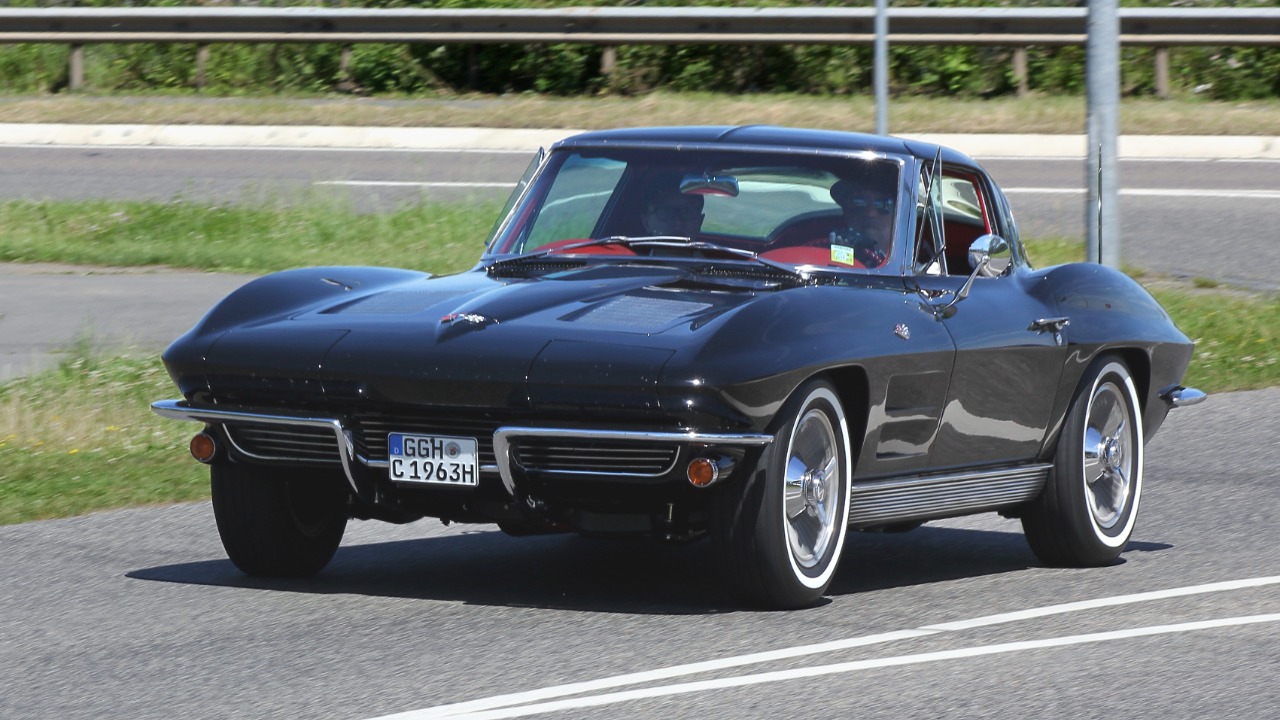
Few American cars are as instantly recognizable as the 1963 Chevrolet Corvette split-window coupe. With its dramatic rear window divided by a vertical spine, the design has become one of the most celebrated styling features in automotive history. Today, collectors pay a premium for split-window Corvettes, and many enthusiasts consider them the most beautiful Corvettes ever built.
Yet despite its legendary status, the split-window design survived for just a single model year. By 1964, Chevrolet had eliminated the feature entirely. The reason wasn’t changing tastes or manufacturing costs—it was visibility.
A Revolutionary New Corvette
The 1963 model marked the debut of the second-generation Corvette, commonly known as the C2 Sting Ray. It represented a dramatic departure from the first-generation Corvette, featuring independent rear suspension, sharper styling, and improved performance.
Leading the design effort was Chevrolet styling chief Bill Mitchell, who wanted the new coupe to look unlike anything else on the road. Inspired by racing cars and his own custom vehicles, Mitchell envisioned a fastback roofline with a distinctive split rear window.
The design created a striking visual effect. The center divider emphasized the car’s sculpted shape and gave the Corvette a futuristic appearance that immediately stood out from competitors.
Style Over Practicality
While the split-window looked fantastic, it created a problem for drivers.
The vertical bar running through the center of the rear glass obstructed the driver’s view directly behind the car. Rear visibility was already limited by the Corvette’s sleek roofline, and the divider made it even more difficult to see approaching vehicles or obstacles.
Owners quickly noticed the issue. Although many were willing to accept the compromise for the sake of appearance, others complained that the design interfered with everyday driving.
At a time when sports cars were becoming more refined and practical, Chevrolet management began to question whether the dramatic styling feature was worth the tradeoff.
The Push for Change
One of the strongest critics of the split-window was Corvette chief engineer Zora Arkus-Duntov. Often called the “Father of the Corvette,” Duntov believed performance and functionality should take priority over styling gimmicks.
He argued that the center divider served no practical purpose and reduced rearward visibility. Duntov pushed Chevrolet to adopt a single-piece rear window that would improve safety and make the car easier to drive.
His concerns eventually won out.
Gone After Just One Year
For the 1964 model year, Chevrolet redesigned the coupe’s rear glass into a single-piece window. The change improved visibility and eliminated one of the most common complaints about the 1963 model.
Mechanically, the 1964 Corvette remained very similar to its predecessor, but visually the rear window instantly distinguished the two years.
The decision made sense from an engineering and usability standpoint. Drivers gained a clearer view behind the car, and Chevrolet no longer had to defend a design feature that offered little functional benefit.
An Unexpected Collector Favorite
Ironically, the very feature that Chevrolet removed became one of the most desirable Corvette design elements ever created.
Because the split-window was produced for only one year, the 1963 coupe gained an exclusivity that later Corvettes could not match. Collectors began seeking out original examples, and values steadily climbed over the decades.
Today, the split-window Corvette is widely regarded as the crown jewel of the C2 generation. Its rarity, distinctive styling, and unique place in Corvette history make it one of the most sought-after American collector cars.
Many owners of later C2 Corvettes have even installed aftermarket split-window conversions to mimic the appearance of the original 1963 model—a testament to how beloved the design has become.
When Function Defeated Form
The 1963 Corvette split-window is a rare example of a design feature that disappeared because it worked better on paper than in practice. Chevrolet’s engineers ultimately decided that improved visibility was more important than maintaining a dramatic styling statement.
Yet the story has a twist. While the split-window may have failed as a practical design solution, it succeeded as an automotive icon. More than sixty years later, the feature remains one of the most recognizable elements ever fitted to an American sports car, proving that sometimes the shortest-lived designs leave the biggest impression.
More from Fast Lane Only