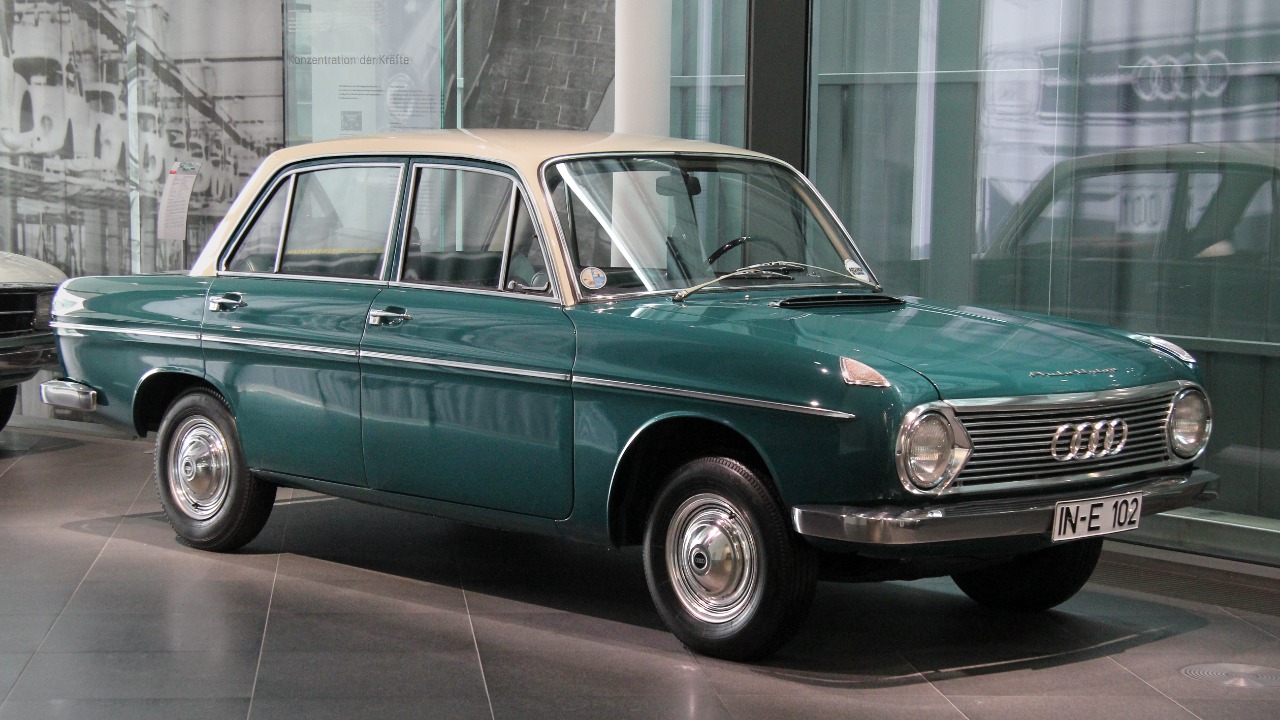
The 1964 DKW F102 is usually remembered, when it is remembered at all, as the last gasp of a tired two-stroke formula. Yet that compact sedan quietly carried the hardware, packaging and corporate decisions that made the modern Audi possible. To understand how the four rings reinvented themselves in the second half of the 1960s, it helps to start not with the Audi 72 or Audi 80, but with the unfashionable DKW that came just before them.
From today’s vantage point, the F102 looks like a dead end. In reality it was the bridge that took Auto Union from smoky three-cylinder saloons to clean four-stroke Audis, and it shaped everything from the engine bay to the badge on the grille.
The last DKW and the weight of history
The DKW F102 arrived in the early 1960s as a compact family car from the German brand that had built its reputation on small two-stroke engines. Period descriptions of the DKW F 102 emphasize that it was produced by the German automaker DKW and that it represented the final flowering of a formula the company had refined since before the war. DKW had dominated prewar motorcycle sales and light cars with simple, inexpensive engines that fired every revolution, and the firm carried that expertise into the postwar Auto Union group in West Germany.
Auto Union itself had been reconstituted in Ingolstadt after the Second World War. By 1949, the group had formed Auto Union GmbH and was building motorcycles and small cars under the DKW name. Later reporting on the history of the four rings notes that Auto Union restarted with modest machinery that fit the economic reality of a ruined country. In that context, the F102 was intended to be a modern, front-wheel-drive compact that would move DKW upmarket without abandoning the two-stroke technology that had carried the company through the 1950s.
Inside Auto Union, engineers were already experimenting with ways to extend that technology. One report describes how, in 1960, DKW combined two three-cylinder two-stroke units into a V6 with a capacity of 1000 cc, a bold attempt to scale up a familiar architecture rather than switch to a four-stroke design. The same mindset shaped the F102: keep the basic two-stroke layout, polish it with better lubrication and cleaner combustion, and wrap it in a sharp new body that could sit alongside contemporary German saloons.
Engineering ambition and the F102’s hidden strengths
On paper, the F102 was not revolutionary. It used a three-cylinder two-stroke engine driving the front wheels, a layout DKW had already proven. What made it significant was how far Auto Union pushed that formula and how much of the car could accept a different powerplant later.
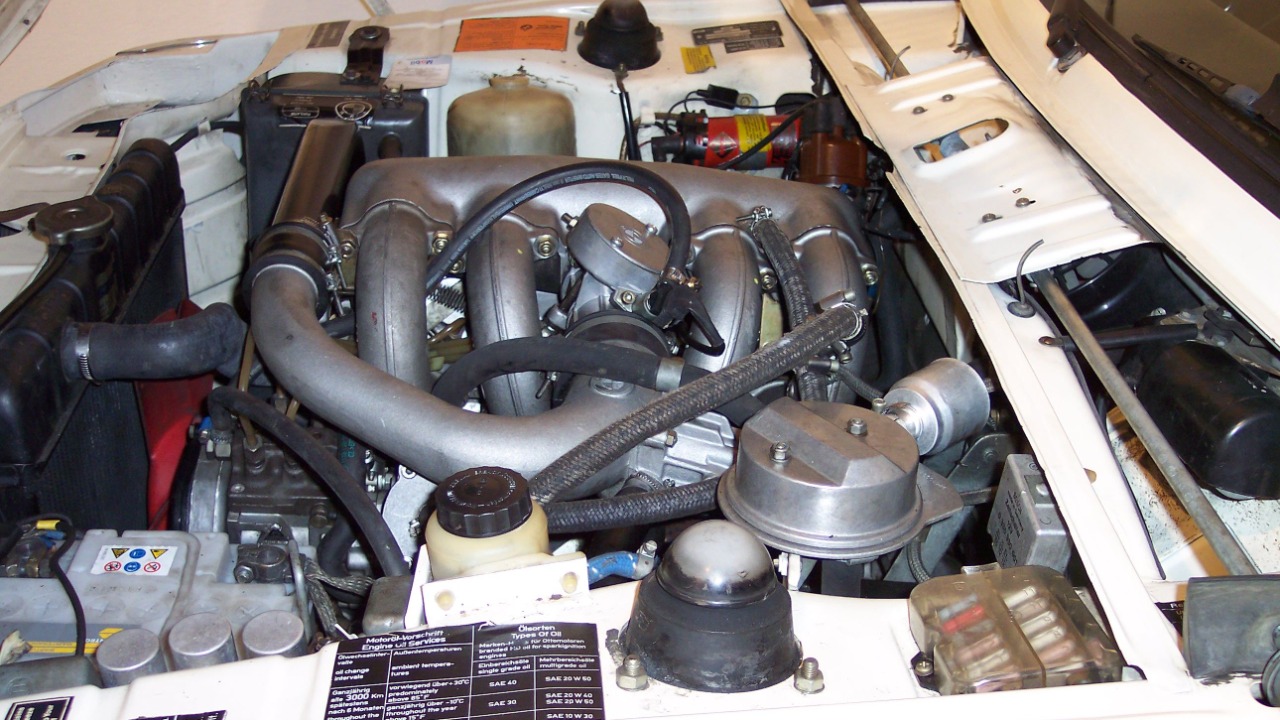
Contemporary technical analysis points out that the F102’s new engine required a 100 mm increase in overall length to 4,380 mm, which equates to 172½ inches, and that all of this extra length sat ahead of the front axle line. As one detailed study of the car’s evolution puts it, the new power unit forced a longer nose and a reworked front structure, yet the engineers kept the basic front-wheel-drive platform and left space for future development. The same source notes that the increase to 4,380 mm (172½ inches) was handled entirely within the front overhang, which would later prove convenient when Auto Union abandoned the two-stroke and slid a four-stroke engine into the same bay.
The F102 also reflected a company trying to climb the market. Its clean, almost austere bodywork and relatively generous cabin aimed at customers who might otherwise have considered an Opel or a small Mercedes. Positioned at the top of DKW’s range, it was intended as a serious family car rather than a budget runabout. That ambition mattered when Auto Union’s ownership changed and the entire strategy had to be reconsidered.
Daimler, Auto Union and an unexpected turning point
By the early 1960s, Auto Union was under the control of Daimler, which had acquired the company as part of a broader industrial strategy. Daimler saw value in the Ingolstadt plant and the DKW dealer network, but it was less enthusiastic about two-stroke engines at a time when buyers were starting to demand smoother, more refined powertrains. A later retrospective on the sale points out that Daimler would come to regret letting Auto Union go once Audi emerged as a serious rival, but in 1964 the group looked like a marginal player with dated technology.
Inside Auto Union, there were voices pushing for change. A profile of the company’s leadership recounts how, in 1963, Ludwig was appointed Auto Union technical director, described there as the person responsible for the company’s technical direction. That appointment placed a strong engineering advocate at the top just as the F102 was being launched and as Daimler was reassessing its commitment to two-strokes. Ludwig and his team had to juggle a car already in production with a growing realization that the market was turning against its fundamental concept.
The sale of Auto Union to Volkswagen in 1964 changed the stakes entirely. For Volkswagen, which at that time still relied heavily on the air-cooled Beetle, the Ingolstadt operation offered front-wheel-drive expertise, a modern factory and a platform that could be adapted quickly. Later commentary on the period argues that Volkswagen initially saw Auto Union as a way to plug gaps in its range rather than as the seed of a premium brand. Yet the F102’s structure, and the decision to invest in it, gave Volkswagen a head start when it decided to launch a new line of cars under the Audi name.
From F102 to Audi F103: same bones, new heart
The decisive step came when Auto Union, now under Volkswagen’s control, chose to abandon the two-stroke engine and rework the F102 into a four-stroke car. The result was the Audi F103 series, internally designated as the F103 and built in West Germany from 1965 to 197 according to both Audi F103 and Classic Cars reference material. These sources agree that the F103 used the same basic platform as the F102 but introduced a new longitudinal four-cylinder engine that transformed the car’s character.
Contemporary accounts describe the new powerplant as a medium-pressure engine that sat somewhere between a conventional gasoline and a diesel unit. One detailed history of the first postwar Audi models notes that this engine was modestly powerful, decently efficient and, above all, far cleaner than the smoky two-stroke it replaced. The same report emphasizes that this medium-pressure design was central to the story of Audi That Saved Audi, because it allowed Auto Union to market the car as modern and technically advanced without straying into experimental territory.
The transformation from F102 to F103 was both radical and conservative. From the firewall back, the car remained largely the same compact sedan that DKW had launched. From the firewall forward, it became something new, with a four-stroke engine, revised front structure and different branding. The fact that the F102’s platform could accept this change so readily highlights how much of the later Audi was already baked into the DKW design, even if buyers never saw it that way.
Crucially, the F103 did not carry the DKW name. Instead, Auto Union revived the Audi badge, which had lain dormant since before the war. Historical summaries explain that the four rings symbolized the union of Audi, DKW, Horch and Wanderer, and that the reborn Audi brand was intended to signal a step up in sophistication. One background piece on the emblem stresses how the rings came to represent more than a mere emblem for the German group, linking The DKW heritage to a new future. The F103 was the first car to carry that message into showrooms after the war, but it did so on F102 underpinnings.
The Audi 72, 60, 75, 80 and Super 90: a family born from DKW
The F103 line quickly expanded into several models distinguished by horsepower figures in their names. One detailed history recounts how the Audi 72 and Audi 100 were later seen as the cars that saved the brand, but the starting point was that first four-stroke sedan adapted from the F102. Another analysis of the family describes how the Audi 60, 75, 80 and Super 90 models were launched, each with different levels of power and equipment, and highlights how the Audi Super 90 in particular gave the range a performance halo. Reporting on this period notes explicitly that The Audi 60, 75, 80 and Super 90 models were launched, and that The Audi Super 90 m and 90 variants played a key role in changing perceptions of the four rings.
All of these cars shared the F103 designation and, beneath their badges, they all traced back to the F102 platform. The Audi 72, in particular, has been singled out by enthusiasts as the car that effectively started Audi’s modern era. A feature on an early example calls it the car that marked the beginning of Audi as a serious postwar brand, and it underlines that Auto Union, after the war, could not simply resume prewar production because its factories lay in what became East Germany. Instead, Auto Union had to rebuild in Ingolstadt, then evolve from DKW two-strokes to four-stroke Audis using the Auto Union experience with front-wheel drive.
Another retrospective from an Audi-focused club traces a similar arc, noting that in 1949 Auto Union GmbH began with motorcycles and small cars, then gradually climbed the market until it could launch the first postwar Audi saloon. That piece frames the F103 series as a new era for the four rings and credits the Ingolstadt team with capturing the spirit of the time by offering a clean, modern sedan with four-stroke power. The New Era for narrative, however, rests on a structure and drivetrain layout that had already been proven in the DKW F102.
The naming strategy also reflected a shift in self-image. Where DKW had sold cars as practical tools, the Audi 72 and its siblings were marketed as refined, technically sophisticated vehicles that could compete with established German brands. The horsepower-based numbers, from 60 to 90, made the range easy to understand and signaled that Audi was now playing in a different league.
Why the F102 faded while the Golf and Audi 80 took the spotlight
When enthusiasts talk about the modernization of Volkswagen’s lineup, they often cite the Golf as the turning point. A widely shared comment on the period argues that it is usually the Golf that gets all the credit for dragging Volkswagen into the front-wheel-drive age, yet the real transformation of the group’s engineering base had started earlier in Ingolstadt. The same reflection notes that Audi became a serious competitor only after Volkswagen had already acquired Auto Union and absorbed its front-drive expertise.
The Audi 80, launched later, is often cited as the car that captured the spirit of its era with crisp styling and efficient engines. Official material on the model’s anniversary explains that the first Audi 80 was unveiled 50 years ago and that it helped Audi capture the zeitgeist with a light, modern saloon that fit perfectly into the emerging middle-class market. One detailed press history of the car notes that the Audi 80 was unveiled 50 years ago and that it represented a key step in Audi’s move upmarket, and it explicitly ties that success to earlier experience with front-wheel-drive compacts, highlighting New Era for themes and the 60 years since the first postwar Audi.
By the time the Golf and Audi 80 arrived, the DKW F102 was already a footnote. Its two-stroke engine had aged badly in the eyes of buyers, who associated it with smoky exhaust and old-fashioned engineering. The Audi-branded derivatives, with their four-stroke engines and more polished image, quickly overshadowed their ancestor. Volkswagen’s marketing naturally focused on the fresh Audi name and the new models rather than the short-lived DKW sedan that had provided their foundation.
There was also a psychological factor. For many West German buyers in the 1960s and 1970s, DKW meant economy and compromise, while Audi was presented as a step toward prestige. When the company began telling its own story, it highlighted the rebirth of Audi after the war, the symbolism of the four rings and the success of the Audi 60, 75, 80 and Super 90. The F102, anchored to a brand that Volkswagen quietly retired, did not fit the narrative of relentless progress.
Reassessing the DKW F102’s legacy
Looking back with the benefit of six decades, the F102 appears less like a failure and more like a necessary prototype for the cars that followed. Its front-wheel-drive layout, its extended nose and its relatively modern body gave Auto Union and Volkswagen a ready-made platform for the first postwar Audi models. Without that car, the Audi 72 would have taken longer to reach the market, and the four rings might not have been ready when buyers began to shift away from rear-engined designs.
Specialist histories of the period highlight how the Ingolstadt engineers used the F102 as a testbed for packaging and structural ideas that later paid off. One detailed essay on the car’s development notes that the new engine forced the body to grow to 4,380 mm, or 172½ inches, and that this change allowed the later four-stroke engine to fit without a complete redesign. The same piece traces a straight line from the F102 through the Audi F103 series and on to the Audi 80 and Audi 100, arguing that the future started with that unfashionable DKW. The Jun analysis connects the dots between the 60, 70, 72, 75, 80, Super 90 and 100 models, with the F102 as the common ancestor.
The broader corporate story reinforces that view. A financial and collector-focused overview of Audi’s history describes how the first postwar Audi saloon, powered by the medium-pressure engine, became central to the narrative of The Audi That Saved Audi. That same account notes that the car lay somewhere between a gas and diesel concept, and that it was modestly powerful, decently efficient and, most importantly, acceptable to buyers who had grown wary of two-stroke smoke. The Discovered coverage around The Audi That Saved Audi, 60 Years Since Ingolstadt and Turning Point, treats the four-stroke F103 as the hero, yet the engineering that made that hero possible had been proven in the F102.
More from Fast Lane Only