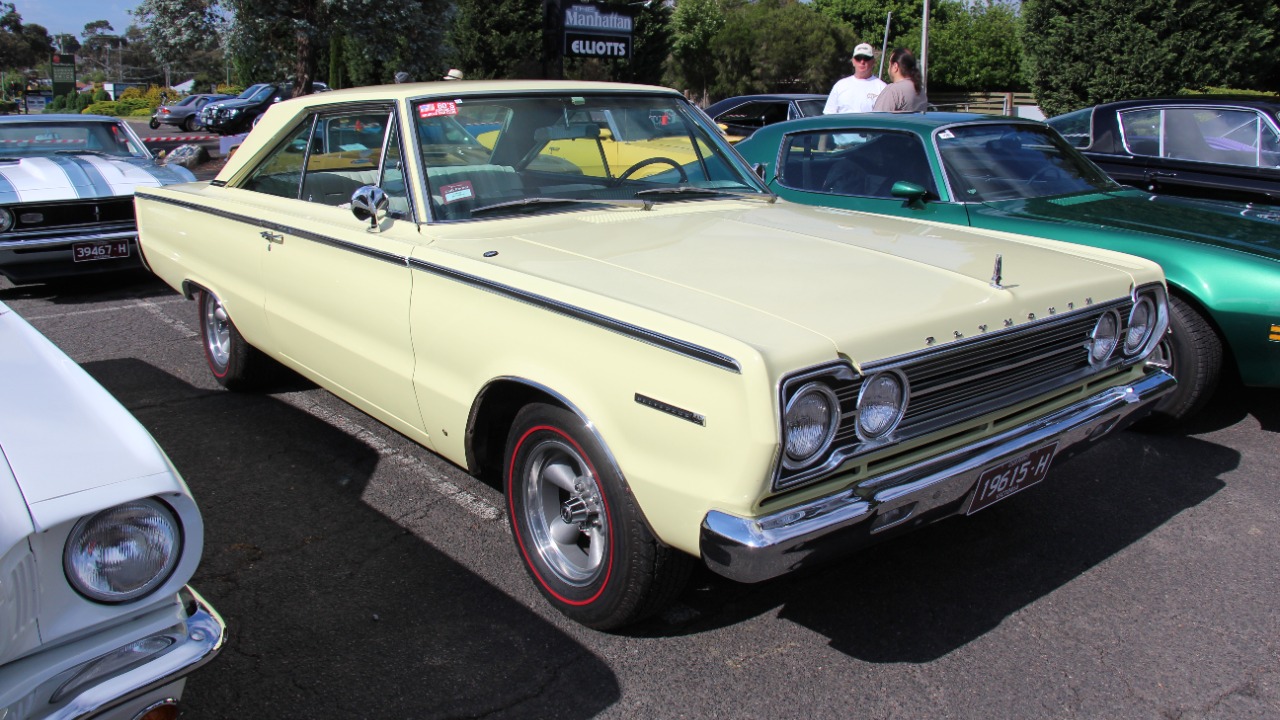
The 1967 Plymouth Belvedere has quietly shifted from overlooked mid‑size to a serious player in modern drag and street culture. Factory history, grassroots builds, and fresh attention from the performance aftermarket are all converging to give this boxy B‑body new credibility at the strip. I see it every time one of these cars lights the beams: the Belvedere is no longer background noise, it is back in the conversation.
That renewed respect is not nostalgia alone. It is rooted in the car’s original Super Stock pedigree, the brutal potential of the 426 HEMI, and a wave of builders who are proving that a 60s family shape can still run hard in an era of turbo everything. The result is a car that feels both authentically old school and surprisingly current.
The factory roots that never stopped mattering
To understand why the 1967 Belvedere is suddenly getting more love, I start with its original mission as a straight‑line weapon. Period Super Stock packages were born into intense Competition in NHRA Super Stock racing, where Chrysler’s engineers treated the Belvedere as a purpose‑built bracket for big‑cube power and minimal frills. The RO23 HEMI cars distilled that idea, pairing the 426 with either a four‑speed transmission or a TorqueFlite automatic and stripping away anything that did not help at the quarter mile. That DNA is exactly what modern racers are rediscovering: a simple, stiff platform that was designed to launch hard.
The Belvedere’s dragstrip identity did not start in 1967 either. Earlier in the decade, the Plymouth Belvedere Lightweight showed how far the factory was willing to go when Mopar for drag racing meant aluminum panels, sparse interiors, and big power. By the time the 1967 HEMI cars arrived, that philosophy was baked in, and it is the throughline that makes today’s builds feel like a continuation rather than a reinvention.
Why the HEMI Belvedere still feels raw and relevant
What really hooks me about the 1967 HEMI Belvedere is how unfiltered it remains compared with modern performance cars. Contemporary descriptions of the 1967 Plymouth Hemi emphasize that it is a true representation of raw American muscle, with an interior that was simple and purposeful, focused on function over flash. Bench or bucket seats, minimal luxury, and that 426 HEMI up front gave the car a kind of honesty that resonates with drivers who are tired of layers of drive modes and touchscreens.
That same spirit shows up whenever someone compares the Belvedere to its period rivals. In one enthusiast debate over whether a 1967 Ford Fairlane 427 or a Plymouth Belvedere GTX is the better car, the Belvedere’s supporters point to how the original When equipped with a 426 HEMI it could be a surprisingly quiet sleeper. That combination of brutal capability and understated presentation is exactly what modern drag racers and street drivers are chasing, and it explains why the HEMI Belvedere’s reputation as a Mopar legend has only grown.
Modern drag builds are rewriting expectations
The Belvedere’s current dragstrip credibility is not theoretical, it is being earned one pass at a time by builders who treat the car as a living platform rather than a museum piece. A standout example is the Nostalgia Super Stock build nicknamed “Mr. Belvedere,” a car that was painstakingly assembled to look and run like a 60s factory race car. The effort was worthwhile as the Mopar is a gleaming example of a 60’s‑era factory race car, and its owner has said that building it was almost as much fun as racing it. That kind of project shows how the Belvedere can honor its roots while using modern safety and tuning to stay competitive.
Other cars push the formula further. One 1967 Plymouth Belvedere II drag machine known as “Poison Ivy” pairs period‑correct trim with serious mechanical upgrades, right down to carefully polished brightwork and hand‑done lettering that had to be recreated on the body. The builder explains in a Jul video how he did the trim, polished all the trim, and handled the stenciling for the letters that were missing on the side of the car, a reminder that these drag Belvederes are as much rolling craftsmanship as they are ET slips.
Historic heroes keep the legend alive
For all the fresh builds, the Belvedere’s modern credibility also leans on the legacy of drivers who made their names in these cars. Few stories capture that better than the factory 426 HEMI Belvedere campaigned by racer Judy Lilly, a car that survives today as a piece of living history. In a walk‑around with owner Rich Gotautleben, the 1967 Plymouth is presented as an amazing historical car from the height of factory drag wars, complete with the kind of period details that younger racers usually only see in black‑and‑white photos.
The Belvedere’s halo extends beyond pure race cars too. Another video tour focuses on Comments around Judy Lilly’s 1967 Plymouth Belvedere GTX in Silver with a Hemi Engine Sound featured on My Car Story, where the focus is as much on the car’s presence as its performance. Hearing a 426 come to life in that context reinforces why these engines and bodies still command respect, and why younger fans are willing to line up for a chance to see them run.
From street cruisers to SEMA concepts, the platform evolves
What really convinces me that the 1967 Belvedere is in a new moment is how it now spans everything from casual cruising to high‑profile show builds. On the street side, enthusiasts highlight cars Finished in a classy Medium Copper exterior with sharp Silver interiors, celebrating them as confident 1960s‑style cruisers rather than just quarter‑mile tools. At the same time, a feature on a collection of On the classic side of things singles out a beautiful Plymouth Belvedere with NHRA decals and strong performance as the car that wraps up a trio of powerful rides, proof that the model can still hold the spotlight.
The aftermarket has noticed. Mopar has teased a 1967 Plymouth Belvedere concept for the Specialty Equipment Market SEMA show, signaling that the brand itself sees value in revisiting this shape with modern hardware. On the retail side, listings like a Plymouth Belvedere Offered as a 1967 Plymouth Belvedere Restomod underline how builders are blending original styling with impressive power and performance enhancements. Put together, the race cars, the cruisers, the historic survivors, and the show concepts all point in the same direction: the 1967 Belvedere is no longer a forgotten B‑body, it is a platform that modern drag racers and enthusiasts are taking seriously again.
More from Fast Lane Only: