The 1968 Oldsmobile Toronado arrived at a moment when American automakers were obsessed with bigger engines and bolder styling, yet it quietly rewrote the rulebook on how that power reached the pavement. Instead of driving the rear wheels like every other big V8 coupe in its class, it sent torque to the front, turning a full-size personal luxury car into a rolling engineering experiment. I see that combination of brute force and technical audacity as the reason this Toronado still feels like a boundary pusher rather than just another late‑sixties cruiser.
By 1968, Oldsmobile had already shocked the market once with the first-generation Toronado, but the second refresh refined the formula into something more mature and more confident. The car kept its massive V8 and front‑wheel‑drive layout, yet it wrapped them in cleaner sheetmetal and a more polished interior that hinted at Cadillac levels of comfort. That balance of innovation and everyday usability is what makes the 1968 model such a compelling case study in how far a mainstream brand was willing to go in the pursuit of new ideas.
From wild concept name to front‑drive reality
Long before the 1968 car rolled off the line, the Toronado name itself had already taken a curious path. It did not come from some storied racing heritage or a romantic European locale, and instead, the word “Toronado” had no inherent meaning at all. It was originally invented for a 1963 Chevrolet show car, then later adopted when Oldsmobile needed a distinctive badge for its new full‑size personal coupe, a model that would stay in production until the 1979 model year, according to period descriptions of how the car was conceived. I find that origin story fitting, because the car itself felt just as invented from scratch as its badge, a clean break from Oldsmobile’s more conservative sedans.
When Oldsmobile finally put the Toronado into production, it did so as part of a broader corporate push to explore unconventional drivetrains. Internal work on a big‑block front‑drive layout had been underway for years, with engineers experimenting on test mules that reportedly used pieces of a production Pontiac V8 before the final package was locked in, a development arc that shows up in technical retrospectives on the early Toronado. By the time the 1968 model year arrived, that experimentation had matured into a cohesive product, one that treated front‑wheel drive not as a novelty but as the foundation of a serious performance and luxury car.
Engineering a V8 for the front wheels
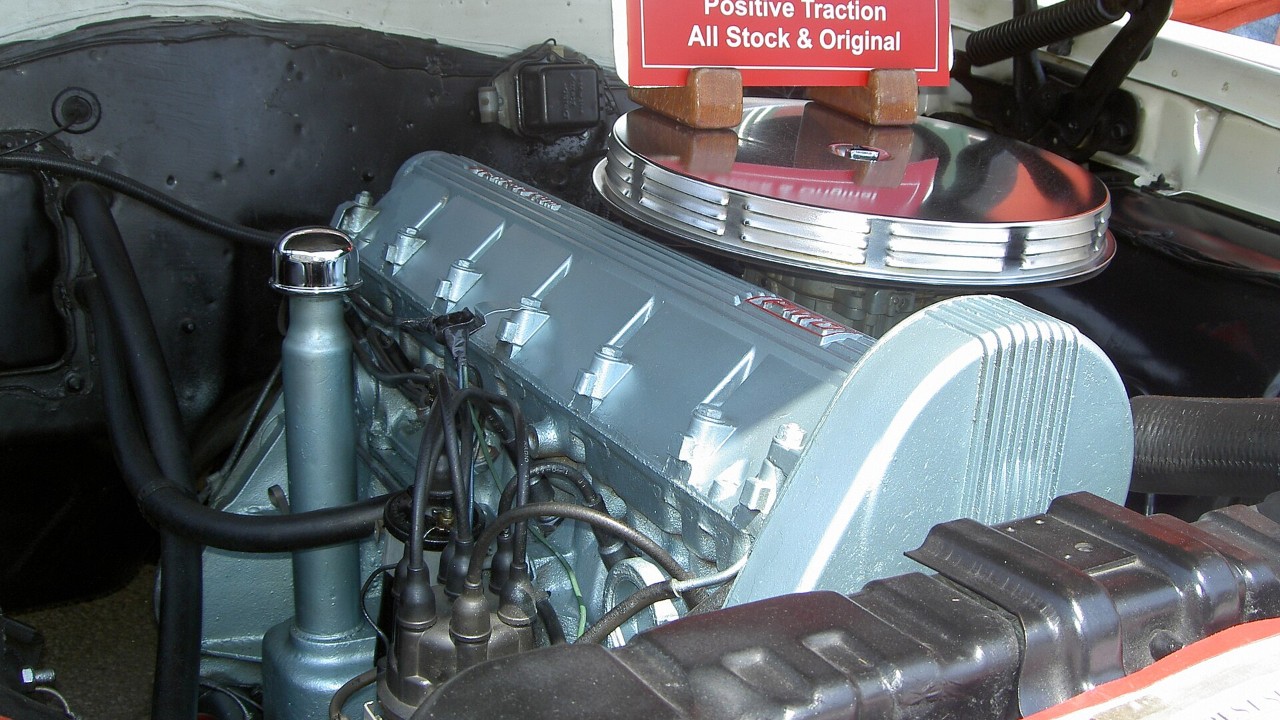
What set the 1968 Oldsmobile Toronado apart mechanically was not just that it drove the front wheels, but that it did so with a massive big‑block V8 that would have felt at home in a muscle car. Under the hood sat a 455 cubic inch engine, listed in period Powertrain Specs as a 455ci 4b configuration, paired with a heavy‑duty automatic transaxle and a robust final drive. I am struck by how ambitious that combination was, because front‑wheel drive in the United States had previously been associated with compact, low‑power cars, not with a full‑size coupe carrying a big‑block under a long hood.
To make that layout work, Oldsmobile engineers had to rethink how torque moved from the crankshaft to the tires, packaging the transmission and differential alongside the engine rather than behind it. Contemporary accounts of the first‑generation Oldsmobile highlight how unusual it was to see such a large displacement engine feeding the front axle, a configuration that demanded careful attention to weight distribution and torque steer. By 1968, the refinements to that system had turned the Toronado into a proof of concept that big‑block front‑wheel drive could be not only feasible but surprisingly civilized in everyday driving.
Styling drama, from hidden lights to luxury cues
The Toronado’s engineering story tends to dominate the conversation, but the 1968 car also carried some of the most distinctive styling cues of its era. Early versions of the model, particularly in 1966 and 1967, used a dramatic hidden headlamp setup that popped up when the driver turned on the switch, a feature that enthusiasts still single out when they talk about the Tornado. By 1968, the front fascia had been cleaned up, yet the car retained a long, sculpted hood, a sweeping roofline, and muscular rear haunches that made it look every bit as powerful as its drivetrain suggested.
Inside, Oldsmobile leaned into the personal luxury brief with a cabin that mixed futuristic details and comfort features that would not have felt out of place in a Cadillac of the same period. Period option lists mention amenities like a stereo tape player and specialized seating arrangements, and some of those details were tied to specific codes that allowed the Toronado to share certain innovations with Cadillac models. When I picture a 1968 Toronado today, I see that blend of sharp exterior drama and plush interior touches as a key part of why the car still reads as a high‑end object rather than just a quirky engineering exercise.
On‑road performance that defied its size
For all its visual presence, the 1968 Oldsmobile Toronado was not just a boulevard ornament. Contemporary performance figures describe a car that, despite its 5,000-pound weight, handled quite well and could reach a then noteworthy top speed of 135 miles per hou, a combination that shows up in detailed write‑ups of the 1968 Toronado. I find those numbers impressive even by modern standards, because they suggest a car that was not overwhelmed by its own mass, and that could translate its big‑block power into real speed without the rear‑drive traction advantage most rivals enjoyed.
Enthusiast retrospectives often emphasize how the front‑drive layout affected the driving experience, with owners describing a sense of stability in poor weather and a distinctive way the car pulled itself out of corners. One analysis of what makes the 1968 Oldsmobile Toronado a classic highlights how all power went to the front wheels and notes that, while the Oldsmobile Toronado is considered a classic, it has not had much exposure outside dedicated circles, a point that surfaces in modern All Power To features. Driving one today, I would expect that combination of secure traction and slightly unusual steering feel to be a big part of its charm, a reminder that this was a car willing to trade convention for character.
Legacy as a pioneering American front‑driver
Looking back, it is easy to forget just how radical the Toronado’s layout was in the context of American car culture. Commentators who revisit the model often stress that it was the first U.S. produced front‑wheel‑drive car since the 1930s, an unheard‑of move for a massive, high‑powered coupe, a point that is still celebrated in enthusiast discussions of how the car introduced front wheel drive to America with the Toronado. When I place the 1968 model in that timeline, it feels like the moment when the experiment proved itself, showing that a front‑drive platform could carry serious power and luxury without scaring off traditional buyers.
That willingness to experiment did not happen in a vacuum. Analysts of the broader market note that American manufacturers were essentially trying to throw every idea that they could at a wall to see what would stick, and this also applied to big personal coupes that blurred the line between muscle car and luxury car, a trend captured in video essays on America’s V8 powered FWD luxury super coupe that spotlight the American appetite for excess. Within that context, the 1968 Oldsmobile Toronado stands out as a groundbreaking car, one of the first mass‑produced models with front‑wheel drive and a feature set that still earns it hashtags like MuscleCarInnovation and RareFind in modern discussions of the Oldsmobile Toronado. When I think about its legacy today, I see a car that did more than just push boundaries with front‑drive V8 power, it quietly paved the way for the idea that innovation and indulgence could share the same driveway.
More from Fast Lane Only: