The first Pontiac Firebird Trans Am arrived in 1969 as a purpose-built homologation car, created so Pontiac could chase glory in professional road racing. Only a small batch reached showrooms, yet that limited production run helped cement the Trans Am name as one of Detroit’s most evocative performance badges. More than half a century later, the surviving cars tell a story of engineering ambition, corporate politics, and the thin line between race track and street.
What happened
Pontiac developed the 1969 Firebird Trans Am as a competition-focused package built on the existing Firebird platform. Engineers and marketers aimed it squarely at the Sports Car Club of America’s Trans-American Sedan Championship, where American brands were battling for prestige in a growing road racing series. To qualify for that series, manufacturers had to sell a street-legal version of their race car, so Pontiac created a tightly specified model that carried both performance upgrades and visual cues tied to the track.
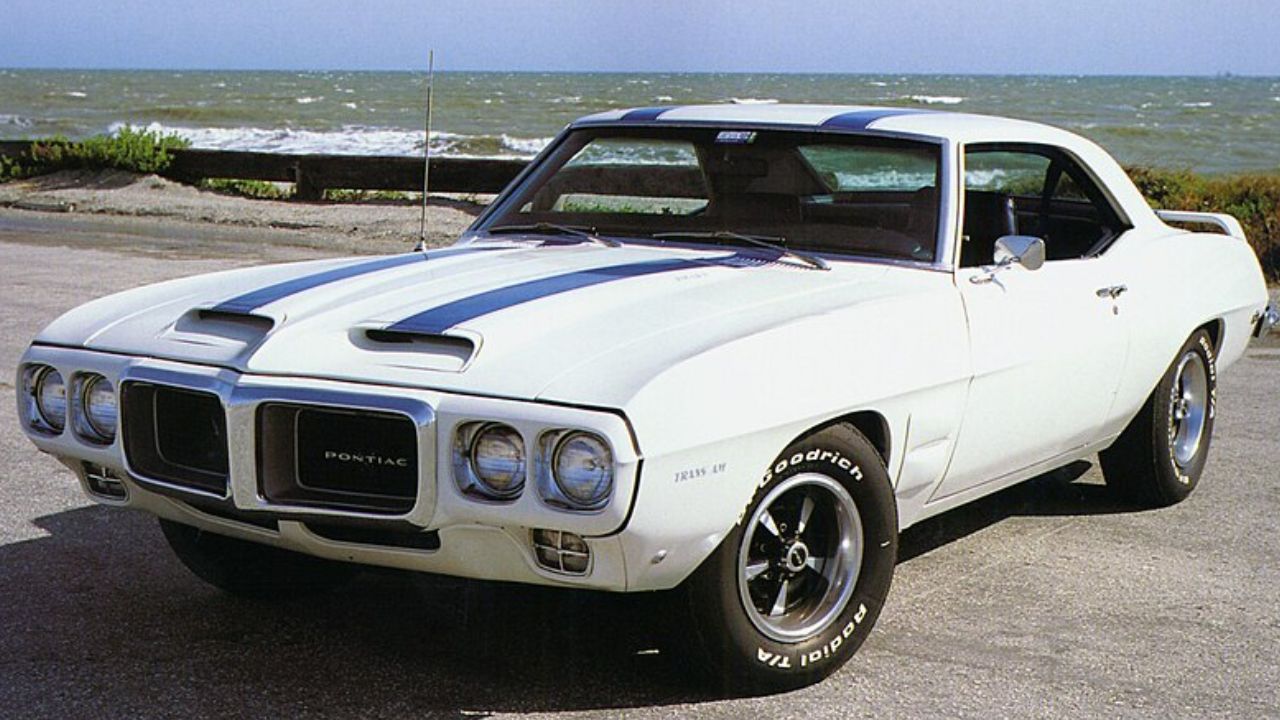
The 1969 Trans Am package centered on the Firebird’s F-body chassis with a 400 cubic inch V8, heavy-duty suspension, and functional aero pieces. Pontiac restricted colors and graphics to create an instantly recognizable identity. Every car left the factory in white with blue stripes, a specific rear spoiler, and a unique hood with integrated scoops that signaled the car’s competition intent. Inside, the package emphasized businesslike equipment rather than luxury, with performance gauges and supportive seating that aligned with the car’s road racing image.
Production remained extremely limited. Pontiac built only a small run of these first-year Trans Ams, split between coupes and convertibles, which made the model rare even when new. Surviving examples are now closely tracked by marque experts, and collectors pay particular attention to cars that retain their original drivetrain and bodywork. One such car has been described as a true survivor, a 1969 Firebird Trans that still carries its factory configuration and illustrates how focused the original specification really was.
The Trans Am name itself came from the SCCA Trans-American series, and Pontiac paid a licensing fee to use it on the car. That decision underlined how closely the road car was tied to competition. Pontiac was not simply building a sporty Firebird trim; it was building a homologation special that would allow the brand to compete against rivals that had already planted their flags in the series.
The 1969 model year also presented complications. General Motors was in the midst of transitioning the F-body to a redesigned second generation, which limited the window in which Pontiac could sell the first Trans Am. The short run of production, combined with the narrow focus of the package, meant that the car never became a volume seller. Instead, it functioned as a showcase for Pontiac’s performance engineering and as a tool to qualify the brand’s racing program.
Why it matters
The debut of the 1969 Firebird Trans Am matters because it represents a moment when a major American manufacturer treated racing as the starting point for a street car rather than an afterthought. The car’s existence was justified primarily by the need to compete in a specific series, and the showroom version was shaped by that requirement. That approach helped define the Trans Am badge as something more serious than a simple styling exercise.
In the broader context of muscle car history, the 1969 Trans Am stands apart from more common high-horsepower models that focused on straight-line speed. Pontiac’s package targeted handling, braking, and aerodynamic stability, reflecting the demands of road courses rather than drag strips. That emphasis anticipated a shift in performance culture, as enthusiasts increasingly valued cars that could turn and stop as effectively as they accelerated.
The limited production run also turned the first-year Trans Am into a benchmark for rarity. Collectors often separate muscle cars into two categories: mass-produced icons that rely on nostalgia, and low-volume homologation specials that carry direct links to competition. The 1969 Trans Am falls firmly into the second group. Its scarcity, combined with its racing purpose, places it in the same conversation as other homologation legends that used the showroom floor as a gateway to the grid.
The survival of original cars adds another layer of significance. A largely untouched 1969 Trans Am, still wearing factory sheet metal and mechanical components, offers a reference point for restorers and historians. It shows exactly how Pontiac executed its racing vision, from suspension tuning to body detailing. When such a car surfaces, it gives the community a chance to confirm production details, compare build sheets, and refine registries that track how many examples remain in authentic condition.
The 1969 debut also shaped Pontiac’s identity for decades. Before the Trans Am, the Firebird was often seen as a sibling to the Chevrolet Camaro, sharing architecture and many components. The racing-focused Trans Am package gave Pontiac a distinct personality within General Motors. It signaled that the division would pursue performance through a blend of engineering and motorsport rather than simply matching Chevrolet’s power figures.
That identity carried into the 1970s and beyond, as the Trans Am evolved into a standalone nameplate associated with aggressive styling, shaker hoods, and high-output engines. Later versions leaned more into street culture and movie fame, yet the credibility of the badge rested on the original car’s competition roots. Enthusiasts who admire later models often trace their interest back to the 1969 homologation special that started the lineage.
The car’s story also illustrates the tension between corporate strategy and enthusiast passion. Pontiac engineers and marketers pushed for a racing program at a time when large manufacturers were reassessing their involvement in motorsport. Building a low-volume, track-oriented Firebird required internal support and a willingness to accept limited short-term sales in exchange for brand prestige. That calculation paid off in terms of legacy, even if the 1969 Trans Am did not move huge numbers at dealerships.
What to watch next
Looking ahead, the 1969 Firebird Trans Am’s relevance will likely grow as collectors and historians place more value on factory-correct homologation cars. As surviving examples age, documentation and originality will become even more important. Cars with unmodified drivetrains, original paint, or verifiable ownership histories will set the standard for the market and for restoration work.
Registry efforts and research projects focused on the 1969 Trans Am will continue to refine understanding of how many cars were built in specific configurations. Enthusiast groups already track details such as color combinations, transmission choices, and optional equipment. As more archival material surfaces, including build sheets and internal memos, the picture of Pontiac’s racing strategy in 1969 will sharpen.
The car also provides a template for how modern manufacturers approach track-inspired specials. Current performance divisions often release limited-run models that echo racing programs, but few are as tightly tied to homologation rules as the original Trans Am. Comparing new track packages to the 1969 car highlights how regulatory environments and marketing priorities have changed, and how rare it is today for a mainstream brand to build a car primarily to satisfy a sanctioning body.
For Pontiac fans, the future of the 1969 Trans Am story will play out at auctions, concours events, and specialist shops. High-profile sales of survivor-grade cars will influence how the broader market views early F-body performance models. Restorers will face decisions about how far to go in returning modified cars to factory specification, especially when original parts are scarce or expensive.
The educational role of these cars will also expand. Museums and private collections that feature early Trans Ams can use them to explain the relationship between American manufacturers and road racing at the end of the 1960s. By placing the 1969 Firebird Trans Am alongside contemporary competitors, curators can show how different brands interpreted the same rulebook and how those decisions shaped the cars that reached the street.
More From Fast Lane Only: