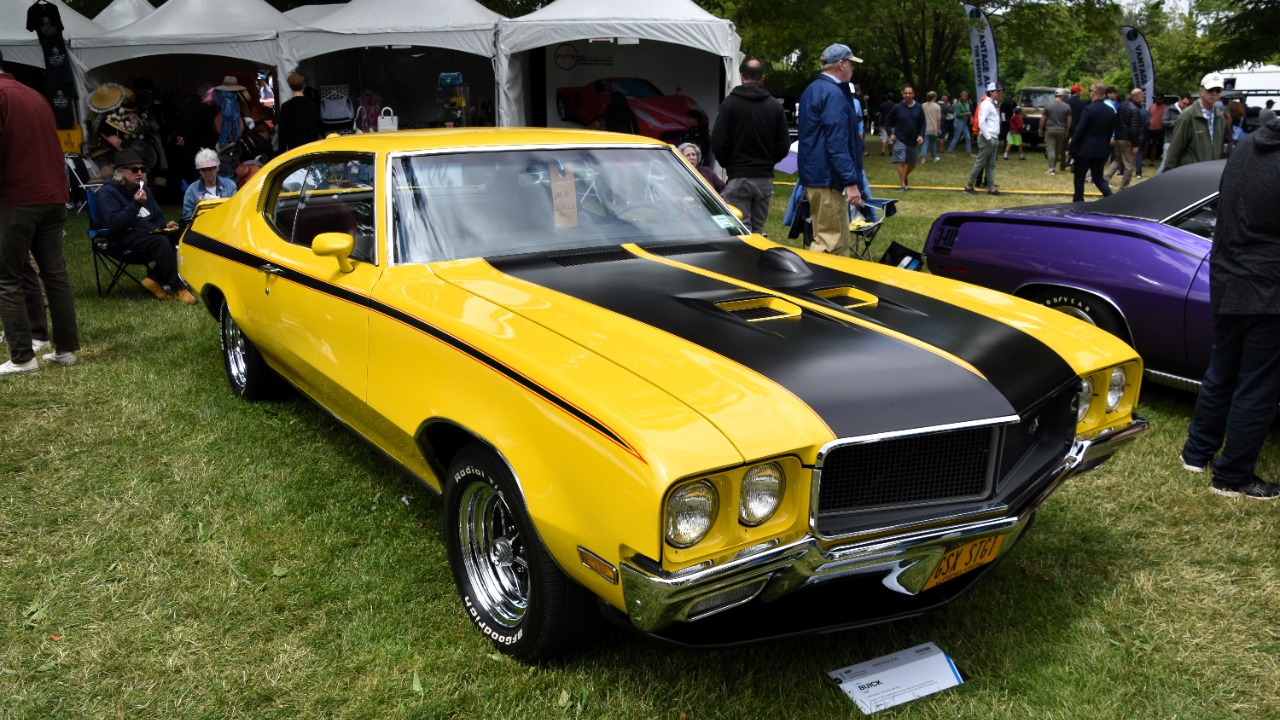
The Buick GS Stage 1 arrived in 1970 with a simple mission: overwhelm the rear tires with torque while pretending to be a gentleman’s car. Rated at 510 lb-ft, its big-block V8 turned a mid-size Buick into one of the quickest street machines of its era, even if many buyers never realized what they had. More than five decades later, that tidal wave of low-end pull still shapes how enthusiasts talk about muscle cars, sleeper performance, and what it means to build a fast car that looks almost restrained.
What happened
By 1970, Detroit’s horsepower war was in full swing, and Buick was tired of watching Chevrolet, Pontiac, Dodge, and Plymouth grab the headlines. The division’s answer was the GS 455, an intermediate coupe and convertible that hid a 455 cubic inch V8 under conservative sheetmetal. The optional Stage 1 package turned that engine into a torque monster that could run with the most celebrated muscle cars of the period.
The Stage 1 recipe started with the same 455 block used in the standard GS, then added higher compression, revised cylinder heads, a hotter camshaft, and recalibrated carburetion and ignition. Factory ratings listed the engine at 360 horsepower and 510 lb-ft of torque, figures that put the Buick at or near the top of the muscle car heap for twist. Contemporary road tests and later enthusiast analysis have long argued that the horsepower number was intentionally conservative, yet even on paper the torque figure told the real story.
That output arrived early in the rev range, giving the GS 455 Stage 1 a different character from high-winding rivals. While some big-block Chevrolets and Hemis begged to be revved, the Buick delivered its best work with a gentle roll into the throttle. Owners who have preserved original cars describe an almost effortless surge from idle, the sort of shove that pinned passengers to the seat long before the speedometer caught up.
Period-correct examples highlight how Buick wrapped this performance in relative subtlety. A rare 1970 GS hardtop, finished in factory-correct paint with discreet badging, looks more like an upscale family coupe than a drag strip regular. The hood scoops and GS emblems signal intent to those who know what to look for, but the overall presentation leans more executive than outlaw.
Buick carried the Stage 1 formula into the early 1970s, applying it to later GS 455 models and even to unusual body styles. One preserved 1972 GS 455 Sun Coupe pairs the big-torque V8 with a semi-open roof, a combination that underlines how the brand tried to blend comfort, style, and brute force. Even as compression ratios dropped and official power ratings declined, the Stage 1 name remained shorthand for Buick’s most serious performance tune.
Among enthusiasts, the 1970 model year still stands apart. The combination of high compression, relatively light emissions equipment, and aggressive tuning gave that first-year Stage 1 a reputation that later versions could not fully match. Collectors often treat 1970 cars as the peak of Buick’s muscle program, and surviving examples with original drivetrains and documentation have become prized pieces of American performance history.
Why it matters
The GS 455 Stage 1 matters first because of what it did on the street. Contemporary tests recorded quarter-mile times that placed the Buick among the quickest factory muscle cars of 1970, even when stacked against famous names like the LS6 Chevelle, 426 Hemi, and Ram Air IV GTO. While published elapsed times varied with conditions and driver skill, the Stage 1 consistently punched above its advertised horsepower rating, especially in real-world stoplight encounters where torque mattered more than peak numbers.
That performance came from a brand better known for quiet luxury than drag racing. Buick’s image in the late 1960s leaned heavily on comfort and refinement, which made the GS 455 Stage 1 a kind of corporate contradiction. The car could be ordered with air conditioning, power accessories, and plush interiors, yet it would still rip off brutal launches if the driver was brave enough with the throttle. This dual personality helped cement the Stage 1’s reputation as a sleeper, a car that looked like it belonged in a country club parking lot but behaved like a street brawler.
Modern coverage often highlights how that sleeper status let the Buick fly under the radar. One analysis of a forgotten 1970 sleeper points out that casual observers saw only a tidy mid-size coupe, not a machine capable of embarrassing more flamboyant rivals. The understated styling, combined with the brand’s conservative reputation, meant that many Stage 1 cars lived quieter lives than their performance potential suggested, which in turn helped some survive without the abuse that claimed other muscle icons.
The torque figure itself has taken on almost mythic status. In an era when marketing departments chased ever higher horsepower ratings, Buick’s decision to focus on twist gave the GS 455 Stage 1 a distinctive identity. Enthusiasts still cite the 510 lb-ft number when comparing classic muscle cars, and it frequently appears in lists of the most potent factory engines of the period. Modern retrospectives on the highest horsepower muscle of the 1970s routinely include the Stage 1, not only for its output but for how effectively it turned that power into real-world speed.
The Buick also helped shape how collectors think about value and rarity. Production numbers for Stage 1 cars were modest compared with mainstream models, and many were driven hard or modified over the decades. Surviving examples with original drivetrains, matching numbers, and factory documentation now command strong prices, especially in desirable colors and with options like four-speed manuals. The market has come to recognize that the GS 455 Stage 1 delivered supercar-level acceleration in a package that few people noticed at the time, which makes well-preserved cars particularly appealing to enthusiasts who want something different from the usual Chevelle or Road Runner.
Beyond nostalgia, the Stage 1 story also speaks to how automakers balance performance with broader brand identity. Buick did not abandon its comfort-first philosophy to build the GS 455. Instead, engineers found a way to integrate a high-output engine into a car that still rode smoothly and offered a well-finished cabin. That approach foreshadowed later performance sedans and coupes that combined strong acceleration with everyday usability, from turbocharged Regals in the 1980s to modern sport-oriented luxury models.
The engine’s legacy has gained fresh relevance as contemporary powertrains chase similar torque benchmarks. A recent naturally aspirated 6.7-liter LS6 V8, developed for a modern performance application, has been highlighted for producing more torque than any previous production non-boosted V8. Coverage of the new 6.7L LS6 often references earlier torque kings, and the Buick Stage 1 sits squarely in that historical conversation. When a new engine claims the torque crown, enthusiasts instinctively compare it to the numbers Buick printed in 1970.
That comparison shows how far engineering has come while also highlighting what made the Stage 1 special. Modern engines achieve huge torque figures with precise fuel control, advanced materials, and sophisticated valvetrain design, yet they often do so at higher engine speeds. The Buick’s appeal lies in how it delivered its best punch just off idle, with a broad plateau of usable power that suited both relaxed cruising and sudden bursts of speed. For drivers, that translated into a feeling of unstrained strength that still resonates with anyone who values effortless acceleration over peaky horsepower.
The GS 455 Stage 1 also matters because it represents the last, brightest flare of a particular era. Within a few years, tightening emissions rules, rising insurance costs, and changing buyer priorities would push big-block muscle cars into decline. Buick shifted back toward comfort and efficiency, and the idea of a full-size or intermediate coupe with more than 500 lb-ft of torque from the factory became a memory. The 1970 Stage 1 sits at the intersection of those trends, a high-water mark built just before the tide turned.
What to watch next
The story of the 1970 Buick Stage 1 V8 is not finished, because the car’s influence continues to shape both the collector market and the direction of modern performance engineering. On the enthusiast side, attention is likely to remain focused on originality and documentation. As more GS 455 Stage 1 cars surface from long-term storage or older restorations, buyers are scrutinizing casting numbers, build sheets, and factory options to separate genuine Stage 1 examples from standard GS models upgraded with performance parts later in life.
That scrutiny has already created a tiered market. Cars with verified Stage 1 drivetrains, original paint colors, and period-correct interiors occupy the top rung, especially when they feature desirable combinations like four-speed manuals or rare appearance packages. Unusual variants, such as the Sun Coupe Stage with its sliding roof, attract collectors who want something distinctive within an already niche segment. At the same time, driver-quality cars and tastefully modified builds appeal to enthusiasts who prioritize seat time over concours trophies.
Restoration trends will shape how the public experiences these cars. Some owners are returning Stage 1s to strict factory specification, right down to original-style exhaust systems and bias-ply tires, to preserve the period-correct driving feel. Others are quietly upgrading brakes, suspension, and cooling systems to make the big Buicks more usable on modern roads, all while keeping the original 455 intact. How the community balances preservation with practical improvements will determine whether future generations encounter the Stage 1 as a museum piece or a living, drivable artifact.
On the engineering front, the Stage 1’s torque-first philosophy continues to echo in new vehicles. Automakers have learned that drivers respond strongly to immediate, low-rpm pull, whether it comes from a large displacement V8, a turbocharged smaller engine, or an electric motor. The latest naturally aspirated V8s that chase record torque figures, including the 6.7-liter LS6, are part of a lineage that includes the Buick 455 Stage 1. Engineers and marketers alike understand that quoting a big torque number still captures attention, just as it did when Buick printed 510 lb-ft in its brochures.
Electric performance cars add a new dimension to that discussion. Instant torque from electric motors has reset expectations for off-the-line acceleration, and some modern EVs can out-sprint classic muscle cars without breaking a sweat. Yet the character of that torque delivery differs from a big-block V8’s surging buildup of power. As enthusiasts compare the experiences, the Stage 1’s blend of sound, vibration, and physical shove may gain renewed appreciation as something that digital drivetrains cannot easily replicate.
Media coverage of classic muscle continues to keep the Buick in the spotlight. Lists of the most powerful 1970s frequently revisit the GS 455 Stage 1’s numbers, while deep dives into specific cars, such as a well-preserved hardtop, give readers a closer look at how these Buicks were optioned and how they drive today. Articles on sleeper muscle keep the narrative alive that a Buick badge can hide serious performance.
More From Fast Lane Only: