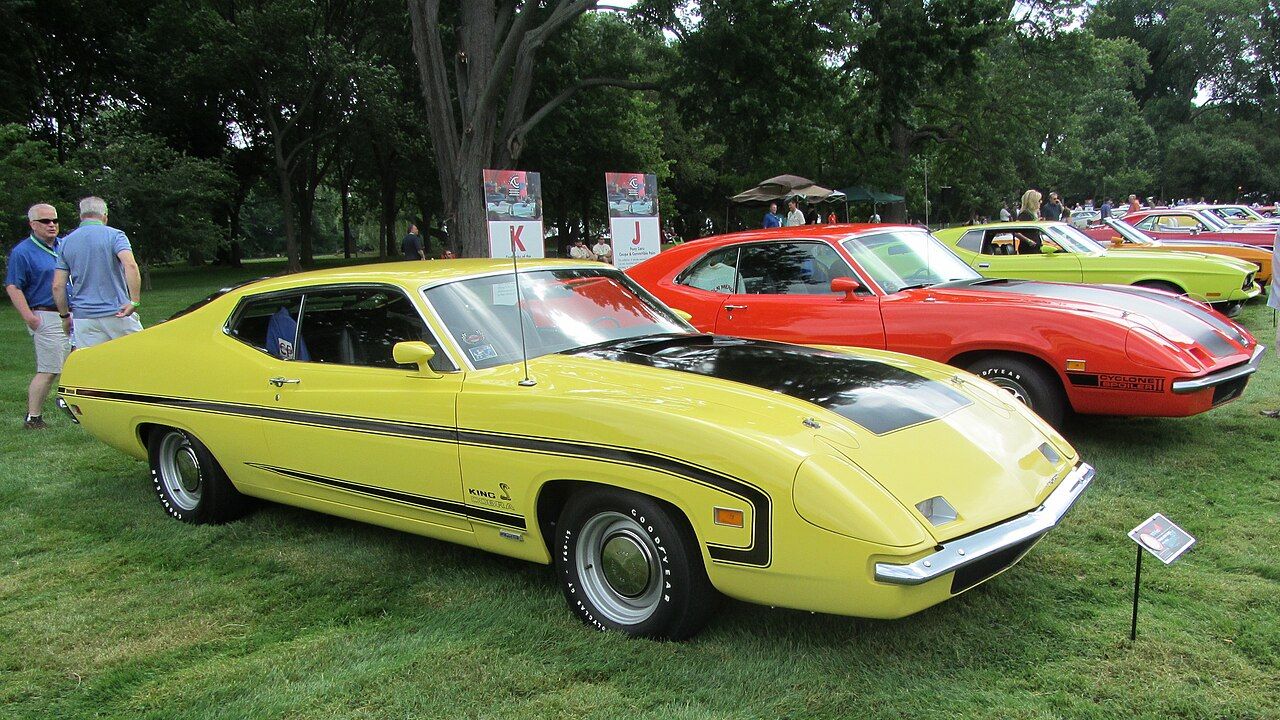
The 1970 Ford Torino King Cobra represents a fascinating moment in automotive history, blending cutting-edge design with the intense competition of NASCAR racing. Poised for greatness, this vehicle was a marvel of engineering that could have changed the landscape of racing had it not faced a series of unfortunate events leading to its near disappearance from the scene.
Background of the Ford Torino
The Ford Torino emerged as a pivotal model during the muscle car era, embodying the raw power and performance that defined American automobiles in the late 1960s and early 1970s. Initially introduced in 1968, the Torino was designed to be a more refined and performance-oriented vehicle than its predecessor, the Ford Fairlane. The Torino quickly gained popularity for its muscular looks and impressive engine options, making it a formidable contender in the muscle car market.
By 1970, the Torino had undergone significant evolution, featuring a longer body and a more aggressive stance. With a variety of engine choices, including the powerful 429-cubic-inch V8, the Torino was equipped to deliver impressive horsepower and torque. This was a critical period in automotive history, marked by fierce competition among manufacturers like Chevrolet and Pontiac, each vying for dominance in a rapidly changing market. The Torino was not just a car; it was a statement, representing Ford’s commitment to performance and innovation.
The Birth of the King Cobra
The Ford Torino King Cobra was conceived as a response to the growing importance of aerodynamics in racing. Designers and engineers were inspired by the need for speed, leading to a vehicle that emphasized sleek lines and a low profile. The King Cobra featured distinct aerodynamic enhancements, including a pointed nose and a rear spoiler, aimed at reducing drag and improving stability on the track.
Key figures such as Larry Shinoda, a renowned designer, played an instrumental role in shaping the King Cobra’s aesthetic and functional elements. Initial concept sketches captured the essence of speed and performance, ultimately culminating in prototypes that would thrill racing enthusiasts. The vision for the King Cobra was not just to create another muscle car, but to push the boundaries of automotive design and engineering.
NASCAR’s Changing Landscape
The landscape of NASCAR was evolving rapidly during the early 1970s, spurred by changing regulations that significantly impacted vehicle design. The introduction of aerodynamic restrictions forced manufacturers to rethink their strategies, as cars needed to be both powerful and sleek. This shift was critical for teams looking to gain a competitive edge on the racetrack.
Prior to the development of the King Cobra, the Ford Torino had already established itself as a competitive vehicle in NASCAR. Models like the 1969 Torino Talladega had showcased the potential for speed and performance. However, as the sport embraced the importance of aerodynamics, the stage was set for the King Cobra to potentially revolutionize racing. It was not just about power anymore; it was about how that power was harnessed through design.
The King Cobra’s Performance Potential
The technical specifications of the King Cobra were impressive, featuring a range of powerful engine options that could deliver upwards of 600 horsepower. The car’s design emphasized weight distribution, with a low center of gravity that promised enhanced handling and stability. These attributes made the King Cobra a strong contender against its contemporaries, such as the Chevrolet Monte Carlo and the Pontiac Grand Prix.
When compared to other NASCAR vehicles of the time, the King Cobra’s performance metrics suggested a significant advantage on the track. Its aerodynamic shape was designed to slice through the air more efficiently, potentially allowing for higher speeds. Ford anticipated that the King Cobra’s combination of power and advanced aerodynamics would make it a formidable presence in NASCAR, perhaps even setting new records for speed and performance.
The Controversy of Aerodynamics
The “aero wars” in NASCAR were marked by a fierce debate over the acceptability of extreme aerodynamic designs. Traditionalists within the sport were often resistant to the radical changes that vehicles like the King Cobra represented. Critics argued that these designs deviated from the spirit of racing, prioritizing speed over traditional racing values.
Key stakeholders, including team owners and drivers, influenced the perception and acceptance of the King Cobra. Some viewed it as a necessary evolution in the sport, while others lamented the loss of the classic muscle car aesthetics. The King Cobra became a symbol of this clash, illustrating the tension between innovation and tradition in NASCAR.
Challenges Faced Before Racing
Despite its promising design and performance potential, the King Cobra faced numerous challenges that ultimately hindered its racing debut. Internal struggles at Ford led to production delays, as management debated the viability of the project amidst a shifting market landscape. Economic conditions during the early 1970s, including the oil crisis, also affected consumer preferences, steering them away from high-performance vehicles.
The culmination of these factors led to a difficult final decision regarding the King Cobra’s NASCAR debut. As enthusiasm for the project waned, and the pressures of production weighed heavily, the decision was made to cancel its entry into the racing circuit. What could have been a groundbreaking moment in NASCAR history faded into obscurity, with the King Cobra relegated to the annals of unfinished projects.
The King Cobra’s Legacy
Despite its brief existence, the King Cobra has carved out a unique place in automotive history. It is remembered not only for its ambitious design but also for its role in illustrating the shifting dynamics of racing and automotive innovation. The King Cobra’s influence can be seen in subsequent Ford designs and NASCAR vehicles, as the lessons learned from its development informed future engineering decisions.
Today, the King Cobra is a sought-after collector’s item, with its rarity contributing to its allure among automotive enthusiasts. The stories surrounding its conception and the legacy it left behind have fostered a dedicated community of collectors who appreciate its place in the narrative of muscle car history. Interest in the King Cobra remains robust, reflecting a broader fascination with vehicles that embody the spirit of competition and innovation.
Surviving Models and Collectors’ Interest
The surviving King Cobra models are few and far between, making them a treasure within classic car culture. These rare vehicles often command significant prices at auctions, with collectors willing to pay a premium for a piece of automotive history. Recent sales have shown that well-preserved models can fetch upwards of $150,000, showcasing the high demand for this unique car.
Notable collectors include enthusiasts who appreciate the King Cobra’s engineering prowess and historical significance. Events like the Muscle Car and Corvette Nationals have featured King Cobra models, drawing attention from both casual fans and serious collectors alike. The stories of these collectors often highlight the passion and dedication required to restore and maintain such rare vehicles, further enhancing the allure of the King Cobra in the automotive world.
More from Fast Lane Only