The 1973 Pontiac Firebird Trans Am arrived at a turbulent moment for American performance cars, when new emissions rules and insurance pressure were cutting into raw horsepower. Rather than surrender its muscle-car identity, Pontiac reworked the Trans Am into a more balanced machine that leaned on handling, torque, and visual drama as much as outright speed. That approach helped the car bridge the gap between the freewheeling late 1960s and the more regulated, efficiency-minded years that followed.
What happened
By 1973, the second-generation Firebird had already evolved from a straight-line street bruiser into a more sophisticated performance coupe. Federal emissions standards and rising fuel concerns forced Pontiac engineers to rethink how they delivered power, and the Trans Am became their most visible test case. The model kept its big-displacement character, but output figures and the way that power reached the pavement changed in response to the new rules.
The Trans Am lineup centered on the 455 cubic inch V8, a unit that had become a Pontiac signature. For 1973, the standard 455 used lower compression and revised tuning to comply with emissions limits, which reduced peak horsepower compared with earlier high-compression versions. At the same time, Pontiac offered the 455 Super Duty, a heavily reinforced version of the engine that used specialized internals, revised cylinder heads, and a unique camshaft profile to preserve strong performance within the regulatory framework. That Super Duty package turned the Trans Am into one of the most capable factory muscle cars of the early 1970s even as other nameplates retreated.
Chassis tuning played a larger role in the car’s identity as straight-line bragging rights became harder to sustain. The 1973 Trans Am used firmer springs, upgraded shocks, and specific sway bars to sharpen turn-in and reduce body roll compared with the regular Firebird. Wider tires and available limited-slip differentials helped the car put its torque to the ground, which meant that real-world pace often exceeded what the raw horsepower numbers suggested. Pontiac promoted this balance as a way to keep the Trans Am relevant on curving roads rather than just drag strips.
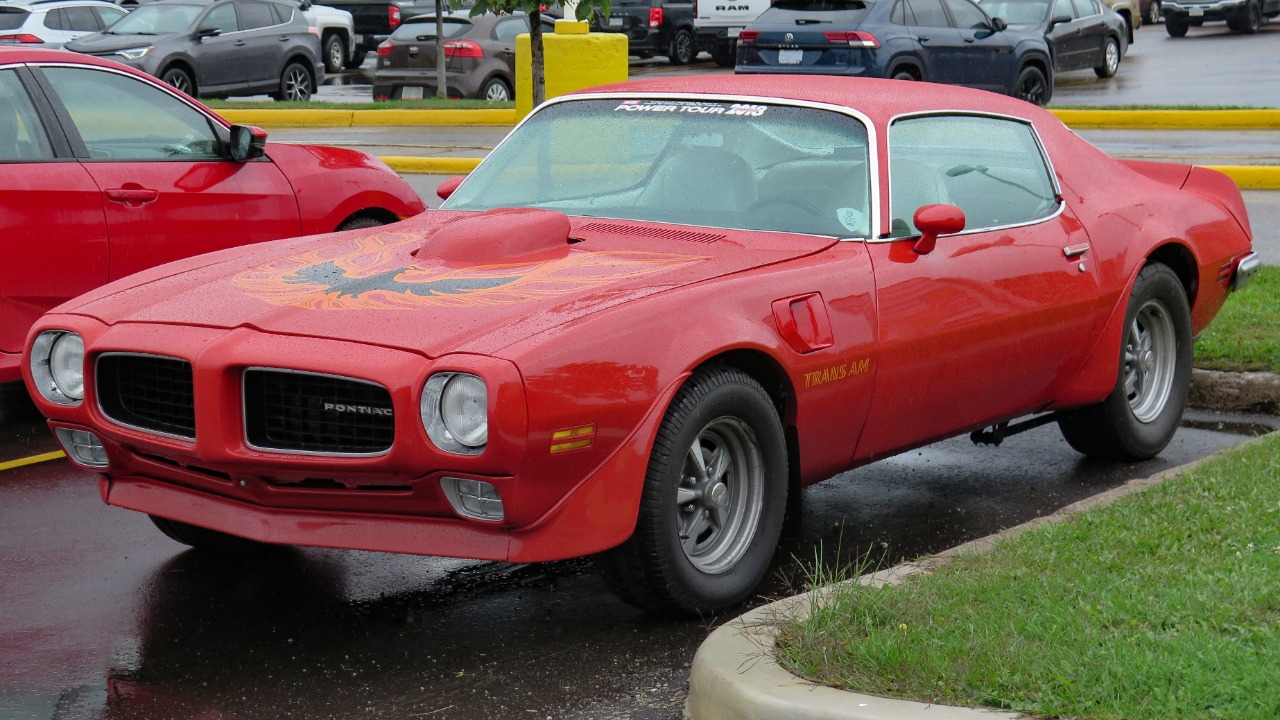
Styling changes reinforced that shift in character. The front end adopted a more aggressive, integrated urethane bumper that complied with new impact standards while giving the car a cleaner, more modern face. The functional hood scoop, prominent rear spoiler, and optional graphics package turned the Trans Am into a rolling billboard for performance at a time when many competitors were visually toning things down. Pontiac understood that image mattered as much as dyno sheets, and the 1973 model leaned into that insight.
Behind the scenes, Pontiac development teams continued to experiment with even more focused versions of the Trans Am. One historically significant example, a special Trans Am that Pontiac kept away from showrooms, reflected how far the division was willing to push the platform while still trying to satisfy corporate and federal constraints. That hidden car, documented in detail in an analysis of a secret Trans Am, showed how Pontiac engineers explored advanced engine and chassis combinations that never reached mass production but influenced later performance decisions.
Why it matters
The 1973 Trans Am illustrates how American performance brands adapted when the original muscle-car formula started to collapse. Insurance companies were penalizing high advertised horsepower, federal rules were tightening, and fuel costs were rising. Many manufacturers responded by stripping their sporty models down to appearance packages with modest engines. Pontiac took a different route, using the Trans Am to show that performance could survive if it was redefined.
That redefinition had several layers. First, the shift from peak horsepower to usable torque and drivability meant the car still felt strong in everyday conditions. The 455 engines delivered their punch at lower revs, which matched real-world driving better than the high-strung big blocks of a few years earlier. Drivers could accelerate briskly from low speeds without needing to wring the engine out, which also helped with fuel consumption and emissions.
Second, the focus on suspension and handling anticipated a broader move toward more European-style performance values. Instead of treating cornering as an afterthought, Pontiac tuned the Trans Am to be stable and predictable on winding roads, which made it more versatile and appealing to buyers who wanted more than quarter-mile numbers. That philosophy would later shape performance packages across the industry, from Z28 Camaros to turbocharged imports.
The 1973 model year also marked a cultural turning point. The Trans Am’s bold graphics, shaker hood, and aggressive stance kept the spirit of late-1960s muscle alive in a decade that was rapidly cooling on overt displays of power. The car became a statement that performance enthusiasts did not have to abandon their passion just because regulations had changed. That message resonated strongly enough that the Trans Am would become a pop-culture icon later in the decade, even as raw power figures continued to slip.
From a historical perspective, the 1973 Trans Am serves as a bridge between two eras of automotive engineering. It retained a carbureted, big-displacement V8 and body-on-subframe construction, yet it also incorporated more sophisticated emissions hardware, safety bumpers, and a chassis tuned for all-around capability. In that sense, it foreshadowed the compromises and innovations that would define performance cars through the 1980s and beyond, where engineers had to balance speed with efficiency, safety, and environmental responsibility.
The car’s development story also highlights the importance of internal experimentation. Pontiac’s work on special Trans Am variants that never reached showrooms, including the hidden example tied to the Super Duty program, shows how manufacturers often tested ideas that were ahead of what the market or regulators would accept. Those projects informed later engines, suspension setups, and even marketing strategies that drew on the mystique of “what might have been.”
What to watch next
Interest in early 1970s Trans Ams has grown as collectors and enthusiasts reassess the period. For years, many focused on the peak muscle years around 1970, when horsepower ratings were highest. As those cars became more expensive and harder to find, attention shifted to models like the 1973 Trans Am that offered a more rounded driving experience along with distinctive styling. Auction results and private sales now reflect a premium for well-documented 455 and Super Duty cars from this era, especially those with original drivetrains and factory performance options.
That trend is likely to continue as more buyers look for cars that are usable on modern roads. The 1973 Trans Am’s blend of torque, handling, and comfort makes it a more approachable classic than some earlier, more temperamental muscle machines. Its compliance with period safety and emissions rules also makes registration and inspection easier in many regions, which adds to its practicality as a weekend driver rather than a static showpiece.
On the restoration and modification side, the model has become a popular platform for subtle upgrades that respect its original character. Enthusiasts often retain the 455 block while adding modern ignition systems, improved cooling, and carefully chosen exhaust components that reduce emissions and improve reliability without dramatically altering the car’s sound or feel. Suspension refreshes with contemporary bushings and dampers can sharpen the handling that Pontiac originally prioritized, while disc-brake upgrades address the stopping power gap between 1970s and modern traffic.
At the same time, there is growing interest in preserving rare variants as close to stock as possible. Collectors who acquire Super Duty cars or examples tied to internal development efforts often prioritize period-correct parts, factory paint codes, and original interior materials. Documentation that connects a given car to Pontiac’s engineering experiments or limited-run configurations can significantly increase its historical and monetary value, which encourages careful archival research and authentication.
More From Fast Lane Only: