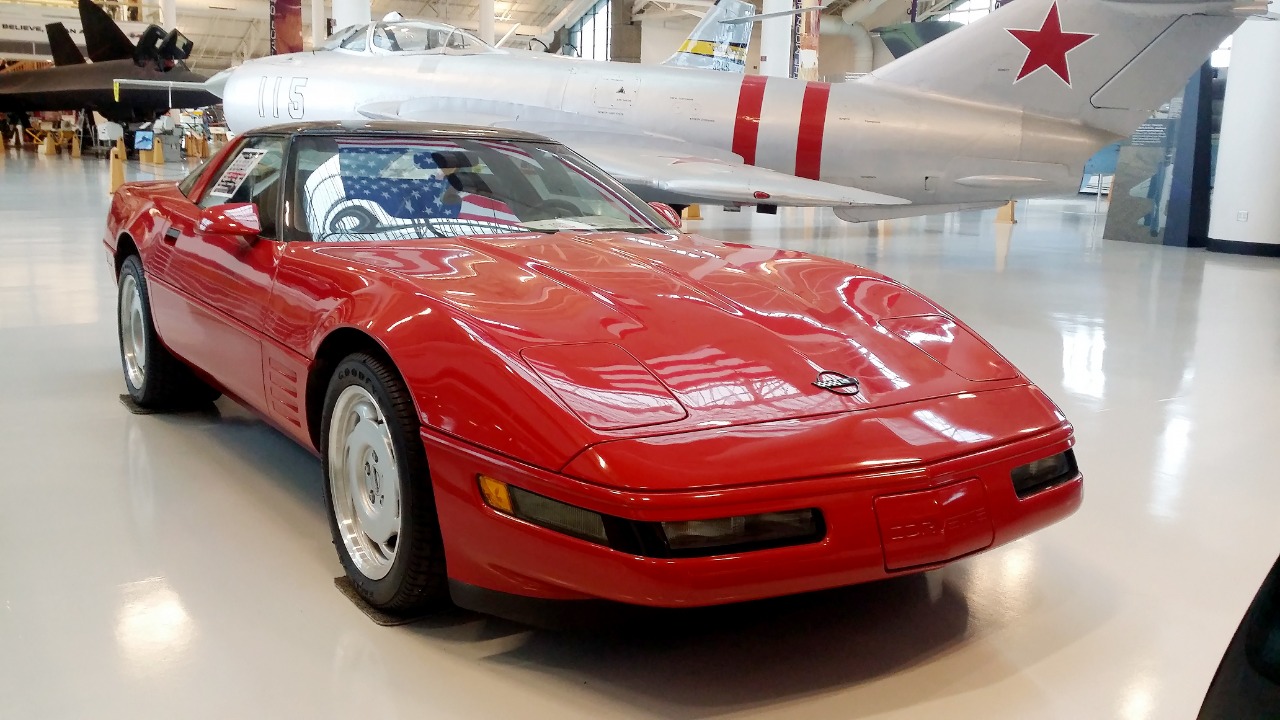
Chevrolet spent much of the 1990s trying to prove that American performance could be as sophisticated as anything from Europe or Japan. One of its boldest efforts arrived with advanced hardware, ambitious engineering, and a price tag that assumed buyers were ready to pay for all of it. The market response showed otherwise, and the car quickly shifted from halo product to cautionary tale.
That mismatch between what engineers built and what customers actually wanted explains why this 1990s Chevrolet performance model now looks like a missed opportunity. Seen from today, it also foreshadows several themes that still shape how performance cars are developed, marketed, and sometimes quietly killed.
How Chevrolet’s 1990s halo car broke from its own past
By the early 1990s, Chevrolet had a clear template for speed: big-displacement pushrod V8s, rear-wheel drive, and a value pitch that made Corvettes and Camaros attainable compared with European rivals. The performance car that upset this formula leaned heavily into technology, complex engineering, and a more premium positioning that sat uncomfortably between traditional muscle and imported exotica.
Across the industry, manufacturers were experimenting with similar ideas. The period produced all-wheel-drive turbo flagships, active suspensions, and composite bodywork that promised race-car responses on public roads. Some of these efforts, like several high-tech projects that later appeared on lists of cars that were effectively dead on arrival, showed how risky it could be to push technology faster than buyers were prepared to accept or afford.
Chevrolet’s 1990s experiment tried to bridge that gap. Engineers chased higher specific output, sharper handling, and more refined aerodynamics. That meant more electronic control, more sensors, and more expensive materials. Performance figures improved, but so did complexity and cost. For traditional Chevrolet loyalists used to straightforward mechanical packages, the new approach felt unfamiliar.
Price was the other shock. The car targeted European benchmarks and was priced accordingly, which undercut Chevrolet’s long-standing value story. Shoppers who wanted a bargain performance car could still buy a more conventional V8 model for less money, while those willing to spend at the higher tier often preferred the badge prestige of established imports. The result was a car that sat in a narrow, awkward space between segments.
Timing compounded those challenges. Performance buyers in the United States were only beginning to warm to the idea that technology could replace displacement. Turbocharging, advanced traction systems, and intricate chassis electronics were still associated with niche imports rather than mainstream American brands. Chevrolet arrived with a car that assumed that shift had already happened.
Why the market shrugged at cutting-edge performance
History shows that being early can be as unforgiving as being wrong. A generation earlier, another American brand had tried to build a domestic supercar with exotic materials and race-bred engineering, only to see the project collapse before the world was ready for it. That earlier cautionary tale, examined through the story of an 1980s American supercar, mirrors what Chevrolet experienced in the 1990s: a technically impressive machine that struggled to find enough real customers.
Within Chevrolet’s own showrooms, the car also had to justify itself against cheaper internal rivals. When a traditional performance model delivers similar straight-line speed for significantly less money, the case for the high-tech alternative has to rest on subtler benefits such as track consistency, braking performance, or long-distance refinement. Those advantages are real, but they are harder to communicate in a brief test drive or a glossy brochure.
The car’s engineering depth did impress a subset of enthusiasts. Detailed road tests praised its stability at high speed, its braking power, and its composure over rough pavement. Even so, the feedback loop that matters most, the sales chart, never caught up. Annual volumes stayed well below what the program needed to justify its development costs, and the car’s status quietly shifted from future-defining flagship to low-volume curiosity.
How hindsight has changed the verdict
Viewed from the 2020s, the 1990s Chevrolet performance outlier looks far less strange. Modern buyers are comfortable with complex electronics, multi-mode suspensions, and software-driven driving experiences. High-performance models now routinely cost several times what their base counterparts do, and the idea of paying a premium for a more sophisticated platform is widely accepted.
The shift toward electrification also makes that 1990s experiment look prescient. Long before today’s push for battery power, engineers were already wrestling with how to blend efficiency, technology, and speed. The broader history of electric shows a repeating pattern: early projects that are technically impressive but commercially out of step with their time, followed by a later wave that finally aligns with market demand and infrastructure.
Chevrolet’s 1990s halo car fits that pattern in the performance arena. It previewed a future where software, sensors, and complex drivetrains would define speed as much as raw displacement. The car’s relative failure did not invalidate that direction. Instead, it highlighted how carefully manufacturers must manage timing, pricing, and messaging when they ask buyers to rethink what a performance car should be.
Collectors have started to respond accordingly. Low production numbers, distinctive engineering, and a backstory rooted in corporate ambition have all begun to elevate the car’s status among enthusiasts who prize oddball milestones. Auction listings now emphasize the very traits that once scared off mainstream shoppers: intricate hardware, limited volumes, and a short production run.
For Chevrolet, the episode also informed later strategy. Subsequent performance projects put more emphasis on incremental evolution, clearer value propositions, and closer alignment with motorsport programs that could validate new technology in front of fans. The lesson was not to avoid risk, but to pair bold engineering with a believable story about why buyers should care.
What Chevrolet’s mis-timed experiment suggests about the next wave
The story of this 1990s performance car has fresh relevance as Chevrolet and its rivals pivot toward electrified and hybrid performance. Once again, engineers are building cars that challenge long-held assumptions about what speed should sound and feel like. Once again, there is a risk that the technology will outpace what the core audience is ready to embrace.
There is also the question of how quickly Chevrolet should move. The 1990s car showed the danger of leaping too far ahead of the core customer base. Yet moving too slowly carries its own risks, especially as regulators, investors, and younger buyers push for lower emissions and higher efficiency. The likely answer lies in a phased approach, where conventional performance models coexist with more radical offerings that gradually build trust.
More from Fast Lane Only
- Unboxing the WWII Jeep in a Crate
- 15 rare Chevys collectors are quietly buying
- 10 underrated V8s still worth hunting down
- Police notice this before you even roll window down
*Research for this article included AI assistance, with all final content reviewed by human editors