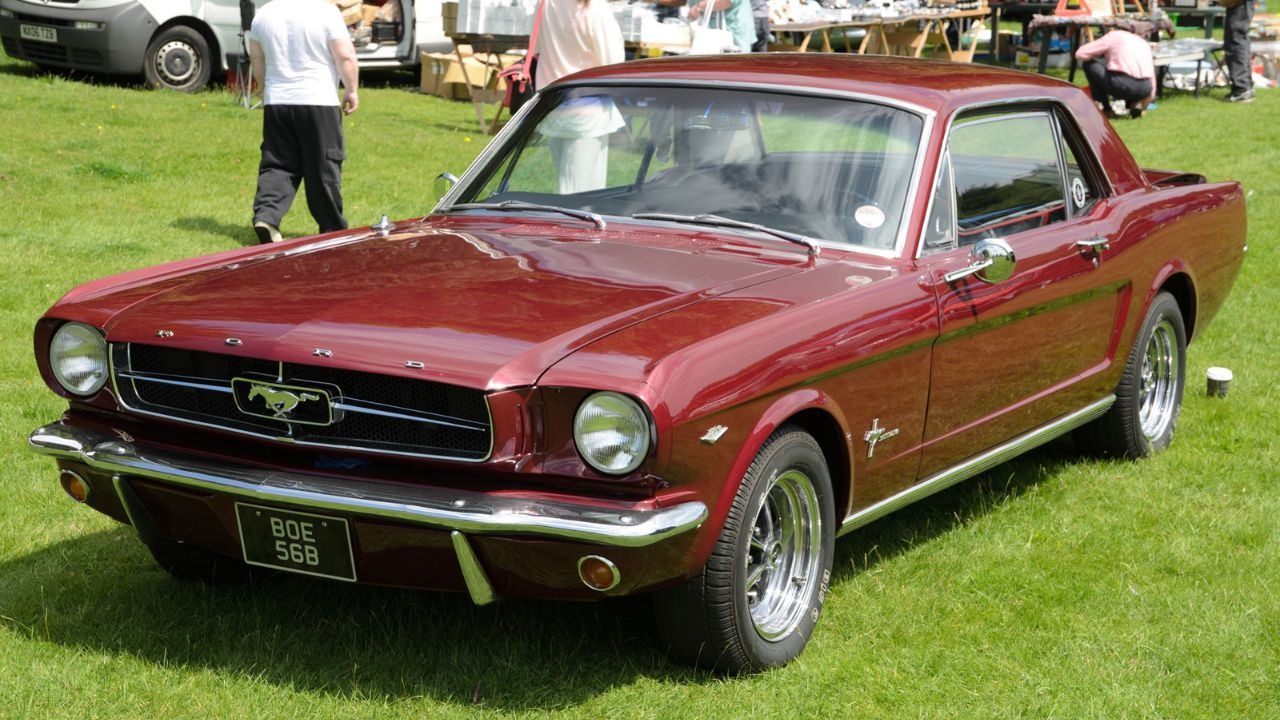
When the Ford Mustang debuted in 1964, it wasn’t designed to invent a new category of automobile. Ford simply wanted an affordable, stylish car that appealed to younger buyers. Instead, the Mustang became an instant sensation, creating the “pony car” segment and changing the American automotive industry in ways few executives could have predicted.
A Simple Idea With Massive Potential
During the early 1960s, Ford noticed that many younger drivers wanted something more exciting than traditional family sedans but couldn’t afford expensive sports cars. Company planners envisioned a compact car with sporty styling, comfortable seating, and a wide range of options that would appeal to a broad audience.
Built on the mechanical foundation of the Ford Falcon, the Mustang combined familiar engineering with an eye-catching design. Buyers could choose from economical six-cylinder engines or powerful V8s, along with numerous appearance and performance packages that allowed them to personalize their cars.
The strategy focused on affordability as much as excitement. Ford wanted a vehicle that first-time buyers could realistically own while still delivering a sporty image.
No one expected that approach to reshape an entire segment of the automotive market.
Demand Surpassed Every Expectation
When the Mustang was introduced in April 1964, customer response exceeded even Ford’s most optimistic forecasts. Dealerships quickly filled with eager buyers, and many cars sold almost as soon as they arrived. The Mustang became one of the most successful vehicle launches in automotive history.
Its appeal extended far beyond young drivers. Families, professionals, and performance enthusiasts all found versions that matched their needs, thanks to the Mustang’s extensive list of available engines, trim levels, and options.
Ford originally projected steady sales, but overwhelming demand forced the company to increase production dramatically. The Mustang’s early success demonstrated that buyers wanted cars combining affordability, style, and performance.
Within its first year, the Mustang had become a cultural phenomenon rather than simply another new model.
Competitors Rushed to Catch Up
The Mustang’s extraordinary success quickly attracted attention throughout Detroit. Rival automakers realized Ford had uncovered an entirely new market, prompting them to develop sporty, affordable coupes of their own. Chevrolet introduced the Camaro, Pontiac launched the Firebird, and Dodge answered with the Challenger, while Plymouth added the Barracuda to the growing competition.
These cars shared a similar formula: compact dimensions, long hoods, short rear decks, and a variety of engines ranging from economical to high-performance V8s. Before long, the term “pony car” became synonymous with this exciting new class of American automobiles.
The fierce competition fueled continuous innovation. Manufacturers improved styling, introduced more powerful engines, and expanded performance options in an effort to attract buyers.
The Mustang had unintentionally started a race that transformed the performance car market for years to come.
A Legacy That Continues Today
More than six decades after its debut, the Ford Mustang remains one of the world’s most recognizable performance cars. Its success proved that buyers wanted vehicles offering personality, customization, and enjoyable driving without the cost of an exotic sports car.
The market segment it created continues to influence modern automotive design. Even as technology evolves with turbocharged engines, advanced electronics, and electrification, the core idea behind the pony car remains unchanged: accessible performance wrapped in distinctive styling.
The Mustang’s enduring popularity reflects the strength of the formula Ford introduced in 1964. What began as a practical business decision unexpectedly created an entirely new category of automobiles.
By redefining what an affordable performance car could be, the Mustang secured its place as one of the most influential vehicles in American automotive history.
More from Fast Lane Only
- Unboxing the WWII Jeep in a Crate
- 15 rare Chevys collectors are quietly buying
- 10 underrated V8s still worth hunting down
- Police notice this before you even roll window down
*Research for this article included AI assistance, with all final content reviewed by human editors