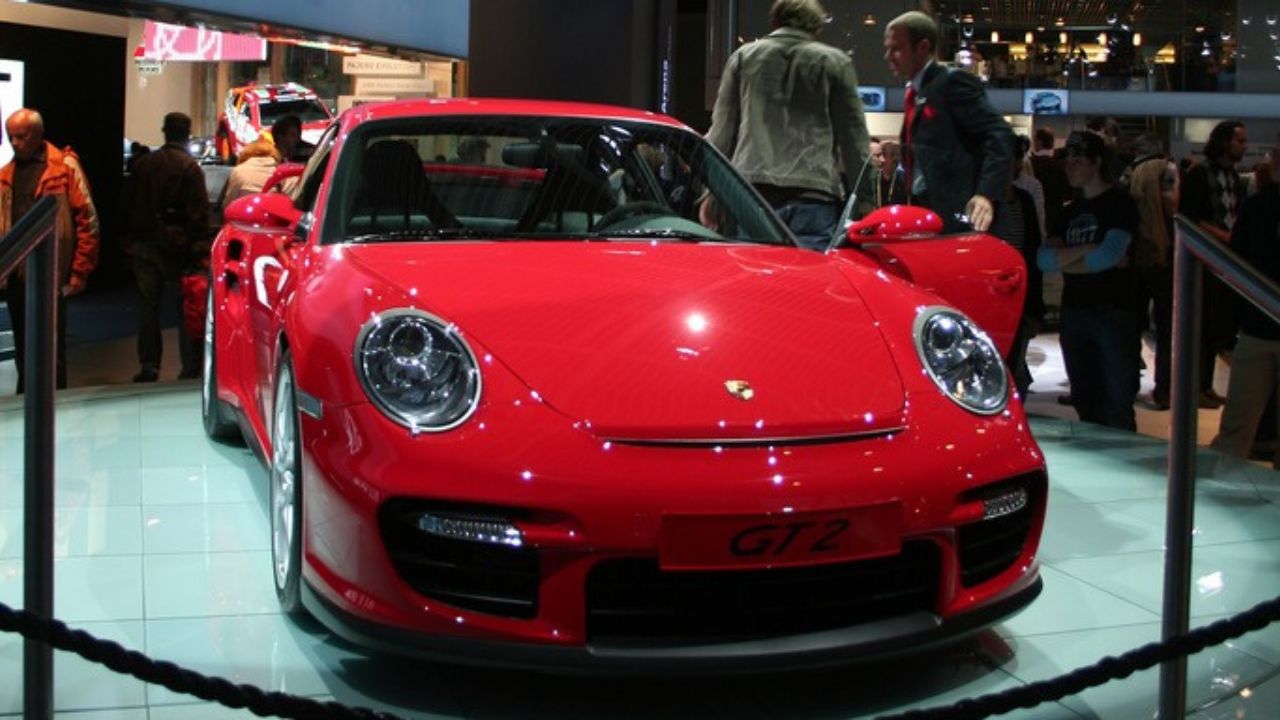
The 2007 Porsche 911 GT2 arrived as the wild side of the 997 generation, a rear-drive, manual-only weapon that took the 911 Turbo’s firepower and stripped away its safety net. Engineered as a road-legal track car, it pushed the performance envelope for both Porsche and the broader supercar world. Nearly two decades on, it still stands as a benchmark for how far a turbocharged 911 can go while remaining usable on real roads.
From 911 Turbo to GT2: turning up the boost
The 2007 GT2 started with the 997-generation 911 Turbo as its foundation, then reworked almost every major system in search of speed. Its core was a twin-turbocharged flat-six that shared its architecture with the turbocharged 911 range, part of a lineage that sites like Porsche 911 Turbo histories trace back through multiple generations of forced-induction 911s. For the GT2, Porsche raised boost, revised internal components, and recalibrated engine management to create one of the most aggressive factory 911 engines of its era.
Where the contemporary 997 Turbo paired its power with all-wheel drive and optional automatic shifting, the GT2 took a purist approach. It sent all of its output to the rear wheels through a six-speed manual gearbox, turning traction into a skill test rather than an electronic guarantee. The rear-drive layout reduced weight and mechanical complexity, but it also demanded more from the driver, especially when the turbos came on song in the mid-range.
Lightweight engineering and track-focused hardware
To justify the GT2 badge, Porsche did not just add power. The company embarked on a disciplined weight-loss program that touched bodywork, interior trim, and even the exhaust system. Lightweight bucket seats, reduced sound insulation, and fewer comfort features helped trim mass compared with the 911 Turbo. The result was a car that felt sharper in every input, from steering to braking.
Chassis tuning followed the same philosophy. The GT2 adopted stiffer springs and dampers, revised anti-roll bars, and a lower ride height. Suspension geometry was set up for high-speed stability and precise turn-in, with aggressive alignment settings that favored grip over tire longevity. Massive brakes with advanced materials gave the car repeated stopping power on the circuit, reinforcing its image as a track tool that happened to wear license plates.
Aerodynamics also distinguished the GT2 from its siblings. A large fixed rear wing, deeper front splitter, and carefully shaped underbody elements generated meaningful downforce at speed. These parts were not decorative; they were calibrated to balance the car at very high velocities, where even small aero changes can alter how a 911 behaves mid-corner or under hard braking.
Performance that redefined the 997 era
On paper, the 2007 911 GT2 delivered numbers that pushed the 997 platform to its limit. Its power-to-weight ratio exceeded that of the standard 911 Turbo, and the combination of rear-drive and manual transmission produced acceleration that felt raw and immediate. Turbo lag was present but manageable, followed by a fierce surge that made full-throttle runs a serious commitment.
Top speed figures moved into territory that only a handful of contemporary supercars could match. The GT2 was designed to run at very high speeds for extended periods, something that required not just power but also cooling, lubrication, and stability systems capable of sustained punishment. On track, its lap times put it in competition with dedicated exotics that lacked the 911’s everyday practicality.
What truly set the GT2 apart was how it delivered this performance. The car did not rely heavily on electronic intervention. Stability control and traction systems were present but far less intrusive than in the 911 Turbo, and experienced drivers could disable them entirely. That choice reflected Porsche’s confidence in the chassis and in the customers who would seek out such a focused machine.
Why the GT2 mattered to Porsche’s identity
The 2007 GT2 played a strategic role in Porsche’s performance hierarchy. It sat above the 911 Turbo in power and track capability, yet remained distinct from the naturally aspirated GT3 and GT3 RS that targeted motorsport purists. The GT2 effectively bridged the gap between turbocharged road cars and the brand’s racing programs, using forced induction to reach performance levels that a naturally aspirated engine would struggle to match in a road-legal package.
By offering a rear-drive, manual-only turbo flagship, Porsche reinforced its reputation for building cars that reward skilled drivers rather than insulating them. The GT2 was not intended as a volume model. It was a halo car that showcased what the 997 platform could do when engineers prioritized lap times and driver engagement over comfort or accessibility.
This approach also helped Porsche compete in a supercar market populated by mid-engine rivals. The GT2 demonstrated that a rear-engined 911, with its unique weight distribution and handling traits, could stand alongside mid-engine exotics in outright speed. It turned the 911’s layout from a perceived handicap into a selling point, especially for enthusiasts who appreciated the challenge.
Turbocharged character and the “widowmaker” reputation
The GT2’s power delivery and rear-drive layout revived an image that had followed earlier high-performance 911 Turbos, sometimes labeled with ominous nicknames that pointed to their unforgiving handling. The 2007 car was more advanced and more controllable than its predecessors, yet it still demanded respect. Sudden throttle applications on cold tires, or careless inputs in the wet, could quickly overwhelm the rear tires.
For many buyers, that edge was part of the appeal. The GT2 was marketed to experienced drivers who wanted a car that felt alive, even slightly intimidating, rather than one that filtered every sensation. Its steering feedback, brake pedal feel, and turbocharged shove combined to create a driving experience that rewarded smooth technique and punished clumsy inputs.
Yet the car retained enough everyday usability to function on public roads. The cabin layout remained recognizably 997, with familiar controls and ergonomics. Owners could drive to a circuit, run hard sessions, then drive home without the compromises associated with full race cars. That dual character helped cement the GT2 as a cult favorite among Porsche loyalists.
How does it compare with the 911 Turbo and GT3
Within the 997 range, the GT2 occupied a distinct niche. The 911 Turbo offered all-wheel drive security, more comfort equipment, and a broader appeal to customers who wanted supercar speed without supercar demands. It was faster in poor weather and easier to drive quickly for less experienced owners, which made it a more versatile choice for daily use.
The GT3 and GT3 RS, by contrast, relied on high-revving naturally aspirated engines and an even more stripped-out character. They appealed to drivers who valued throttle response, linear power delivery, and the sound of a race-bred flat-six spinning toward redline. On some circuits, the lighter GT3 variants could match or even surpass the GT2, particularly where traction and balance mattered more than outright power.
The GT2 sat between these poles. It combined turbocharged torque with a track-focused chassis, delivering explosive straight-line speed and serious cornering performance. Less forgiving than the Turbo and more brutal in its acceleration than the GT3, it became the car for drivers who wanted the most intense 997 experience available from the factory.
Market reception and collector status
When it launched, the 2007 911 GT2 attracted a specific type of buyer: enthusiasts who already understood the 911 platform and wanted the most extreme version. Production numbers were limited, which added an element of exclusivity and helped support long-term values. Many cars were used as intended on track days and fast road drives, which further thinned the pool of low-mileage examples.
Over time, the GT2’s reputation grew as later generations of 911s added more electronics and, eventually, dual-clutch transmissions across much of the performance range. Collectors began to view the 997 GT2 as one of the last analog-feeling turbocharged flagships, with a manual gearbox and relatively modest driver aids. That perception has helped keep demand strong among buyers who want a car that feels connected and mechanical rather than heavily digital.
Pricing on the secondary market has reflected that status. Well-kept examples, especially those with documented history and minimal modifications, often command a premium over equivalent 911 Turbos of the same era. The car’s mix of rarity, performance, and driving challenge has turned it into a reference point for modern classic supercars.
Influence on later GT2 models
The 2007 GT2 did more than cap the 997 lineup. It set a template for what a turbocharged GT car from Porsche should be. Later GT2 variants, including more extreme evolutions, built on the formula of high power, rear-wheel drive, and track-ready suspension. They added more advanced aerodynamics, lighter materials, and increasingly sophisticated electronics, but the core idea remained the same.
Engineers drew lessons from how owners used the 997 GT2, particularly in terms of durability and heat management under repeated high-load conditions. Cooling systems, brake packages, and tire technology all advanced in response. As a result, later GT2 models could deliver even higher performance while maintaining the reliability expectations that come with the Porsche badge.
The 2007 car also influenced how the brand communicated about its top-tier 911s. Marketing shifted toward emphasizing lap times, motorsport connections, and the skill required to extract the car’s potential. That narrative resonated with a growing audience of track-day drivers who wanted a machine that felt close to a race car yet remained road legal.
What enthusiasts should watch next?
For enthusiasts and collectors, the legacy of the 2007 911 GT2 raises a few key questions about the future of high-performance 911s. One is how long Porsche will continue to offer manual transmissions in its most extreme models. The 997 GT2 stands as proof that a manual box can coexist with huge turbocharged power, but market trends and emissions regulations have pushed many manufacturers toward automated gearboxes.
Another area to watch is how future turbocharged 911 flagships balance analog feel with modern driver assistance systems. The 2007 GT2 leaned heavily toward driver responsibility, with relatively light electronic intervention. Newer cars offer far more configurable stability and traction control, as well as adaptive suspension and active aerodynamics. The challenge for Porsche will be to preserve the sense of connection that made the 997 GT2 special while meeting contemporary safety and efficiency demands.
Finally, the car’s growing status as a modern classic suggests that values may continue to evolve as supply tightens and awareness spreads among younger enthusiasts. As more performance cars move toward hybrid or fully electric powertrains, a rear-drive, manual, twin-turbo 911 from the mid-2000s looks increasingly like a snapshot of a particular performance era. For those who value that blend of analog control and turbocharged violence, the 2007 Porsche 911 GT2 remains one of the clearest expressions of what a 997 could be when engineers were allowed to push the limits.
More from Fast Lane Only
- Unboxing the WWII Jeep in a Crate
- 15 rare Chevys collectors are quietly buying
- 10 underrated V8s still worth hunting down
- Police notice this before you even roll window down
*Research for this article included AI assistance, with all final content reviewed by human editors.